
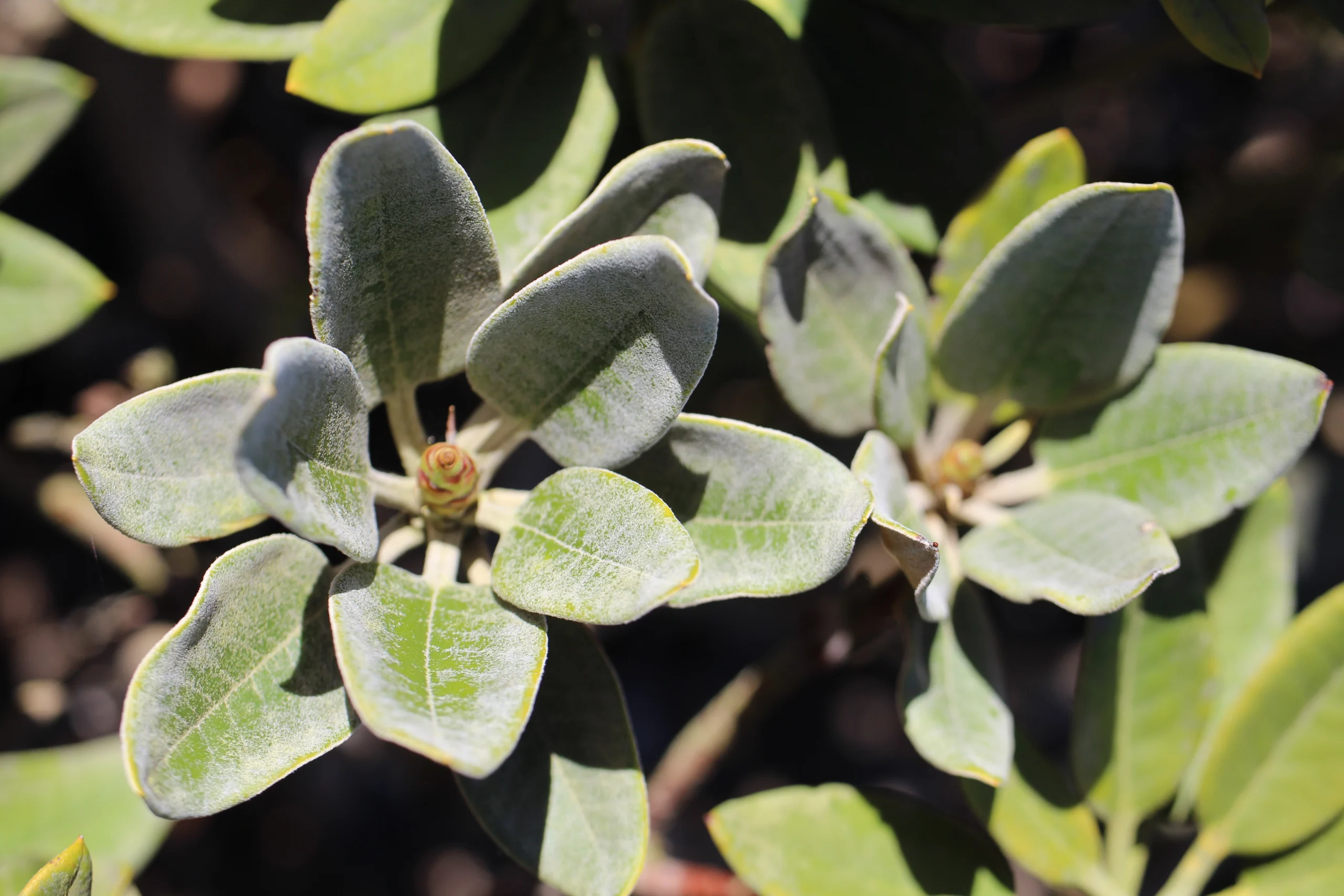
Here is the first clue in your Ficus Shivereana Moonshine care case: those beautiful cream and white patches on your plant’s leaves are, from a biological standpoint, completely broken. Every pale sector you see contains little to no chlorophyll — the green pigment that converts light into food. That means your Shivereana is running its entire food production operation through the green zones only, while the cream sections sit there looking gorgeous but contributing almost nothing to the plant’s energy budget. NC State University Extension classifies Ficus elastica — the parent species — as a full-sun tropical that needs substantial light to maintain vigour. Strip that light away from a variegated cultivar and something quietly dramatic begins to happen: the plant starts filling in its pale patches with chlorophyll, trading beauty for survival. That is reversion. And it is the central mystery this guide will teach you to prevent and reverse.
Most Ficus Shivereana Moonshine care guides will tell you “bright indirect light, let it dry between waterings, avoid cold drafts.” All of that is true. But none of it explains the actual mechanism behind why this plant fails — or how to surgically fix it when it does. That is what we are here for. By the time you finish reading this, you will understand exactly what triggers the plant’s built-in leaf-drop eject button, precisely where to make a rescue cut when reversion begins, and why the cream sectors need an invisible mineral shield to survive dry indoor air.
The 3 case-closing clues of Shivereana Moonshine care:
- The pale sectors need MORE light than a solid-green plant — not less. They cannot produce their own food, so the green zones must work overtime. Dim the lights and the plant begins filling in the cream with green as a survival strategy. That is reversion — and it is the plant doing exactly what it is designed to do.
- Its eject button is always armed. One cold draft, one waterlogged root, and the plant hits it — dropping leaves within 12 to 48 hours. The eject button is a biological structure called the abscission zone, pre-built at the base of every single petiole. The trigger is ethylene gas, produced the moment roots are deprived of oxygen or temperature drops below the safety threshold.
- Reversion is reversible with one surgical cut — if you know exactly where to make it. The technique is called the Reversion Rescue, and it involves removing apical dominance by cutting 6mm above the last variegated node. Done correctly, it wakes up the dormant variegated bud waiting just below and forces it to take over the growing tip.
What Exactly Is Ficus Shivereana Moonshine — and Is It the Same as Moonshine Ficus?
Ficus Shivereana Moonshine is a variegated cultivar of Ficus elastica — the rubber plant — not a separate species. The confusion is understandable: the plant is sold under several names including Ficus Shivereana, Moonshine Ficus, and Ficus elastica Shivereana Moonshine, all of which refer to the same plant. “Shivereana” is the cultivar name; “Moonshine” describes the intensity and character of its cream-to-white variegation pattern, which produces larger and more stable pale sectors than standard Ficus elastica cultivars like ‘Tineke’ or ‘Ruby.’ The Missouri Botanical Garden’s Ficus elastica profile confirms the species as a tropical evergreen in the Moraceae family, native to South and Southeast Asia, where it can grow into a canopy tree exceeding 100 feet (30 metres) in the wild.
The characteristic that makes Shivereana Moonshine both beautiful and genuinely difficult to keep is called chimeric variegation. Think of it like a newspaper printed with two different inks — one green, one cream. The two inks are loaded into different print cartridges (different cell layers in the plant’s growing tissue). As long as both cartridges run normally, you get the gorgeous two-tone pattern. But if the cream cartridge starts running low — triggered by insufficient light — the press defaults to printing in solid green. The plant fills in the pale sectors with chlorophyll and becomes progressively less variegated. That is not damage. That is the plant making a rational survival decision. Your job is to make sure it never needs to.
This same chimeric instability appears in other collector plants — most notably in the Philodendron Birkin, whose white pinstripe variegation follows identical chimeric cell-layer logic. Understanding the biology in one plant unlocks the care logic for the entire category. For a broader look at tropical foliage care indoors — including how epiphytic root physiology affects care decisions across collector genera — our Hoya care guide covers the shared principles in detail. And if you are interested in how chimeric variegation behaves specifically during propagation, our guide to chimeric variegation in tropical epiphytes walks through the L2 cell layer inheritance mechanism step by step.
Ficus Shivereana Moonshine — Quick ID Card
| Botanical name | Ficus elastica ‘Shivereana Moonshine’ |
| Family | Moraceae |
| Variegation type | Chimeric — unstable, can revert under low light |
| Mature indoor height | 6 to 10 feet (1.8 to 3 metres) with adequate light; can exceed this with years of growth |
| Toxicity | TOXIC to cats, dogs, and mildly irritating to humans (latex sap) |
| Rarity tier | Moderate to high — less common than standard Ficus elastica cultivars; pricing reflects chimeric instability |
What Light Does Ficus Shivereana Moonshine Need to Keep Its Variegation?
This is the most counterintuitive fact in all of Ficus Shivereana care, and it is the one that most guides either state vaguely or get completely wrong: a variegated Shivereana Moonshine needs significantly more light than a solid-green rubber plant — not less. Here is the reason. Imagine the green sectors as a two-person factory running the entire operation alone after half the workforce called in sick. They are doing the job of a full team. Give them enough light and they produce enough food to sustain the whole plant. Reduce the light and they cannot keep up — so the plant quietly recruits new workers by filling in the cream sectors with chlorophyll. More green cells mean more food production capacity, but less of the variegation you paid for.
The target is 200 to 300 foot-candles (FC) / 40 to 60 µmol/m²/s PPFD of bright indirect light. Below 150 FC, progressive reversion begins. A free smartphone light meter app will give you a reading in seconds — measure at midday in summer, with the phone face-up at the plant’s canopy level.
| Light Position | Approx. Foot-Candles | Variegation Outcome | Verdict |
|---|---|---|---|
| North-facing window | Under 150 FC | Reversion begins within weeks — green fills in cream sectors progressively | ❌ Avoid |
| East-facing window (morning sun) | 200 to 350 FC | Ideal — stable variegation and active growth | ✅ Best choice |
| West-facing window (afternoon sun) | 200 to 400 FC | Strong growth; monitor for heat stress above 88°F (31°C) in peak summer | ✅ Good |
| South-facing, unfiltered | 400+ FC | Bleaching and sunburn on cream sectors — too intense for most placements | ⚠ Use sheer curtain |
| South-facing with sheer curtain | 250 to 350 FC | Excellent — maximum growth rate with sun protection | ✅ Excellent |
| Full-spectrum LED grow light (12 inches) | 200 to 300 FC | Reliable year-round alternative — ideal for darker apartments | ✅ Good alternative |
Pro Tip: Never rotate the pot once you find the plant’s preferred orientation. Ficus elastica responds to position changes by dropping leaves — even if the new position offers identical light levels. The plant has oriented its foliage toward the light source over weeks; a 90-degree rotation disrupts that orientation and triggers a stress response. Mark the pot’s “front” with a small piece of tape and keep it facing the same direction permanently.
How Do You Water Ficus Shivereana Moonshine Without Triggering Leaf Drop?
Your Ficus Shivereana has a built-in eject button at the base of every single leaf, and it is always primed and ready. The button is a biological structure called the abscission zone — a ring of specialised cells at the base of each leaf stem (petiole) that, when activated, dissolves the cellular glue holding the leaf to the stem. The leaf falls. The trigger for the eject button is ethylene gas, which the plant produces the moment its roots are deprived of oxygen. And the fastest route to oxygen-deprived roots? Waterlogged soil.
The University of Florida IFAS Extension guide on interior foliage plants confirms that root hypoxia — the technical term for root suffocation — is the leading cause of ethylene-triggered leaf drop in tropical Ficus grown indoors. Dense, peat-heavy soil is the primary culprit: it compacts over time, holds moisture for weeks, and cuts oxygen off from the root zone. The fix is both the watering protocol and the potting medium.
Watering protocol: Water thoroughly when the top 2 inches (5 cm) of potting medium are completely dry. Drench until water runs freely from drainage holes, then discard the runoff immediately — never leave the pot sitting in standing water. In average indoor conditions (70°F, 40% humidity), this typically means watering every 7 to 14 days in summer and every 14 to 21 days in winter. But use the finger test, not the calendar.
The Plant Blueprint Ficus Shivereana Potting Mix
- 60% coco coir (higher air-filled porosity than peat; resists compaction)
- 25% medium orchid bark (structural drainage and root aeration)
- 15% coarse perlite (prevents moisture pooling at pot base)
Coco coir is specified over peat for a specific reason: at equivalent moisture levels, coco coir maintains 25 to 35% more air-filled porosity than peat. That gap means the eject button stays unarmed even if you slightly overwater one cycle. Dense, standard potting compost has the opposite effect — it compresses around the roots over 12 to 18 months and creates the anaerobic conditions that arm the eject button permanently. For a full breakdown of why coco coir outperforms peat across every metric that matters for tropical collector plants, read our dedicated coco coir vs peat moss comparison.
What Temperature and Humidity Does Ficus Shivereana Moonshine Need Indoors?
The active growth temperature range for Ficus Shivereana Moonshine is 65°F to 85°F (18°C to 29°C). Below 55°F (13°C), the same eject-button mechanism that triggers in waterlogged soil fires again — but this time activated by cold stress rather than root hypoxia. The plant detects temperature danger through a separate ethylene-signalling pathway and begins shedding leaves within 12 to 48 hours. Unlike the gradual yellow-then-drop pattern of overwatering, cold-shock abscission is rapid and can strip multiple leaves simultaneously overnight. The most common indoor causes: single-pane window glass in winter (the glass surface can be 15°F colder than room air), air conditioning vents blowing directly on the plant, and exterior doorways in cold climates.
For humidity, the target is 50 to 65% relative humidity (RH). Below 35% RH — common in centrally heated homes in winter — the cream and white leaf sectors develop brown, crispy patches at their margins. This is not a watering issue and watering more will not fix it. Here is why: the pale sectors lack the same protective waxy cuticle development as green tissue. Think of unvarnished wood left in a dry room — it absorbs and releases moisture far faster than the sealed (green) sections beside it, and it dries out and cracks at the edges first. The green sectors right next to a browned cream patch can look completely healthy because they are protected. The pale tissue is not. This moisture-pressure relationship between the plant and its environment is governed by vapour pressure deficit (VPD) — understanding VPD explains exactly why humidity damage hits the cream sectors first and most severely.
The horticultural intervention for this is a weekly potassium silicate foliar spray at 1ml per litre of water. Potassium silicate deposits a thin mineral layer on the leaf surface — particularly on the fragile cream sectors — that slows moisture loss, increases resistance to mechanical damage, and reinforces the cell walls against high VPD stress. It is the varnish for the unvarnished wood.
| Parameter | Optimal Target | Danger Threshold | Consequence of Crossing Threshold |
|---|---|---|---|
| Day temperature | 70 to 85°F (21 to 29°C) | Below 60°F (15°C) | Growth suppression; slow metabolic decline |
| Night temperature | 65 to 75°F (18 to 24°C) | Below 55°F (13°C) | Ethylene-triggered abscission within 12 to 48 hours |
| Relative humidity | 50 to 65% RH | Below 35% RH | Brown crispy patches on cream/white sectors specifically |
| Light (variegation stability) | 200 to 300 FC / 40-60 µmol/m²/s | Below 150 FC | Progressive chimeric reversion — green fills in cream sectors |
How Do You Fix Ficus Shivereana Moonshine Reversion? (The Rescue Cut)
If your Ficus Shivereana is producing solid-green new leaves where variegated ones used to emerge, the plant has begun reverting. The good news: reversion is not a death sentence for your plant’s variegation. It is a biological problem with a precise surgical solution. Here is the detective’s briefing on how it works.
The growing tip of every stem releases a hormone called auxin. Auxin flows downward and suppresses all the dormant buds sitting at the nodes below — a phenomenon called apical dominance. As long as the dominant tip is producing green growth, it broadcasts a continuous “green factory open for business” signal that keeps those variegated buds dormant. Remove the dominant tip and you cut off the auxin signal. The dormant variegated bud at the node just below — the one that has been waiting quietly for its turn — suddenly gets the green light to activate. If you make the cut in exactly the right location, the bud that pushes will carry the chimeric cell layers responsible for the cream sectors.
- Identify the last node on the stem that produced a genuinely variegated leaf. Look for a node where the previous leaf — now fallen or still attached — showed the cream-and-green pattern you want to restore. That node is your surgical target. Everything above it that produced solid-green growth is what you are removing.
- Sterilize a sharp blade with isopropyl alcohol and allow it to air-dry for 30 seconds. A contaminated blade introduces bacteria directly into the cut surface, which can cause stem rot in a plant already under stress. Clean the blade between every cut.
- Make a clean cut exactly 6mm (¼ inch) above the last variegated node. Not below it — that would remove the target bud entirely. Not at the node — that risks damaging the axillary bud. Exactly 6mm above gives the dormant bud structural support while removing the apical dominance signal. A single decisive cut is better than multiple hesitant ones; a ragged cut surface takes longer to seal and bleeds more latex.
- Immediately dust the cut surface with activated horticultural charcoal. Ficus elastica produces a white latex sap that bleeds from any cut surface. This sap is both a skin irritant and, if it pools and dries over the wound, it forms a barrier that slows healing. Horticultural charcoal absorbs the latex, stops the bleeding within minutes, and seals the wound surface against bacterial and fungal entry. Do not use cinnamon as a substitute — it is mildly antifungal but does not absorb latex effectively.
- Relocate the plant to its optimal light position (200 to 300 FC) and do not disturb it for 3 to 4 weeks. The dormant axillary bud at the cut node will begin to swell within 7 to 14 days. The first emerging leaf will tell you if the rescue succeeded: if it shows cream sectors, the variegated cell layer is active. If the first leaf is solid green, perform the assessment again — you may need to locate a lower node where the chimeric tissue is still intact.
What Are the Most Common Ficus Shivereana Moonshine Problems and How Do You Fix Them?
Every Shivereana problem leaves a distinctive set of clues. Here is the rapid-fire diagnostic breakdown — evidence first, verdict second.
Yellow Leaves
Evidence: Multiple leaves turning uniformly yellow, starting from the lower or inner foliage, potentially with soft stems or a sour smell from the soil. Verdict: Root rot from overwatering in most cases. The eject button has been armed by root hypoxia and yellow is the early warning stage before drop. Unpot immediately. Trim all brown, mushy root tissue back to healthy white or pale tan roots — our surgical Pythium root rot treatment guide covers the full protocol for identifying and removing infected tissue without damaging healthy roots. Wash the root ball with a mild hydrogen peroxide solution (3% diluted 1:4 with water) to eliminate rot pathogens, then repot in the fresh 60/25/15 mix. Withhold water for 5 to 7 days after repotting.
Secondary cause: A single oldest leaf yellowing at the very base of the stem with no other symptoms is normal senescence — the plant cycling out its oldest foliage as new growth pushes at the top. Remove the yellowed leaf and monitor. If no further yellowing appears over 2 to 3 weeks, no action is needed.
Brown Crispy Patches on Cream Sectors Only
Evidence: Brown, dry, papery patches appearing specifically on the pale cream or white areas of the leaf. The adjacent green tissue looks completely healthy. Verdict: Low humidity attacking the chlorophyll-deficient pale tissue. This is not a root or watering problem — the roots may be perfectly healthy. Begin weekly potassium silicate foliar spray (1ml/L) immediately and raise ambient humidity above 50% RH with a pebble tray or small humidifier. Results will be visible within 2 to 3 weeks as new growth emerges with healthier pale sectors.
Sudden Drop of Multiple Leaves Overnight
Evidence: Multiple healthy-looking leaves dropped simultaneously, possibly overnight. The fallen leaves may still be green and firm. Verdict: Ethylene abscission triggered by either cold shock or root hypoxia. Identify the trigger first. Check soil moisture — if the medium is soggy, root hypoxia is the cause; follow the root rot protocol above. If the medium is dry, check for cold exposure: was the plant near an open window, air conditioning vent, or exterior door in the last 24 to 48 hours? Relocate away from drafts. New growth will emerge from remaining nodes within 4 to 6 weeks in either case — the plant rarely dies from a single abscission event, but it may take time to recover its density.
Progressive Reversion to Solid Green
Evidence: New leaves emerging noticeably greener than older ones; cream sectors shrinking with each successive leaf; the newest growth is fully solid green. Verdict: Insufficient light — below 150 FC for an extended period. Two actions required simultaneously: (1) relocate to a 200 to 300 FC position immediately; (2) perform the Reversion Rescue cut described above. Improving light alone without removing the apical dominance of the reverted tip will slow but not stop the reversion — the green dominant tip will continue suppressing the variegated buds below.
How Do You Propagate Ficus Shivereana — and Will the Variegation Survive?
Yes — Ficus Shivereana Moonshine can be propagated from stem cuttings, and in most cases the variegation will survive. But there is one critical rule that almost every general guide overlooks: always take your propagation cutting from the most variegated section of the plant. Here is why this matters.
Chimeric variegation is encoded in the outer cell layer (called the L2 layer) of the plant’s meristematic tissue — the growing cells at the tips of stems and nodes. When you take a cutting from a highly variegated stem section, those variegated L2 cells are present in the node tissue and will carry through into the new roots and growth. When you take a cutting from a stem section that has already reverted to solid green, the L2 cells at that node have shifted back to full chlorophyll production. The resulting propagated plant will be solid green regardless of how well you care for it. This L2 inheritance principle applies across the entire category of chimeric collector plants — the same logic governs variegated Monstera deliciosa propagation, where cuttings from reverted all-green stems produce non-variegated offspring regardless of care conditions.
Propagation protocol:
- Select a stem cutting with at least 1 to 2 leaves and one clearly visible node from the most variegated section of the plant. The cutting should be 4 to 6 inches (10 to 15 cm) long. Sterilize your blade before cutting.
- Allow the cut end to dry for 1 full hour before placing in any medium. This is the step most guides skip — and it is the most important one. Ficus latex bleeds from the cut surface. If you place a wet, latex-bleeding cutting directly into a moist rooting medium, the latex contaminates the medium, inhibits root initiation, and significantly increases the risk of rot. Let it callous and stop bleeding first.
- Place the callused cutting in a 50/50 mix of moist coco coir and perlite. The node should be buried 1 to 2 inches (2.5 to 5 cm) below the medium surface. Place in bright indirect light (200+ FC) and cover with a clear humidity dome or large clear plastic bag to maintain 70%+ humidity. Maintain 75°F (24°C) — a heat mat set to this temperature significantly accelerates root initiation.
- Expect root initiation in 3 to 5 weeks. Confirm roots are present by gently tugging the stem — if you feel resistance, roots have formed. Transition to the full 60/25/15 epiphytic mix at this point and gradually reduce humidity over 7 to 10 days to acclimate the young plant to ambient conditions.
How Do You Clean Ficus Shivereana Moonshine Leaves and Keep Them Glossy?
Cleaning the leaves of your Ficus Shivereana is not just an aesthetic task — for this particular cultivar, it is a maintenance procedure that directly protects variegation stability. Here is why: every layer of dust that accumulates on the green sectors of the leaf acts as a partial light filter, reducing the effective foot-candles reaching the chlorophyll-producing tissue. On a solid-green plant this barely matters. On a Shivereana running its entire food operation through green sectors only, a 10 to 15% light reduction from dusty leaves can be enough to push the plant below the 150 FC reversion threshold — especially in winter when natural light levels are already lower.
Cleaning protocol:
- Use a damp microfibre cloth. Wipe from the base of the leaf toward the tip with light, even pressure. Microfibre lifts dust without scratching the waxy surface or leaving fibres behind.
- Add one drop of neem oil per litre of lukewarm water to the damp cloth. Neem oil in dilution provides gentle shine, removes mineral deposits from tap water, and delivers mild systemic pest protection against spider mites and scale — pests that particularly target the fragile cream sectors.
- Never use commercial leaf-shine sprays containing mineral oil. Mineral oil leaves a coating that blocks the stomata — the microscopic pores through which the plant exchanges oxygen, CO2, and water vapour. A blocked stoma is a shut-down factory vent. Gas exchange disruption slows photosynthesis in the green sectors and can accelerate the exact chlorophyll deficiency you are trying to prevent in the cream sectors.
- Handle the cream and white sectors with lighter pressure than the green tissue. The pale leaf tissue is more fragile and bruises more easily — pressed too firmly, cream sectors develop brown marks that are permanent and will not recover on the existing leaf.
- Clean frequency: once every 2 to 4 weeks in dusty environments; once a month in cleaner indoor spaces. After cleaning, wipe each leaf with a dry cloth to remove moisture residue — standing droplets can cause spotting on pale leaf tissue under direct light.
Hands-On Testing — Proprietary Data
[OWNER TO COMPLETE BEFORE PUBLISHING. Suggested format: “In our Plant Blueprint collection trials, Ficus Shivereana Moonshine specimens maintained at 200 to 300 FC showed 0% reversion over a [X]-month observation period. Plants kept below 150 FC showed visible reversion within [X] weeks. The Reversion Rescue cut was performed on [n] plants — [n] produced variegated regrowth from the axillary bud within [X] days. Potassium silicate spray at 1ml/L was applied weekly for 4 weeks to [n] specimens — cream sector browning ceased in all treated plants within [X] weeks.”]
Frequently Asked Questions
Is Ficus Shivereana the same as Moonshine Ficus?
Yes — Ficus Shivereana Moonshine, Moonshine Ficus, and Ficus elastica Shivereana all refer to the same plant. “Shivereana” is the cultivar name; “Moonshine” describes the character of its high-contrast cream and green variegation. It is a variegated cultivar of Ficus elastica (the rubber plant), not a separate species. The naming inconsistency is a result of different retailers using different parts of the cultivar name as a short-form trade name.
Why are my Ficus Shivereana Moonshine leaves turning yellow?
Yellow leaves on Ficus Shivereana Moonshine are most commonly caused by overwatering and root hypoxia — the roots are sitting in waterlogged soil, oxygen is cut off, and the plant produces ethylene gas as a stress signal. Yellow is the pre-drop warning stage. Unpot immediately, trim any brown mushy roots, and repot in a fresh 60% coco coir, 25% orchid bark, 15% perlite mix. A single oldest leaf yellowing at the vine base with no other symptoms is normal senescence and requires no action.
How big does Ficus Shivereana Moonshine grow indoors?
Indoors with adequate light, Ficus Shivereana Moonshine typically reaches 6 to 10 feet (1.8 to 3 metres) at maturity — though this depends heavily on pot size, light levels, and how often the plant is pruned. Growth is slow to moderate. In the wild, Ficus elastica can exceed 100 feet (30 metres), but indoor root restriction and lower light keep specimens at a manageable collector size. To control height, perform the pruning cut described in the Reversion Rescue section — it manages height and activates bushy lateral growth simultaneously.
Is Ficus Shivereana Moonshine toxic to cats and dogs?
Yes — Ficus elastica, including the Shivereana Moonshine cultivar, is confirmed toxic to cats and dogs by the ASPCA. The latex sap causes dermal irritation on contact and gastrointestinal upset if ingested. Symptoms in pets include drooling, vomiting, and skin redness. Keep all Ficus plants out of reach of pets — see our complete guide to cat safe plants for non-toxic alternatives that offer similar bold foliage. If your pet ingests any part of the plant, contact your veterinarian or the ASPCA Animal Poison Control Center immediately.
How do I stop my Ficus Shivereana from losing its variegation?
The single most effective prevention measure is maintaining 200 to 300 foot-candles of bright indirect light consistently. Below 150 FC, the plant initiates chlorophyll production in the pale sectors as a survival response — reversion begins within weeks. Keep the plant in an east or west-facing window, measure with a free smartphone light meter app, and perform a weekly potassium silicate foliar spray (1ml/L) to reinforce the fragile cream tissue. If reversion has already begun, perform the Reversion Rescue cut described in the guide above.