
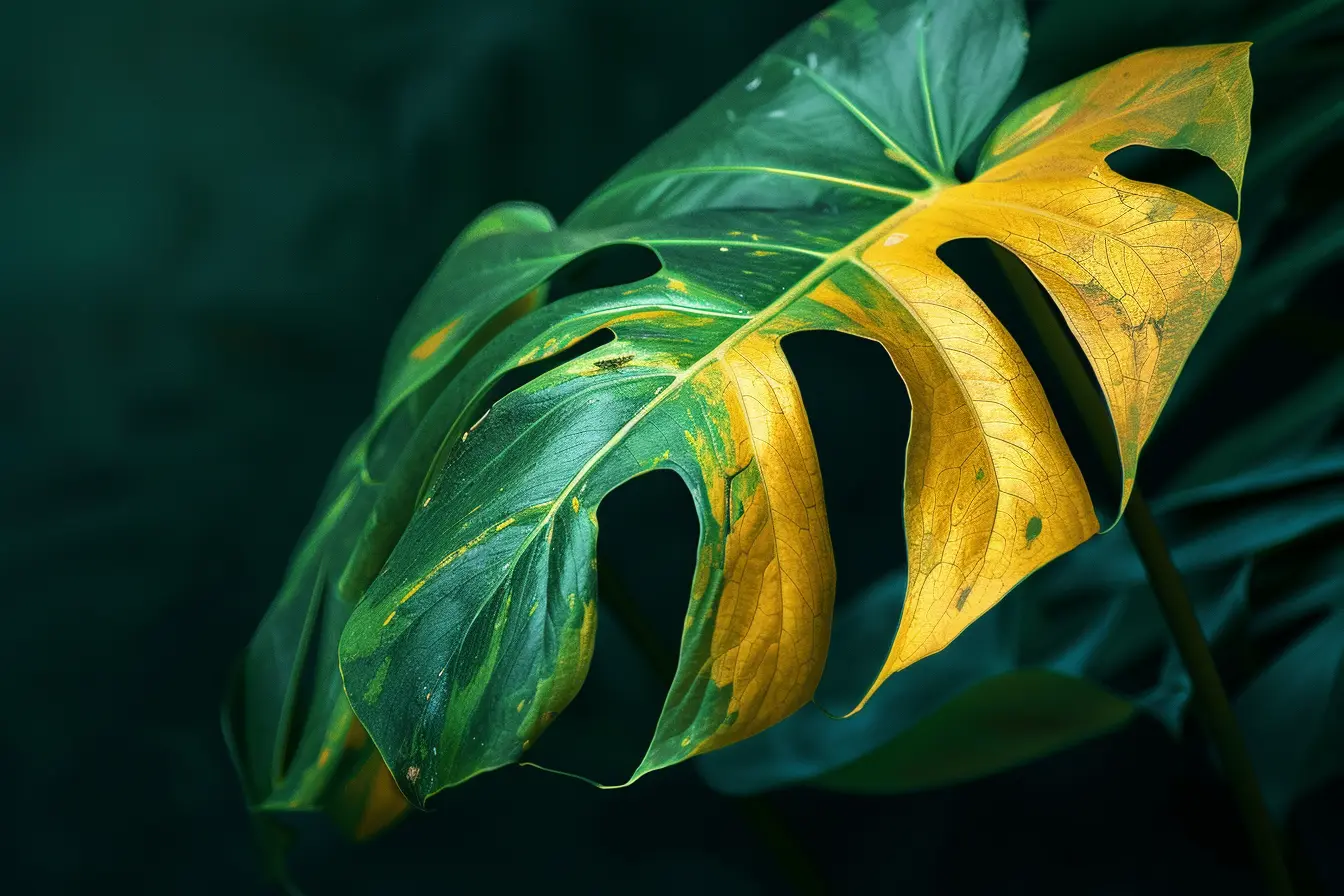
Plant leaves turning yellow are a symptom, not a disease, and where and how the yellow appears usually points to the cause. The Royal Horticultural Society says one or two yellowing lower leaves on a mature houseplant are normal, while widespread yellowing usually comes from growing conditions: too much or too little water, a pot that is too big, too little light, cold or draughts, or a nutrient shortage.
Why Are My Plant Leaves Turning Yellow? Quick Diagnosis
| What you see | Most likely cause | First step |
|---|---|---|
| Yellow, soft or limp leaves; soil stays wet | Overwatering, poor drainage or a pot that is too big | Let the soil dry; check roots for rot |
| Yellow, dry or crispy leaves; soil bone dry | Underwatering | Water thoroughly and check more often |
| Older, lower leaves yellow evenly; soil moisture fine | Nitrogen shortage, or normal aging if it’s only one or two | Feed during the growing season |
| New leaves yellow between green veins | Iron shortage, often linked to alkaline (hard) water or soil | Check water and potting mix pH |
| Pale, stretched growth with yellowing lower leaves | Too little light | Move to a brighter spot |
| Fine pale speckles, webbing or sticky leaves | Sap-sucking pests | Check leaf undersides with a magnifier |
Based on RHS houseplant leaf damage advice and Cornell University nutrient deficiency guidance.
Cause 1: Watering Problems
The RHS lists too much or too little water as the first thing to check, and recommends looking at the roots: “Dark, soft, brittle roots indicate poor root health.” Adjust watering based on what you find.
Too much water
Leaves turn yellow and soft, the soil stays wet for days, and the pot feels heavy. Roots in waterlogged mix run short of oxygen and can rot. The RHS also flags overpotting, meaning a pot much larger than the root ball, because the extra mix stays wet. Let the soil dry, empty saucers, and repot into a smaller pot if needed. If the roots are mushy, see our root rot treatment guide.
Too little water
Leaves turn yellow and dry or crispy, often starting at the bottom, and the soil pulls away from the pot. The RHS notes that lower leaves browning and dropping more often points to underwatering and excess heat. Water thoroughly until it drains, then check the soil more often.
Not sure which one you’re dealing with? Our overwatered vs underwatered guide walks through the differences side by side. A fast-draining mix helps prevent both; see vermiculite vs perlite for choosing a drainage amendment.
Cause 2: Nutrient Shortages
When the soil moisture is fine, the position of the yellow leaves is the best clue. Cornell University’s SoilNOW program explains that plants can move “mobile” nutrients from old leaves to new growth, so shortages of those nutrients show up first on older, lower leaves, while shortages of “immobile” nutrients show up on younger leaves.
Nitrogen: old leaves
Nitrogen is mobile, so a shortage shows as yellowing of older leaves first (Cornell). The RHS also names nitrogen as a common cause of yellowing. Feed with a balanced fertilizer during the growing season.
Iron: new leaves
Iron is immobile, and a shortage shows as yellowing between the veins of young leaves while the veins stay green (Cornell). The RHS notes that in lime-hating plants such as gardenia, excess calcium can make iron and manganese unavailable.
Magnesium: between veins
Cornell associates magnesium shortage with yellowing between the veins too. It is usually described as starting on older leaves, which helps tell it apart from iron.
Nutrients can be in the pot but unavailable: Cornell notes they must be in a form the plant can take up, which depends on moisture, temperature and pH. That’s why hard water and old potting mix often cause yellowing even when you fertilize. See our guides to pH lockout in houseplants and white crust on houseplant soil.
Don’t fix yellow leaves with extra fertilizer alone
If the real problem is wet soil or rotten roots, the plant can’t take up the fertilizer, and the extra salts can make things worse. Fix watering and drainage first.
Cause 3: Light, Cold and Drafts
The RHS lists a position that is too shady, cold, a sudden temperature drop and draughts as common causes of yellowing. It recommends moving plants to a brighter spot, such as a south-facing windowsill in winter, while avoiding scorching midday sun, and keeping them away from draughts and cold. If a bright window isn’t available, see our guide to grow lights for indoor plants.
For water-quality yellowing at the leaf tips and edges, common in plants such as calatheas and dracaenas, see our guide to water for calatheas and our dracaena brown tips guide.
Cause 4: Pests
Sap-sucking pests leave pale speckles or yellow patches rather than even yellowing. Check leaf undersides and stems:
- Spider mites: fine pale speckling and webbing on the undersides of leaves.
- Thrips: silvery streaks and tiny black specks. See how to get rid of thrips.
- Mealybugs and scale: white cottony clusters or brown bumps, often with sticky honeydew. See rubbing alcohol for mealybugs.
- Fungus gnats: UC IPM notes the larvae can chew roots and stunt young plants when numbers are high. See our fungus gnat control guide.
For a gentle spray option, see how to use neem oil on plants.
When Yellow Leaves Are Normal
Natural aging
The RHS says an occasional yellow lower leaf that falls is normal on a mature houseplant. If the rest of the plant looks healthy and new growth is coming in green, simply remove the old leaf. Worry when yellowing is widespread, fast, or affecting new growth.
For more on diagnosing leaf problems, see our guides to curling leaves.
Frequently Asked Questions
Why are my plant leaves turning yellow?
The most common causes are overwatering or underwatering, a pot that is too big, too little light, cold or drafts, and nutrient shortages, according to the RHS. Check the soil moisture first, then look at which leaves are affected.
Should I cut off yellow leaves?
Yes, once a leaf is mostly yellow it won’t recover, so removing it tidies the plant and lets you see whether new growth is healthy. Cut it off at the base with clean scissors. Fix the underlying cause first, or new leaves will follow.
Can yellow leaves turn green again?
Usually not. A leaf that has fully yellowed rarely turns green again. Focus on fixing the cause so that new leaves come in healthy.
Why are the bottom leaves of my plant turning yellow?
Lower leaves yellow first with overwatering, underwatering and nitrogen shortage, because the plant moves mobile nutrients like nitrogen from old leaves to new growth (Cornell). One or two old lower leaves yellowing on a healthy plant is normal aging.
Why are the new leaves on my plant turning yellow?
Yellowing between green veins on new leaves usually points to an iron shortage, which Cornell explains shows up on young leaves first. It’s often linked to hard, alkaline water or old potting mix that locks iron away.
Can overwatering cause yellow leaves?
Yes. It’s one of the most common causes. Waterlogged soil starves roots of oxygen and can lead to root rot, so the plant can’t take up water and nutrients. The RHS recommends checking the roots; dark, soft roots indicate poor root health.