
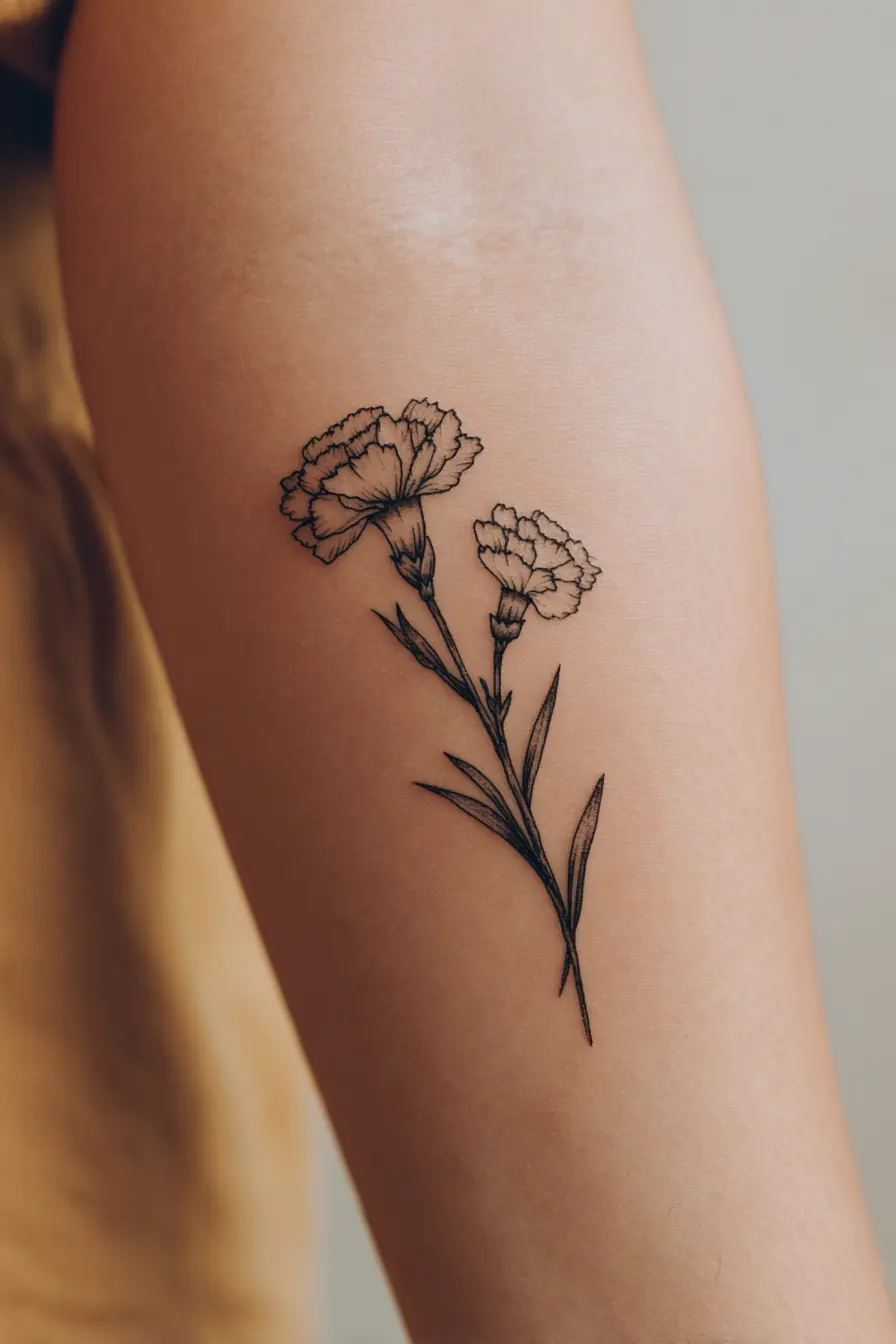
🌸 Quick Answer: What Are the January Birth Flowers?
Carnation (Dianthus caryophyllus) — Symbolizes love, fascination, and distinction. Color matters: red means deep love, pink honors mothers, and striped carnations carry a secret warning.
Snowdrop (Galanthus nivalis) — Symbolizes hope, rebirth, and consolation. The first flower brave enough to bloom through frost.
Together, they represent January’s central theme: resilience in the coldest season.
| Flower | Key Meaning | Best For… |
|---|---|---|
| 🥀 Carnation | Love, Fascination, Distinction | Romantic partners, Mothers |
| ❄️ Snowdrop | Hope, Rebirth, Innocence | New beginnings, Friends |
Table of Contents
Introduction: January Isn’t Dead—It’s the Month of Resilience
There’s a quiet lie we tell ourselves about January. That it’s a month of endings. Of gray skies. Of nothing growing.
But look closer.
Beneath the frost, before the world has even decided to wake up, two flowers are already doing the work of spring. Incarnation—ruffled, romantic, criminally underestimated—has been crowning gods and revolutionaries for over two thousand years. And the snowdrop, that impossibly delicate white bell, pushes through actual snow to remind us that hope doesn’t wait for perfect conditions.
If you were born in January, these are your flowers. And in the Victorian art of floriography (flower language), they have something to say about who you are.
The Carnation (Dianthus): Not Just a Filler Flower
Let’s address the elephant in the room: somewhere along the way, the carnation became the flower you grab at the gas station when you’ve forgotten an anniversary. Grocery store bouquets. Prom corsages your mom insisted on. Filler.
This is a tragedy.
The carnation’s botanical name—Dianthus—translates to “flower of the gods.” The Greeks wove them into ceremonial crowns (the word “carnation” likely derives from coronation). Renaissance painters tucked them into portraits of the Virgin Mary. Spanish claveles became symbols of political resistance. Korean students gift them to teachers on Parents’ Day.
This flower has gravitas. It’s just been waiting for you to notice.
Color Meanings: The Secret Language of Carnations
In the Victorian era, when saying “I love you” out loud was practically scandalous, flowers did the talking. Carnations were fluent.
Here’s what each color actually means—and the one you should probably avoid:
Red Carnations—Deep love and admiration. The “my heart is yours” flower. Bold, unambiguous, romantic. Safe for anniversaries, declarations, and grand gestures.
White Carnations—Pure love and good luck. Traditionally worn on Mother’s Day in memory of mothers who have passed. Also popular at weddings for their association with innocence and new beginnings.
Pink Carnations—A mother’s undying love. Anna Jarvis, founder of Mother’s Day, specifically chose pink carnations as the holiday’s official flower because they were her own mother’s favorite. If you’re gifting to Mom, this is the one.
⚠️ Striped Carnations—Refusal. Rejection. “I cannot be with you.”
This is the hidden meaning most people miss—and the one that makes carnations genuinely interesting. In the language of flowers, a striped carnation was a polite but unmistakable no. A way to decline a suitor without saying a word. If someone in 1850 sent you striped carnations, you’d know exactly what they meant.
Today, this makes striped carnations unexpectedly powerful for tattoos or art about setting boundaries, walking away, or choosing yourself.
(And maybe skip them for Valentine’s Day. Just in case.)
The Snowdrop (Galanthus): The Flower of Hope
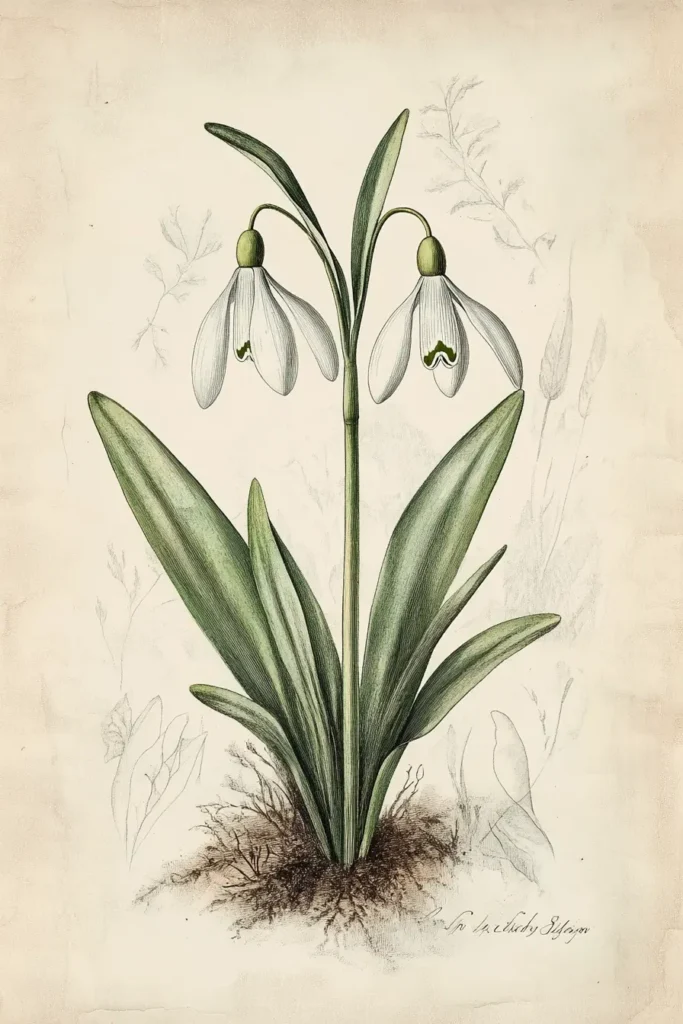
If the carnation is a love letter, the snowdrop is a promise.
Picture this: it’s late January. The ground is frozen. Nothing should be alive out there. And then—a single white bloom, no bigger than a thumbnail, pushes through the snow. Not after the cold ends. During it.
This is why the snowdrop means hope.
Not optimism. Not wishful thinking. Hope—the kind that acts before conditions are perfect. The kind that says, “I’ll go first.”
While snowdrops bloom in the cold, many indoor plants struggle in January. Check out our Guide to January Plant Care to keep your indoor jungle alive this winter.
In Victorian flower language, snowdrops also carried notes of sympathy and consolation, often left at graves or given during mourning. There’s something tender about that: a flower that blooms in the harshest month, offered to people walking through their own winters.
For Candlemas (February 2nd), churches across Britain would scatter snowdrops on their altars—symbols of purification, of light returning after the darkest days.
If your birthday falls in January, the snowdrop is your reminder: you don’t have to wait for things to get easier. You can bloom anyway.
The Snowdrop (Galanthus) is one of the few flowers that can create its own heat to melt through snow. You can learn more about this fascinating biological thermogenesis at the Royal Horticultural Society .January Birth Flower Tattoo Ideas (Minimalist & Fine Line)
Birth flower tattoos have surged in popularity—and for good reason. They’re personal without requiring explanation. Elegant. Timeless. And for January-born folks, both carnations and snowdrops translate beautifully into ink.
🎨 January Birth Flower Tattoo Ideas
Planning a January birth flower tattoo?
- The Minimalist: A single line-drawing of a drooping Snowdrop on the wrist.
- The Duo: A bouquet combining the Carnation (Love) and Snowdrop (Hope) to represent resilience.
- The Script: The flower stem turning into the birth date.
💡 Design Tip: Because the Snowdrop is a “drooping” flower and the Carnation is “upright,” they create a perfect natural curve for forearm or ribcage tattoos. Use the Snowdrop to represent “Hope” and the Carnation for “Admiration.”
Here are three concepts for each, designed for minimalist and fine-line aesthetics:
Carnation Tattoo Ideas
1. The Single Stem Profile A side-view carnation rendered in one continuous line. The ruffled petals create natural negative space—delicate but dimensional. Works beautifully on the inner forearm or along the collarbone. Best in black ink; let the linework do the talking.
2. Geometric Frame A single carnation bloom centered inside a thin diamond or hexagonal border. Add fine dotwork shading to the petals for depth. This concept suits the upper arm, shoulder blade, or ankle. The geometry adds a modern edge to a traditional flower.
3. Deconstructed Petals Three carnation petals, floating and slightly scattered—like they’ve just fallen. No stem, no leaves. Feminine, understated, almost abstract. Ideal for wrist, behind-the-ear, or ribcage placement. Perfect for those who want something subtle but meaningful.
Snowdrop Tattoo Ideas
1. The Drooping Trio Three snowdrops at varying heights, their bell-shaped heads bowed. Rendered in a single unbroken line from stems to petals. Captures the flower’s gentle, nodding posture. Beautiful on the inner wrist, ankle, or along the spine.
2. Emerging Through Snow A single snowdrop pushing through a thin, curved crescent—representing the snowline or frozen ground. This design tells a story: resilience, breakthrough, and hope despite conditions. Works powerfully on the forearm or upper back.
3. Botanical Diagram Victorian scientific illustration style: the whole plant from bulb to bloom, with fine hairline labels (optional). Educational yet artistic. Appeals to the nature-lover and the history nerd alike. Best for larger placements—inner bicep, thigh, or calf.
Pro tip: Bring reference photos to your artist. Fine-line botanicals require precision—choose someone whose portfolio shows clean, delicate work.
Are January Flowers Pet Safe? (The Urban Lab Warning)
Here’s the part we can’t skip.
If you’re a plant parent and a pet parent, you need to know: both January birth flowers carry toxicity risks.
🐾 Pet Safety Alert
- Carnations: Mildly toxic. Ingestion can cause vomiting and diarrhea. Risk level: Low to moderate.
- Snowdrops: More concerning. Bulbs contain toxins that cause cardiac issues. Risk level: Moderate to high.
The Urban Lab Recommendation: Keep fresh bouquets on high shelves. If ingestion occurs, contact your vet immediately.
The good news? You can still celebrate your January birth flowers without the worry:
- Dried or preserved arrangements (no tempting fresh leaves)
- High-quality faux stems (today’s silk flowers look remarkably real)
- Birth flower tattoos or art prints (zero toxicity, maximum aesthetic)
Your cat will thank you. So will your peace of mind.
Frequently Asked Questions
Why are there two birth flowers for January?
Most months have two birth flowers, a tradition that evolved for both practical and symbolic reasons. Historically, certain flowers weren’t available year-round in all regions, so alternatives developed. Today, the dual system lets you choose the flower that resonates more—or embrace both. The carnation offers bold botanical symbolism of love and fascination; the snowdrop brings quiet hope. January babies get the best of both.
Do carnations last long in a vase?
Yes! Carnations are among the longest-lasting cut flowers, often staying fresh for two to three weeks with proper care. Change the water every two days, trim the stems at an angle, and keep them away from direct heat or fruit (which releases ethylene gas and speeds wilting). Their longevity is part of why they’ve remained so popular for events—they’re beautiful and practical.
What does it mean if someone gives me a yellow carnation?
Tread carefully. In traditional flower language, yellow carnations symbolize disappointment, rejection, or disdain—not exactly the cheerful vibe yellow usually suggests. If you receive them, consider the context: the sender may not know the symbolism. But if you’re giving flowers and want to play it safe, stick with red, pink, or white carnations.
Can I grow snowdrops indoors?
Snowdrops are tricky as houseplants because they require a cold dormancy period to bloom. However, you can “force” bulbs indoors by chilling them in a refrigerator for 10-12 weeks before planting in pots. They’ll bloom once, then typically need to return outdoors. For a low-maintenance option, enjoy them as outdoor perennials—they naturalize beautifully and return stronger each year.
Are carnations appropriate for funerals?
Absolutely. White and light pink carnations are traditional choices for sympathy arrangements and memorial services. Their association with pure love and remembrance makes them both appropriate and meaningful. Red carnations can also honor someone who lived with passion and vitality.
January babies, your birth flowers aren’t quiet—they’re resilient. They bloom when nothing else will. Wear that energy well.