
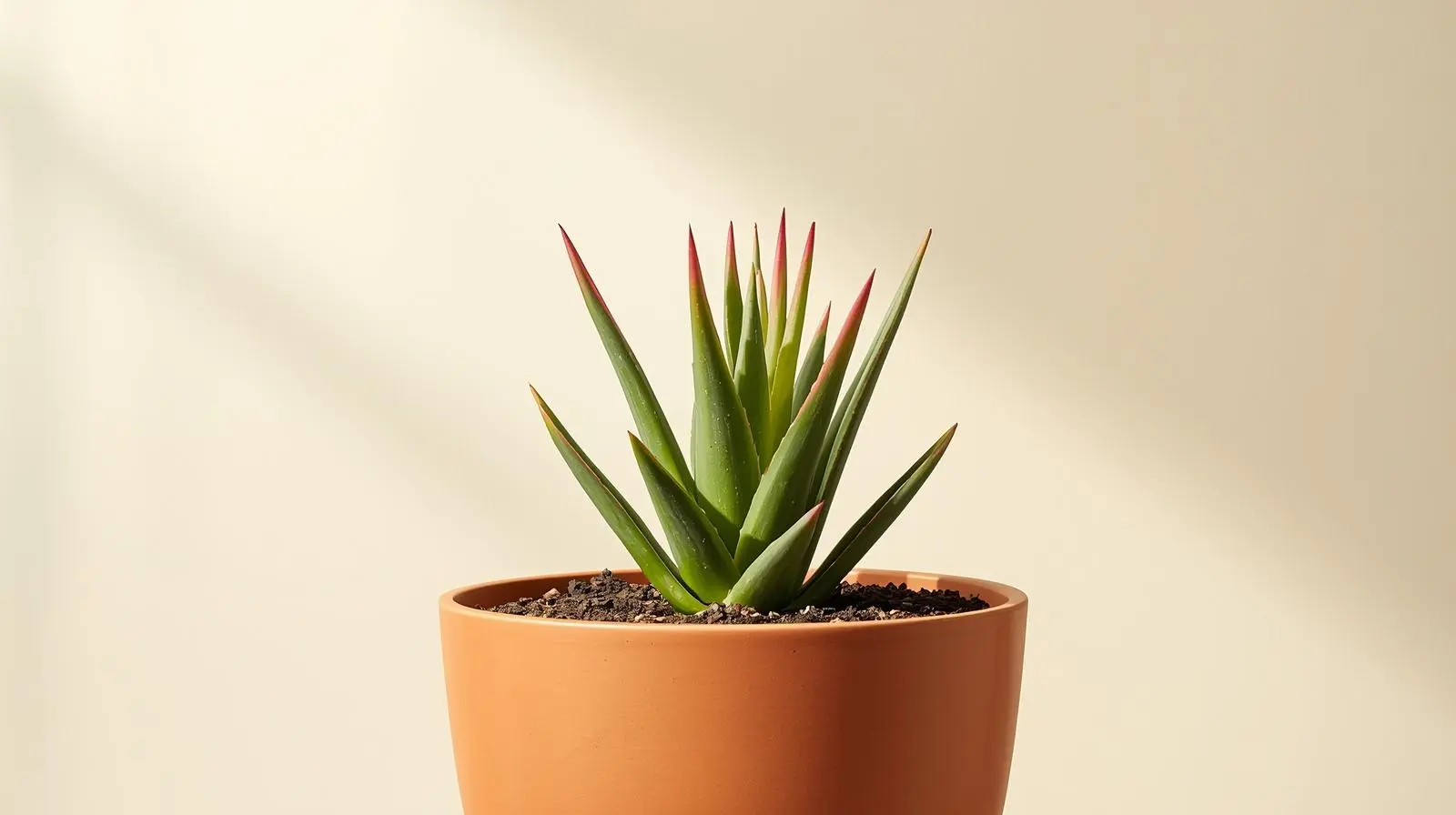
🔬 The Urban Lab Answer
Red/pink leaves with firm texture? Your Aloe microstigma is producing anthocyanins—a natural sunscreen. This is healthy sun stress and actually means your plant is thriving.
Brown/mushy leaves that smell off? You’re dealing with root rot from overwatering. Time for emergency drainage intervention.
⚠️ Pet Safety Alert: Aloe microstigma contains saponins and is toxic to cats and dogs. Keep on high shelves or in pet-free zones.
🌡️ How to get Red Leaves on Aloe Microstigma: This is called “Stress Coloring.” To achieve those deep red hues, the plant needs a combination of high light (full sun) and restricted watering. It is a natural defense mechanism that makes the plant look stunning without harming its health.
Table of Contents
Look, your Cape Speckled Aloe isn’t dying—it’s talking to you. The color shift you’re seeing is actually a diagnostic gift. Most urban plant parents panic when they see color changes, but this succulent uses pigmentation like a mood ring to communicate its environmental needs.
Here’s what makes this particularly tricky in apartments: your Aloe microstigma evolved in South African karoo scrublands where it gets hammered by sun and then left alone for weeks. Your climate-controlled apartment? That’s basically an alien planet to this plant.
The “Good Red”: What Is Sun Stress?
Sun stress is your plant’s protective response to intense light—and it’s actually a sign of excellent health. When Aloe microstigma receives strong UV exposure (usually from south or west-facing windows), it produces anthocyanins, the same pigment that makes strawberries red and autumn leaves orange.
Think of it as your plant putting on sunglasses. The anthocyanin molecules absorb excess light energy that would otherwise damage the plant’s cellular machinery. If your leaves are turning red, pink, or coral BUT remain firm and plump when you gently squeeze them, congratulations—you’ve nailed the light requirements.
Urban windows create what I call “spotlight syndrome.” Unlike diffused outdoor light, window glass concentrates UV rays into a narrow band. A south-facing apartment window in summer can deliver the same UV intensity as midday desert sun, especially between 10 AM and 2 PM. Your Aloe microstigma responds by ramping up anthocyanin production within 7-10 days of exposure.
The verdict? Don’t move it. Red coloration with firm leaves means your plant is photosynthesizing at peak efficiency. Some collectors actually prize this stressed coloration—it’s like getting a free color upgrade.
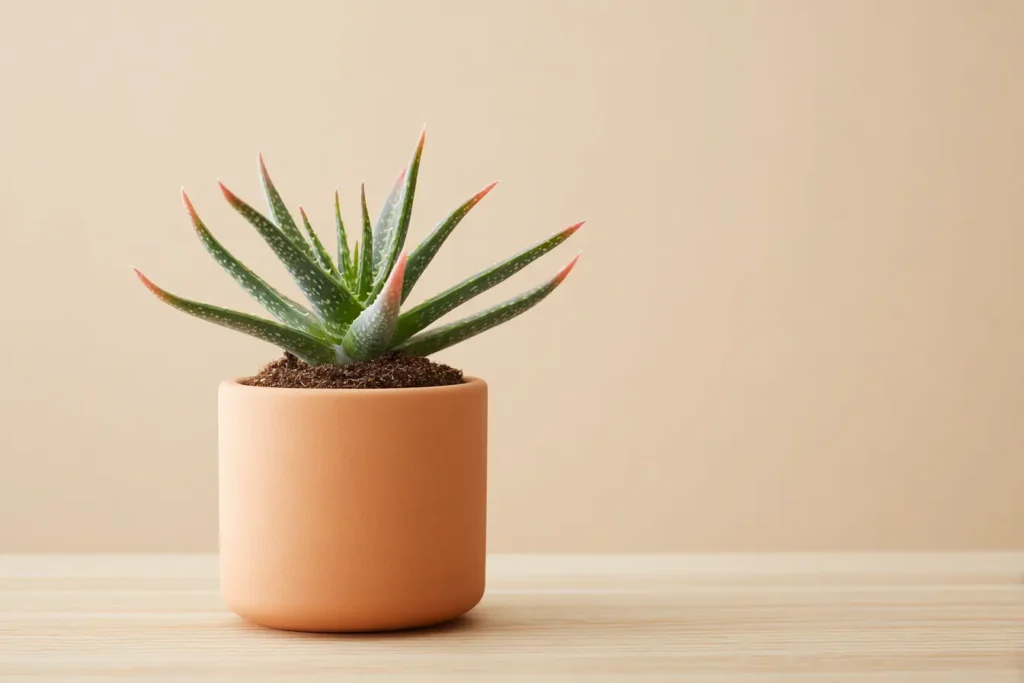
The “Bad Red”: Signs of Root Rot
Here’s where things get serious. Root rot masquerades as discoloration but reveals itself through texture. While sun stress creates vibrant reds and pinks, rot produces muddy browns, translucent yellows, and that sickly ochre color that screams “bacterial invasion.”
Overwatering often leads to pests; if you see tiny flies, use a Diatomaceous Earth treatment to clear them.
The Squish Test is your diagnostic gold standard. Gently press a discolored leaf between your thumb and forefinger. Healthy sun-stressed leaves feel like a firm grape—they have resistance and spring back. Rotting leaves feel like a water balloon about to burst. They’re mushy, yield completely under pressure, and sometimes leak fluid when punctured.
Now do the smell test. Stick your nose near the soil surface (I know, unglamorous work). Healthy succulent soil smells like minerals and dried earth—neutral, slightly dusty. Rotting roots smell damp, vaguely like old vegetables or swamp water. That odor is hydrogen sulfide gas produced by anaerobic bacteria feasting on dead root tissue.
The root cause? Low-light apartments + generous watering = disaster. When photosynthesis slows down in dim conditions, your plant stops drinking water aggressively. That moisture sits in the pot, saturates the root zone, and suffocates the roots. Once oxygen-deprived, the roots die and become bacteria buffets. The infection travels upward into the leaves, creating that characteristic brown mush.
Emergency protocol if you confirm rot: Remove the plant from its pot immediately. Cut away all mushy tissue with sterilized scissors (wipe blades with rubbing alcohol between cuts). Let the plant dry bareroot for 3-5 days in bright indirect light. Repot in fresh, completely dry succulent mix. Don’t water for 10 days.
Watering Rules for the Urban Jungle
The “Soak and Dry” method isn’t just a catchphrase—it’s how you mimic the karoo’s boom-and-bust rainfall pattern in a 6-inch ceramic pot. Here’s the protocol: When soil is completely dry 2 inches down (use the chopstick test—insert a wooden chopstick to the bottom, leave for 30 seconds, pull out and check for moisture), water thoroughly until liquid drains from the bottom holes. Then ignore the plant until it’s bone dry again.
In practice, this means radically different schedules depending on your apartment’s microclimate. Summer watering (May-September): With AC running and windows open, most urban apartments maintain 40-60% humidity. Your Aloe microstigma in bright light might need water every 10-14 days. The key indicator? Leaves start to feel slightly soft when gently squeezed, like they’ve lost 10% of their turgidity.
Winter watering (November-March): This is where urban plant parents murder their succulents. Forced-air heating drops humidity to 20-30%, but your plant enters semi-dormancy with reduced light. It’s drinking maybe 30% of its summer water intake. Water every 3-4 weeks maximum. I’ve kept Aloe microstigma specimens healthy on 5-week intervals during dark Boston winters.
The Urban Stress Variable: Air conditioning drafts and radiator heat create artificial “desert” conditions. If your plant sits within 3 feet of an AC vent, it’s getting desiccated constantly—you might water every 7-10 days even in winter. Conversely, a bathroom with shower steam might need 4-week intervals in summer. Observe YOUR specific microclimate ruthlessly.
Pot selection matters more than you think. Terracotta breathes and wicks moisture from soil—it’s your safety buffer against overwatering. Glazed ceramic or plastic holds moisture 2-3x longer. If you’re using plastic in a north-facing window, you’re playing on nightmare difficulty.
Is Aloe Microstigma Toxic to Pets?
Yes—unequivocally toxic to both cats and dogs. Let’s be crystal clear because “toxic” covers a spectrum, and you need to understand the severity.
Aloe microstigma contains saponins, the same glycoside compounds found in all Aloe species. When your cat chews on a leaf (and let’s be honest, cats LOVE batting at those speckled rosettes), saponins irritate the gastrointestinal tract. Symptoms appear within 2-6 hours: vomiting, diarrhea (sometimes with blood), lethargy, loss of appetite, and tremors in severe cases.
Dogs experience similar reactions but tend to chew more leaf material due to their size, potentially leading to more severe symptoms. I’ve seen emergency vet reports where large dogs consumed multiple leaves and developed significant dehydration from persistent vomiting.
The latex compound (aloin) is the secondary villain. That yellow sap you see when you break a leaf? It’s a powerful laxative. Even small amounts cause gastrointestinal distress. While Aloe microstigma has lower aloin concentrations than Aloe vera, it’s still enough to make a 10-pound cat very sick.
Placement strategies for pet owners:
- High shelves work only if you enforce the rule. Cats are parkour athletes. A shelf needs to be truly inaccessible—like mounted to the ceiling or behind closed doors.
- Hanging planters at minimum 6 feet high in rooms cats don’t frequent. Remember: cats can jump 5-6x their body length.
- Closed terrariums or glass cabinets turn your Aloe collection into a display case. IKEA Detolf cabinets are perfect for this.
- Pet deterrent sprays (bitter apple) around the pot base can help, but determined cats will still investigate.
If ingestion happens: Call your vet immediately or contact Pet Poison Helpline (855-764-7661). Have the plant species name ready. Don’t induce vomiting unless instructed—sometimes that causes more harm.
For a complete botanical profile and the natural history of this species in the wild, you can explore the Aloe microstigma research page at SANBI (South African National Biodiversity Institute) .
FAQ
“Can I cut off the red leaves?”
Don’t. Seriously, leave them alone. Red sun-stressed leaves are photosynthesizing beautifully—they’re actually working harder than green leaves because they’re managing both photosynthesis AND UV protection. Cutting them reduces your plant’s energy production capacity and creates open wounds susceptible to infection.
The only exception: if leaves are brown and mushy (confirmed rot), remove them immediately with sterilized scissors. Cut at the base where the leaf meets the rosette. Dust the wound with cinnamon powder—it’s a natural anti-fungal.
If you aesthetically prefer all-green leaves, gradually move the plant to lower light. The red will fade over 4-6 weeks as chlorophyll replaces anthocyanins. But you’re essentially de-optimizing your plant’s health for cosmetic reasons.
“How fast does it grow indoors?”
Aloe microstigma is a slow-burn investment, not an instant gratification plant. In optimal conditions (bright indirect light, proper watering, temps 65-80°F), expect 3-5 new leaves per year. That’s it. This isn’t a pothos.
The rosette expands about 1-2 inches in diameter annually. You’ll see noticeable size changes over 2-3 years, not 2-3 months. Urban apartments typically slow this to 2-3 leaves per year due to lower light and humidity.
Pups (offsets) appear even more slowly. A mature plant (4+ years old) might produce 1-2 pups annually if it’s thriving. In marginal conditions, you might wait 5 years for the first offset.
Growth accelerators:
- Diluted fertilizer (1/4 strength) once in spring, once in summer. Use cactus/succulent formula. More is not better—overfertilizing causes salt buildup and root burn.
- Maximize light without causing crispy brown tips. The sweet spot is bright indirect light for 6-8 hours daily.
- Temperature swings help. Cool nights (60-65°F) and warm days (75-80°F) mimic natural conditions and stimulate growth.
“My leaves have brown tips—what gives?”
Two common causes: fluoride/chlorine toxicity or extreme underwatering. Tap water in many cities contains fluoride levels (0.7-1.2 ppm) that accumulate in leaf tips over months. Brown, crispy tips that progress inward are the telltale sign.
Solution: Switch to distilled water or let tap water sit uncovered for 24 hours to allow chlorine to evaporate. Rainwater is ideal if you can collect it safely.
Underwatering presents differently—the entire leaf withers from the base, becoming thin and papery. The tips brown as the final stage of desiccation.
“Can I propagate from a red leaf?”
Technically yes, but it’s unnecessarily difficult. Aloe microstigma propagates most reliably from pups (the small offsets that grow at the base). Wait until pups are 1/3 the size of the mother plant, then carefully separate them with roots attached.
Leaf propagation is possible but temperamental. Cut a healthy leaf at the base, let it callus for 5-7 days, plant in dry succulent mix, and wait 6-8 weeks for roots while providing zero water. Success rate is maybe 30-40% even for experienced growers. Pup division has an 80-90% success rate.
The Urban Lab Verdict
Your Aloe microstigma’s color changes aren’t a crisis—they’re a communication system. Firm red leaves mean you’ve created ideal conditions. Mushy brown tissue means you need to troubleshoot your watering habits and soil drainage immediately.
Urban environments throw curveballs at desert plants: inconsistent light, forced-air heating, humidity swings, and the temptation to water too frequently. The growers who succeed are the ones who observe more than they intervene. Check soil dryness with your finger, monitor leaf texture weekly, and resist the urge to fuss.
Keep this plant away from your pets—those speckled rosettes are irresistible to curious cats but genuinely harmful when ingested. A high shelf or closed cabinet isn’t overprotective; it’s responsible plant parenting.
If you’ve confirmed root rot, act fast but don’t panic. Aloes are surprisingly resilient when you catch problems early. If you’re seeing healthy sun stress, celebrate it—you’re in the top 20% of indoor succulent growers who actually provide adequate light.
The real skill in urban plant care isn’t following rules—it’s adapting general principles to your specific apartment’s microclimate. Your south-facing studio will need different tactics than a north-facing bedroom. Watch your plant’s responses, adjust accordingly, and remember: slow growth isn’t failure. It’s just how Aloe microstigma operates.
If you enjoy low-maintenance desert plants like the Aloe Microstigma, you might also like our guide on using Diatomaceous Earth to keep your succulent soil pest-free.