
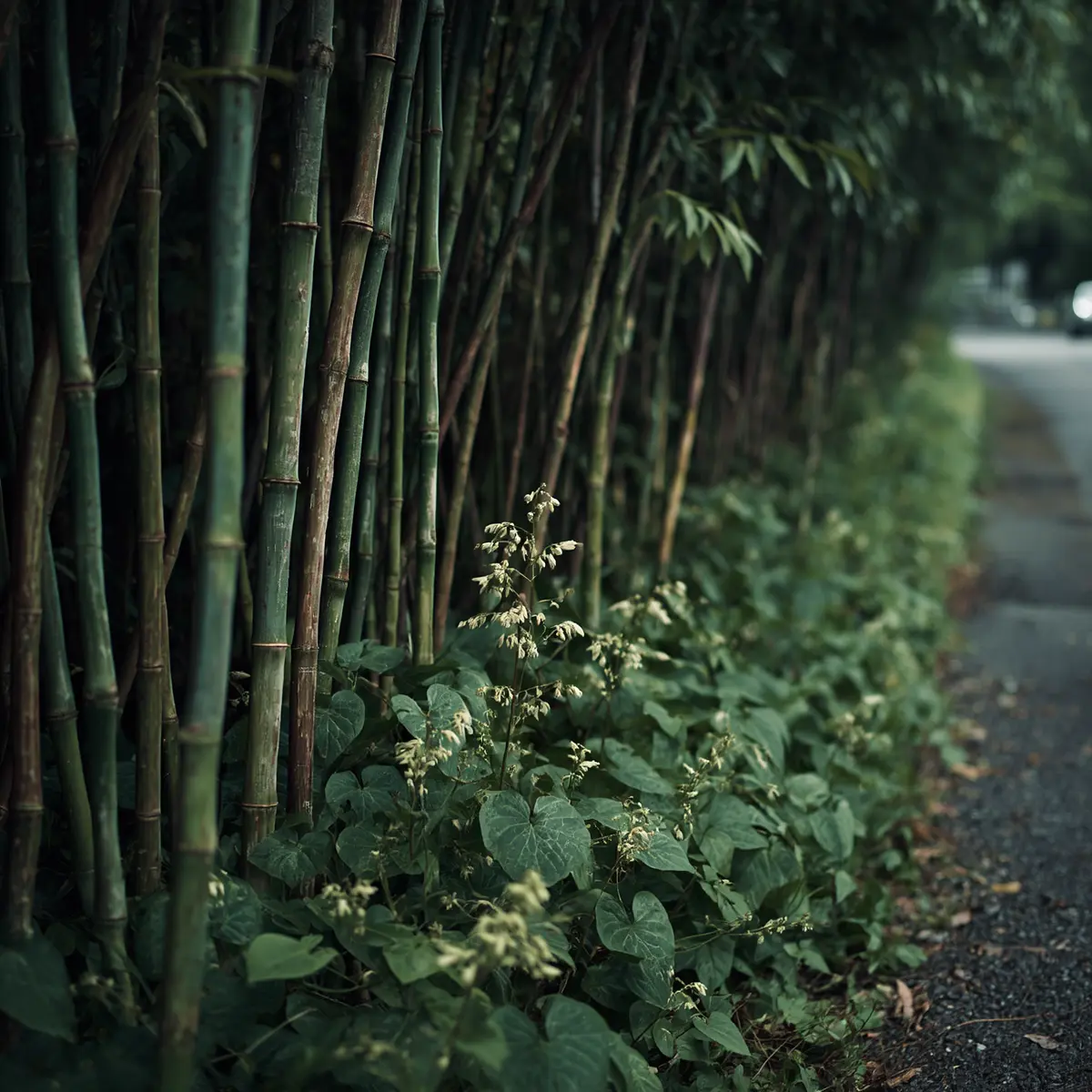
If you have found tall, bamboo-like stems with reddish-purple speckles colonizing your garden, you are right to act fast. Learning how to get rid of Japanese knotweed permanently is not a weekend gardening project; it is a structured eradication campaign against one of the most destructive invasive plants in the world. This guide gives you the identification markers, the biological reasons it is so dangerous, the legal exposure you face, and the exact treatment and disposal protocols that actually work.
Japanese knotweed (Reynoutria japonica, formerly Fallopia japonica and Polygonum cuspidatum) is a highly aggressive invasive species that spreads through an underground rhizome network and regenerates from fragments as small as 0.7 grams. Effective control requires either professional-grade land remediation or a multi-season program of strict chemical control, most reliably professional glyphosate stem injection. Because it damages property and is classified as controlled waste, untreated knotweed carries severe legal and financial implications, including failed house sales and liability for spread onto neighboring land.
What Does Japanese Knotweed Look Like? (Identification Guide)
Correct identification is the first step, because the eradication clock and your legal duties begin the moment you confirm it. The plant’s appearance shifts dramatically across the seasons, so check against the markers below before assuming the worst. For official visual references, cross-check your specimen against the Royal Horticultural Society’s Japanese knotweed profile.
Spring and Summer Identification
In spring, knotweed emerges as red or purple asparagus-like shoots that unfurl quickly. By summer it reaches full maturity with these defining features:
- Hollow stems with purple speckles: The canes are hollow, segmented, and look distinctly bamboo-like, mottled with reddish-purple flecks.
- Heart-shaped / shield-shaped leaves: Leaves are flat, roughly 7-14 cm long, with a characteristic straight-edged base, arranged in a zig-zag pattern along the stem.
- Cream-white flowers in late summer: Sprays of small, creamy-white flowers appear in late summer to early autumn, a key seasonal confirmation marker.
- Height: Mature stands routinely reach 2-3 metres in a single growing season.
Lookalikes and Common Misnomers
Several harmless plants are mistaken for knotweed, and knotweed itself travels under several incorrect folk names. Bindweed is a climbing vine with white trumpet flowers and lacks the rigid bamboo-like cane. True bamboo has woody, non-hollow-segmented growth and narrow grass-like leaves rather than shield-shaped foliage. You may also see this exact plant called “Japanese ragweed” or “Japanese rot weed” online; both are misnomers for Reynoutria japonica and are not separate species. Ragweed (Ambrosia) is an unrelated pollen allergen, so do not let the naming confusion delay action.
Why is Japanese Knotweed a Problem? (The Root System)
The visible canes are only the symptom. The real threat lives underground in the rhizome, a dense network of horizontal roots that stores energy and drives relentless regrowth. This is why mowing or cutting alone never works and often makes the infestation worse.
The Rhizome and Its Spread
The knotweed root system is extraordinarily resilient. Rhizomes can extend up to 3 metres deep and spread 7 metres horizontally from the parent plant. The single most important biological fact for eradication is this: a viable new plant can regenerate from a 0.7g rhizome fragment. That is smaller than a fingernail. Any soil disturbance, fly-tipping, or careless digging that moves contaminated soil can establish an entirely new colony.
How Fast It Grows
During peak season, Japanese knotweed can grow up to 10 cm per day. This explosive growth rate allows it to outcompete native vegetation, crack through asphalt, and exploit any existing structural weakness. The UK Government guidance on preventing knotweed spread treats this growth and regeneration risk as the basis for its strict legal controls.
| Parameter | Knotweed Reality | Why It Matters |
|---|---|---|
| Regeneration threshold | New plant from a 0.7g rhizome fragment. | Makes incomplete removal worse than no removal. |
| Root depth | Up to 3 metres deep. | Hand-digging rarely reaches all viable material. |
| Lateral spread | Up to 7 metres horizontally. | Can cross boundaries onto neighboring land. |
| Growth speed | Up to 10 cm per day in season. | Delays in treatment rapidly escalate the problem. |
Property Damage and Legal Implications
For most owners, the financial and legal stakes are the real emergency. Knotweed does not typically punch through sound concrete on its own, but it ruthlessly exploits existing cracks in foundations, drainage pipes, cavity walls, tarmac, and patios, widening them as it grows.
Impact on House Sales and Mortgages
The presence of knotweed can derail a property transaction entirely. Many lenders refuse a mortgage on an affected property unless a professional treatment plan with an insurance-backed guarantee is in place. Sellers in many jurisdictions are legally required to declare known knotweed on property disclosure forms, and failing to do so can lead to misrepresentation claims after the sale.
Legal Obligations of Property Owners
While growing knotweed on your own land is not automatically illegal, allowing it to spread onto neighboring property or into the wild can expose you to civil liability and, in some regions, criminal penalties. Owners have a legal duty to prevent its spread. If a neighbor’s knotweed encroaches on your land, you may have grounds for a private nuisance claim. Document everything with dated photographs.
How to Treat and Remove Japanese Knotweed
There are two viable routes to eradication: chemical control and full excavation. Both are slow, and both reward patience over force. Quick fixes do not exist for this plant.
Chemical Control
Glyphosate treatment is the most widely used and cost-effective method. For serious infestations, professional glyphosate stem injection is the gold standard: a concentrated dose is injected directly into each hollow cane, delivering herbicide straight to the rhizome with minimal collateral damage to surrounding plants. Foliar (spray) application of a ground-clearing herbicide is an alternative for large stands. Either way, expect a treatment program spanning 3 to 5 growing seasons, as the rhizome can lie dormant and re-emerge.
Manual Removal
Digging out by hand is occasionally necessary, for example when a site must be developed quickly, but it is high-risk. Because of the 0.7g fragment regeneration threshold, any rhizome left behind, or any contaminated soil moved off-site, can start a fresh colony. Full excavation typically requires removing soil to a depth of up to 3 metres and is best left to specialists with controlled-waste handling capability.
Hiring Professionals: Surveys and Cost
A professional knotweed survey identifies the infestation’s extent, maps the rhizome spread, and produces a documented management plan, often with the insurance-backed guarantee lenders demand. Costs vary widely by infestation size and method:
- Professional survey: typically a few hundred currency units.
- Herbicide treatment program: commonly mid-hundreds to low thousands over multiple seasons.
- Full excavation and removal: can run into several thousand for large or development sites.
Pro Tip: Always commission a survey before buying any treatment product. A documented, guaranteed management plan is what protects your property value and satisfies mortgage lenders, not the herbicide alone.
Proper Disposal: The Law on Knotweed Waste
Disposal is where many well-meaning owners break the law without realizing it. Japanese knotweed and any soil containing its rhizome are legally classified as controlled waste. This has strict consequences:
- It cannot go in your household green bin, standard compost, or general waste.
- Off-site disposal must go to a licensed landfill facility permitted to accept it, with proper waste transfer documentation.
- Moving contaminated soil without authorization can constitute an environmental offense.
Can You Burn Japanese Knotweed?
Burning is generally permitted on-site and can be an effective way to destroy cut canes and dried rhizome, but it is subject to local environmental health and air-quality regulations. Always allow the material to dry out completely first, never transport live material elsewhere to burn it, and check with your local authority before lighting anything. Even after burning, ash from rhizome material may still require classified disposal.
Frequently Asked Questions
Does Japanese knotweed die in winter?
The above-ground canes die back and turn brown and brittle over winter, which can make the plant look dead. However, the underground rhizome remains fully alive and dormant, ready to send up vigorous new growth in spring. Winter dieback does not mean eradication.
Is Japanese knotweed edible?
Yes, the young spring shoots are edible and have a tart flavor similar to sour rhubarb. Despite this, foraging is strongly discouraged because cutting and transporting the plant risks spreading viable fragments, and harvesting from treated stands means ingesting herbicide residue.
How do I report Japanese knotweed?
If you spot knotweed on public land, report it to your local council or local authority’s environmental department, providing the location and dated photographs. Many regions also have invasive-species recording schemes where sightings can be logged to help track spread. On private land, the responsibility lies with the landowner.
How long does it take to get rid of Japanese knotweed permanently?
Chemical control programs typically require 3 to 5 growing seasons to exhaust the rhizome, while full excavation can clear a site in weeks but at far higher cost. Permanent eradication is only confirmed after a sustained period with no regrowth, which is why insurance-backed guarantees usually run for several years.
If you have found tall, bamboo-like stems with reddish-purple speckles colonizing your garden, you are right to act fast. Learning how to get rid of Japanese knotweed permanently is not a weekend gardening project; it is a structured eradication campaign against one of the most destructive invasive plants in the world. This guide gives you the identification markers, the biological reasons it is so dangerous, the legal exposure you face, and the exact treatment and disposal protocols that actually work.
Japanese knotweed (Reynoutria japonica, formerly Fallopia japonica and Polygonum cuspidatum) is a highly aggressive invasive species that spreads through an underground rhizome network and regenerates from fragments as small as 0.7 grams. Effective control requires either professional-grade land remediation or a multi-season program of strict chemical control, most reliably professional glyphosate stem injection. Because it damages property and is classified as controlled waste, untreated knotweed carries severe legal and financial implications, including failed house sales and liability for spread onto neighboring land.
What Does Japanese Knotweed Look Like? (Identification Guide)
Correct identification is the first step, because the eradication clock and your legal duties begin the moment you confirm it. The plant’s appearance shifts dramatically across the seasons, so check against the markers below before assuming the worst. For official visual references, cross-check your specimen against the Royal Horticultural Society’s Japanese knotweed profile.
Spring and Summer Identification
In spring, knotweed emerges as red or purple asparagus-like shoots that unfurl quickly. By summer it reaches full maturity with these defining features:
- Hollow stems with purple speckles: The canes are hollow, segmented, and look distinctly bamboo-like, mottled with reddish-purple flecks.
- Heart-shaped / shield-shaped leaves: Leaves are flat, roughly 7-14 cm long, with a characteristic straight-edged base, arranged in a zig-zag pattern along the stem.
- Cream-white flowers in late summer: Sprays of small, creamy-white flowers appear in late summer to early autumn, a key seasonal confirmation marker.
- Height: Mature stands routinely reach 2-3 metres in a single growing season.
Lookalikes and Common Misnomers
Several harmless plants are mistaken for knotweed, and knotweed itself travels under several incorrect folk names. Bindweed is a climbing vine with white trumpet flowers and lacks the rigid bamboo-like cane. True bamboo has woody, non-hollow-segmented growth and narrow grass-like leaves rather than shield-shaped foliage. You may also see this exact plant called “Japanese ragweed” or “Japanese rot weed” online; both are misnomers for Reynoutria japonica and are not separate species. Ragweed (Ambrosia) is an unrelated pollen allergen, so do not let the naming confusion delay action.
Why is Japanese Knotweed a Problem? (The Root System)
The visible canes are only the symptom. The real threat lives underground in the rhizome, a dense network of horizontal roots that stores energy and drives relentless regrowth. This is why mowing or cutting alone never works and often makes the infestation worse.
The Rhizome and Its Spread
The knotweed root system is extraordinarily resilient. Rhizomes can extend up to 3 metres deep and spread 7 metres horizontally from the parent plant. The single most important biological fact for eradication is this: a viable new plant can regenerate from a 0.7g rhizome fragment. That is smaller than a fingernail. Any soil disturbance, fly-tipping, or careless digging that moves contaminated soil can establish an entirely new colony.
How Fast It Grows
During peak season, Japanese knotweed can grow up to 10 cm per day. This explosive growth rate allows it to outcompete native vegetation, crack through asphalt, and exploit any existing structural weakness. The UK Government guidance on preventing knotweed spread treats this growth and regeneration risk as the basis for its strict legal controls.
| Parameter | Knotweed Reality | Why It Matters |
|---|---|---|
| Regeneration threshold | New plant from a 0.7g rhizome fragment. | Makes incomplete removal worse than no removal. |
| Root depth | Up to 3 metres deep. | Hand-digging rarely reaches all viable material. |
| Lateral spread | Up to 7 metres horizontally. | Can cross boundaries onto neighboring land. |
| Growth speed | Up to 10 cm per day in season. | Delays in treatment rapidly escalate the problem. |
Property Damage and Legal Implications
For most owners, the financial and legal stakes are the real emergency. Knotweed does not typically punch through sound concrete on its own, but it ruthlessly exploits existing cracks in foundations, drainage pipes, cavity walls, tarmac, and patios, widening them as it grows.
Impact on House Sales and Mortgages
The presence of knotweed can derail a property transaction entirely. Many lenders refuse a mortgage on an affected property unless a professional treatment plan with an insurance-backed guarantee is in place. Sellers in many jurisdictions are legally required to declare known knotweed on property disclosure forms, and failing to do so can lead to misrepresentation claims after the sale.
Legal Obligations of Property Owners
While growing knotweed on your own land is not automatically illegal, allowing it to spread onto neighboring property or into the wild can expose you to civil liability and, in some regions, criminal penalties. Owners have a legal duty to prevent its spread. If a neighbor’s knotweed encroaches on your land, you may have grounds for a private nuisance claim. Document everything with dated photographs.
How to Treat and Remove Japanese Knotweed
There are two viable routes to eradication: chemical control and full excavation. Both are slow, and both reward patience over force. Quick fixes do not exist for this plant.
Chemical Control
Glyphosate treatment is the most widely used and cost-effective method. For serious infestations, professional glyphosate stem injection is the gold standard: a concentrated dose is injected directly into each hollow cane, delivering herbicide straight to the rhizome with minimal collateral damage to surrounding plants. Foliar (spray) application of a ground-clearing herbicide is an alternative for large stands. Either way, expect a treatment program spanning 3 to 5 growing seasons, as the rhizome can lie dormant and re-emerge.
Manual Removal
Digging out by hand is occasionally necessary, for example when a site must be developed quickly, but it is high-risk. Because of the 0.7g fragment regeneration threshold, any rhizome left behind, or any contaminated soil moved off-site, can start a fresh colony. Full excavation typically requires removing soil to a depth of up to 3 metres and is best left to specialists with controlled-waste handling capability.
Hiring Professionals: Surveys and Cost
A professional knotweed survey identifies the infestation’s extent, maps the rhizome spread, and produces a documented management plan, often with the insurance-backed guarantee lenders demand. Costs vary widely by infestation size and method:
- Professional survey: typically a few hundred currency units.
- Herbicide treatment program: commonly mid-hundreds to low thousands over multiple seasons.
- Full excavation and removal: can run into several thousand for large or development sites.
Pro Tip: Always commission a survey before buying any treatment product. A documented, guaranteed management plan is what protects your property value and satisfies mortgage lenders, not the herbicide alone.
Proper Disposal: The Law on Knotweed Waste
Disposal is where many well-meaning owners break the law without realizing it. Japanese knotweed and any soil containing its rhizome are legally classified as controlled waste. This has strict consequences:
- It cannot go in your household green bin, standard compost, or general waste.
- Off-site disposal must go to a licensed landfill facility permitted to accept it, with proper waste transfer documentation.
- Moving contaminated soil without authorization can constitute an environmental offense.
Can You Burn Japanese Knotweed?
Burning is generally permitted on-site and can be an effective way to destroy cut canes and dried rhizome, but it is subject to local environmental health and air-quality regulations. Always allow the material to dry out completely first, never transport live material elsewhere to burn it, and check with your local authority before lighting anything. Even after burning, ash from rhizome material may still require classified disposal.
Frequently Asked Questions
Does Japanese knotweed die in winter?
The above-ground canes die back and turn brown and brittle over winter, which can make the plant look dead. However, the underground rhizome remains fully alive and dormant, ready to send up vigorous new growth in spring. Winter dieback does not mean eradication.
Is Japanese knotweed edible?
Yes, the young spring shoots are edible and have a tart flavor similar to sour rhubarb. Despite this, foraging is strongly discouraged because cutting and transporting the plant risks spreading viable fragments, and harvesting from treated stands means ingesting herbicide residue.
How do I report Japanese knotweed?
If you spot knotweed on public land, report it to your local council or local authority’s environmental department, providing the location and dated photographs. Many regions also have invasive-species recording schemes where sightings can be logged to help track spread. On private land, the responsibility lies with the landowner.
How long does it take to get rid of Japanese knotweed permanently?
Chemical control programs typically require 3 to 5 growing seasons to exhaust the rhizome, while full excavation can clear a site in weeks but at far higher cost. Permanent eradication is only confirmed after a sustained period with no regrowth, which is why insurance-backed guarantees usually run for several years.