
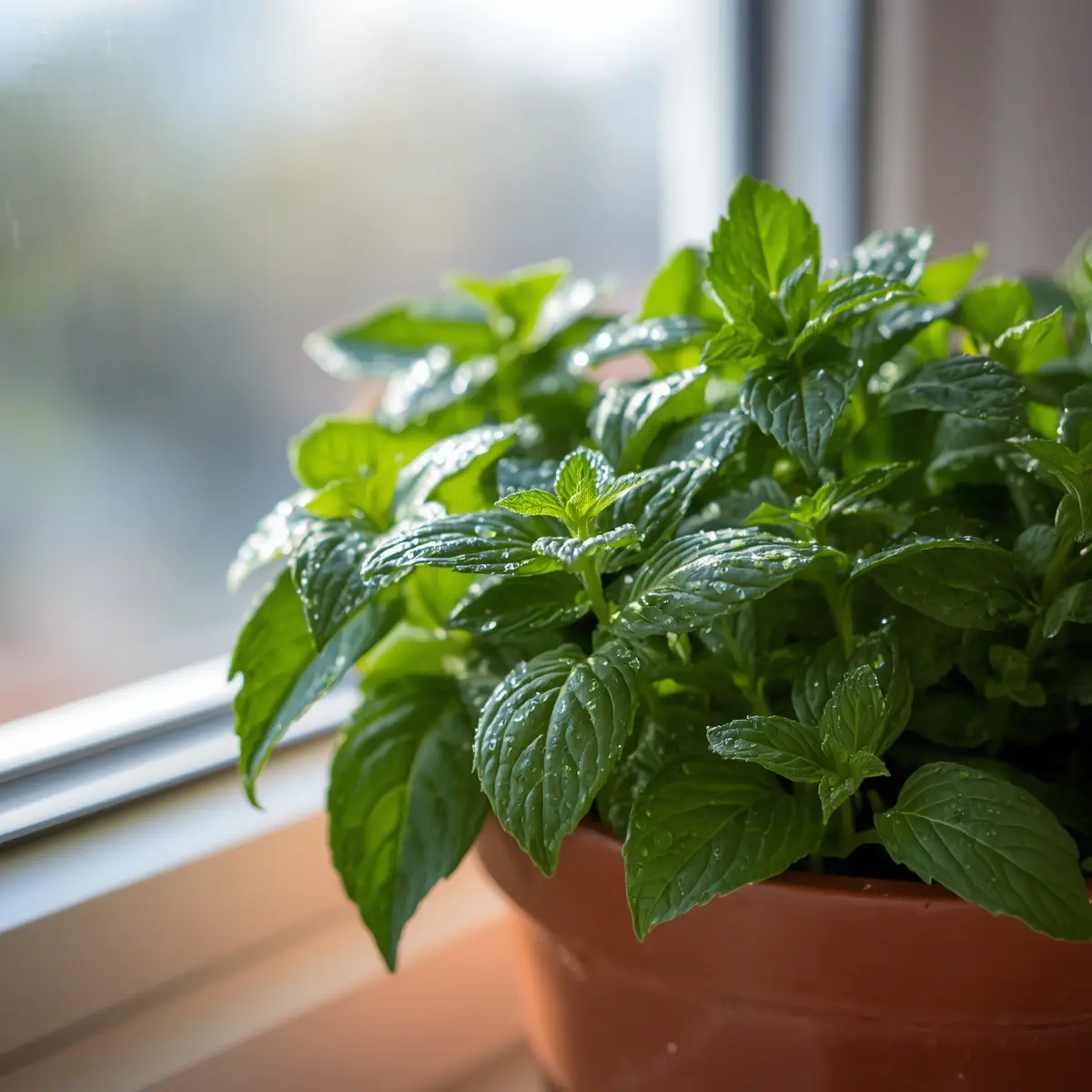
Mint (Mentha) is one of the easiest herbs to grow, and the hardest to keep in its place: it spreads by underground stems (rhizomes) and will take over a bed if you let it. Mint plant care comes down to sun or light shade, steady moisture, regular picking, and a pot to hold it in. This guide follows the RHS, University of Illinois Extension, Clemson HGIC and the ASPCA, including one thing many guides get wrong: mint is not pet-safe.
| Need | What the sources say |
|---|---|
| Light | Full sun or partial shade (RHS); prefers full sun, tolerates light shade (Illinois) |
| Soil | Tolerates a range of soils (RHS); rich, moist soil (Clemson) |
| Water | Pots dry out faster; check often in hot weather (RHS) |
| Containment | Grow in containers (RHS, Illinois, Clemson) |
| Harvest | Young shoot tips, late spring to autumn; regular picking keeps it compact (RHS) |
| Main disease | Mint rust (RHS) |
| Pets | Toxic to dogs, cats and horses (ASPCA) |
Sources: RHS; University of Illinois Extension; Clemson HGIC herbs factsheet; ASPCA.
The two most common mints are peppermint (Mentha × piperita) and spearmint (Mentha spicata); both grow 1 to 3 feet tall and spread by rhizomes (Illinois Extension).
Light
The RHS says mint grows in full sun or partial shade, and Illinois says it prefers full sun but tolerates light shade. In very hot weather, the RHS suggests moving pots to a shadier spot to reduce how often they need watering.
Soil
The RHS says most mints tolerate a range of soil types, and Clemson HGIC says mints prefer rich, moist or even damp soil. In pots, use a good multipurpose or soil-based compost in a container with drainage holes.
Watering
Mint likes steady moisture. The RHS points out that plants in containers dry out much faster than those in the ground, so check them regularly in the growing season, especially in hot, dry weather. Water when the top of the compost starts to dry, and don’t leave pots standing in water.
Mint Plant Care in Pots: Stopping the Spread
Clemson calls mints easy, vigorous growers that can become invasive if not confined and recommends growing them in a container or planter. Illinois strongly suggests growing mint in containers above ground, and notes that sunken, bottomless containers don’t always work. The RHS suggests that in beds you sink a bottomless container or a pot with large drainage holes into the soil, leaving the rim slightly above the surface, so the rhizomes can’t creep over the edge.
- Choose a wide pot: mint spreads sideways.
- Repot or divide every few years (RHS); Illinois suggests dividing every 3 to 4 years to keep plants vigorous.
- Don’t set pots directly on soil, where rhizomes can escape through drainage holes.
Mint Plant Care Indoors
The RHS says that to keep picking through winter, you can bring potted mint indoors in autumn and place it on a sunny windowsill. Indoors, give it your brightest window or a grow light (see our grow light guide), keep the compost evenly moist, and keep picking to stop it getting leggy. Outdoors, the RHS notes that mint stems die back over winter and regrow in spring.
Harvesting and Cutting Back
The RHS says to pick from late spring to autumn, choosing young, soft shoot tips for the most intense flavor, and that regular picking keeps plants compact and productive. It adds that freezing preserves the flavor better than drying. Illinois says cutting stems often encourages new growth, which has the most flavorful leaves, and that removing flower spikes as they form helps preserve leaf flavor; leaves for drying are best picked as flowers start to appear.
After flowering, the RHS suggests cutting the whole plant down to about 5 cm (2 in) above the base to encourage fresh leaves, and cutting old stems back from late autumn until spring, just before new shoots appear.
Propagation
The RHS says mint is easily propagated by division, by softwood cuttings from spring shoots, or by rooting stems in water and then potting them up; cuttings from the rhizomes can be taken at any time of year. Clemson says it is best to grow mints from cuttings, roots or transplants, and Illinois lists stem and root cuttings. These methods keep the variety true, unlike seed.
- Take a 3- to 4-inch tip cutting and remove the lower leaves.
- Stand it in a glass of water, or insert it in moist compost.
- Pot it up once roots form, usually within a couple of weeks.
See our guide to cuttings rotting in water if they go soft.
Mint Rust
The RHS describes mint rust (Puccinia menthae) as a fungal disease that causes pale, distorted shoots in spring, then dusty orange pustules on stems and leaves that later turn yellow and black; badly affected plants can lose their leaves. Resting spores in the soil or on the rhizomes infect new shoots each spring.
- Remove affected plants promptly, before black resting spores form and contaminate the soil (RHS).
- Start a new, healthy patch from uninfected stems elsewhere (RHS).
- Optional heat treatment: the RHS describes washing rhizomes in early autumn, soaking them in water at 44°C (111°F) for 10 minutes, cooling them in cold water and replanting. Use an accurate thermometer, because the RHS warns this is very near the temperature that kills the plant.
- No fungicides: the RHS says none with activity against mint rust are available for culinary herbs.
Why Is My Mint Plant Dying?
| Symptom | Likely cause | What to do |
|---|---|---|
| Wilting, crispy leaves in a pot | Pot dried out (RHS) | Water thoroughly; check more often in heat; move to light shade |
| Orange or black pustules on leaves | Mint rust (RHS) | Remove affected plants; restart from clean stems |
| Thin, woody, patchy plant with a dead center | Overcrowded, old clump (RHS, Illinois) | Divide and repot, discarding the old center |
| Leggy, pale growth indoors | Too little light | Sunniest window or a grow light; pinch tips |
| Small insects on shoot tips | Aphids (RHS) | Rinse off; see our aphids guide |
| Stems dying back in autumn | Normal winter dieback (RHS) | Cut back; it regrows in spring |
Sources: RHS; University of Illinois Extension.
See our aphids guide. For other kitchen herbs, see our guides to basil and rosemary.
Is Mint Safe for Pets?
No. The ASPCA lists mint (Mentha) as toxic to dogs, cats and horses because of its essential oils, causing vomiting and diarrhea, mainly when large amounts are eaten. Keep mint where pets can’t graze on it, and be especially careful with concentrated mint oils. If a pet eats a lot of it, call your veterinarian or the ASPCA Animal Poison Control Center at (888) 426-4435. See our cat-safe plants list for alternatives.
For more herbs and edibles, see our guides to okra and growing basil. Mint cuttings root easily in water; see our guide to herbs that grow in water. Mint is often listed as a mosquito repellent, but see what the research says in our guide to plants that repel mosquitoes.
Frequently Asked Questions
Does mint need sun or shade?
It grows in full sun or partial shade (RHS); Illinois says it prefers full sun but tolerates light shade. In very hot weather, light shade reduces how often pots need water.
How do you care for mint in pots?
Use a wide pot with drainage holes, keep the compost moist and check it often in hot weather, pick regularly, and divide or repot every few years (RHS, Illinois).
Can you grow mint indoors?
Yes. The RHS suggests bringing potted mint indoors in autumn to a sunny windowsill to keep picking through winter.
Why is my mint plant dying?
Usually a pot that dried out, mint rust (orange then black pustules), or an old, overcrowded clump. Water more consistently, remove rusted plants, and divide old clumps (RHS).
Is mint toxic to cats?
Yes. The ASPCA lists mint as toxic to dogs, cats and horses because of its essential oils, causing vomiting and diarrhea.
How do I stop mint from spreading?
Grow it in a container above ground, as Illinois strongly suggests, or sink a bottomless container into the bed with the rim above the soil (RHS).