Skip to content
www.plantblueprint.com
  • Home
  • The Infirmary
  • The Lab
  • The Pantry
  • Symbolism
  • About the Lab
  • Contact

The Lab

The lab has science-based care guides for rare and common indoor plants.

VPD for Indoor Plants: The Vapor Pressure Deficit Protocol

May 5, 2026 by Mark Tavis
IKEA greenhouse cabinet with smart environmental controller showing VPD readings and automated humidifier system for Anthurium crystallinum cultivation

🔬 THE LAB | ENVIRONMENTAL ENGINEERING PROTOCOLS You maintain 75% relative humidity in your Anthurium crystallinum cabinet using a basic analog hygrometer and manual misting … Read more

Categories The Lab Tags Anthurium Care, Greenhouse Automation, Smart Sensors, Vapor Pressure Deficit, VPD Leave a comment

Sphagnum Moss Propagation Box: Rooting Monstera Nodes

May 2, 2026 by Mark Tavis
Sphagnum moss propagation box containing rare Aroid nodes and wet sticks in a controlled laboratory environment, demonstrating high-humidity cloning techniques and root-zone thermal regulation for rapid cellular division.

🔬 THE LAB | BOTANICAL CLONING PROTOCOLS When you sever a node from a Monstera deliciosa, Monstera albo, or Philodendron mother plant, you create an … Read more

Categories The Lab Tags Aroid Propagation, Cloning Chamber, Monstera Nodes, Rooting Hormone, Sphagnum Moss Propagation Leave a comment

Best Water for Calathea: Reverse Osmosis Protocol

May 1, 2026 by Mark Tavis
Calathea orbifolia leaf showing marginal necrosis brown crispy edges from fluoride toxicity next to reverse osmosis water filtration system

🔬 THE LAB | BOTANICAL HYDRATION PROTOCOLS Your Calathea orbifolia, Calathea white fusion, or Goeppertia cultivar develops progressive brown, crispy edges despite maintaining 70% humidity … Read more

Categories The Lab Tags Calathea Care, Fluoride Toxicity, Marginal Necrosis, Reverse Osmosis, Tropical Plants Leave a comment

The Semi-Hydro Protocol: Transitioning Monsteras to Lechuza Pon

April 30, 2026 by Mark Tavis
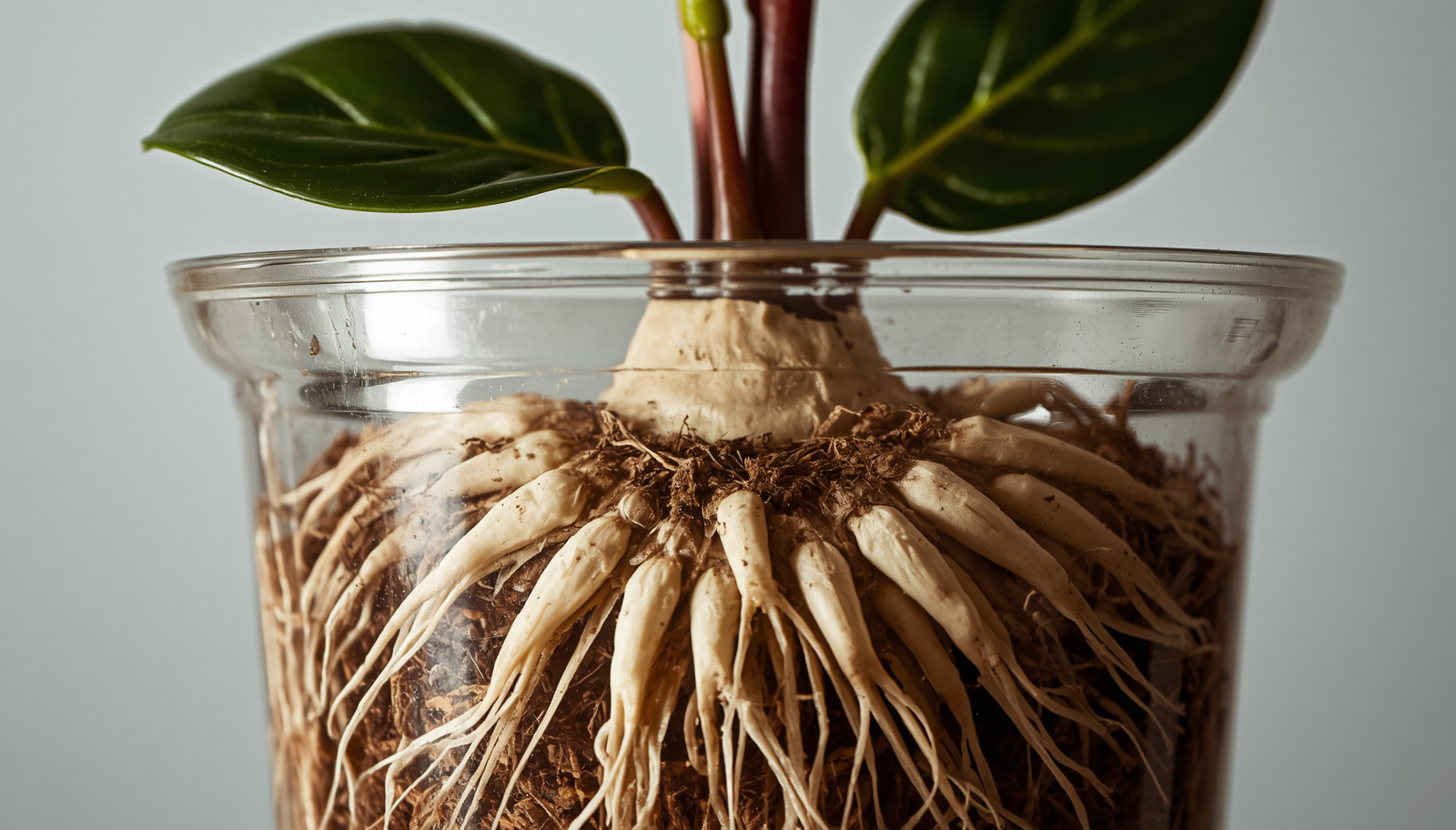
Monstera deliciosa root system in Lechuza Pon mineral substrate showing white fuzzy hydro roots growing through pumice zeolite and lava rock matrix

🔬 THE LAB | SUBSTRATE ENGINEERING PROTOCOLS Organic soil is fundamentally incompatible with controlled indoor horticulture. Peat-based substrates compact over time, create anaerobic (oxygen-deprived) zones … Read more

Categories The Lab Tags Hydro Roots, Lechuza Pon, Mineral Substrate, Monstera Care, Semi-Hydroponics Leave a comment

The H₂O₂ Protocol: Oxidizing Anaerobic Root Rot in Aroids

April 29, 2026 by Mark Tavis
Close-up of plant roots submerged in hydrogen peroxide solution showing active effervescence bubbles as anaerobic pathogens are oxidized during root rot treatment and hydrogen peroxide root rot

🚨 THE LAB | EMERGENCY TRIAGE PROTOCOLS ⚠️ Emergency Assessment: Anaerobic Root Zone Collapse Your Monstera deliciosa, Philodendron gloriosum, or other high-value aroid is exhibiting … Read more

Categories The Lab Tags Aroid Care, Emergency Triage, Pest & Disease Control, Plant Chemistry, Root Rot Management Leave a comment

The Acclimation Protocol: Deflasking Tissue Culture Plants

April 28, 2026 by Mark Tavis
Laboratory setup showing tissue culture plant being removed from sterile flask with surgical tweezers next to humidity dome and substrate preparation materials

🔬 THE LAB | MICROPROPAGATION PROTOCOLS Tissue culture plants exist in a sterile, high-humidity, sugar-supplemented artificial environment that bears zero resemblance to your windowsill. Micropropagated … Read more

Categories The Lab Tags Deflasking Protocol, Micropropagation, Plant Acclimation, Tissue Culture Leave a comment

The Carnivorous Protocol: Eradicating Fungus Gnats with Pinguicula & Drosera

April 26, 2026 by Mark Tavis
carnivorous Close-up of Pinguicula butterwort leaf with multiple captured fungus gnats stuck to sticky mucilage surface demonstrating biological pest control

🔬 THE LAB | BIOLOGICAL WARFARE PROTOCOLS Fungus gnats (Sciaroidea family) develop chemical resistance to standard pesticides within 3-5 generations. Neem oil, pyrethrin sprays, and … Read more

Categories The Lab Tags Biological Pest Control, Butterworts, Carnivorous Plants, Drosera, Fungus Gnat Control, Pinguicula Leave a comment

Fiddle Leaf Fig Notching: Force Branching Without Pruning

April 21, 2026 by Mark Tavis
Fiddle Leaf Fig Notching

🔬 THE LAB | GROWTH HORMONE MANIPULATION Your Ficus lyrata is a single unstable pole climbing toward the ceiling with zero lateral branching. This isn’t … Read more

Categories The Lab Leave a comment

Variegated Monstera Deliciosa Care: Stop Brown Leaves

March 14, 2026 by Mark Tavis
Healthy half-moon leaf of Variegated Monstera Deliciosa Albo Borsigiana with pristine white variegation and no signs of browning or necrosis

🔬 THE URBAN LAB | RARE VARIEGATION PROTOCOLS You finally invested in a Variegated Monstera Deliciosa, but now those stunning, expensive white leaves are starting … Read more

Categories The Lab Tags Indoor Plant Lighting, Leaf Necrosis Prevention, Monstera Albo Borsigiana, Variegated Monstera, Variegation Management Leave a comment

Alocasia Polly vs Bambino: 5 Scientific Ways to Tell Them Apart

March 8, 2026 by Mark Tavis
Side-by-side comparison of Alocasia Polly and Bambino showing size difference with Polly displaying larger shield-shaped leaves with scalloped margins and Bambino showing smaller narrow arrow-shaped leaves with smooth edges

🔬 THE URBAN LAB | AROID IDENTIFICATION The Miniature Alocasia Mystery: Both Alocasia ‘Polly’ and ‘Bambino’ share the same botanical parentage—Alocasia × amazonica, a hybrid … Read more

Categories The Lab Tags Alocasia amazonica, Aroid Care, Houseplant Care, Plant Identification, Rare Alocasia Leave a comment
Older posts
Page1 Page2 Next →

Mark Tavis

The founder and head botanist behind The Urban Lab. With over a decade of specialized experience in high-performance urban plant care, my mission is to provide data-driven troubleshooting protocols that cut through common gardening myths. My commitment to blending horticultural science with zero-waste practices ensures every guide published is reliable, tested, and tailored for indoor microclimates.

Recent Posts

  • Monstera root ball being dusted with mycorrhizal inoculant powder showing beneficial fungi houseplant root treatment during transplant procedure
    Mycorrhizae for Indoor Plants: The Inoculation Protocol
    by Mark Tavis
  • Premium aroid soil mix components showing pumice, orchid bark, tree fern fiber, coco coir, and zeolite arranged separately before mixing, demonstrating chunk houseplant soil texture
    Best Aroid Soil Mix: The CEC Protocol
    by Mark Tavis
  • Monstera albo variegata showing thick rigid stems and pristine white variegation without browning from potassium silicate supplementation cell wall fortification
    Potassium Silicate for Houseplants: The Silica Protocol
    by Mark Tavis
  • Close-up of Ficus stem showing armored scale insects as hard brown dome-shaped bumps with sticky honeydew droplets and developing sooty mold on leaves below
    Armored Scale Treatment Indoor Plants: The Suffocation Protocol
    by Mark Tavis
  • Close-up of Monstera deliciosa leaf showing spider mite webbing between veins and characteristic stippling damage from Tetranychidae feeding with visible mites under magnification best miticide for houseplants
    Best Miticide for Houseplants: Spider Mite Eradication
    by Mark Tavis
  • IKEA greenhouse cabinet with smart environmental controller showing VPD readings and automated humidifier system for Anthurium crystallinum cultivation
    VPD for Indoor Plants: The Vapor Pressure Deficit Protocol
    by Mark Tavis

The Urban Lab

Data-driven botanical protocols and scientific troubleshooting for the modern grower. We simplify plant biology into actionable blueprints for high-performance urban gardening.

The Archives

  • The Lab (Advanced Care)
  • The Infirmary (Pests)
  • The Pantry (Sustainability)
  • Plant Symbolism

Company

  • About the Lab
  • Contact

Legal

  • Home
  • Privacy Policy
  • Terms of Use

© 2026 The Urban Lab | Built for Speed & Scientific Accuracy.

© 2026 www.plantblueprint.com • Built with GeneratePress
  • Home
  • The Infirmary
  • The Lab
  • The Pantry
  • Symbolism
  • About the Lab
  • Contact