
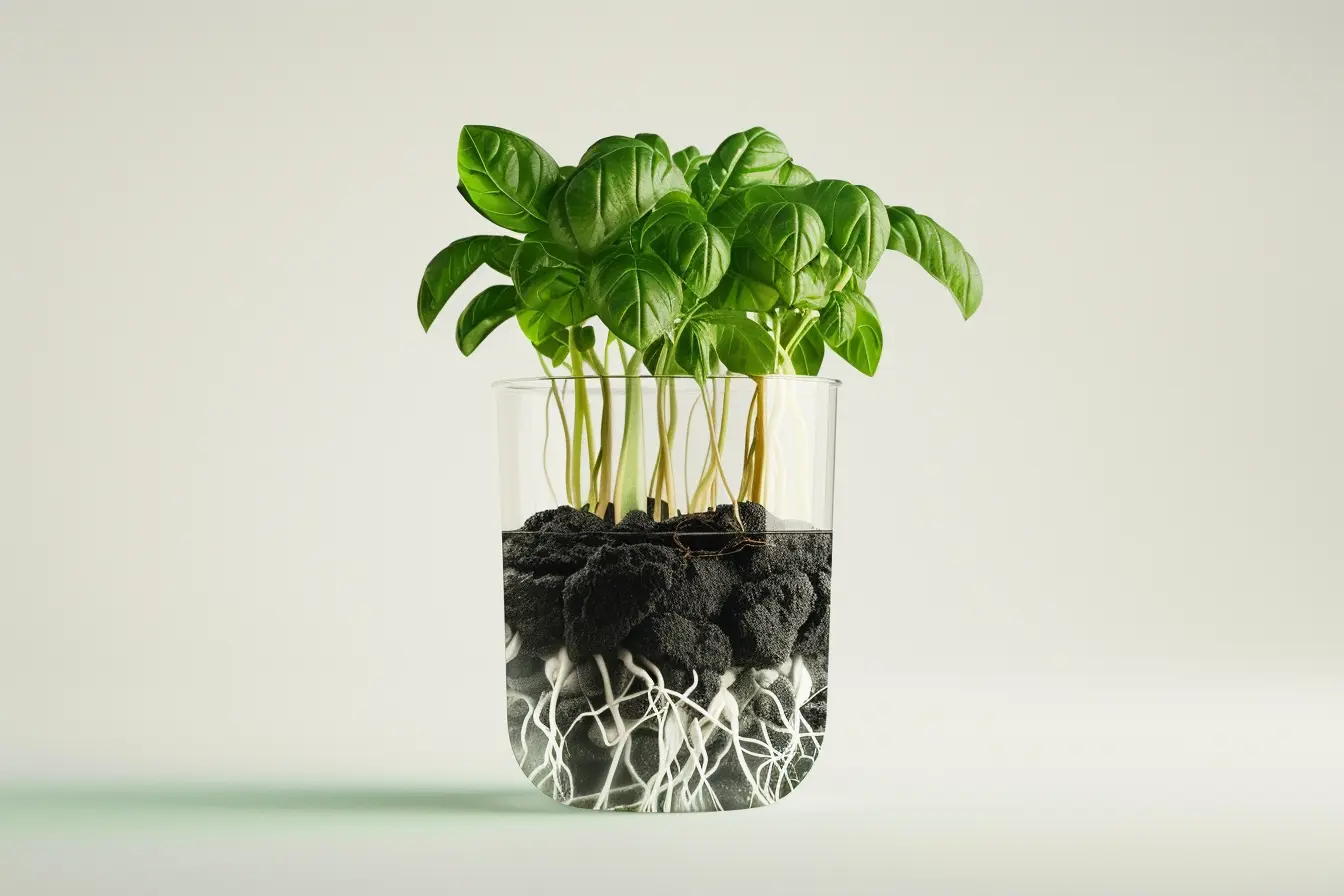
🔬 Urban Lab Quick Answer: The Kratky Method
The Kratky Method is a passive hydroponic technique where plants sit in a suspended Net Cup, allowing roots to grow into a static nutrient solution with an “air gap” for oxygen.
❌ No pumps. ❌ No electricity. ✅ Zero Noise.
Table of Contents
Introduction: Why Soil is the “Old Way”
Soil is messy. Soil harbors pests. Soil invites fungus gnats—those tiny black flies that infest your kitchen the moment you bring home a houseplant. If you’ve ever dealt with a gnat infestation, you know the frustration. (For our complete gnat elimination protocol, see: “How to Eliminate Fungus Gnats Permanently. The Kratky method is the ultimate ‘set it and forget it’ hydroponic system—until you see that dreaded green tint in your water. Algae isn’t just an eyesore; it’s a parasite that steals oxygen and nutrients from your plants’ roots.The science is simple: Algae needs light to survive. If your Kratky containers aren’t truly opaque, you’re running an algae farm, not a vegetable garden. In this Urban Lab protocol, we’re breaking down the physics of light leaks and the most effective ways to ‘black out’ your reservoirs for a clean, maintenance-free harvest.”.)
The Kratky method eliminates soil entirely. No soil means no breeding ground for gnats. Period.
This is the clean, clinical future of apartment gardening. A Mason jar on your windowsill. A head of lettuce growing in silence. Zero pumps. Zero electricity. Zero pests. Total cost: under $10.
What is the Kratky Method? (The Science of Still Water)
Developed by Dr. B.A. Kratky method at the University of Hawaii, this method exploits a simple biological fact: roots need oxygen as much as they need water.
To dive deeper into the original research behind non-circulating hydroponics, you can review the foundation papers by Dr. Bernard Kratky at the University of Hawaiʻi College of Tropical Agriculture and Human Resources .
In soil, roots get oxygen from tiny air pockets between particles. Submerge those same roots in stagnant water, and they suffocate within 24 hours. The dissolved oxygen in static water depletes rapidly—dropping below survivable levels in less than a day.
The “Air Gap” Principle
The Kratky method solves this with elegant physics. Here’s what happens:
- You place a seedling in a Net Cup suspended above nutrient solution. The solution initially touches the bottom of the cup.
- The plant drinks. The water level drops. A gap forms between the water surface and the net cup.
- The plant grows two types of roots: “water roots” that stay submerged (thin, translucent, fragile) and “oxygen roots” that hang in the air gap (fuzzy, white, exposed).
- The system self-regulates. As the plant grows larger and drinks more, the air gap expands proportionally.
Critical rule: Once the air gap forms, the water level must never rise back up and submerge the oxygen roots. If they flood, the plant drowns within 48 hours.
The Urban Lab Setup Guide (Step-by-Step)
Total startup cost: $8–15. Time to setup: 15 minutes.
Step 1: The Container (Must Be Light-Proof)
Light + Nutrients + Water = Algae. This is non-negotiable biology.
If light reaches your nutrient solution, photosynthetic algae will bloom within days. Algae steal nutrients, coat roots, and—when they decompose—create anaerobic conditions that cause root rot. The result: a swamp smell in your apartment.
The solution: Use an opaque container. Black plastic works. So does any container you wrap in a dark sock or paint with black spray paint.
Container sizing guide:
- Leafy greens (lettuce, basil): 1 quart (32 oz) minimum
- Larger herbs (mint, cilantro): Half-gallon
- Fruiting plants (peppers, tomatoes): 3–5 gallons
Step 2: The Net Cup & Growing Medium
The Net Cup is a small plastic basket with slotted sides. It holds the plant and allows roots to grow out into the water below. Standard sizes: 2-inch (herbs, lettuce) or 3-inch (larger plants).
You’ll cut a hole in your container lid sized to fit the net cup snugly.
Inside the net cup, you need a growing medium to support the plant. The standard choice is LECA (Lightweight Expanded Clay Aggregate), also called Hydroton. These are small, round, porous clay balls that:
- Support the plant structurally
- Are completely inert (won’t decompose or alter pH)
- Can be rinsed and reused indefinitely
- Cost about $15 for a bag that lasts years
For starting seeds, use a Rockwool cube. Once the seedling has roots, transfer it (cube and all) into the LECA-filled net cup.
🔬 The Urban Lab Algae-Proof Protocol
To stop algae in the Kratky Method, you must eliminate 100% of light penetration into the reservoir:
- Double-Paint: Use a coat of black spray paint followed by a reflective white or silver coat to keep water cool.
- Aluminum Foil Wrap: The most cost-effective DIY method for immediate light-blocking.
- Net Pot Gaps: Use clay pebbles (LECA) to fill every gap in the net pot; even a tiny light leak will trigger an algae bloom.
Step 3: The Nutrient Solution
Do not use soil fertilizer. Soil fertilizers are designed to be broken down by soil microorganisms before plants can absorb them. In water, they’ll just create toxic sludge.
Use hydroponic nutrients—these are already in ionic form, immediately available to roots.
The budget standard: Masterblend 4-18-38 + Calcium Nitrate + Epsom Salt. Mix ratio: 2:2:1 by weight. Total cost: ~$25 for enough nutrients to grow hundreds of plants.
Simpler option: Pre-mixed liquid hydroponic nutrients (like General Hydroponics Flora Series). More expensive per plant, but easier for beginners.
pH matters: Keep your solution between pH 5.5–6.5. Outside this range, nutrient lockout occurs—the plant can’t absorb what it needs. A basic pH test kit costs $8. Check weekly.
What Can You Grow?
| Category | Difficulty | Examples |
|---|---|---|
| Leafy Greens | Easy | Lettuce, Basil, Spinach, Kale, Arugula |
| Fruiting Plants | Moderate | Peppers, Cherry Tomatoes (need 3-5 gal tank) |
| Houseplants | Excellent | Pothos, Monstera, Philodendron, Lucky Bamboo |
Start with leafy greens. Lettuce and basil are forgiving, fast-growing, and give you visible results in 3-4 weeks. Master these before attempting peppers.
Common Mistakes (The Troubleshooting Log)
Mistake #1: Refilling Too High
Symptom: Plant was healthy, then suddenly wilted despite full water.
Cause: You refilled the container and submerged the oxygen roots. They can’t survive underwater—they’ve differentiated to breathe air.
Fix: When topping off nutrients, never fill higher than the existing water line. If roots have been submerged for more than 24 hours, the plant may not recover.
Mistake #2: Using Clear Containers
Symptom: Green slime on container walls. Water looks murky. Faint swamp smell.
Cause: Light reached the nutrient solution. Algae bloomed.
Fix: Dump the solution. Scrub the container with diluted hydrogen peroxide. Wrap the container completely in opaque material. Start fresh.
Mistake #3: Using Soil Fertilizer
Symptom: Roots are brown. Solution is cloudy. Nothing is growing.
Cause: Miracle-Gro and similar soil fertilizers contain organic components that decompose in water, creating toxic anaerobic conditions.
Fix: Only use fertilizers explicitly labeled “hydroponic.” Masterblend, General Hydroponics, MaxiGro—these are designed for water-based growing.
Frequently Asked Questions
“Does it smell?”
Not if you’re doing it right. A healthy Kratky method system is odorless. If you detect a smell, something has gone wrong—typically root rot from submerged oxygen roots, or algae from light exposure. Both are preventable with proper setup.
“Can I use tap water?”
Usually yes. Most municipal tap water works fine. Exceptions: if your tap water is heavily chlorinated (strong pool smell), let it sit uncovered for 24 hours to off-gas. If you have very hard water (high mineral content), you may see salt buildup on LECA over time. In those cases, consider filtered water or occasional flushing.
“How often do I need to check it?”
For leafy greens: weekly glance to ensure water level is adequate. That’s it. The entire point of Kratky method is low maintenance. Check pH every 1-2 weeks if you want optimal growth, but lettuce is forgiving.
“Will this attract bugs?”
No. Fungus gnats breed in moist organic matter—specifically the top layer of soil. No soil, no gnats. This is the single biggest advantage for apartment growers. Your Kratky method lettuce will not invite pests into your kitchen.
📋 The Urban Lab Gear List
- [ ] Opaque Container: Mason jar (sock-wrapped) or storage tote.
- [ ] Net Cup: 2-inch (greens) or 3-inch (large plants).
- [ ] Growing Medium: LECA (Clay Pebbles).
- [ ] Nutrients: Masterblend 4-18-38 (Must be hydroponic specific!).
- [ ] pH Kit: Test strips or digital meter.
- [ ] Seed Starter: Rockwool cubes.
The Bottom Line: The Kratky method is the quietest, cleanest, most apartment-friendly way to grow food. No pumps humming at 3 AM. No gnats hovering over your sink. No soil tracking across your floor. Just a jar, some clay balls, and a plant that waters itself.
Start with one lettuce. See how it goes. Then scale up.
Welcome to the lab.