
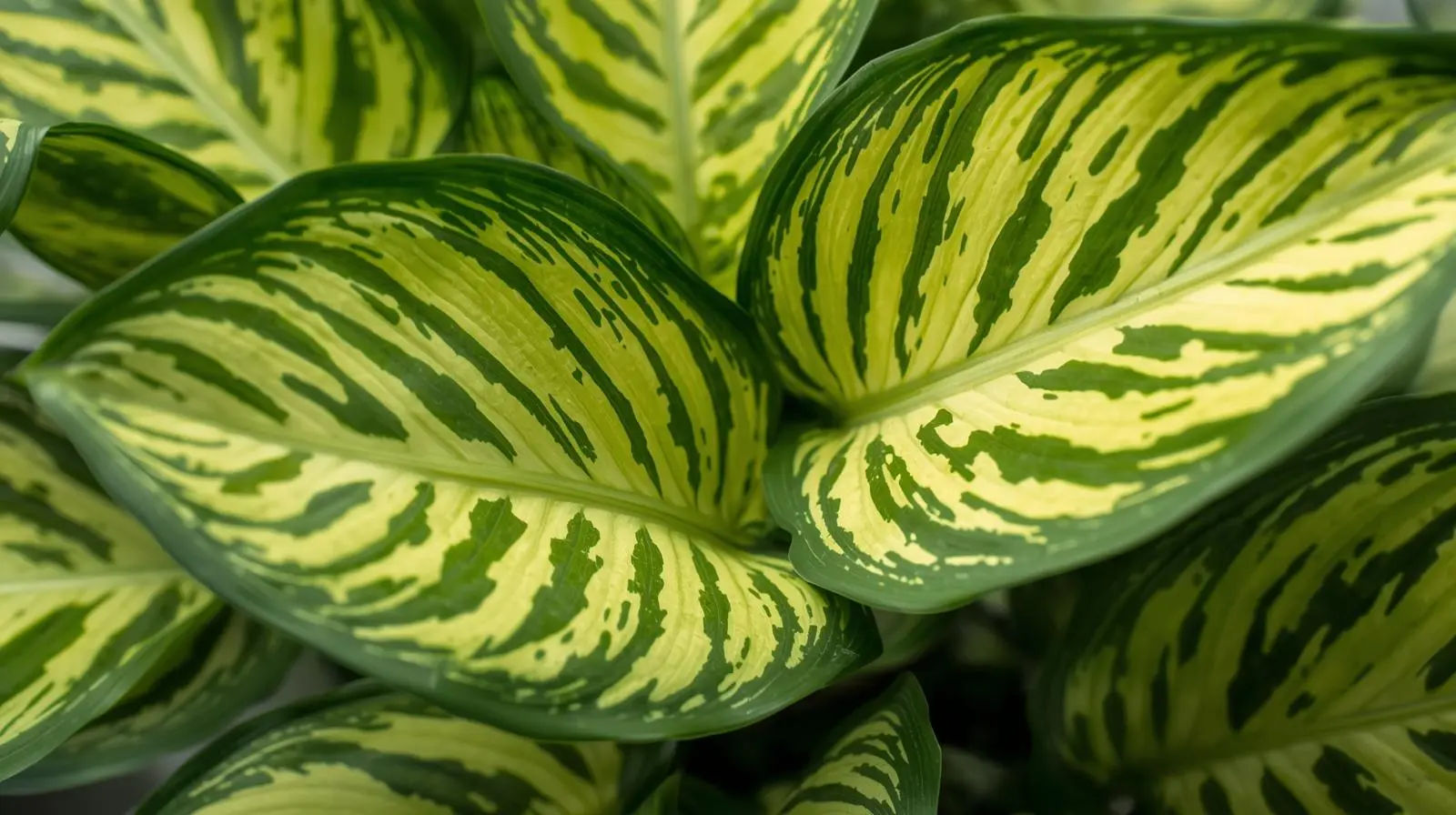
Maranta ‘Lemon Lime’ is a prayer plant with dark green leaves striped in bright yellow-green, which fold upward every evening like hands in prayer. It is the same species as the classic red-veined prayer plant, Maranta leuconeura, and needs the same care. Maranta Lemon Lime care comes down to bright, indirect light, compost that stays evenly moist in summer and a little drier in winter, high humidity, and soft water. This guide follows NC State, the RHS and the ASPCA.
What Is Maranta Lemon Lime?
NC State lists ‘Lemon’ (sold as Lemon Lime prayer plant) as a cultivar of Maranta leuconeura with dark green leaves and a yellowish-green center and striping. The species comes from Brazil and grows 6 to 12 inches tall and 6 to 24 inches wide. Its leaves lie flat by day and rise to a “praying” position at night (NC State), the nightly movement that gives prayer plants their name. Marantas belong to the same family as calatheas, Marantaceae, but they are a different genus.
| Need | What the sources say |
|---|---|
| Light | Bright, filtered or indirect (RHS); tolerates low to medium light; direct sun bleaches colors (NC State) |
| Water | Evenly moist in the growing season, somewhat drier in winter (NC State); water moderately, less in winter (RHS) |
| Humidity | High; misting, a gravel tray or a humid room (RHS, NC State) |
| Temperature | Intolerant of cold and drafts (NC State); H1B, not frost hardy (RHS) |
| Soil | Peat-free compost (RHS); good drainage to avoid root rot (NC State) |
| Feeding | Monthly (RHS) |
| Pets | Non-toxic to cats (ASPCA) |
Sources: NC State Extension; RHS (Maranta leuconeura); ASPCA.
Light
The RHS says bright, filtered or indirect light is best. NC State says the plant tolerates low to medium light but is intolerant of direct sun, which bleaches the leaf colors, and notes that low light can also reduce color. An east or north window, or a spot a few feet back from a brighter window, works well. If your Lemon Lime’s stripes fade, check the light first.
Watering
NC State says to keep the soil evenly moist during the growing season and to let it dry out somewhat in winter, and warns that poorly drained soil leads to root rot. The RHS says to water moderately and reduce watering in winter. Water thoroughly when the surface starts to dry, let the pot drain, and never leave it standing in water. Check with a finger rather than watering on a schedule.
Water quality matters too. NC State lists high fluoride as a cause of leaf burn, so use rainwater or distilled water if your tap water is fluoridated. Our best water for calathea guide covers the options for the whole prayer plant family.
Humidity and Temperature
The RHS says to maintain high humidity at all times by misting or using a gravel tray, and NC State suggests a humidified room or a pot standing on a tray of wet pebbles. A bathroom with good light also works. NC State says marantas are intolerant of low temperatures and cold drafts, and the RHS rates them H1B, not frost hardy. Keep the plant away from cold windows, doors and heating vents.
Soil, Pots and Feeding
The RHS recommends peat-free compost, and NC State warns that root rot can occur in poorly drained soil. A houseplant mix with a little perlite or bark drains well; see our soil mix guide. Marantas have fairly shallow roots, so a wide, shallow pot with drainage holes suits them. For feeding, the RHS says monthly; use a balanced houseplant fertilizer at label strength or weaker in spring and summer, and NC State notes that over-fertilizing can burn the leaves.
Maranta Lemon Lime Propagation
NC State lists division of the rhizomes and root cuttings; the RHS lists basal cuttings, division and seed. The two simplest methods at home:
- Division: at repotting in spring, gently separate the clump into pieces, each with roots and several stems, and pot them up.
- Stem cuttings: cut a stem just below a node (the joint where a leaf meets the stem), and root it in water or moist compost in warm, humid conditions. Pot it up once roots form.
See our guide to cuttings rotting in water if water cuttings go soft.
Why Isn’t My Maranta Praying?
The leaves rise at night and flatten by day in response to light (NC State). If they stop moving, the usual causes are a spot that is too dim to give a clear day-night difference, lights left on in the evening, or a plant that is stressed by cold, drought or root problems. Give it a bright day position and a dark night, check the watering, and the movement usually returns.
Curling Leaves
Leaves that curl or roll inward usually signal thirst or dry air: the soil has dried out too far, the humidity is low, or the plant is near a heater or cold draft. Check the compost first and water thoroughly if it’s dry, then raise the humidity (RHS, NC State). Curling with wet soil points instead to root problems from poor drainage (NC State).
Brown Tips and Faded Color
| Symptom | Likely cause | What to do |
|---|---|---|
| Brown, burned tips and edges | Fluoride or over-fertilizing (NC State); dry air (RHS) | Rainwater or distilled water; feed less; raise humidity |
| Faded or bleached stripes | Direct sun (NC State) | Move out of direct sun |
| Dull color, weak growth | Low light or low fertility (NC State) | Brighter indirect light; light monthly feeding |
| Yellowing, soft stems, wet soil | Root rot from poor drainage (NC State) | Let the top dry; improve drainage |
| Speckling, webbing, cottony spots | Spider mites, mealybugs (NC State, RHS) | Rinse; treat; raise humidity |
Sources: NC State Extension; RHS.
See our spider mite guide and yellow leaves guide.
Getting a Bushier Plant
Marantas spread and trail with age, so they can look thin. The RHS says no pruning is required, but trimming long, bare stems just above a node encourages new shoots lower down, and the trimmings can be rooted and planted back into the same pot to fill it out. Good, bright indirect light also keeps growth compact.
Is Maranta Lemon Lime Cat Safe?
Yes. The ASPCA’s cat plant list includes maranta among plants that are non-toxic to cats, and its prayer plant entry is listed as non-toxic to dogs, cats and horses. As with any plant, a pet that eats a lot of it may get a mild stomach upset. See our cat-safe plants list.
For more houseplants grown for their colorful leaves, see our guides to begonias and purple passion plant. It is also on our list of plants safe for dogs. It is one of the plants Iowa State suggests for a closed terrarium; see our guide on how to make a terrarium.
Frequently Asked Questions
Is Maranta Lemon Lime easy to care for?
Fairly easy if you keep its conditions steady: bright indirect light, evenly moist soil, high humidity and no cold drafts. Dry air and fluoridated water are the most common reasons for brown tips.
Is Maranta Lemon Lime cat safe?
Yes. The ASPCA lists maranta and prayer plant as non-toxic to cats.
How do you do Maranta Lemon Lime propagation?
Divide the clump at repotting, or take stem cuttings just below a node and root them in water or moist compost. NC State lists division and root cuttings; the RHS lists basal cuttings, division and seed.
How often should I water Maranta Lemon Lime?
Keep the soil evenly moist in the growing season and let it dry out somewhat in winter (NC State). Water when the surface starts to dry, and never leave it standing in water.
Why are my Maranta Lemon Lime leaves losing their stripes?
Direct sun bleaches the colors, and low light or low fertility dulls them (NC State). Move it to bright, indirect light and feed lightly in the growing season.
Why is my maranta not closing at night?
It needs a clear difference between bright days and dark nights. Lights on in the evening, a dim position, or stress from cold, drought or root problems can stop the movement.