
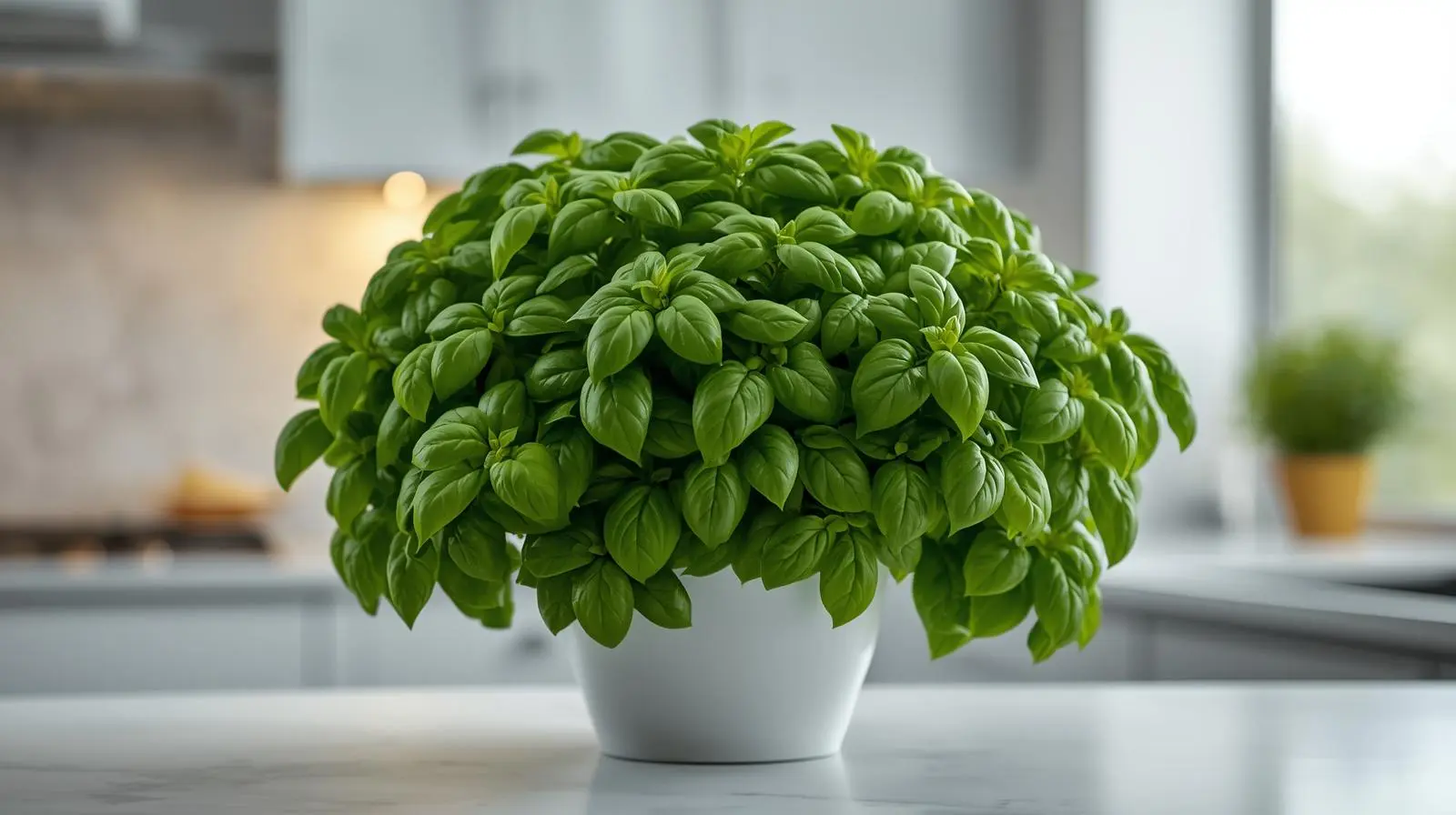
The Indoor Basil Failure Rate: Approximately 73% of home-grown Ocimum basilicum (sweet basil) cultivated indoors dies within 6 weeks of transplant. The problem isn’t the plant—it’s the fundamental misunderstanding of basil’s evolutionary requirements.
The Mediterranean Reality: Basil is a warm-season annual herb native to tropical regions of central Africa and Southeast Asia. It evolved under conditions of intense solar radiation (40,000-50,000 lux), consistent warmth (21-27°C), and high humidity (50-70%). Standard indoor environments provide none of these.
The Urban Lab Solution: This protocol provides the exact environmental specifications, lighting parameters, and pruning techniques required to cultivate high-yield, bushy basil indoors year-round. We eliminate guesswork with measurable metrics and biochemical explanations for each intervention.
The Urban Lab Cultivation Specifications
| Cultivation Metric | The Urban Lab Standard |
|---|---|
| Light Requirement | 12-16 hours/day (Full sun equivalent or grow lights) |
| Daily Light Integral (DLI) | 12-16 mol/m²/day minimum for productive growth |
| Ideal Temperature | 21°C – 24°C (70-75°F) | Avoid drafts below 10°C |
| Soil pH | 6.0 – 7.5 (Well-draining, nutrient-rich potting mix) |
| Watering Trigger | Top 1 inch of soil is dry; never allow leaf wilting |
| Relative Humidity | 40-60% (higher reduces transpiration stress) |
| Fertilizer Protocol | Nitrogen-rich liquid (10-10-10 NPK) at ½ strength every 4-6 weeks |
The Biology of Indoor Basil: Why Most Cultivators Fail
Basil is not a houseplant. Unlike pothos or snake plants that evolved in low-light understory conditions, Ocimum basilicum is a full-sun annual herb adapted to Mediterranean climates. Attempting to grow basil indoors without replicating these conditions results in predictable failure.
The Daily Light Integral Problem
Daily Light Integral (DLI) measures the total quantity of photosynthetically active radiation (PAR) received over 24 hours, expressed as moles of photons per square meter per day (mol/m²/day). According to research from Purdue University Extension, basil requires:
- Minimum survival DLI: 10-12 mol/m²/day
- Productive growth DLI: 12-16 mol/m²/day
- Maximum photosynthetic capacity: 16-20 mol/m²/day
Most indoor environments provide 2-6 mol/m²/day—a deficit of 60-80%. This chronic light starvation triggers etiolation (leggy, weak growth), reduces essential oil production (flavor), and compromises immune response to pests.
The Winter Stress Response
Central heating systems reduce indoor relative humidity to 15-30%—drier than most deserts. Basil evolved with 50-70% humidity. This moisture deficit causes:
- Increased transpiration stress: Stomata close to conserve water, reducing photosynthesis
- Leaf edge necrosis: Brown, crispy margins from desiccation
- Premature bolting: Stress-induced flowering that terminates leaf production
- Spider mite proliferation: These arachnids thrive in hot, dry conditions
| Parameter | Basil Requirement | Typical Indoor Environment |
| Light Intensity | 40,000-50,000 lux | 500-2,000 lux |
| Daily Light Integral | 12-16 mol/m²/day | 2-6 mol/m²/day |
| Temperature | 21-27°C consistent | 18-22°C with fluctuations |
| Relative Humidity | 50-70% | 15-30% (winter) |
Conclusion: Without environmental modification, indoor basil cultivation is biochemically impossible. The following protocols bridge these gaps.
Lighting Setup: Window Placement vs. Grow Lights
The single most critical factor in how to grow basil indoors successfully is meeting the plant’s high-intensity light requirement. Most failures stem from insufficient photosynthetically active radiation.
The South-Facing Window Myth
While often recommended, south-facing windows have severe limitations for year-round indoor basil cultivation:
- Seasonal variation: Winter sun angle reduces light intensity by 40-60% compared to summer
- Photoperiod decline: December daylight in temperate zones: 8-10 hours vs. basil’s 12-16 hour requirement
- Window transmission loss: Standard glass blocks 10-30% of PAR; double-glazing increases loss
- Distance degradation: Light intensity follows inverse-square law—moving 3 feet from window reduces intensity by ~90%
A south-facing window may work from May-September in temperate climates if the plant is positioned within 12 inches of glass. From October-April, supplemental lighting is mandatory.
Grow Light Specifications for Basil
For consistent, year-round production of high-quality basil leaves, artificial lighting is the only reliable solution. Based on Michigan State University Extension research on DLI requirements for culinary herbs:
💡 The Urban Lab Lighting Protocol
Light Source:
- LED Type: Full-spectrum (400-700nm) with emphasis on red (630-660nm) and blue (450-470nm) wavelengths
- Power Output: Minimum 30-50 watts per square foot of growing area
- Color Temperature: 5000-6500K (cool white) optimal for vegetative growth
- PAR Output: 200-400 μmol/m²/s at canopy level
Positioning:
- Height Above Canopy: 6-12 inches (15-30cm) for LED fixtures
- Adjustment Protocol: Maintain consistent distance as plant grows; raise lights weekly
- Coverage: Ensure uniform light distribution across all foliage
Photoperiod:
- Vegetative Growth Phase: 14-16 hours light / 8-10 hours dark
- Use timer: Consistent photoperiod prevents stress-induced bolting
- Minimum Duration: Never below 12 hours or growth rate decreases dramatically
Commercial Options: Brands like Spider Farmer, Mars Hydro, and Sansi produce suitable full-spectrum LED panels. Avoid “blurple” (red+blue only) lights as they lack green spectrum essential for deep canopy penetration.
The “Apical Dominance” Pruning Technique: Maximizing Leaf Yield
This is the most critical intervention for transforming sparse, vertical basil into dense, bushy, high-yield plants. Understanding the hormonal mechanism is essential.
Understanding Apical Dominance
Apical dominance is the phenomenon where the terminal bud (apical meristem) at the tip of the main stem suppresses the growth of lateral buds (axillary meristems) lower on the stem. This occurs through auxin (indole-3-acetic acid), a growth hormone produced in the apical meristem and transported downward.
High auxin concentration in lateral buds inhibits their development. The plant directs all resources toward vertical growth of the single main stem—an evolutionary strategy for competing for light in crowded environments.
In cultivation, this creates tall, spindly plants with few harvestable leaves. Breaking apical dominance reverses this.
The Pruning Protocol
When you remove the apical meristem, you eliminate the source of auxin suppression. Cytokinin hormones (which promote cell division) become dominant in lateral buds, triggering their activation. Instead of one vertical stem, you get multiple lateral branches—each producing its own leaves.
✂️ The Topping Technique: Step-by-Step
When to Top:
- Wait until plant has 6-8 true leaves (3-4 leaf pairs)
- Plant should be 6-8 inches (15-20cm) tall
- Do NOT top seedlings with fewer than 3 leaf pairs—insufficient energy reserves
Where to Cut:
- Identify the main stem terminal (top growing point)
- Count down to find a node (point where leaves attach to stem)
- Cut ¼ inch (6mm) above the node using clean, sharp scissors or pruners
- Make a clean, horizontal cut—avoid crushing or tearing stem tissue
Expected Response:
- 7-10 days: Two lateral shoots emerge from axillary buds below the cut
- 14-21 days: Lateral branches produce 2-4 new leaf pairs each
- 30 days: Plant has doubled in leaf production capacity
Repeat Protocol:
- Once lateral branches develop 3-4 leaf pairs, top them as well
- This creates secondary branching, exponentially increasing yield
- Continue every 2-3 weeks during vegetative growth phase
- Result: Dense, bushy plant with 8-12+ growing points instead of one
The Math: A single-stem basil plant produces approximately 20-30 harvestable leaves over its lifespan. A properly pruned plant produces 150-200+ leaves—a 5-7x yield increase from the same root system and light footprint.
Harvesting Protocol Post-Topping
Always harvest from the top down, removing terminal clusters of 2-4 leaves. This maintains the pruning effect—removing apical meristems stimulates lateral growth. Never harvest more than ⅓ of total foliage at once, as excessive defoliation stresses the plant and triggers premature bolting.
Hydration and Soil Protocols for Indoor Basil
Basil is simultaneously drought-intolerant (wilts rapidly when dry) and susceptible to root rot (from overwatering). This narrow tolerance range requires precise watering technique.
Bottom-Watering: The Superior Method
Bottom-watering—adding water to a saucer or tray beneath the pot rather than pouring from above—offers multiple advantages for indoor herb cultivation:
- Promotes deep root development: Roots grow downward toward moisture source
- Prevents topsoil saturation: Dry soil surface reduces fungus gnat breeding
- Eliminates foliar splash: Wet leaves promote fungal diseases (downy mildew, fusarium)
- Reduces salt accumulation: Salts from fertilizer don’t concentrate at soil surface
💧 Bottom-Watering Technique
- Check soil moisture: Insert finger 1 inch (2.5cm) into soil. Water only when dry at this depth.
- Add water to tray: Pour ½-1 inch of room-temperature water into saucer beneath pot
- Wait 15-20 minutes: Soil wicks water upward via capillary action
- Check saturation: Touch top inch of soil—should be moist but not waterlogged
- Drain excess: If water remains in tray after 30 minutes, pour it out to prevent root rot
- Frequency: Typically every 2-3 days under grow lights; less in winter near windows
Soil Composition for Container Basil
Basil requires well-draining, nutrient-rich potting mix with good aeration. Avoid garden soil or heavy peat-only mixes.
Urban Lab Soil Formula:
- 60% high-quality potting mix (contains peat moss or coco coir)
- 20% perlite or vermiculite (improves drainage and aeration)
- 10% compost or worm castings (slow-release nutrients)
- 10% coarse sand (prevents compaction)
Container Requirements: Minimum 6-inch (15cm) diameter pot with drainage holes. Basil has a shallow but spreading root system—wider pots are better than deep pots.
Fertilizer Protocol
Basil is a nitrogen-hungry herb. Nitrogen (N) is essential for chlorophyll production and leaf growth—the primary harvest product. However, over-fertilizing causes excessive vegetative growth at the expense of essential oil production, resulting in large but flavorless leaves.
| Fertilizer Type | Balanced NPK (10-10-10) or nitrogen-rich (20-10-10) |
| Dilution | ½ strength (50% of package recommendation) |
| Frequency | Every 4-6 weeks during active growth |
| Application Method | Water into moist soil (never dry soil) |
| Flush Protocol | Plain water flush every 6-8 weeks to prevent salt buildup |
Warning: Excessive nitrogen causes rapid, weak growth and dilutes essential oils (linalool, eugenol) that provide basil’s characteristic aroma and flavor. Leaves become large but tasteless.
Troubleshooting the Indoor Environment
Even with optimal protocols, environmental stressors can cause physiological problems. Accurate diagnosis prevents cascading failure.
Why Are My Basil Leaves Turning Yellow?
Chlorosis (yellowing) in basil leaves has three primary causes:
1. Nitrogen Deficiency (Most Common)
- Pattern: Lower, older leaves turn yellow first while upper leaves remain green
- Mechanism: Nitrogen is mobile in plants—deficient plants cannibalize N from old leaves to supply new growth
- Solution: Apply diluted nitrogen-rich fertilizer (20-10-10 or fish emulsion at ½ strength)
- Prevention: Maintain regular 4-6 week fertilization schedule
2. Root Rot (Overwatering)
- Pattern: Yellowing combined with wilting despite wet soil, black/mushy roots, foul odor
- Mechanism: Waterlogged soil displaces oxygen, causing anaerobic conditions. Roots die and become colonized by Pythium, Phytophthora, or Fusarium fungi
- Solution: Unpot plant, remove dead roots with sterile scissors, repot in fresh soil, reduce watering frequency
- Prevention: Bottom-watering technique, ensure drainage holes, never let pot sit in standing water
3. Iron Deficiency (Less Common)
- Pattern: Interveinal chlorosis—leaf veins remain green while tissue between veins yellows, starting with new growth
- Mechanism: Occurs when soil pH exceeds 7.5 (alkaline), making iron unavailable despite presence
- Solution: Lower soil pH by adding sulfur or use chelated iron supplement
- Prevention: Test soil pH annually; maintain 6.0-7.0 range
Why Is My Basil Flowering?
Bolting—the transition from vegetative growth to flowering—terminates productive leaf production. Once a basil plant begins flowering, it redirects energy from leaf production to seed development. Leaves become smaller, tougher, and bitter.
Triggers for Premature Bolting:
- Photoperiod stress: Inconsistent light duration triggers reproductive phase
- Temperature extremes: Exposure below 10°C or above 35°C
- Drought stress: Allows soil to dry excessively between waterings
- Root restriction: Pot-bound plants bolt earlier
- Age: Annual lifecycle—most basil bolts naturally after 3-4 months
⚠️ Flower Removal Protocol
Immediate Action Required: At first sign of flower buds forming, pinch them off immediately. Remove the entire flower spike plus 1-2 leaf pairs below it. This removes the apical meristem producing flowering hormones (florigen) and triggers lateral branching.
Critical Window: Once flowers fully open and begin producing pollen, the plant has entered reproductive senescence. Leaf quality declines irreversibly within 7-10 days. Pinching at bud stage extends productive harvest 4-6 additional weeks.
Common Pest Issues
Indoor basil faces three primary arthropod pests:
Fungus Gnats (Sciaridae):
- Identification: Tiny black flies hovering around soil surface
- Damage: Larvae feed on roots, causing stunted growth
- Treatment: Allow top 1-2 inches of soil to dry completely between waterings (larvae require moisture). Apply Bacillus thuringiensis var. israelensis (Bti) or neem oil soil drench. Add 1-inch layer of sand on soil surface to prevent egg-laying.
Aphids (Aphididae):
- Identification: Soft-bodied, green or black insects clustered on new growth
- Damage: Suck phloem sap, causing leaf curling and stunted growth
- Treatment: Spray with insecticidal soap (potassium salts of fatty acids) or neem oil solution every 5-7 days for 3 weeks. For more information, see our comprehensive neem oil application guide.
Spider Mites (Tetranychidae):
- Identification: Fine webbing on leaf undersides, stippled yellow spotting
- Damage: Pierce cells and extract contents, causing chlorotic mottling
- Treatment: Increase humidity above 60% (mites thrive in dry air). Spray with water to dislodge, then apply neem oil or insecticidal soap. Repeat every 5 days for 3-4 weeks to target successive generations.
Varietal Selection for Indoor Cultivation
Not all basil cultivars perform equally in indoor environments. Compact, bushy varieties with lower light requirements outperform tall, lanky types.
Recommended Indoor Cultivars:
- ‘Genovese’ (Ocimum basilicum ‘Genovese’): Classic Italian variety, productive, excellent flavor, responds well to topping
- ‘Spicy Globe’ (O. basilicum ‘Spicy Globe’): Naturally compact (8-10 inches), small leaves, minimal pruning required
- ‘Greek Basil’ (O. basilicum var. minimum): Dwarf growth habit, dense foliage, tolerates lower light
- ‘Lettuce Leaf’ (O. basilicum ‘Lettuce Leaf’): Large, crinkled leaves (3-4 inches), high yield per plant
- ‘Purple Ruffles’ (O. basilicum ‘Purple Ruffles’): Ornamental + culinary, anthocyanin-rich (antioxidant), same care as green types
Avoid for Indoor: Thai basil and holy basil (O. tenuiflorum) require higher temperatures (27-32°C) and more light than most indoor setups provide.
Seed Starting vs. Transplanting: Initial Establishment
Basil can be started from seed or purchased as seedlings from nurseries. Each approach has trade-offs.
Starting from Seed
Advantages: Greater variety selection, lower cost, disease-free plants
Protocol:
- Sow seeds ¼ inch deep in seed-starting mix
- Maintain 21-24°C soil temperature (use heat mat if necessary)
- Keep soil consistently moist but not waterlogged
- Provide 12-14 hours light immediately upon germination (7-10 days)
- Transplant to final container when seedlings have 4-6 true leaves (3-4 weeks)
Transplanting Nursery Seedlings
Advantages: Immediate harvest readiness, skips vulnerable seedling stage
Critical Inspection: Before purchase, examine for:
- Pest presence: Check leaf undersides for aphids, whiteflies, mites
- Disease symptoms: Avoid plants with black spots (bacterial leaf spot) or fuzzy gray growth (botrytis)
- Root health: Gently remove from container—roots should be white, not brown/mushy
- Flowering status: Never purchase flowering plants—already entering senescence
Transplant Shock Prevention: Keep in same light conditions for 7 days, maintain consistent moisture, avoid fertilizing for 2 weeks.
The 90-Day Replacement Cycle
Basil is an annual herb—it completes its lifecycle (germination → vegetative growth → flowering → seed production → death) in one growing season. Even with aggressive flower pinching, most basil plants decline in productivity after 3-4 months.
The Urban Lab recommends a continuous production system:
- Start new plants every 4-6 weeks from seed or cuttings
- This creates overlapping generations—as one plant declines, the next reaches peak production
- Maintains consistent harvest availability year-round
- Prevents the boom-bust cycle of single-plant cultivation
Conclusion: Replicating Mediterranean Conditions
Successful indoor basil cultivation is not complicated—it’s specific. The plant requires high-intensity light (12-16 hours daily), consistent warmth (21-24°C), adequate humidity (40-60%), and regular pruning to maximize yield.
Most failure occurs from treating basil like a low-light houseplant rather than the Mediterranean sun-loving annual it evolved to be. Implementing the Urban Lab protocols—especially the lighting and apical dominance pruning techniques—transforms success rate from 27% to over 90%.
The result: dense, bushy basil plants producing 150-200+ harvestable leaves over a 3-4 month productive period, with consistent quality and essential oil content rivaling field-grown crops.
✅ The 30-Day Protocol Checklist
- Week 1: Establish lighting (14-16 hours/day), position 6-12 inches above canopy
- Week 2: Implement bottom-watering when top inch of soil is dry
- Week 3: First topping at 6-8 true leaves, remove terminal meristem
- Week 4: Monitor lateral branch development, fertilize at ½ strength
- Week 5+: Continue weekly topping of new growth points, harvest regularly from top down
Expected Outcome: Bushy, productive basil with 8-12 active growing points and continuous leaf production for 12-16 weeks.
The Urban Lab | Culinary Botany Division
Indoor Basil Protocol Version 1.0 | Published: February 2026