
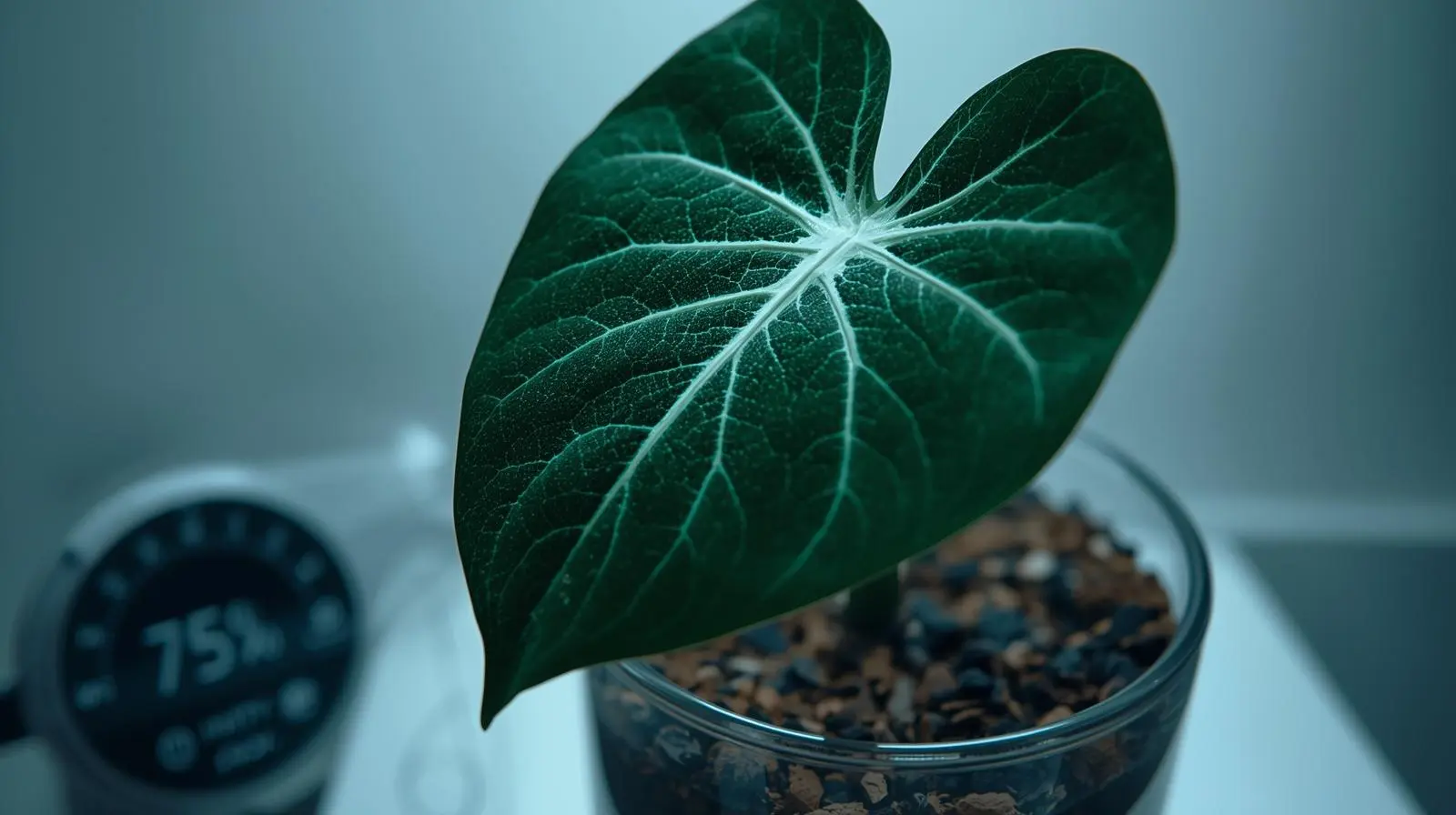
Anthurium clarinervium, sometimes sold as velvet cardboard anthurium, has thick, velvety, heart-shaped leaves crossed by pale veins. It looks exotic, but Anthurium clarinervium care is fairly simple once you give it what the Royal Horticultural Society (RHS) recommends: bright, indirect light, an open acidic mix, generous watering in the growing season and little in winter, raised humidity, and warmth above 18 °C (64 °F).
Anthurium clarinervium Care Snapshot
| Factor | Ideal | Avoid |
|---|---|---|
| Light | Bright, indirect; east- or west-facing aspect | Direct summer sun; deep shade |
| Temperature | Above 18 °C (64 °F) in winter; anthuriums like 16 to 30 °C (60 to 85 °F) | 10 °C (50 °F) or lower; cold drafts |
| Humidity | Raised: moist gravel tray or humidifier | Dry air next to heaters |
| Mix | 2 parts ericaceous peat-free compost, 1 part grit, 1 part orchid bark | Dense, soggy compost |
| Water | Freely in growth, sparingly in winter; rainwater or filtered, room temperature | Standing water; cold water |
| Feeding | Orchid fertilizer every 2 weeks, spring to autumn | Feeding in winter |
| Pets | Keep out of reach | Harmful if eaten; sap irritates skin and eyes |
Sources: RHS Anthurium clarinervium plant details; RHS anthurium guide.
What Is Anthurium clarinervium?
Anthurium clarinervium is an aroid (family Araceae) described by the botanist Eizi Matuda in 1952. Plants of the World Online (Kew) gives its native range as Chiapas, Mexico, and notes it grows mainly in the seasonally dry tropical biome. That is worth knowing, because many care guides describe it as a cloud-forest plant that needs constant mist; its home range is drier than that, and the RHS care advice is correspondingly moderate.
The RHS describes it as a tender, evergreen, epiphytic perennial about 25 to 30 cm tall, with deeply lobed, velvety, dark green leaves up to 13 cm long on stalks up to 15 cm, marked with pale green-white veins. Its lance-shaped, pale green spathes are long-lasting and appear through the year. The RHS lists 2 to 5 years to reach maturity.
It is often confused with the larger Anthurium crystallinum:
| Feature | A. clarinervium | A. crystallinum |
|---|---|---|
| Leaf shape | Deeply lobed, heart shaped | Broadly elliptic to ovate |
| Leaf length | To 13 cm | To 45 cm |
| Veins | Pale green-white | White main veins |
| Native range | Chiapas, Mexico | Panama to Colombia |
Sources: RHS plant details for both species; Plants of the World Online.
Care is almost identical; see our Anthurium crystallinum care guide. For the red-flowered flamingo flower, see our Anthurium andraeanum guide.
Anthurium clarinervium Soil Mix and Potting
As an epiphyte, it has thick roots that need air as well as water. The RHS suggests either growing it epiphytically (mounted) or in an acidic potting mix of 2 parts ericaceous peat-free compost, 1 part horticultural grit and 1 part orchid bark, and lists its soil preference as moist but well drained, acid or neutral. The RHS anthurium guide asks for an open, fast-draining, peat-free acidic compost.
Any chunky aroid mix that drains quickly and still holds some moisture will do; our aroid soil mix guide compares the common recipes. Avoid using plain bagged potting soil on its own, which stays wet for too long around the roots.
- Pot: use one with drainage holes, only slightly larger than the root ball. A pot that is too big holds wet mix the roots cannot use.
- Depth: keep the plant at the same depth it grew before.
- Repotting: in spring or summer, when roots fill the pot or the mix has broken down and stays soggy.
Humidity and Temperature
Humidity. Anthuriums like high humidity, and the RHS suggests standing the pot on a tray of moist gravel or pebbles. In a heated home in winter, a humidifier nearby does more, and grouping plants helps a little. Keep some gentle air movement so the velvety leaves do not stay damp, and water the mix rather than the leaves.
You will see exact humidity “minimums” such as 60 or 70 percent in many guides. We found no published source for a specific threshold for this species, so watch the plant instead: brown, crispy edges and new leaves that tear as they open usually mean the air is too dry for it.
Temperature. The RHS rates it H1A (under glass all year in the UK, above 15 °C / 59 °F) and recommends keeping it above 18 °C (64 °F). Its anthurium guide gives 16 to 30 °C (60 to 85 °F) as the comfortable range and warns that anthuriums can be damaged or killed at 10 °C (50 °F) or lower, or by cold water. Keep it away from cold windows and drafty doors in winter.
Watering and Feeding
Watering. The RHS says to water freely in the growing season and sparingly in winter. In practice, water thoroughly when the top few centimetres (about an inch) of mix feel dry, let the excess drain, and empty the saucer. The RHS lists root rot from overwatering as its main disease risk, so a chunky mix plus never leaving the pot in water is the best protection.
Water quality. The RHS anthurium guide says anthuriums dislike tap water and that rainwater is best, with filtered water as the alternative. Let it reach room temperature first. If you only have tap water, flush the pot now and then with plenty of water; a white crust on the mix is a sign salts are building up.
Feeding. The RHS recommends an orchid fertilizer every two weeks from spring to autumn. Follow the label dilution and stop feeding in winter.
Light Requirements
The RHS recommends bright, indirect light and an east- or west-facing aspect. Its anthurium guide warns that leaves scorch in direct summer sunlight. Near an east window, or a little back from a south or west window behind a sheer curtain, is usually right. If new leaves come out smaller on long, stretched stalks, move the plant closer to the light or add a grow light; see our grow light guide.
Common Problems
| Symptom | Likely cause | Fix |
|---|---|---|
| Crispy brown leaf edges | Dry air, or salt buildup from tap water or overfeeding | Raise humidity; switch to rainwater or filtered water; flush the pot |
| Yellowing lower leaves with wet, sour-smelling mix | Overwatering, root rot | Check roots, cut away mushy ones, repot into fresh chunky mix |
| One old leaf yellowing now and then | Normal ageing | Remove it at the base once it dies back |
| Pale or scorched patches | Direct sun | Move to bright, indirect light |
| Small new leaves on long stalks | Too little light | More light, out of direct sun |
| Damage after a cold spell | 10 °C (50 °F) or lower, or cold water | Move away from cold glass; use room-temperature water |
Temperature limits and root rot risk from the RHS; other fixes are general practice.
The green spike that appears is the flower: a slim spadix with a narrow pale green spathe. It does no harm. Leave it, or follow the RHS advice to remove dead flower stems (and dead leaves) at the base. If roots are rotting, our root rot guide walks through the steps.
Propagation
The RHS lists division, stem or rhizome cuttings, and offsets in spring or summer.
- Wear gloves, since the sap irritates skin and eyes.
- Slide the plant out of its pot and look for offsets or clumps with their own roots and leaves.
- Separate them gently, cutting with a clean knife only where needed.
- Pot each piece in fresh, chunky mix at its original depth.
- Keep the divisions warm, in bright indirect light with raised humidity, and water lightly until new growth shows they have rooted.
A stem piece with aerial roots and at least one leaf can also be potted, or rooted first in moist sphagnum moss.
Pests, Diseases and Pet Safety
The RHS lists mealybugs and scale insects as possible pests and root rot from overwatering as the main disease. Check leaf undersides and stem joins when you water. For treatment, see our guides to rubbing alcohol for mealybugs and armored scale. Test any spray on one leaf first; velvety leaves mark easily.
Toxic to pets and people
The RHS lists A. clarinervium as harmful if eaten and a skin and eye irritant, for both people and pets, and says all parts of anthuriums are toxic. The ASPCA’s flamingo flower entry (for a related anthurium) lists it as toxic to dogs, cats and horses because of insoluble calcium oxalates, with signs such as oral irritation, drooling, vomiting and difficulty swallowing. If a pet chews it, call your vet or the ASPCA Animal Poison Control Center at (888) 426-4435.
Looking for something safe for a cat household instead? See our cat-safe plants list.
Frequently Asked Questions
What is the best soil for Anthurium clarinervium?
A chunky, acidic, fast-draining mix. The RHS suggests 2 parts ericaceous peat-free compost, 1 part horticultural grit and 1 part orchid bark. Any airy aroid mix that drains quickly but holds some moisture works.
Why are the edges of my Anthurium clarinervium leaves crispy?
Usually dry air, or salts from tap water and fertilizer building up in the mix. Raise the humidity, switch to rainwater or filtered water as the RHS suggests, and flush the pot with plenty of water.
How often should I water Anthurium clarinervium?
The RHS says to water freely in the growing season and sparingly in winter. Water when the top few centimetres of mix are dry, let it drain fully, and never leave the pot standing in water.
Why are my Anthurium clarinervium leaves turning yellow?
An occasional old leaf yellowing is normal. Several yellow leaves with wet mix suggest overwatering or root rot: check the roots and repot into fresh, chunky mix if they are brown and mushy.
How big does Anthurium clarinervium get?
The RHS describes it as about 25 to 30 cm tall, with leaves up to 13 cm long on stalks up to 15 cm, reaching maturity in 2 to 5 years.
Is Anthurium clarinervium toxic to cats?
Yes. The RHS lists it as harmful to people and pets if eaten, and the ASPCA lists anthurium as toxic to cats, dogs and horses because of insoluble calcium oxalates.