
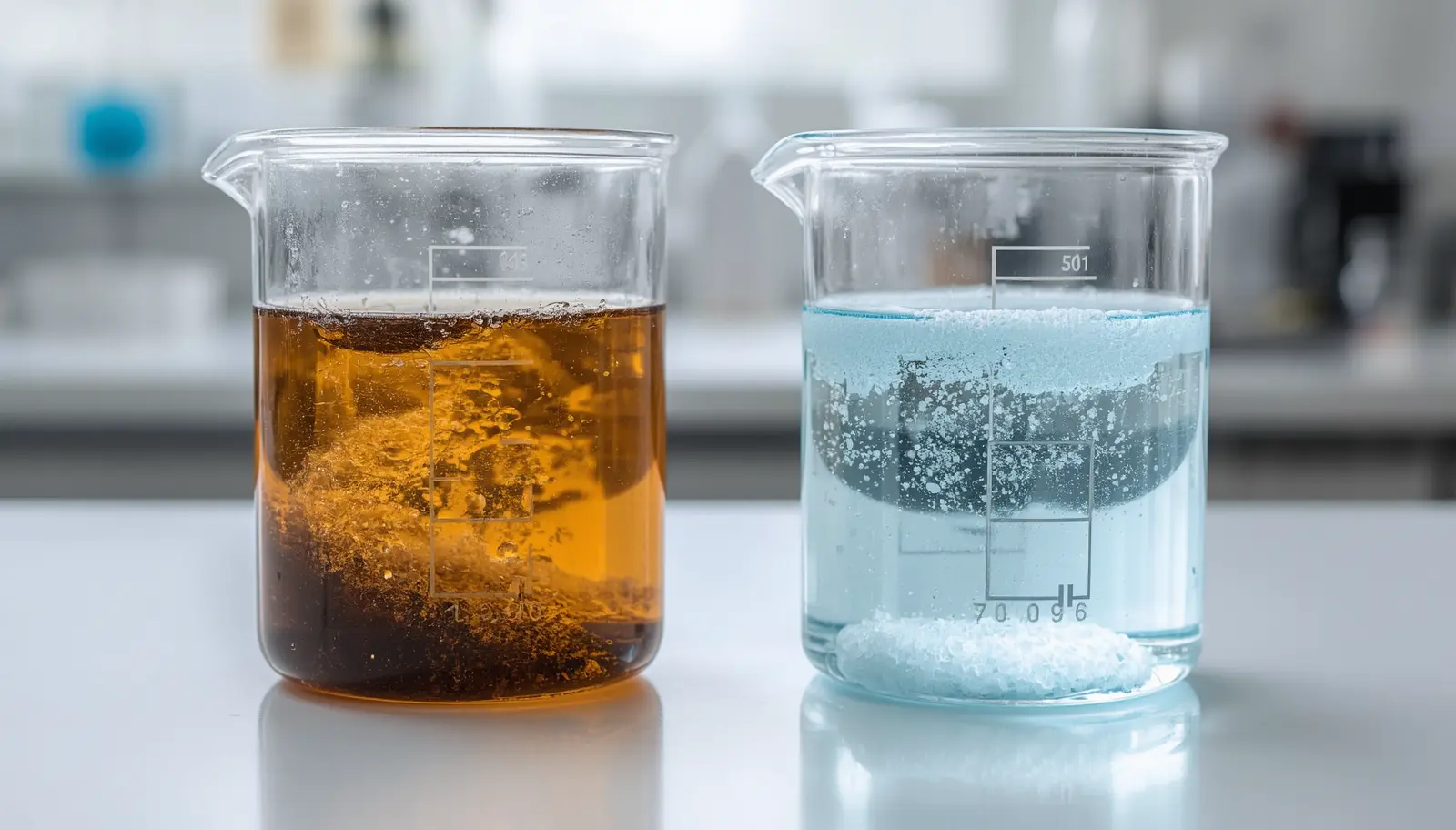
Should you feed your houseplants a synthetic fertilizer or an organic one? Start with the fact both camps agree on. Clemson Extension puts it plainly: plants cannot recognize the difference between natural and synthetic fertilizers, because nutrients must be dissolved as inorganic ions before roots can absorb them, whatever their source. So the real question in synthetic vs organic fertilizer for indoor plants is not which is “healthier” but how fast, how predictably and how cleanly each one delivers those ions in a small pot.
What Is the Difference Between Synthetic and Organic Fertilizer?
Clemson Extension divides fertilizers into two broad groups:
- Natural fertilizers come from plant or animal sources, such as composted manures, seed meals and animal byproducts like bone meal, blood meal and feather meal, or from mined minerals such as rock phosphate and gypsum. NC State Extension notes that these are commonly called “organic,” but “natural” is more accurate, since some are mined inorganic ores.
- Synthetic fertilizers are mined, made by an industrial process, or are industrial byproducts, designed to contain a known amount of nutrients. Examples Clemson gives include ammonium sulfate and calcium nitrate. Most contain no carbon; urea is the exception.
| Factor | Synthetic | Organic (natural) |
|---|---|---|
| Nutrient release | Fast if water soluble; slow-release versions exist | Mostly slow; depends on microbes, warmth and moisture |
| Nutrient content | Known, stated on the label | Usually lower N-P-K per unit weight; can vary |
| Cost | Usually cheaper per unit of nutrient | Often costlier to apply at adequate rates |
| Main risk | Easier to overapply (fertilizer burn) | Can still be overapplied; odor; fungus gnats |
| Extra benefits | Precise, clean, odorless | Can supply micronutrients and support soil organisms |
Sources: Clemson HGIC 1230; NC State Extension Gardener Handbook, chapters 1 and 18; UConn Home and Garden Education Center.
How Fast Do Organic Fertilizers Work in Pots?
Slower than synthetics, and less predictably. NC State explains that natural fertilizers usually release nutrients more slowly and over a longer period because microbes must first break them down, a process called mineralization that depends on moisture, temperature and microbial activity. Clemson adds that while a fast-release fertilizer may take a few days to release nitrogen, a slow-release one can take weeks or months, and that it is difficult to match the release from organic matter to the moment the plant needs it.
Some houseplant articles claim potting mix is “sterile,” so organic fertilizers never break down indoors. That overstates it. The UMass greenhouse nutrient management guide says the bacteria that convert organic nitrogen into ammonium and nitrate are found in most potting media, but the process can be unpredictable and needs a well-aerated mix. Organic feeding works in pots; it just gives you less control, which is why UMass notes growers may still need a soluble feed such as fish emulsion after planting.
Two practical downsides matter more indoors than in a garden:
- Fungus gnats. The UC Statewide IPM Program lists compost, organic fertilizers and mulches among the gnats’ favorite breeding spots and advises against fertilizing with excessive amounts of manure, blood meal or similar organic materials. See also our guide to carnivorous plants for fungus gnats.
- Odor. NC State notes that fish emulsion has a strong odor, which some people do not want in a living room.
What NPK Ratio Do Houseplants Need?
The three numbers on a label (for example 20-20-20) are the percentages of nitrogen (N), phosphate (P) and potash (K). The UConn Home and Garden Education Center explains that nitrogen promotes green, leafy growth, phosphorus encourages flowering and root growth, and potassium supports stem strength and stress tolerance.
UConn’s guidance is simple: foliage houseplants appreciate fertilizers higher in nitrogen, flowering plants respond best to a higher phosphorus analysis, and for a mixed collection an all-purpose, balanced fertilizer (such as 20-20-20 or 10-8-7) can be applied to all plants. Foliage-plant formulas sold around a 3-1-2 ratio (such as 9-3-6 or 24-8-16) fit the “higher nitrogen” advice; no extension source we found requires that exact ratio.
Do not overdo phosphorus. UMass notes it is generally believed that greenhouse crops receive more phosphorus than they need, recommends formulas with 5% phosphorus or less for those crops, and warns that too much can make plants stretch and that phosphorus is a pollutant. For foliage plants, a “bloom booster” with a very high middle number is rarely needed. If you suspect a pH problem rather than a fertilizer shortage, see our pH lockout guide.
Is Urea Bad for Indoor Plants?
Not bad, but worth understanding. Urea is a common nitrogen source in all-purpose fertilizers, and Clemson lists it with nitrate and ammonium as a fast-release form. It is converted to ammonium in the growing medium. UMass’s greenhouse guide flags a specific risk: ammonium toxicity can occur in soilless media when there are high levels of ammonium or urea fertilizer, and it shows up on some plants when the mix is cool and waterlogged. UMass suggests that, ideally, no more than half of the nitrogen given to plants in soilless media be in the ammonium form, and it warns that a 20-20-20 whose nitrogen is 75% ammonium and urea carries that risk.
For a houseplant owner, the takeaway is modest. Check the label’s nitrogen breakdown: a formula with a good share of nitrate nitrogen is the safer pick for soilless mixes, especially in a cool room in winter. If you use a urea-based all-purpose feed, use it at or below the label rate, do not feed cold, waterlogged plants, and stop feeding in the dormant season. Urea itself is not “toxic gas in a bottle”; the problem is too much ammonium in cold, wet mix.
How to Apply Liquid Fertilizer to Houseplants
- Feed during active growth. UConn says houseplants respond to fertilizer during active growth, usually March to October, and it is generally recommended not to fertilize during dormant periods. NC State gives the same window: fertilize indoor houseplants once a month from March to October, and not from November to February unless deficiency symptoms appear.
- Follow the label, or split it. UConn suggests that if the label says one teaspoon per quart monthly, you can feed every two weeks with half a teaspoon or weekly with a quarter teaspoon. Same total, steadier supply.
- Water first. UConn: always apply fertilizer to already moist potting soil to avoid root damage.
- Let some drain through. Water until a little runs out of the drainage holes, then empty the saucer.
- Adjust to the plant. A plant in a dim corner grows slowly and uses less; a fast grower in bright light uses more. Feeding cannot make up for too little light. See our grow light guide.
If you will be away or prefer less fuss, UConn notes that time-release pellets or spikes can supply nutrients for 2 to 9 months.
Using Organic Fertilizer Indoors Without the Downsides
If you prefer organic products, they can work well. To keep the drawbacks in check:
- Prefer liquid or soluble organics (such as fish or seaweed-based liquids) over bulky meals mixed into the pot. UMass notes that incorporating dried blood or bone meal before planting limits your control over nutrition as the plant grows.
- Use small amounts. NC State warns that even natural sources of nutrients can be overapplied and damage plants, and UC IPM advises against excessive blood meal or manure because of gnats.
- Keep the mix airy and let the surface dry between waterings, which UC IPM recommends against gnats and which also suits the microbes that release organic nutrients.
- Use finished, pasteurized products. UC IPM advises against incompletely composted organic matter in potting media unless it is pasteurized first.
Kitchen scraps are a different story. Before you bury them in a pot, read our research-checked guides to coffee grounds, banana peels, eggshells and rice water, or our homemade plant food overview. Interested in root fungi? See mycorrhizae for indoor plants.
Fertilizer Burn and Salt Buildup
Any fertilizer can burn. Clemson explains that virtually all fertilizers are salts: when too much dissolves around the roots, the high salt concentration draws water out of the roots, and the plant shows drought-like symptoms such as yellowing and leaf scorch, with brown leaf margins. NC State notes it may be easier to overapply a synthetic fertilizer than a natural one, but natural ones can be overapplied too.
Signs you are overfeeding
UConn lists browning roots and leaf tips, wilting, poorly shaped leaves and a white crust on pot rims as possible signs of overfertilization. The fix is to leach the pot with plenty of water, letting it drain freely, or to repot into fresh mix. NC State describes the same white crust from liquid feeding and recommends leaching by slowly running water through the mix. More on this in our white crust guide.
How to Read a Fertilizer Label
You do not need a specialty product for every plant. UConn notes the difference between specialty houseplant fertilizers is often more in the packaging than in the nutrients, and Clemson advises comparing labels and the cost of nutrients rather than buying plant-specific formulas. On the label, check:
| Label item | What to look for |
|---|---|
| Guaranteed analysis (N-P-K) | Higher N for foliage plants; balanced for mixed collections; avoid very high P for foliage |
| Nitrogen sources | A good share of nitrate N is gentler in soilless mix than mostly ammonium and urea |
| Micronutrients | UConn suggests a synthetic with micronutrients, since they are typically not present in soilless mixes |
| Release type | Water-soluble for regular feeding; time-release for long intervals |
| Derived from | Tells you whether the nutrients are synthetic, natural, or both |
Sources: UConn Home and Garden Education Center; Clemson HGIC 1230; UMass greenhouse BMP guide.
Growing in water or semi-hydro? Mineral nutrient solutions are the norm there; see our hydroponic systems guide and LECHUZA PON guide.
For more on soil and feeding, see our guides to coco coir vs peat moss.
Frequently Asked Questions
Is synthetic or organic fertilizer better for indoor plants?
For most houseplants, a water-soluble synthetic is the more practical choice: it acts fast, is precise, has no odor and does not feed fungus gnats. Organic fertilizers also work but release nutrients more slowly and less predictably. Plants absorb the same inorganic ions from either source.
How fast do organic fertilizers work?
Slowly. Microbes must first break them down, and Clemson notes slow-release nutrients can take weeks or months to become available, compared with a few days for fast-release fertilizers. Warmth, moisture and an airy mix speed the process.
What is the best NPK ratio for indoor plants?
UConn advises higher-nitrogen fertilizers for foliage houseplants, higher-phosphorus ones for flowering plants, and a balanced fertilizer such as 20-20-20 for mixed collections. Foliage formulas around 3-1-2 (for example 9-3-6) fit the higher-nitrogen advice.
Is urea good for indoor plants?
Urea is a normal nitrogen source in many all-purpose fertilizers, but UMass warns that high levels of urea or ammonium can cause ammonium toxicity in soilless mixes, mostly when the mix is cool and waterlogged. Prefer formulas with plenty of nitrate nitrogen and do not feed in winter.
Why does my houseplant soil smell after organic fertilizer?
Some organic products, especially fish emulsion, simply have a strong odor, as NC State notes. A sour or rotten smell from a pot that stays wet usually means the mix is staying too wet and airless: water less often and improve drainage.
How often should I fertilize houseplants?
During active growth only, usually March to October. NC State suggests once a month for indoor houseplants; UConn notes you can split the monthly dose into weaker weekly or every-two-weeks feeds. Skip winter unless the plant is actively growing.
Sources
- Clemson Cooperative Extension, HGIC 1230: Choosing a Fertilizer (2023)
- NC State Extension Gardener Handbook, Chapter 1: Soils and Plant Nutrients
- NC State Extension Gardener Handbook, Chapter 18: Plants Grown in Containers
- UMass Extension Greenhouse BMP Manual: Nutrient Management
- UConn Home and Garden Education Center: Houseplant Fertilization
- UC Statewide IPM Program: Fungus Gnats