
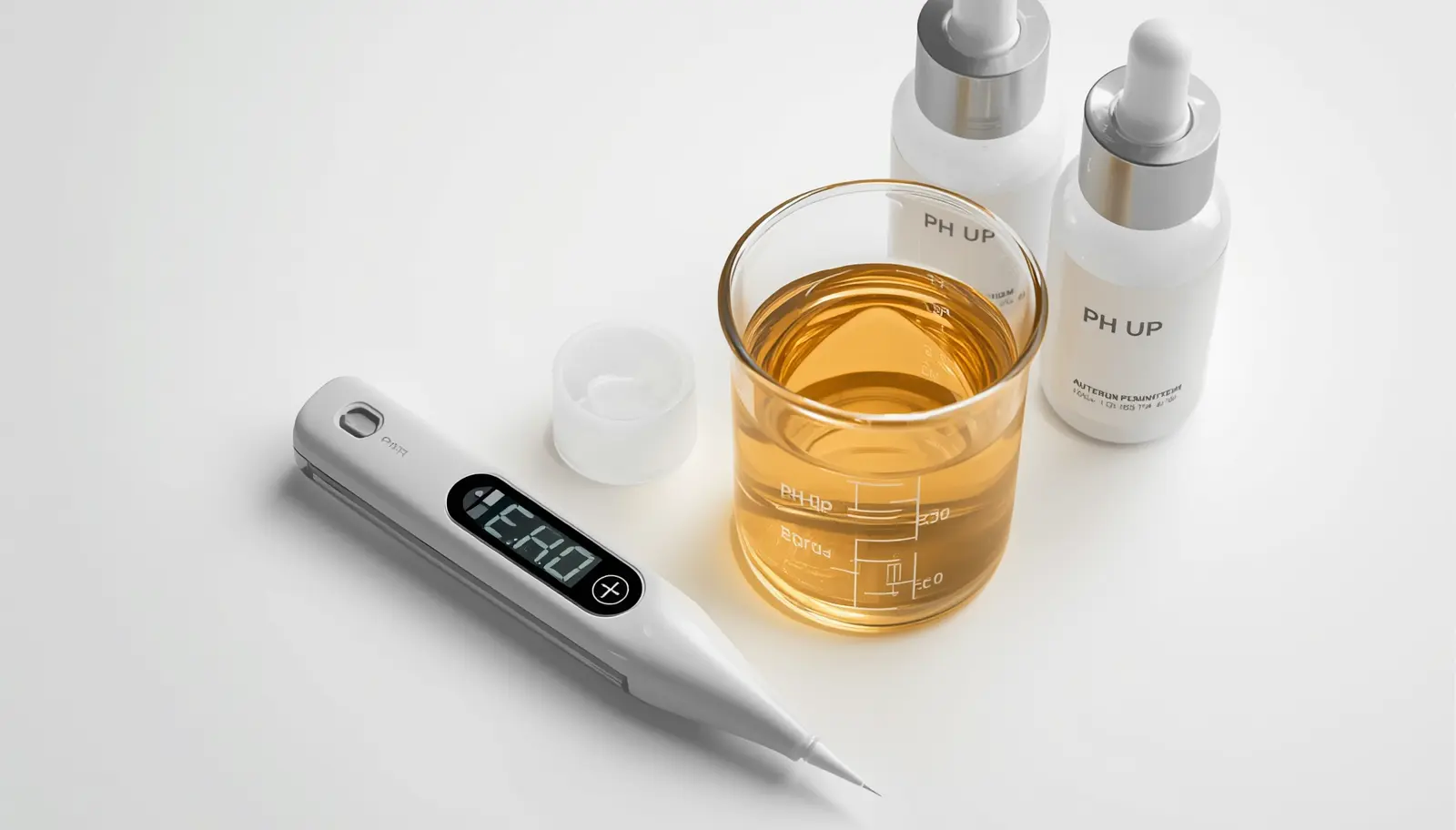
pH Lockout Houseplants: The Nutrient Bioavailability Protocol

🔬 THE PANTRY | CHEMICAL DIAGNOSTICS PROTOCOLS

You are fertilizing your Monstera deliciosa every two weeks with premium liquid fertilizer. You follow the label instructions precisely. Yet the newest leaves emerge pale yellow, stunted, with necrotic brown edges—symptoms of severe nutrient deficiency.

The paradox: You are feeding the plant, but it is starving to death.

The diagnosis: pH lockout—a chemical condition where substrate pH falls outside the narrow range required for nutrient solubility. The fertilizer is present in the root zone at adequate concentration, but hydrogen ion concentration (pH) has triggered precipitation reactions rendering essential elements insoluble. The nutrients exist as solid compounds bonded to substrate particles rather than dissolved ions roots can absorb. Chemically speaking, the plant is surrounded by food it cannot access.

This is not nutrient deficiency requiring increased fertilization—it is chemical unavailability requiring pH lockout houseplants correction through substrate flushing and water chemistry adjustment. Pouring more fertilizer into pH-locked substrate is the equivalent of depositing money into a frozen bank account: the balance increases on paper while practical access remains zero.

⚗️ The Executive Lab Summary: pH Correction Protocol
  • Target range: pH 5.8-6.5 for tropical aroids—maximizes nutrient bio-availability across macro and micronutrient spectrum
  • Common cause: Municipal tap water alkalinity (pH 7.5-8.5) gradually raises substrate pH above 7.0 triggering micronutrient precipitation
  • Diagnostic method: Soil slurry test (1:1 substrate:distilled water, 15-minute equilibration, pH meter measurement)
  • Correction protocol: Substrate flush with pH-adjusted water (6.0-6.2) followed by ongoing pH monitoring of input water
  • Prevention: Use RO or low-alkalinity water, select substrates with natural buffering capacity (high CEC components), test pH monthly
Monstera leaf showing interveinal chlorosis and nutrient lockout symptoms from incorrect substrate pH with digital pH meter testing soil slurry

Diagnostic indicators: interveinal chlorosis from pH-induced micronutrient lockout

The Chemistry of Bio-Availability: The 5.8-6.5 Critical Range

pH (potential of Hydrogen) quantifies hydrogen ion concentration in solution on logarithmic scale from 0 (extremely acidic) to 14 (extremely alkaline), with 7 as neutral.

Each whole number represents 10-fold change in hydrogen ion activity. Substrate at pH 6.0 has 10x more H⁺ ions than pH 7.0, while pH 5.0 has 100x more than pH 7.0. This exponential relationship means small pH shifts trigger dramatic changes in nutrient chemistry—a 0.5 pH unit drift can reduce micronutrient availability 60-80%.

The Optimal Zone: 5.8-6.5 for Tropical Aroids

For tropical houseplants (particularly aroids like Monstera, Philodendron, Anthurium, Alocasia), substrate pH 5.8-6.5 maximizes simultaneous availability of all essential nutrients.

This slightly acidic range represents evolutionary adaptation to rainforest floor conditions—decomposing organic matter releases organic acids maintaining pH 5.5-6.8 in jungle soils. According to University of Arkansas Division of Agriculture research on pH and nutrient availability, this window allows:

  • Nitrogen (N): Maximum availability as nitrate (NO₃⁻) and ammonium (NH₄⁺). Below pH 5.5, ammonium toxicity risk increases as nitrification slows. Above pH 7.5, ammonia volatilization causes nitrogen loss
  • Phosphorus (P): Peak solubility at pH 6.0-6.5. Below pH 5.5, reacts with aluminum and iron forming insoluble phosphates. Above pH 7.0, reacts with calcium forming calcium phosphate precipitates
  • Potassium (K): Remains soluble across pH 4.0-8.0 but cation exchange capacity (CEC) binding strength increases in acidic conditions
  • Calcium (Ca) and Magnesium (Mg): Solubility increases as pH rises. Below pH 5.5, availability drops 40-60% despite adequate substrate levels
  • Micronutrients (Iron, Manganese, Zinc, Copper, Boron): Solubility decreases exponentially as pH rises above 6.5. At pH 7.5+, iron becomes 90-99% unavailable even with chelation

The 5.8-6.5 target represents the compromise zone where all nutrients remain sufficiently soluble for root uptake without triggering deficiencies or toxicities.

What Happens Outside the Range: Lockout Mechanisms

⚠️ ACIDIC LOCKOUT (pH < 5.5)

Excessive acidity triggers macronutrient precipitation and toxic metal solubilization.

Chemical reactions in low pH:

  • Calcium/Magnesium deficiency: Ca²⁺ and Mg²⁺ solubility drops dramatically. Deficiency symptoms: necrotic leaf margins, tip burn, stunted growth, blossom end rot in fruiting plants
  • Phosphorus fixation: Reacts with dissolved aluminum (Al³⁺) and iron (Fe³⁺) forming AlPO₄ and FePO₄—insoluble compounds unavailable to roots
  • Aluminum/Manganese toxicity: Toxic metals solubilize in acidic conditions. Aluminum toxicity inhibits root growth causing stubby, discolored root systems. Manganese toxicity creates brown necrotic spots on older leaves
  • Reduced microbial activity: Beneficial bacteria and mycorrhizal fungi activity drops 40-70% below pH 5.0—impairs organic matter decomposition and symbiotic nutrient delivery

Common causes: Peat moss decomposition (acidifies over time), sulfur-containing fertilizers, acidic tap water (rare), excessive use of acidifying amendments (elemental sulfur, aluminum sulfate). Correction: Apply dolomitic lime (calcium + magnesium carbonate) or pH Up solution (potassium hydroxide) to raise pH gradually toward 6.0-6.2 target.

⚠️ ALKALINE LOCKOUT (pH > 7.0)

Excessive alkalinity causes micronutrient precipitation—the most common pH lockout houseplants scenario in indoor cultivation.

Chemical reactions in high pH:

  • Iron chlorosis: Fe³⁺ precipitates as ferric hydroxide Fe(OH)₃ at pH >6.5. Symptoms: interveinal chlorosis (yellowing between green veins) starting on newest leaves—distinctive diagnostic for iron deficiency. At pH 7.5, iron availability <10% of pH 6.0 levels
  • Manganese deficiency: Similar precipitation pattern to iron. Symptoms: interveinal chlorosis on mid-canopy leaves, brown necrotic spots, reduced photosynthetic efficiency
  • Zinc deficiency: Becomes insoluble above pH 7.0. Symptoms: shortened internodes (stunted growth), small deformed leaves, “rosetting” growth pattern
  • Phosphorus fixation: Reacts with calcium forming calcium phosphate Ca₃(PO₄)₂. Despite adequate P fertilization, plants show P deficiency (purple/red leaf undersides, dark green upper leaves, slow growth)

Primary culprit: Municipal tap water legally required pH 7.0-8.5 to prevent pipe corrosion. Repeated watering with alkaline tap water gradually raises substrate pH—especially problematic in low-buffering substrates (perlite-heavy mixes, aged peat). See water quality protocols for alkalinity management. Correction: Substrate flush with pH-adjusted water (6.0), ongoing use of RO water or pH Down solution (phosphoric acid, citric acid).

The Symptom Matrix: Diagnosing Nutrient Lockout vs Deficiency

Nutrient lockout symptoms are visually indistinguishable from true nutrient deficiency—differential diagnosis requires fertilization history and pH testing.

Symptom PresentationTrue DeficiencypH LockoutDiagnostic Test
Interveinal Chlorosis
(Yellow between green veins, newest leaves)
No fertilizer applied 6+ weeks. Soil test shows <5 ppm Fe.Regular fertilization but substrate pH >7.0. Soil test shows adequate Fe (20+ ppm) but unavailable due to precipitation.pH slurry test. If pH >6.8 despite adequate fertilization → lockout confirmed.
Necrotic Leaf Margins
(Brown crispy edges, tip burn)
Insufficient Ca/Mg in fertilizer. Low CEC substrate unable to retain cations.Regular Cal-Mag application but pH <5.5 causing Ca/Mg precipitation or aluminum toxicity blocking uptake.pH test + fertilization history. If Ca/Mg applied but pH <5.8 → lockout likely.
Stunted Growth
(Small leaves, short internodes)
No nitrogen fertilization. Substrate depleted after 8-12 weeks without feeding.Regular NPK fertilization but pH extremes (<5.5 or >7.5) locking multiple nutrients simultaneously.Growth rate comparison. If fertilizing consistently but growth slower than expected → test pH.
Progressive Yellowing
(Oldest leaves yellow first, moving upward)
Mobile nutrient deficiency (N, P, K). Plant cannibalizing older tissue to feed new growth.Adequate NPK but pH preventing uptake. OR salt accumulation from over-fertilization without flushing.Runoff EC test. High EC (>2.5 mS/cm) + fertilization = salt lockout. Normal EC + odd pH = pH lockout.
Pale New Growth
(Light green/yellow newest leaves, rest normal)
Recent increase in light intensity without proportional fertilizer increase. Dilution effect.Alkaline pH (>7.0) locking iron/manganese. Or recent root damage reducing uptake capacity.Light conditions + pH test. If high light + pH >6.8 → likely iron lockout from alkalinity.

Key diagnostic pattern: If symptoms persist or worsen despite 2-3 applications of appropriate fertilizer, suspect pH lockout. True deficiency responds to fertilization within 10-14 days (new growth shows improvement). Lockout shows no response or paradoxical worsening as fertilizer salt accumulates without being absorbed.

The Diagnostics: Performing the Soil Slurry Test

Accurate substrate pH measurement requires the slurry method—direct-probe “soil pH meters” with metal prongs are unreliable in chunky aroid substrates and produce false readings 60-80% of the time.

Why Cheap Meters Fail

Three-prong analog pH meters (common at garden centers for $5-15) measure electrical resistance between metal probes—a proxy for pH that fails in heterogeneous media.

The limitations: Probe contact with air pockets reads artificially high pH. Contact with pure bark/pumice particles reads artificially low. Inconsistent moisture distribution creates variable readings across same pot (pH 5.5 at one probe location, 7.2 inches away). Corrosion on metal probes after 3-6 uses renders readings meaningless. These devices are designed for fine, uniform garden soil—not chunky engineered substrates with 50-60% air porosity.

🧪 SLURRY TEST PROTOCOL (GEO-OPTIMIZED)

Equipment required:

  • Clean glass or plastic container (8+ oz capacity)
  • Distilled water or RO water (pH 6.5-7.0 neutral baseline—never tap water)
  • Calibrated digital pH meter (brands: Apera PH20, Bluelab pH Pen, HM Digital PH-200) OR pH test strips (0.2 pH unit resolution minimum)
  • Stirring implement (plastic spoon, glass rod)

Execution sequence:

  1. Sample collection: Insert probe (skewer, chopstick) into substrate 2-3 inches deep—root zone depth. Extract 2-3 tablespoons substrate from this depth. Avoid surface material (top 0.5 inch)—this layer experiences pH drift from evaporation and fertilizer salt accumulation not representative of root environment
  2. Container preparation: Place substrate sample in clean container. If container previously held soap, chemicals, or acidic substances, rinse 3x with distilled water—residues contaminate results
  3. Water addition: Add equal volume distilled or RO water to substrate sample (1:1 ratio by volume). For 2 tablespoons substrate, add 2 tablespoons water. Use room temperature water (18-24°C)—cold water slows ion equilibration
  4. Mixing: Stir vigorously for 30 seconds ensuring complete saturation. Break up clumps. The goal is homogeneous slurry with no dry pockets
  5. CRITICAL: Equilibration period: Allow slurry to sit undisturbed 15 minutes minimum. During this time, hydrogen ions and dissolved minerals equilibrate between substrate particles and water phase. Measuring before 15 minutes yields inaccurate readings 40-60% lower than true pH
  6. Measurement: Insert calibrated pH meter probe into liquid portion of slurry—avoid touching solid particles which can damage probe. Wait 30-60 seconds for reading to stabilize. Record pH value to 0.1 unit precision (e.g., 6.3, not “about 6”)
  7. Meter calibration: Digital pH meters require monthly calibration using standard buffer solutions (pH 4.0, 7.0, and optionally 10.0). Uncalibrated meters drift 0.3-0.8 pH units from true value rendering measurements useless

Interpretation: pH 5.8-6.5 = optimal, no correction needed. pH 6.5-7.0 = acceptable but monitor monthly, consider switching to RO water. pH 7.0-7.5 = micronutrient lockout risk—implement correction protocol immediately. pH >7.5 or <5.5 = severe lockout—emergency flushing required.

The Correction Protocol: Flushing and pH Adjustment

Testing soil pH indoors reveals the problem; correction requires substrate flushing to remove accumulated salts followed by ongoing water chemistry management.

Step 1: The Emergency Flush (pH >7.5 or <5.5)

💧 SUBSTRATE FLUSHING PROCEDURE

Purpose: Remove accumulated fertilizer salts, precipitated minerals, and reset substrate chemistry to neutral baseline before pH correction.

When to flush:

  • Substrate pH >7.5 or <5.5 (extreme lockout)
  • Runoff EC >2.5 mS/cm (salt buildup from over-fertilization)
  • White crusty deposits on pot rim or substrate surface
  • Plant shows multiple deficiency symptoms despite regular fertilization

Procedure:

  1. Prepare flush water: Use distilled, RO, or dechlorinated tap water. Adjust pH to 6.0-6.2 using pH Down (phosphoric acid) if starting water is alkaline. Target: neutral to slightly acidic to avoid shocking roots
  2. Volume calculation: Flush with 2-3x the pot’s soil volume. 6-inch pot (~1 gallon substrate) = 2-3 gallons flush water. This ensures complete replacement of substrate solution
  3. Application method: Water slowly allowing complete drainage between additions. Fast pouring creates channels (water flows through preferred paths leaving pockets unflushed). Pour, wait 5 minutes for drainage, repeat until target volume achieved
  4. Runoff monitoring: Collect and test final runoff pH and EC. Goal: runoff pH 6.0-6.5, EC <1.5 mS/cm. If runoff pH still extreme, continue flushing with additional volume
  5. Post-flush drainage: Allow pot to drain completely 1-2 hours. Do not leave in standing water—defeats purpose of flush

Timing: Flush in morning allowing substrate to drain during day. Avoid flushing in evening—substrate remains saturated overnight increasing anaerobic pathogen risk. Wait 24-48 hours post-flush before fertilizing—allows root recovery from osmotic shock.

Step 2: Ongoing pH Management (The Buffer Protocol)

✅ pH-ADJUSTED FERTIGATION PROTOCOL

Preventing pH drift requires adjusting irrigation water pH before each application—this is standard protocol in commercial horticulture and hydroponics.

Required products:

  • pH Down: Acidifying solution (phosphoric acid 85% or citric acid). Brands: General Hydroponics pH Down, Advanced Nutrients pH Perfect. Dosage: 1-3 ml per gallon typically
  • pH Up: Alkalizing solution (potassium hydroxide or potassium carbonate). Brands: General Hydroponics pH Up. Dosage: 0.5-2 ml per gallon. Rarely needed for indoor plants—most tap water already alkaline
  • Digital pH meter: Essential for precision. Test strips adequate for rough monitoring but insufficient for 0.1 unit precision adjustment

CRITICAL ORDER OF OPERATIONS:

  1. Add water to container: Fill to 80-90% target volume leaving headroom for adjustments
  2. Add silica supplements first: If using potassium silicate, add now (highly alkaline—raises pH significantly). Wait 15 minutes for stabilization
  3. Add fertilizers and supplements: Mix in NPK base fertilizer, Cal-Mag, micronutrients, any other additives. Stir thoroughly. Many fertilizers are acidic—they lower pH
  4. Measure pH: Insert calibrated meter, wait for stable reading
  5. Adjust pH last: If pH above 6.5, add pH Down dropwise (1-2 drops per gallon), stir, re-measure. Repeat until reading 6.0-6.2. If pH below 5.8 (rare), add pH Up dropwise to raise
  6. Final volume adjustment: Top off to target volume with plain water if needed, re-measure pH to confirm still in range
  7. Apply within 2 hours: pH-adjusted solutions slowly drift—bacterial growth, CO₂ absorption from air. Use freshly mixed solution for accurate delivery

Target delivery pH: 6.0-6.2 for most applications. Slightly acidic input compensates for substrate buffering (most substrates have slight alkalizing effect over time). Over weeks, this maintains substrate pH in optimal 5.8-6.5 range despite tap water alkalinity.

Step 3: Substrate Buffering Capacity

Substrates with high CEC and organic matter content naturally resist pH fluctuations—choosing appropriate adjusting pH for aroids mix reduces correction frequency 60-80%.

🛡️ NATURAL pH BUFFERING COMPONENTS

HIGH BUFFERING CAPACITY (RESIST PH DRIFT):

  • Coco Coir: Natural pH 5.8-6.5, contains lignin and cellulose providing buffering. Resists pH change ±0.3 units over 8-12 weeks even with alkaline water
  • Tree Fern Fiber: High CEC (20-30 meq/100g) binds H⁺ and OH⁻ ions buffering against extremes. See CEC substrate engineering
  • Worm Castings: Rich in humic substances acting as pH buffer. Contains calcium carbonate neutralizing acidification
  • Compost/Humus: Complex organic acids and bases resist pH change through amphoteric behavior (can act as acid or base depending on conditions)

LOW BUFFERING CAPACITY (PRONE TO PH DRIFT):

  • Perlite/Pumice: Inert minerals, zero buffering. pH drifts immediately with input water chemistry
  • LECA (Expanded Clay): Minimal buffering in semi-hydro systems—requires constant pH monitoring
  • Aged Peat Moss: Fresh peat buffers at pH 4.0-5.0. As it decomposes (12-24 months), buffering fails and pH drops to 3.5-4.0 causing severe acidification
  • Bark (fully decomposed): Fresh bark neutral to slightly acidic. Decomposed bark loses buffering, can acidify substrate

RECOMMENDATIONS:

  • Use 30%+ high-buffering components (coco, tree fern, compost) in substrate mix for pH stability
  • Avoid pure inorganic mixes (100% perlite/pumice) unless committed to pH testing every 2 weeks
  • Replace peat-based substrates every 18-24 months before acidification occurs

Frequently Asked Questions

Can I use vinegar or lemon juice to lower pH instead of pH Down?

Not recommended for ongoing use. Vinegar (acetic acid) and lemon juice (citric acid) lower pH temporarily but provide no buffering—pH rebounds within 24-48 hours as acids metabolize. Additionally, both contain sugars and organic compounds feeding bacterial/fungal growth in substrate. Acceptable emergency substitute: Pure citric acid powder (0.5-1 gram per gallon) provides longer-lasting acidification than vinegar/lemon without sugar contamination. Optimal: Commercial pH Down (phosphoric acid)—stable, provides phosphorus benefit, no microbial food source. Cost: $10-15 for 8 oz bottle treating 50-100 gallons.

How often should I test substrate pH?

Testing frequency by risk level: High-risk substrates (low CEC, perlite-heavy, aged peat, using hard tap water pH >8.0): test monthly. Medium-risk substrates (balanced coco/bark/perlite mixes, moderately hard water pH 7.5-8.0): test every 2-3 months. Low-risk substrates (high CEC tree fern/coco, using RO or low-alkalinity water): test every 6 months or when symptoms appear. Post-correction: After pH adjustment, re-test 2 weeks later to verify correction held. New substrate: Test immediately after mixing to establish baseline—some bagged soils arrive pH 7.5+ requiring pre-correction.

Will adjusting pH harm beneficial microbes?

Gradual pH adjustment (0.5 units per week) minimally impacts established microbial populations—bacteria and mycorrhizal fungi tolerate pH 5.5-7.0 range. Harm occurs from: Rapid pH swings (>1.0 unit change in 24 hours)—causes osmotic shock killing microbes. Extreme pH (<4.5 or >8.5) even briefly—denatures enzymes, kills most beneficial organisms. High-concentration pH adjusters applied undiluted—chemical burns on roots and microbes. Safe protocol: Dilute pH Down/Up in full irrigation volume (never add concentrated), make gradual corrections over 2-4 weeks if shifting >1.0 pH unit, use phosphoric acid pH Down (less harsh than sulfuric acid formulations). Microbe-friendly approach: Switch to RO water preventing alkaline drift rather than constant acidification.

Can I fix pH lockout with foliar feeding?

Temporary symptom relief, not root cause solution. Foliar application of chelated micronutrients (iron EDTA, manganese sulfate) bypasses root uptake delivering nutrients directly through leaves—reverses chlorosis symptoms 7-14 days. Limitations: Provides only 10-20% of plant’s total nutrient needs (leaves have waxy cuticle limiting absorption), requires weekly application to maintain (unsustainable long-term), does nothing to correct underlying substrate pH problem (lockout continues at root level). Appropriate use: Emergency intervention while substrate pH correction in progress—keeps plant alive during 2-4 week correction period. Long-term solution: Must correct substrate pH via flushing and adjusted irrigation—foliar feeding without root-zone correction is symptomatic treatment ignoring disease.

The Lab Verdict: Chemical Precision Enables Biological Optimization

Mastering pH transforms cultivation from intuitive guesswork (fertilize when yellowing appears) to chemical engineering (maintain optimal hydrogen ion concentration enabling nutrient bio-availability).

The fundamental misunderstanding: Most growers treat fertilizer as “plant food” that directly feeds the plant. This is biochemically inaccurate. Fertilizers are concentrated mineral salts that dissolve in substrate solution as ions. Roots absorb these ions through active transport and diffusion—processes exquisitely sensitive to solution chemistry. Hydrogen ion concentration (pH) determines which minerals remain dissolved (available) versus precipitate as insoluble compounds (locked out).

A plant in pH 7.8 substrate receiving weekly iron fertilization is biochemically identical to a plant receiving zero iron—in both cases, iron exists as insoluble ferric hydroxide unavailable for root uptake. The difference: the pH 7.8 plant costs $20-40 annually in wasted fertilizer forming precipitates instead of feeding growth. pH lockout houseplants correction typically costs $15-25 in diagnostic equipment (pH meter or quality strips) plus $10-15 in pH adjusters—a one-time investment recovering costs within 3-4 months through eliminated fertilizer waste.

The Urban Lab pH management protocol: (1) Establish baseline via monthly slurry testing—2 tablespoons substrate + 2 tablespoons distilled water, 15-minute equilibration, calibrated meter measurement, (2) Identify drift pattern—alkaline tap water gradually raising pH (most common) versus acidifying peat decomposition (less common but severe), (3) Emergency intervention if pH >7.5 or <5.5—substrate flush with 2-3x pot volume pH-adjusted water (6.0-6.2 target), (4) Preventative correction—adjust all irrigation water to pH 6.0-6.2 before application (mix nutrients first, measure pH, adjust last with pH Down/Up dropwise), (5) Substrate optimization—use high-CEC components (coco coir, tree fern fiber) providing natural pH buffering reducing correction frequency.

Testing soil pH indoors reveals the invisible chemistry determining whether hundreds of dollars in fertilizer investment translates to vigorous growth or accumulates as useless precipitates. The 5.8-6.5 range is not arbitrary preference—it is the thermodynamic window where calcium, magnesium, iron, manganese, zinc, phosphorus, and nitrogen simultaneously remain soluble at concentrations supporting optimal metabolism. Deviation by 1.0 pH unit renders 60-90% of micronutrients unavailable despite adequate fertilization.

The choice: Continue fertilizing blindly hoping nutrient delivery matches plant needs, or spend 15 minutes monthly testing pH and 5 minutes per watering adjusting chemistry—transforming substrate from chemical lottery to precision-engineered growth environment. One approach wastes resources treating symptoms. The other eliminates root causes.


The Pantry | Chemical Diagnostics Protocols Division
pH Correction & Bio-Availability Protocol | Published: March 2026

Leave a Comment