Skip to content
www.plantblueprint.com
  • Home
  • The Infirmary
  • The Lab
  • The Pantry
  • Symbolism
  • About the Lab
  • Contact

Best Aroid Soil Mix: The CEC Protocol

May 10, 2026 by Mark Tavis
Premium aroid soil mix components showing pumice, orchid bark, tree fern fiber, coco coir, and zeolite arranged separately before mixing, demonstrating chunk houseplant soil texture

🔬 THE PANTRY | SUBSTRATE ENGINEERING PROTOCOLS “Dirt” does not belong indoors. Standard potting soil—peat moss, composted bark, perlite—is engineered for annual bedding plants in … Read more

Categories The Pantry Tags Aroid Soil Mix, CEC, Pumice, Substrate Engineering, Tree Fern Fiber, Zeolite Leave a comment

Potassium Silicate for Houseplants: The Silica Protocol

May 9, 2026 by Mark Tavis
Monstera albo variegata showing thick rigid stems and pristine white variegation without browning from potassium silicate supplementation cell wall fortification

🔬 THE PANTRY | STRUCTURAL ENGINEERING PROTOCOLS Standard NPK fertilizers (nitrogen, phosphorus, potassium) provide macronutrients for metabolic processes—protein synthesis, energy transfer, enzyme activation. They do … Read more

Categories The Pantry Tags Cell Wall Fortification, Plant Nutrition, Potassium Silicate, Silica Supplement Leave a comment

Armored Scale Treatment Indoor Plants: The Suffocation Protocol

May 8, 2026 by Mark Tavis
Close-up of Ficus stem showing armored scale insects as hard brown dome-shaped bumps with sticky honeydew droplets and developing sooty mold on leaves below

🚨 THE INFIRMARY | PARASITIC TRIAGE ⚠️ Visual Diagnosis: Immobile Armored Parasites You observe hard, dome-shaped brown bumps on plant stems, petioles, and leaf veins … Read more

Categories The Infirmary Tags Armored Scale, Diaspididae, Horticultural Oil, Scale Insects Leave a comment

Best Miticide for Houseplants: Spider Mite Eradication

May 6, 2026 by Mark Tavis
Close-up of Monstera deliciosa leaf showing spider mite webbing between veins and characteristic stippling damage from Tetranychidae feeding with visible mites under magnification best miticide for houseplants

🚨 THE INFIRMARY | ARACHNID TRIAGE ⚠️ Critical Diagnostic Error: Misidentification as Insect Infestation If you are applying standard indoor insecticides, pyrethrins, or even neem … Read more

Categories The Infirmary Tags Miticides, Predatory Mites, Spider Mites, Tetranychidae Leave a comment

VPD for Indoor Plants: The Vapor Pressure Deficit Protocol

May 5, 2026 by Mark Tavis
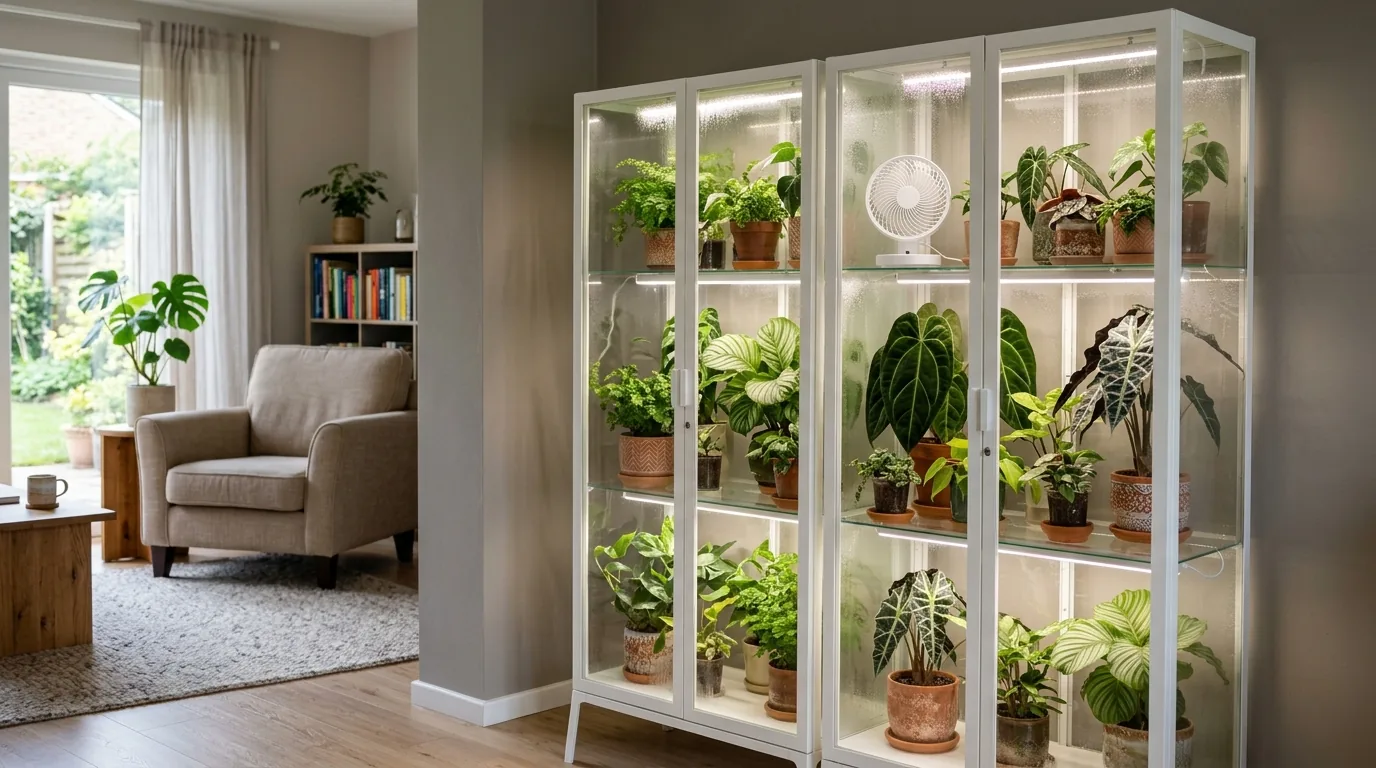
IKEA greenhouse cabinet with smart environmental controller showing VPD readings and automated humidifier system for Anthurium crystallinum cultivation

🔬 THE LAB | ENVIRONMENTAL ENGINEERING PROTOCOLS You maintain 75% relative humidity in your Anthurium crystallinum cabinet using a basic analog hygrometer and manual misting … Read more

Categories The Lab Tags Anthurium Care, Greenhouse Automation, Smart Sensors, Vapor Pressure Deficit, VPD Leave a comment

Rubbing Alcohol for Mealybugs: The Denaturation Protocol

May 4, 2026 by Mark Tavis
Close-up of white cottony mealybug masses on houseplant stem being treated with cotton swab dipped in isopropyl alcohol showing wax dissolution

🚨 THE INFIRMARY | ENTOMOLOGICAL TRIAGE ⚠️ Emergency Diagnosis: Cryptic Mealybug Infestation You observe white cottony masses resembling mold or fungus wedged in the axils … Read more

Categories The Infirmary Tags Isopropyl Alcohol, Mealybug Treatment, Pest Control, White Fuzz Leave a comment

Sphagnum Moss Propagation Box: Rooting Monstera Nodes

May 2, 2026 by Mark Tavis
Sphagnum moss propagation box containing rare Aroid nodes and wet sticks in a controlled laboratory environment, demonstrating high-humidity cloning techniques and root-zone thermal regulation for rapid cellular division.

🔬 THE LAB | BOTANICAL CLONING PROTOCOLS When you sever a node from a Monstera deliciosa, Monstera albo, or Philodendron mother plant, you create an … Read more

Categories The Lab Tags Aroid Propagation, Cloning Chamber, Monstera Nodes, Rooting Hormone, Sphagnum Moss Propagation Leave a comment

Best Water for Calathea: Reverse Osmosis Protocol

May 1, 2026 by Mark Tavis
Calathea orbifolia leaf showing marginal necrosis brown crispy edges from fluoride toxicity next to reverse osmosis water filtration system

🔬 THE LAB | BOTANICAL HYDRATION PROTOCOLS Your Calathea orbifolia, Calathea white fusion, or Goeppertia cultivar develops progressive brown, crispy edges despite maintaining 70% humidity … Read more

Categories The Lab Tags Calathea Care, Fluoride Toxicity, Marginal Necrosis, Reverse Osmosis, Tropical Plants Leave a comment

The Semi-Hydro Protocol: Transitioning Monsteras to Lechuza Pon

April 30, 2026 by Mark Tavis
Monstera deliciosa root system in Lechuza Pon mineral substrate showing white fuzzy hydro roots growing through pumice zeolite and lava rock matrix

🔬 THE LAB | SUBSTRATE ENGINEERING PROTOCOLS Organic soil is fundamentally incompatible with controlled indoor horticulture. Peat-based substrates compact over time, create anaerobic (oxygen-deprived) zones … Read more

Categories The Lab Tags Hydro Roots, Lechuza Pon, Mineral Substrate, Monstera Care, Semi-Hydroponics Leave a comment

The Hâ‚‚Oâ‚‚ Protocol: Oxidizing Anaerobic Root Rot in Aroids

April 29, 2026 by Mark Tavis
Close-up of plant roots submerged in hydrogen peroxide solution showing active effervescence bubbles as anaerobic pathogens are oxidized during root rot treatment and hydrogen peroxide root rot

🚨 THE LAB | EMERGENCY TRIAGE PROTOCOLS ⚠️ Emergency Assessment: Anaerobic Root Zone Collapse Your Monstera deliciosa, Philodendron gloriosum, or other high-value aroid is exhibiting … Read more

Categories The Lab Tags Aroid Care, Emergency Triage, Pest & Disease Control, Plant Chemistry, Root Rot Management Leave a comment
Older posts
Newer posts
← Previous Page1 Page2 Page3 … Page5 Next →

Mark Tavis

The founder and head botanist behind The Urban Lab. With over a decade of specialized experience in high-performance urban plant care, my mission is to provide data-driven troubleshooting protocols that cut through common gardening myths. My commitment to blending horticultural science with zero-waste practices ensures every guide published is reliable, tested, and tailored for indoor microclimates.

Recent Posts

  • Hoya kerrii
    Hoya Kerrii Single Leaf: The Meristematic
    by Mark Tavis
  • Hoya Carnosa
    Hoya Carnosa Inflorescence Triggers: The DLI Blooming Protocol
    by Mark Tavis
  • Sansevieria cylindrica African Spear Plant showing perfect cylindrical leaf morphology and structural rigidity from proper CAM photosynthesis light requirements and volumetric hydration
    Sansevieria Cylindrica Care: The CAM Photosynthesis Protocol
    by Mark Tavis
  • A digital PAR meter measuring Monstera light requirements PPFD, displaying a reading of 550 directly above a mature, heavily fenestrated leaf in a bright, modern greenhouse.
    Monstera Light Requirements PPFD: The DLI Protocol
    by Mark Tavis
  • Comparison of pure fine Lechuza Pon causing root rot versus amended substrate with coarse perlite showing healthy white roots in semi-hydroponics system
    Lechuza Pon Semi-Hydro Transition: Stop the Root Rot
    by Mark Tavis
  • Monstera root system showing severe Pythium root rot with black mushy necrotic tissue compared to healthy white roots requiring emergency surgical debridement
    How to Fix Root Rot: The Pythium Eradication Protocol
    by Mark Tavis

The Urban Lab

Data-driven botanical protocols and scientific troubleshooting for the modern grower. We simplify plant biology into actionable blueprints for high-performance urban gardening.

The Archives

  • The Lab (Advanced Care)
  • The Infirmary (Pests)
  • The Pantry (Sustainability)
  • Plant Symbolism

Company

  • About the Lab
  • Contact

Legal

  • Home
  • Privacy Policy
  • Terms of Use

© 2026 The Urban Lab | Built for Speed & Scientific Accuracy.

© 2026 www.plantblueprint.com • Built with GeneratePress
  • Home
  • The Infirmary
  • The Lab
  • The Pantry
  • Symbolism
  • About the Lab
  • Contact