
📋 Table of Contents
- Why the Bloodgood Japanese Maple Steals the Show
- What Is a Bloodgood Japanese Maple?
- Sunlight Requirements for Perfect Color
- Soil & Planting Secrets
- The Watering Schedule That Actually Works
- Fertilizing Essentials (Less Is More)
- Pruning Tips from the Experts
- Hardiness & Climate Considerations
- Pests & Problems to Watch For
- Leaf Color & Seasonal Magic
- Container Care Tips
- Common FAQs
I’ll never forget the first time I saw a mature Bloodgood Japanese maple in person. It was at a botanical garden in late spring, and the tree was absolutely glowing with these deep burgundy-purple leaves that seemed to shimmer in the afternoon light. I stood there for what must have been ten minutes, completely mesmerized by how one tree could be so breathtakingly beautiful.
That moment started my obsession with Japanese maple Bloodgood care, and over the past eight years, I’ve learned exactly what these stunning trees need to thrive. If you’re considering adding a Bloodgood Japanese maple to your garden—or if you already have one and want to help it reach its full potential—this complete guide will walk you through everything you need to know.
The Bloodgood Japanese maple isn’t just another ornamental tree. It’s a living sculpture that changes with the seasons, rewards proper Japanese maple Bloodgood care with decades of beauty, and becomes the absolute focal point of any landscape. Let me show you exactly how to care for this magnificent tree.
The Most Important Rule: Bloodgood Japanese maples are slow growers that can live for 60-100+ years with proper care. Patience and consistency in your Japanese maple Bloodgood care routine will be rewarded with a stunning specimen tree that increases in value and beauty every year.
What Is a Bloodgood Japanese Maple?
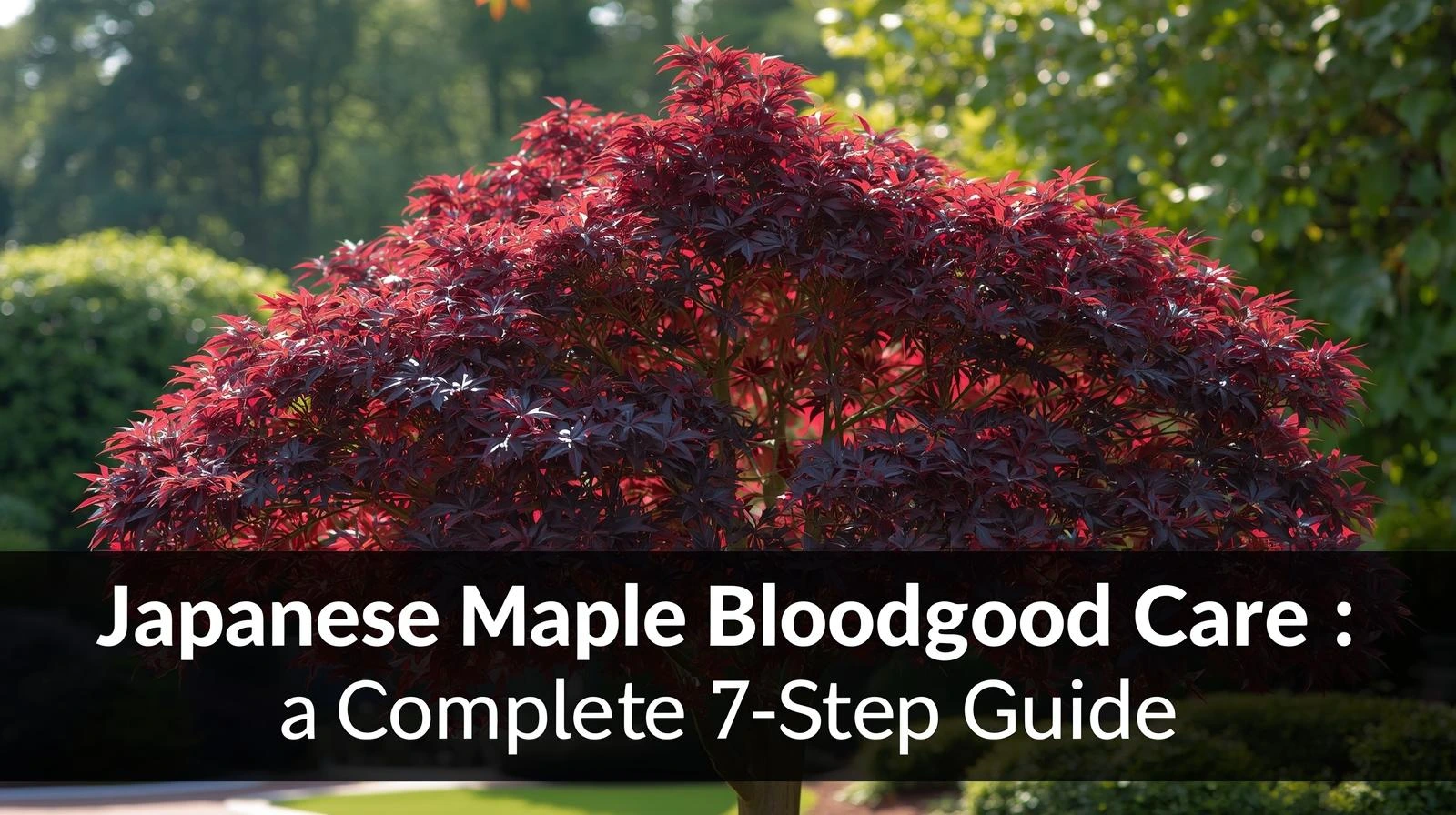
The Bloodgood Japanese maple (Acer palmatum ‘Bloodgood’) is arguably the most popular and widely planted cultivar of Japanese maple in North America, and for good reason. This deciduous ornamental tree is celebrated for its deep burgundy-red to purple foliage that holds its rich color remarkably well throughout the entire growing season.
What makes the Bloodgood Japanese maple truly special is its consistent performance. Unlike some Japanese maple varieties that fade to green in summer heat, proper Japanese maple Bloodgood care ensures the foliage maintains its dramatic deep red-purple color from spring through fall, only intensifying to brilliant crimson and scarlet tones before leaf drop.
Key Characteristics of Bloodgood Japanese Maple:
| Feature | Description |
|---|---|
| Mature Size | 15-20 feet tall, 15-20 feet wide (can reach 25 feet in ideal conditions) |
| Growth Rate | Slow to moderate (1-2 feet per year once established) |
| Leaf Color | Deep burgundy-purple in spring/summer, brilliant red in fall |
| Leaf Shape | Classic palmate (hand-shaped) with 5-7 pointed lobes |
| Form | Upright, rounded canopy with graceful branching structure |
| Hardiness Zones | USDA Zones 5-8 (with protection in Zone 5) |
| Lifespan | 60-100+ years with proper Japanese maple Bloodgood care |
The Bloodgood Japanese maple works beautifully as a specimen tree, focal point in mixed borders, understory tree beneath taller canopies, or even as a large container plant on patios and terraces. Its moderate size makes it perfect for residential landscapes where you want dramatic impact without overwhelming the space.
“After growing five different Japanese maple cultivars over the years, I keep coming back to Bloodgood. It’s simply the most reliable for color retention, cold hardiness, and that perfect combination of elegance and drama.”
Sunlight Requirements for Perfect Color Retention
Getting the light conditions right is absolutely crucial for optimal Japanese maple Bloodgood care. This is where I see most gardeners make their first mistake—and it’s an easy one to avoid once you understand what this tree actually needs.
The Bloodgood Japanese maple performs best in partial shade to full sun, but the ideal balance depends entirely on your climate. Here’s what I’ve learned after years of growing Bloodgood Japanese maples in different locations:
Climate-Specific Light Requirements:
In Cool, Temperate Climates (Zones 5-6):
- Full sun to partial shade works beautifully for Japanese maple Bloodgood care
- 6-8 hours of direct sun produces the deepest, richest burgundy color
- Morning sun is ideal, but all-day sun is generally fine
- These trees can handle intense light when temperatures stay moderate
In Warm, Hot Climates (Zones 7-8):
- Partial shade is essential for successful Japanese maple Bloodgood care
- Morning sun with afternoon shade is the ideal combination
- 4-6 hours of direct sun (preferably morning) is sufficient
- Protection from intense afternoon sun prevents leaf scorch
- Dappled shade from taller trees mimics their natural forest edge habitat
What Happens with Too Little Light?
I learned this lesson the hard way with my first Bloodgood Japanese maple. I planted it in deep shade thinking I was protecting it from sun, and while the tree survived, the leaves gradually turned more greenish-purple instead of that signature deep burgundy. The tree also developed a leggy, sparse growth habit reaching for light.
For the best Japanese maple Bloodgood care results, aim for bright, filtered light or morning sun. The deep red-purple color that makes this cultivar so desirable requires adequate light to develop and maintain throughout the season.
Frequently Asked Questions About Japanese Maple Bloodgood Care
How fast does a Bloodgood Japanese maple grow?
Bloodgood Japanese maples have a slow to moderate growth rate, typically growing 1-2 feet per year once established. Young trees may grow more slowly (6-12 inches annually) as they establish root systems. With optimal Japanese maple Bloodgood care, a young tree can reach 8-10 feet in 5-7 years and its mature height of 15-20 feet in 15-20 years.
Can Bloodgood Japanese maples tolerate full sun?
Yes, Bloodgood Japanese maples can tolerate full sun in cooler climates (Zones 5-6), where they actually develop the deepest burgundy color. However, in warmer regions (Zones 7-8), afternoon shade is essential to prevent leaf scorch. The ideal Japanese maple Bloodgood care in hot climates includes morning sun with afternoon shade—about 4-6 hours of direct sunlight.
When should I water my Bloodgood Japanese maple?
Water your Bloodgood Japanese maple when the top 3-4 inches of soil feel dry to the touch. Newly planted trees need deep watering 2-3 times weekly for the first 1-2 years. Established trees typically need supplemental watering only during dry spells. The key to successful Japanese maple Bloodgood care is keeping soil consistently moist but never waterlogged.