
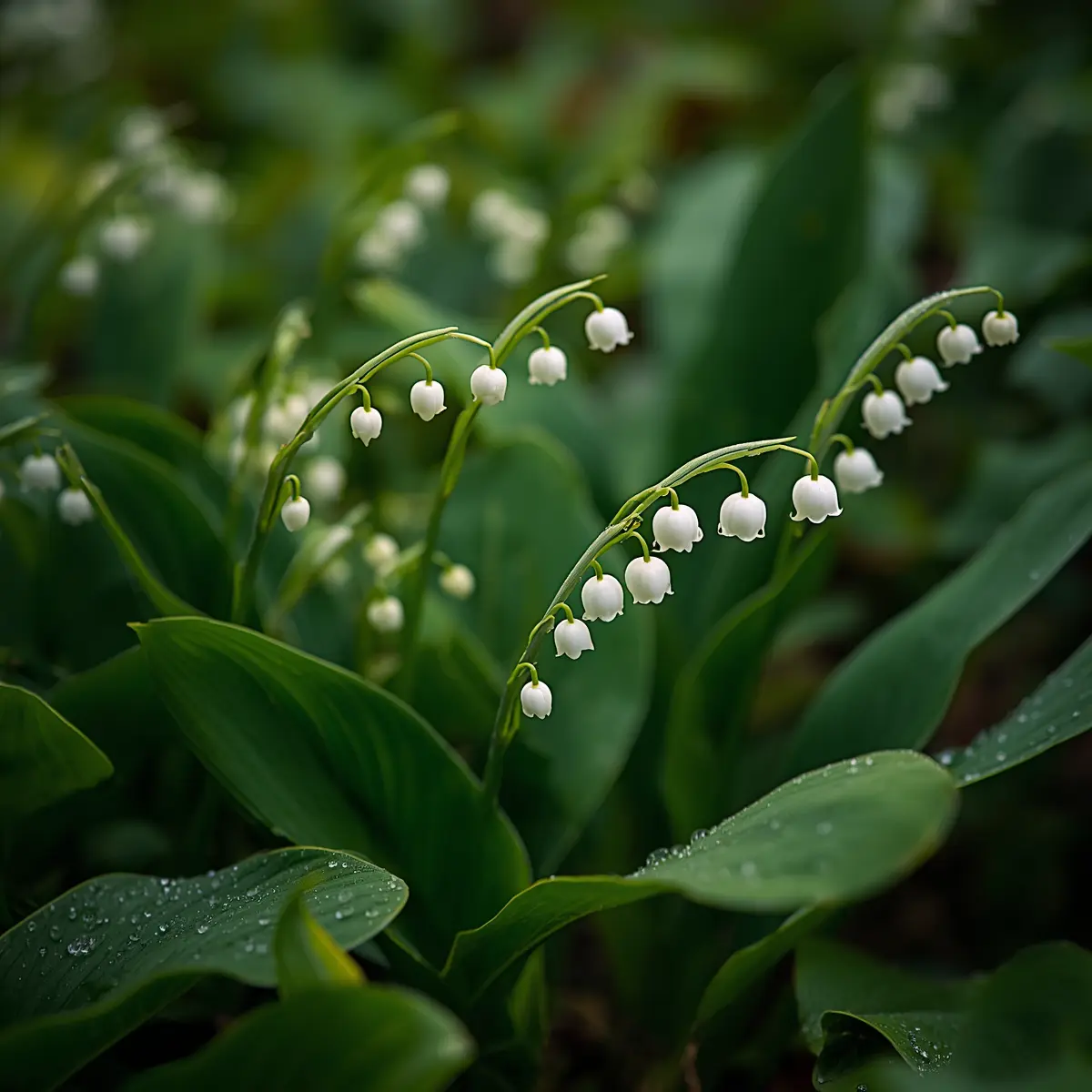
Few flowers are as beloved as lily of the valley. Its arching stems of tiny, nodding white bells release one of the sweetest fragrances in the garden, it’s the birth flower of May, and it has graced royal wedding bouquets for generations. But this cottage-garden darling has a double edge: it is genuinely toxic, and once it settles into a bed it can be almost impossible to evict. This guide covers all of it — how to grow lily of the valley, how to keep it (and your household) safe, how to remove it if it takes over, and what those little bells have symbolized for centuries.
Lily of the Valley at a Glance
Lily of the valley is a rhizomatous perennial groundcover, not a true lily at all — despite the name, it belongs to the asparagus family (Asparagaceae). Here’s the snapshot before we dig in.
| Factor | Details |
|---|---|
| Botanical name | Convallaria majalis (family Asparagaceae) |
| Hardiness | USDA zones 3–8; prefers cool-summer climates |
| Light | Part shade to full shade |
| Soil | Moist, rich, well-drained; tolerates clay and some dryness |
| Height | 8–12 inches, spreading indefinitely by rhizomes |
| Bloom | Fragrant white bells, early to mid spring |
| Toxicity | All parts highly toxic to pets and people |
| Watch out | Invasive — spreads fast and is hard to remove |
What Is Lily of the Valley?
Lily of the valley (Convallaria majalis) is a woodland perennial native to Europe and temperate Asia that has naturalized across much of North America. Each plant sends up two or three broad, parallel-veined leaves, and from their center rises a slender, one-sided raceme of five to ten pendent, bell-shaped white flowers famous for their sweet scent. In fall, pollinated plants may produce small orange-red berries. It’s also known as “May lily” or “May bells,” and it grows from pointed rhizome buds called pips.
⚠️ Read This Before You Plant
how to grow lily of the valley
Lily of the valley is planted from pips — the pointed rhizome buds that produce each new fan of leaves and flowers. The best time to plant is fall, or early spring while the plant is still dormant. Follow these steps:
- Choose a shady spot. Pick a location in part to full shade with moist, rich, well-drained soil. Dappled shade beneath trees or on the north side of the house is ideal.
- Prep the soil. Loosen it and work in compost or aged manure. If your soil is heavy clay, mix in some sand or peat to improve drainage.
- Soak the pips. Soak the pips in room-temperature water for a few hours before planting to rehydrate the roots.
- Plant pips up, 1 inch deep. Set each pip with the pointed bud facing upward, about 1 inch below the soil surface, spreading the roots out around it.
- Space about 6 inches apart. Give each pip roughly 6 inches — they’ll knit together into a dense carpet over a couple of seasons.
- Cover, firm, and water well. Backfill, firm gently, and water thoroughly. Top with a layer of mulch.
Pro tip: Plant lily of the valley in a buried, bottomless pot — or don’t plant it at all. Loose in a bed, those innocent little pips become a decades-long eviction battle.
Lily of the Valley Care
Lily of the valley is famously low-maintenance once established. Here’s the routine.
- Light: Part to full shade. It will grow in sun only if the soil stays reliably moist, but the foliage often scorches.
- Water: Keep the soil evenly moist, especially the first year. Don’t let it dry out completely, or growth and flowering suffer.
- Feeding: Little to none. A top-dressing of compost each fall is usually all it needs; add a slow-release fertilizer in spring only if your soil is poor.
- Mulch: Apply a fresh layer of mulch or leaf mold each autumn to mimic its natural woodland floor.
- Pruning: None needed. Leave the foliage after flowering — it feeds the rhizomes for next year.
It’s naturally resistant to browsing by deer and rabbits (thanks to its toxicity) and rarely troubled by pests. If it’s growing well but not flowering, the colony may be overcrowded — dividing it can restore bloom. For light needs on other shade plants, see our grow light guide.
How to Propagate Lily of the Valley
Division is the standard way to propagate lily of the valley, and it couldn’t be easier. In fall or early spring while the plant is dormant, dig up a clump, gently tease the tangle of rhizomes apart into sections — each with at least one pip and some roots — and replant them about 6 inches apart at their original depth. Water them in well. Growing from seed is possible but slow and rarely worth it when division works so reliably.
⚠️ Is Lily of the Valley Poisonous?
Yes — lily of the valley is highly poisonous to both people and animals, and this is not a risk to take lightly. Every part of the plant contains cardiac glycosides (such as convallatoxin) along with saponins. These compounds affect the heart directly, which is what makes the plant dangerous rather than merely irritating.
Toxic to pets
According to the ASPCA, lily of the valley is toxic to dogs, cats, and horses. Symptoms of ingestion include vomiting, a slow or irregular heartbeat, low blood pressure, disorientation, seizures, and in severe cases coma. If you suspect your pet has eaten any part of the plant, treat it as an emergency: call your veterinarian or the ASPCA Animal Poison Control Center at (888) 426-4435 immediately.
Toxic to people
All parts are toxic to humans too, including the bright berries that can tempt children and even the water from a vase of cut flowers. Poisonings have been documented from ingesting berries and leaves. Handling the plant can also irritate sensitive skin, so wear gloves. If someone ingests any part, contact Poison Control at (800) 222-1222 or seek emergency care.
Is Lily of the Valley Invasive? How to Get Rid of It
Lily of the valley is considered invasive across much of the U.S. Midwest and Northeast and parts of Canada. It spreads relentlessly by underground rhizomes (and by seed), forming dense colonies that crowd out native wildflowers. Because even a tiny fragment of rhizome can resprout, removing it takes persistence. Here’s how:
- Dig out every rhizome. Wearing gloves, dig up the plants and sift the soil by hand to remove all rhizome pieces. Any fragment left behind will grow a new pip.
- Or smother the patch. In early spring, cover the area with cardboard or an opaque tarp, weighted down and sealed at the edges, and leave it in place for a full growing season.
- Spot-treat as a last resort. A glyphosate herbicide painted directly onto the foliage will kill it, but it kills whatever else it touches — use with care.
- Bag it, don’t compost it. Dispose of all plant material as yard waste. Never compost it, and don’t let rhizomes hitch a ride in moved soil.
For a deeper playbook on tackling a stubborn spreader, see our guide to identifying and removing invasive plants. If you’re clearing a patch to make way for something better, native replacements like Solomon’s seal or violets fill the same shady niche without the risks.
Lily of the Valley Meaning & Symbolism
Lily of the valley is the birth flower of May, paired with the hawthorn, which is why it’s sometimes called “May lily” or “May bells.” Across cultures it carries some of the loveliest symbolism of any bloom: humility, purity, sweetness, motherhood, and — most famously — the “return of happiness,” a nod to the way it arrives with spring.
In Christian tradition it’s known as “Our Lady’s tears,” said to have sprung from the Virgin Mary’s tears at the crucifixion (and, in another legend, from Eve’s tears leaving Eden). It’s the national flower of Finland, and in France it’s the flower of Le Muguet — sprigs are given to loved ones on May 1st as a token of luck and affection. Its association with purity and good fortune has also made it a favorite in weddings: it appeared in the bridal bouquets of Grace Kelly, Princess Diana, Kate Middleton, and Meghan Markle, and in Queen Elizabeth II’s coronation bouquet. For more flower lore, browse our flower symbolism collection and our guide to snapdragons.
Lily of the Valley Varieties
Beyond the classic white species, a handful of cultivars offer something a little different:
| Variety | What makes it special |
|---|---|
| C. majalis var. rosea | Soft pink flowers instead of white. |
| ‘Bordeaux’ | Larger flowers on strong stems — a good choice for cutting. |
| ‘Golden Slippers’ | Chartreuse-gold foliage that brightens shady corners. |
| ‘Albostriata’ | Green leaves striped lengthwise in creamy white. |
| ‘Fortin’s Giant’ | A larger, later-blooming form with bigger bells. |
Grown thoughtfully — in the right shady spot, ideally contained, and well out of reach of children and pets — lily of the valley rewards you with one of spring’s great fragrances and a piece of living folklore. Just plant it with your eyes open to both its charms and its risks.
Frequently Asked Questions
Is lily of the valley poisonous to dogs and cats?
Yes. The ASPCA lists it as toxic to dogs, cats, and horses. Its cardiac glycosides can cause vomiting, an irregular heartbeat, low blood pressure, seizures, and coma. If your pet ingests any part, call your vet or ASPCA Animal Poison Control at (888) 426-4435 immediately.
Is lily of the valley poisonous to humans or to touch?
All parts are toxic if eaten, including the berries and even the vase water. Handling it can irritate sensitive skin, so wear gloves. If someone ingests any part, contact Poison Control at (800) 222-1222 or seek emergency care.
Where does lily of the valley grow best — sun or shade?
It grows best in part to full shade with moist, rich, well-drained soil, in USDA zones 3–8. It tolerates some sun only if the soil stays consistently moist, and prefers cool-summer climates.
How do you get rid of lily of the valley for good?
Dig out every rhizome (any fragment resprouts), or smother the patch with cardboard or a tarp for a full growing season. Glyphosate painted on the leaves works as a last resort. Bag the material as yard waste — never compost it.
What does lily of the valley symbolize, and what month is it for?
It’s the birth flower of May and symbolizes humility, purity, sweetness, and the return of happiness. In Christian tradition it’s called “Our Lady’s tears,” and it’s the national flower of Finland.
Is lily of the valley invasive?
Yes. It spreads aggressively by rhizomes and seed, forming dense colonies that outcompete native plants, and is considered invasive in much of the U.S. Midwest and Northeast. Containing it in a buried pot helps keep it in check.