
📋 Table of Contents
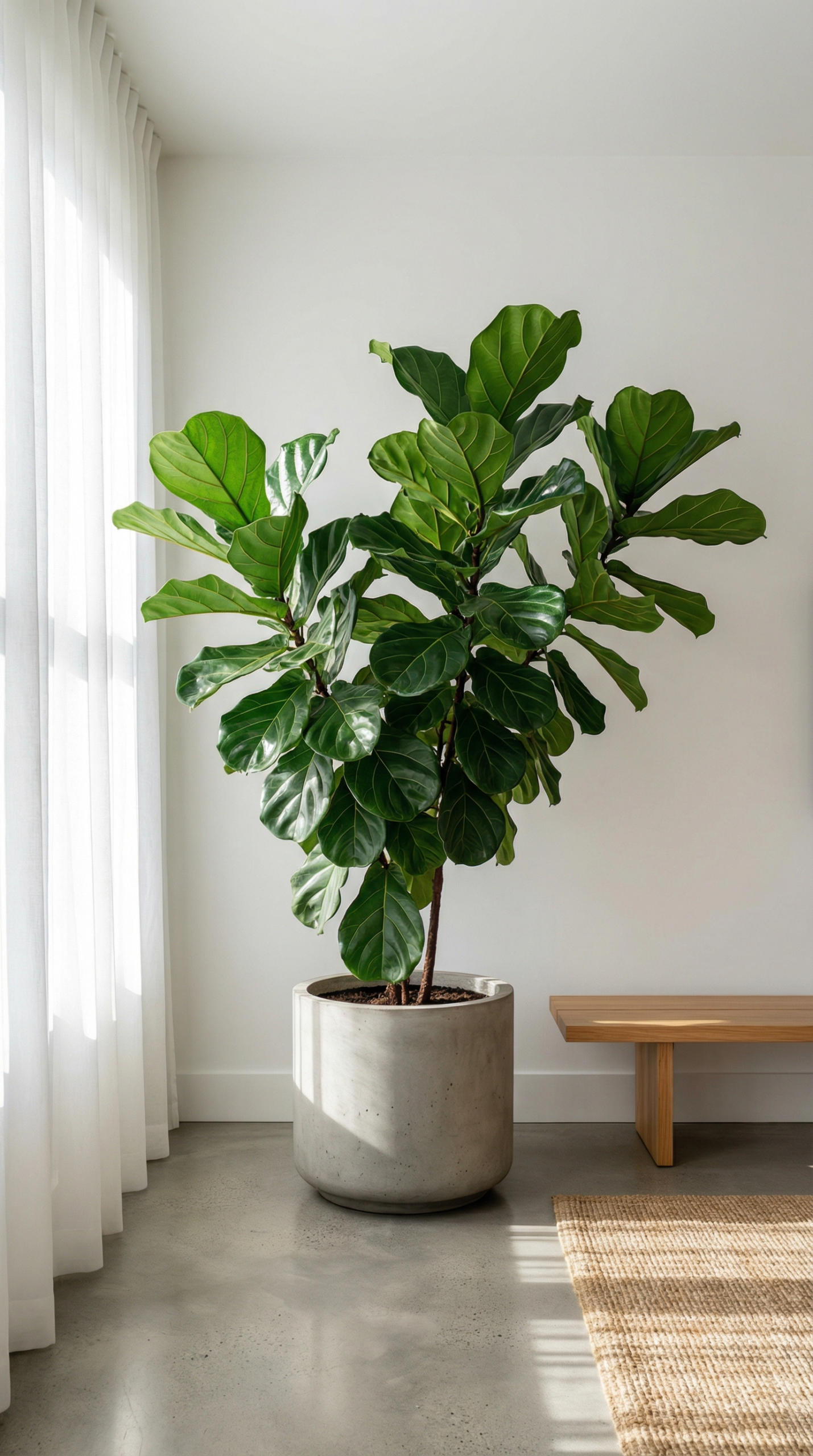
The “Diva” Myth Debunked: Fiddle Leaf Figs (Ficus lyrata) have earned a reputation as temperamental houseplants—”Look at it wrong, and it drops a leaf.” This characterization, while widespread among indoor plant enthusiasts, fundamentally misunderstands the plant’s biology.
The Evolutionary Reality: Native to the lowland tropical rainforests of West Africa, Ficus lyrata evolved in dense, wind-protected jungle understories where environmental conditions remain remarkably stable. When transplanted to indoor environments with fluctuating light, temperature, and humidity, the plant enters acclimatization shock—a physiological stress response that triggers leaf abscission (the scientific term for leaf drop).
The Urban Lab Solution: This isn’t about the plant being “difficult.” It’s about understanding the biochemical mechanisms behind Fiddle Leaf Fig stress responses and implementing evidence-based stabilization protocols. This comprehensive Ficus lyrata care guide will transform your approach from reactive troubleshooting to preventative plant physiology management.
🧪 Lab Note: Feeling intimidated by the Ficus Lyrata’s complex care requirements? If you are building your indoor jungle, we recommend mastering the Variegated Pothos Protocols (N-Joy vs. Pearls and Jade) first. They offer similar visual impact with significantly higher error tolerance for beginners.
The Biology of Leaf Abscission: Understanding Plant Stress Hormones
When discussing Fiddle Leaf Fig care, most guides focus on symptoms without addressing the underlying biochemistry. The Urban Lab takes a different approach.
📚 Source Data: For detailed botanical taxonomy and natural habitat analysis of Ficus lyrata (Moraceae family), reference the Royal Horticultural Society’s Botanical Profile .
The Ethylene Response Cascade
When Ficus lyrata detects environmental change—particularly in photosynthetically active radiation (PAR) or relative humidity—specialized cells produce ethylene gas (C₂H₄), a plant hormone that regulates stress responses. According to research from the USDA Agricultural Research Service, ethylene is the primary trigger for leaf drop in tropical ficus species.
This ethylene accumulation signals the abscission zone—a specialized layer of cells where the leaf petiole attaches to the stem. Within this zone, the plant produces enzymes that degrade cell walls, severing the vascular connection and causing the leaf to detach.
- Environmental Change Detected → Photoreceptors (phytochromes) sense light quality shifts
- Ethylene Synthesis Initiated → ACC (1-aminocyclopropane-1-carboxylic acid) converts to ethylene
- Abscission Zone Activated → Cell wall degrading enzymes (cellulase, polygalacturonase) mobilize
- Vascular Disconnection → Nutrient and water flow ceases to leaf
- Leaf Abscission → Mechanical separation occurs
The Stabilization Solution
Understanding this mechanism reveals the solution: environmental stability prevents ethylene cascade initiation. Your Fiddle Leaf Fig doesn’t need perfect conditions—it needs consistent conditions.
✅ The Stability Protocol
Once you place your Ficus lyrata in its permanent location, do not move it for a minimum of 6-8 weeks. This allows complete acclimatization to:
- Local light intensity and duration (photoperiod)
- Ambient temperature and daily fluctuation patterns
- Relative humidity levels and air circulation
- Water availability in the growing medium
Lighting Requirements: The PPFD Specification for Ficus Lyrata
The most common misconception in Fiddle Leaf Fig indoor care is the “medium light” recommendation. This vague guidance leads to chronic photosynthetic deficiency.
Debunking the “Medium Light” Myth
As a tropical rainforest tree that reaches 15 meters in its native habitat, Ficus lyrata is adapted to high-intensity filtered light—not dim interior conditions. In West African forests, these trees grow in gaps and edges where substantial light penetrates the canopy.
Understanding light requirements for tropical houseplants is essential for long-term success.
The PPFD Requirement
Photosynthetic Photon Flux Density (PPFD) measures the amount of photosynthetically active radiation reaching the plant. Based on Purdue University Extension research on indoor fig cultivation:
- Minimum survival threshold: 50-75 μmol/m²/s
- Maintenance (no new growth): 100-150 μmol/m²/s
- Active growth (optimal): 200-400 μmol/m²/s
- Maximum tolerance: 600 μmol/m²/s (higher causes photoinhibition)
The Window Placement Test
Without a quantum PAR meter, use this practical assessment:
📖 The Reading Test for Fiddle Leaf Fig Light
At noon on a clear day, stand in the proposed plant location. If you cannot comfortably read standard print (10-12pt font) without squinting or additional lighting, the location is too dark for healthy Ficus lyrata growth.
Optimal window orientations:
- South-facing (Northern Hemisphere): Best option if filtered through sheer curtains 3-6 feet from window
- East-facing: Excellent; gentle morning direct sun is tolerated
- West-facing: Acceptable with afternoon sun filtered
- North-facing: Insufficient for robust growth; supplemental grow lights required
Phototropism Management: The Rotation Protocol
Unilateral lighting causes phototropic bending—the plant leans toward the light source due to differential auxin (indole-3-acetic acid) distribution. Auxin accumulates on the shaded side of the stem, promoting cell elongation and creating curvature.
Solution: Rotate your Fiddle Leaf Fig 90° clockwise every 30 days. This distributes auxin evenly, maintaining vertical growth and symmetrical canopy development.
Watering Protocol: Preventing Edema and Root Rot in Ficus Lyrata
Improper watering causes the majority of Fiddle Leaf Fig problems. Two primary conditions result from water management errors: edema and anaerobic root rot.
For detailed information on preventing root rot across all houseplants, see our comprehensive root rot prevention guide.
Understanding Edema (Intumescence)
If you’ve noticed small red or brown spots on new Fiddle Leaf Fig leaves, you’re observing edema (also spelled oedema)—a physiological disorder where cells rupture from excessive water uptake.
The Mechanism
When roots absorb water faster than leaves can transpire it (release through stomata), turgor pressure inside leaf cells exceeds cell wall capacity. The cells literally burst, creating visible lesions that appear as:
- Small red or brown raised bumps on new meristematic growth
- Cork-like brown spots on leaf undersides
- Rough, warty texture on younger leaves
According to Oregon State University Extension, edema is non-infectious and doesn’t spread, but indicates suboptimal watering practices.
✅ The Soak and Dry Watering Method
Step 1: Deep Watering
- Water thoroughly until approximately 20% of applied water drains from bottom holes
- This flushes accumulated salts from fertilizer and prevents soil compaction
- Ensures complete root ball hydration
Step 2: Complete Dry Down
- Wait until the top 2-3 inches (5-7cm) of soil are completely dry
- Insert finger or moisture meter to verify
- Typically 7-14 days depending on season, pot size, and environmental conditions
Step 3: Consistent Rhythm
- Water based on soil moisture, NOT calendar schedule
- Season affects frequency: more in summer (active growth), less in winter (dormancy)
Preventing Anaerobic Root Rot
Root rot occurs when oxygen is displaced from the soil by excess water. Roots require aerobic respiration—without oxygen, they die and become colonized by pathogenic fungi (Pythium, Phytophthora species).
Soil composition for Fiddle Leaf Fig:
- 60% quality potting mix
- 20% perlite (improves drainage and aeration)
- 15% orchid bark or coco coir chunks
- 5% activated charcoal (prevents anaerobic conditions)
The Urban Lab Diagnostic Table: Fiddle Leaf Fig Troubleshooting
| Symptom | Diagnosis | Protocol |
|---|---|---|
| Lower Leaf Drop | Acclimatization shock OR insufficient light intensity | Do not move plant. Increase PPFD to 200+ μmol/m²/s. Wait 6-8 weeks for stabilization. |
| Brown Spots (Center of Leaf) | Anaerobic root rot from waterlogged soil | Unpot and inspect roots. Remove mushy brown roots. Repot in aerated soil with 20% perlite. Reduce watering frequency. |
| Crispy Brown Leaf Edges | Low relative humidity (<40%) OR chronic underwatering OR salt accumulation | Increase humidity with humidifier (target 50-60%). Flush soil with distilled water to remove salt buildup. Maintain consistent watering. |
| Red/Brown Dots on New Growth | Edema (intumescence) from water stress | Cosmetic issue only—not harmful. Increase air circulation. Avoid overwatering. Maintain consistent watering rhythm. |
| Yellowing Lower Leaves | Natural senescence OR nitrogen deficiency OR overwatering | 1-2 leaves annually is normal. If multiple leaves: check soil drainage and fertilize with balanced NPK fertilizer at ¼ strength monthly. |
| Leaning/Tilting Growth | Phototropism from unilateral light source | Rotate plant 90° clockwise monthly to distribute auxin evenly and promote vertical growth. |
Thigmomorphogenesis: The Shake Test for Trunk Strength
One of the most overlooked aspects of Fiddle Leaf Fig indoor care is mechanical stimulation. In nature, wind provides constant physical stress that triggers thigmomorphogenesis—the plant’s growth response to mechanical stimulus.
The Biochemical Mechanism
Physical movement activates mechanoreceptor proteins in cell membranes, triggering a cascade that increases cellulose and lignin deposition in cell walls. This results in:
- Thicker, stronger trunk (increased radial growth)
- Shorter internodes (compact growth)
- Enhanced structural support capacity
- Reduced need for external staking
Research published in the Journal of Experimental Botany demonstrates that mechanical stimulation in potted plants significantly increases stem diameter and structural rigidity.
🌪️ The Weekly Shake Protocol
- Frequency: Once weekly
- Duration: 30-60 seconds per session
- Technique: Gently grasp the trunk at mid-height and oscillate side-to-side (mimics wind sway)
- Intensity: Moderate—visible movement but not aggressive
- Timing: During morning when stomata are open and plant is most responsive
Expected Results: Within 3-6 months, measurably increased trunk caliper (diameter) and improved self-supporting capacity.
Pest Management: Common Fiddle Leaf Fig Insects
While Ficus lyrata is relatively pest-resistant, three arthropods commonly infest indoor specimens:
Spider Mites (Tetranychidae)
Identification: Fine webbing on leaf undersides, stippled yellowing, tiny moving dots
Treatment: Increase humidity above 60% (mites thrive in dry conditions). Spray with neem oil solution or insecticidal soap weekly for 3-4 weeks. Wipe leaves with damp cloth to physically remove mites.
Learn more about eliminating spider mites from indoor plants with our complete treatment protocol.
Scale Insects (Coccoidea)
Identification: Brown or white bumps on stems and leaf undersides
Treatment: Manual removal with cotton swab dipped in rubbing alcohol. Apply horticultural oil or neem oil to suffocate remaining insects. Repeat treatment every 7-10 days for 4-6 weeks.
Mealybugs (Pseudococcidae)
Identification: White cottony masses in leaf axils and stem joints
Treatment: Isolate plant immediately. Remove visible mealybugs with cotton swab and rubbing alcohol. Spray entire plant with insecticidal soap. Monitor for 6-8 weeks as eggs may hatch.
Fertilization Protocol for Optimal Meristematic Growth
Meristematic tissue—the actively dividing cells in growth points—requires adequate nutrients for new leaf production. However, Ficus lyrata is sensitive to over-fertilization, which causes salt accumulation and root burn.
| Fertilizer Type | Balanced NPK (3-1-2 ratio or 20-20-20) |
| Dilution | ¼ strength (25% of package recommendation) |
| Frequency (Spring/Summer) | Every 4 weeks during active growth |
| Frequency (Fall/Winter) | Every 8-12 weeks during dormancy |
| Application Method | Water into moist soil (never dry soil) |
Critical: Flush soil with plain water every 3 months to prevent salt accumulation that causes brown leaf edges and root damage.
Toxicity Warning: Calcium Oxalate Crystals
⚠️ PET SAFETY ALERT
All parts of Ficus lyrata contain calcium oxalate crystals (CaC₂O₄), which are toxic to cats, dogs, and other pets when ingested. According to the ASPCA Animal Poison Control, symptoms include:
- Oral irritation and pain
- Excessive drooling (hypersalivation)
- Vomiting
- Difficulty swallowing (dysphagia)
Prevention: Keep Fiddle Leaf Figs on elevated surfaces inaccessible to pets. If ingestion occurs, contact veterinarian immediately. Do not induce vomiting without veterinary guidance.
Repotting Protocol: When and How to Repot Ficus Lyrata
Repotting causes significant stress and should only occur when necessary. Indicators for repotting include:
- Roots growing through drainage holes
- Water running straight through pot without absorption
- Severely rootbound condition (roots circling densely)
- Growth has stopped despite optimal conditions
Repotting frequency: Every 2-3 years for young plants; every 3-5 years for mature specimens.
Step-by-Step Repotting
- Timing: Spring (March-May) when plant enters active growth phase
- Pot Size: Only 2 inches larger in diameter than current pot
- Soil: Fresh aerated mix (formula provided above)
- Root Inspection: Remove old soil and examine roots. Trim any mushy, black, or dead roots with sterile scissors
- Planting Depth: Maintain same depth as previous pot—do not bury stem deeper
- Watering: Water thoroughly after repotting
- Recovery Period: Keep in medium light (not bright) for 2 weeks to reduce transplant shock
Frequently Asked Questions: Fiddle Leaf Fig Care
Why is my Fiddle Leaf Fig dropping leaves?
Leaf drop (abscission) in Fiddle Leaf Figs is caused by environmental change triggering ethylene gas production. The most common causes are moving the plant to a new location (acclimatization shock), insufficient light (below 100 μmol/m²/s PPFD), or inconsistent watering. Solution: Do not move your plant for 6-8 weeks, ensure bright indirect light, and maintain consistent watering rhythm.
What causes brown spots on Fiddle Leaf Fig leaves?
Brown spots in the center of leaves indicate root rot from overwatering and anaerobic soil conditions. Brown edges indicate low humidity (below 40%), underwatering, or salt accumulation from over-fertilizing. Red/brown dots on new growth are edema (harmless water stress). Check soil drainage, adjust watering frequency, and flush soil to remove salt buildup.
How much light does a Fiddle Leaf Fig need?
Fiddle Leaf Figs require high-intensity indirect light (200-400 μmol/m²/s PPFD for optimal growth). Place directly in front of an east or south-facing window. The “reading test” works well: if you can’t comfortably read at noon in that spot, the light is insufficient. Avoid direct afternoon sun which burns leaves, but don’t relegate ficus to “medium light” corners where they slowly decline.
How often should I water my Fiddle Leaf Fig?
Water thoroughly when the top 2-3 inches of soil are completely dry (typically every 7-14 days). Use the soak-and-dry method: water until 20% drains from bottom, then wait for soil to dry before watering again. Never water on a strict schedule—check soil moisture first. Frequency varies by season (more in summer), pot size, and environmental conditions.
Is Fiddle Leaf Fig toxic to cats and dogs?
Yes, all parts of Ficus lyrata contain calcium oxalate crystals (CaC₂O₄) which are toxic to cats, dogs, and other pets. Ingestion causes oral irritation, excessive drooling, vomiting, and difficulty swallowing. Keep plants on elevated surfaces inaccessible to pets. If ingestion occurs, contact your veterinarian or ASPCA Animal Poison Control immediately.
Should I rotate my Fiddle Leaf Fig?
Yes, rotate your Fiddle Leaf Fig 90° clockwise every 30 days to prevent phototropic leaning. Unilateral light causes auxin hormone to accumulate on the shaded side, creating lopsided growth. Regular rotation distributes auxin evenly, maintaining vertical growth and symmetrical canopy development without requiring stakes.
What is the shake test for Fiddle Leaf Figs?
The shake test involves gently shaking the trunk for 30-60 seconds weekly to mimic wind stress. This triggers thigmomorphogenesis—a biochemical response that increases cellulose and lignin deposition, creating a thicker, stronger trunk. Results in improved structural support within 3-6 months, reducing need for staking.
When should I repot my Fiddle Leaf Fig?
Repot every 2-3 years for young plants or every 3-5 years for mature specimens. Only repot when roots grow through drainage holes, water runs straight through without absorption, or growth stops despite optimal conditions. Always repot in spring (March-May), use a pot only 2 inches larger, and maintain the same planting depth to minimize transplant shock.
Conclusion: Mastering Ficus Lyrata Through Plant Physiology
The key to successful Fiddle Leaf Fig care isn’t complexity—it’s understanding the plant’s evolutionary adaptations and biochemical responses. Ficus lyrata isn’t temperamental; it’s simply optimized for stable tropical understory conditions.
By implementing the Urban Lab protocols—environmental stability, adequate PPFD lighting, consistent soak-and-dry watering, mechanical stimulation, and preventative pest management—you eliminate the conditions that trigger leaf abscission and other stress responses.
The result: a robust, structurally sound Fiddle Leaf Fig that produces large, glossy leaves without the dramatic leaf drop that gives this species its undeserved reputation.
✅ The 30-Day Stabilization Challenge
Implement these protocols for 30 consecutive days:
- Do NOT move your plant
- Maintain consistent watering rhythm
- Provide 200+ μmol/m²/s light intensity
- Rotate 90° once during the month
- Perform weekly shake test
Expected outcome: Cessation of leaf drop, visible new meristematic growth, and measurably thicker trunk. Your Fiddle Leaf Fig will stabilize into consistent, healthy growth.
The Urban Lab | Plant Physiology Division
Ficus Lyrata Protocol Version 2.0 | Published: February 2026