
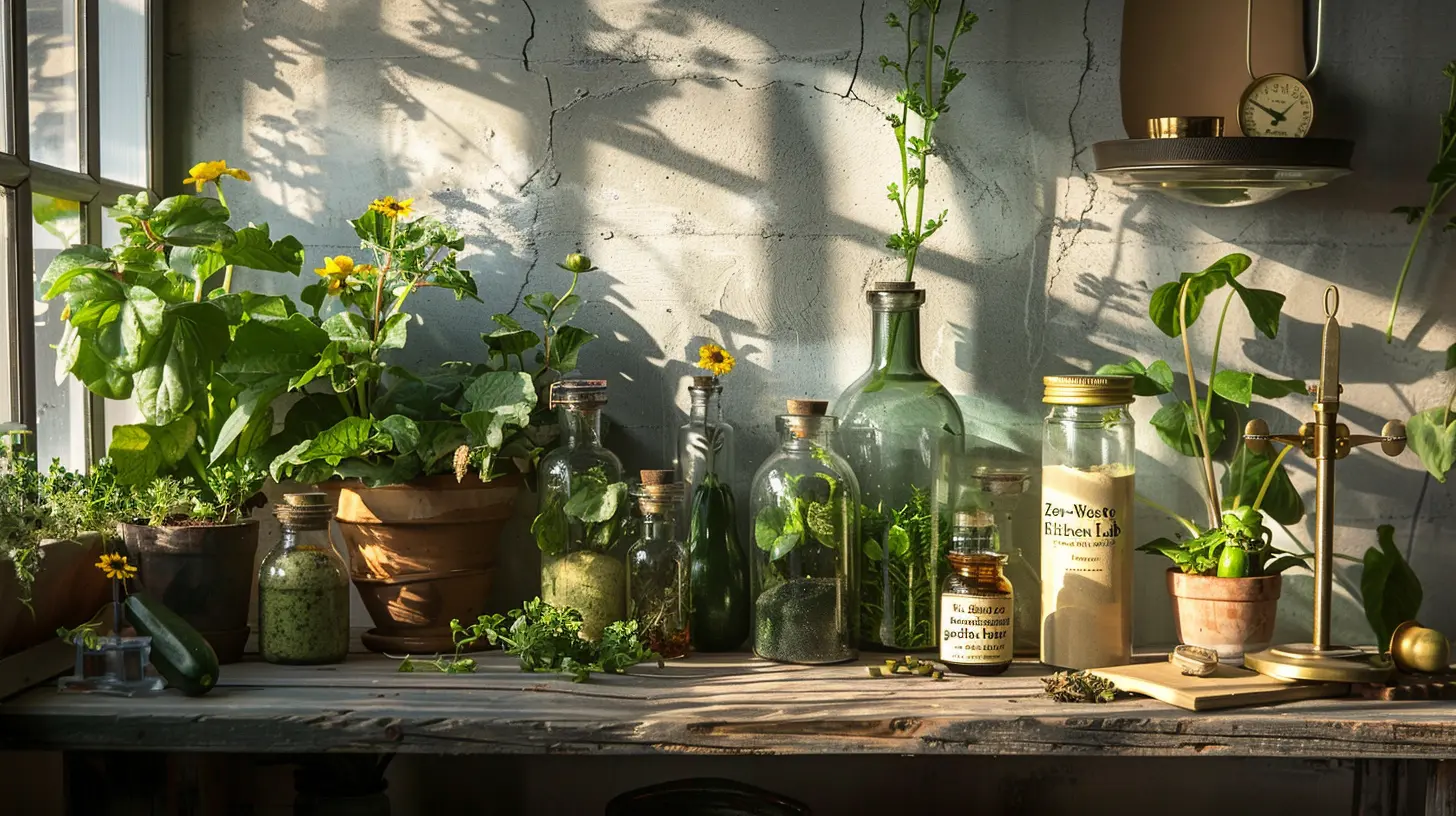
♻️ Urban Lab Protocol — Closed Loop Kitchen
| System Efficiency | 90% Waste Reduction |
| Input Method | Kitchen Scraps & Weeds |
| Output Yield | High-Calorie Flour & Preserves |
Your Kitchen Is Bleeding Money
Here’s an uncomfortable calculation most urban dwellers never make: the average American household throws away $1,500 worth of food annually. That’s not a budgeting failure—it’s a systems failure.
And here’s what makes it worse. You’re paying twice.
Once at the grocery store. Again when that wilted basil hits the trash can.
This guide exists because I got tired of watching my balcony sit empty while I paid $4 for herbs that died in three days. I started asking a different question: What if my kitchen operated like a laboratory instead of a consumption station?
The answer became what I call the Closed-Loop System—a protocol where nothing exits the cycle as waste. Scraps become compost. Compost becomes soil. Soil grows food. Food feeds you. Leftovers get preserved. Preservation failures feed the compost.
The loop closes. The grocery bill shrinks.
This isn’t about becoming a hobby gardener who grows tomatoes for Instagram. This is about treating your apartment like the expensive real estate it is—and making every square foot pay rent.
What follows is the complete operating manual. We’ll cover foraging (free calories growing in sidewalk cracks), preservation (turning summer gluts into winter assets), and high-ROI cooking (meals that extract maximum value from minimum inputs).
Consider this your hub. Each section connects to deeper protocols. Bookmark it.
The Closed-Loop System: A Visual Framework
Before we dive into tactics, you need to understand the architecture.
Most kitchens operate linearly:
Every arrow represents money leaving your pocket. The final arrow—trash—means you paid for something that contributed nothing.
The closed-loop alternative looks different:
Notice what’s missing? The trash can. There is no exit point in this system. Everything cycles.
This isn’t idealism. It’s engineering. And like any good engineering project, we start with the free inputs.
The Free Superfoods: Foraging Your Neighborhood
Let me tell you about the most embarrassing realization I’ve had as an urban gardener.
For three years, I carefully cultivated spinach in containers. I watered it. Fertilized it. Fought off aphids. Watched half of it bolt in the summer heat.
Meanwhile, Stellaria media—common chickweed—grew wild in every sidewalk crack within 500 feet of my apartment. It tastes almost identical to spinach. It grows without irrigation. It contains more vitamin C than cultivated lettuce.
I was paying for a product that nature was giving away for free.
The Economics of Edible Weeds
Most people see weeds as problems. Urban lab operators see them as unmanaged assets.
Consider the numbers:
| Weed | Nutritional Highlight | Where It Grows | Effort Required |
|---|---|---|---|
| Purslane | Highest omega-3 content of any leafy green | Sidewalk cracks, disturbed soil | Zero—just harvest |
| Dandelion | Complete plant (leaves, roots, flowers all edible) | Lawns, parks, neglected lots | Zero |
| Dead Nettle | High in iron, vitamin C, antioxidants | Shaded areas, forest edges | Zero |
| Lamb’s Quarters | Rivals spinach nutritionally | Garden beds, roadsides | Zero |
The catch? You need to know what you’re picking. Misidentification isn’t a minor error—it’s a hospital visit.
Deep Dive: Dead Nettle (Lamium purpureum)
Dead nettle deserves special attention because it solves a specific problem: the “hungry gap.”
In early spring, your cultivated garden produces almost nothing. Seeds are germinating. Transplants are establishing. The grocery store is your only option.
Unless you know where to look.
Dead nettle emerges in late winter when nothing else grows. Those purple-tinged leaves appearing in shaded corners of parks? That’s free salad.
I’ve written a complete identification and harvest protocol for this specific plant. It covers look-alikes to avoid, optimal harvest timing, and preparation methods.
The foraging component of your closed-loop system requires exactly two things: identification knowledge and a bag. Everything else—irrigation, fertilizer, pest control—is handled by nature.
Free inputs. Zero maintenance. Maximum ROI.
The Preservation Lab: Turning Gluts Into Shelf-Stable Assets
Here’s the fundamental problem with growing food in small spaces: timing.
Your zucchini plant doesn’t care about your meal schedule. It produces on its schedule—which typically means zero fruit for weeks, followed by a tsunami of squash you couldn’t possibly eat fresh.
This is called the Glut Problem, and it’s where most apartment gardeners fail.
They grow the food successfully. They harvest it. Then they watch it rot in the refrigerator because they can’t consume it fast enough.
The solution isn’t growing less. The solution is time-shifting—converting perishable harvests into shelf-stable assets that feed you months later.
The Moisture Principle
All preservation methods share one goal: removing or controlling moisture.
Bacteria, mold, and enzymes need water to destroy your food. Remove the water, and you’ve bought yourself months—sometimes years—of shelf life.
The standard solution is a food dehydrator. But dehydrators have problems:
- They consume electricity (ongoing cost)
- They take up counter space (limited in apartments)
- They’re single-purpose tools (bad ROI on kitchen real estate)
I don’t own one. Haven’t needed one for five years. Here’s what I use instead.
The Zucchini Flour Protocol
This is the single highest-leverage preservation technique I’ve discovered.
Zucchini is the poster child for the glut problem. One plant produces 6-10 pounds of fruit per season. A single zucchini can weigh two pounds. Unless you want to eat zucchini for breakfast, lunch, and dinner, most of it goes to waste.
Unless you convert it to flour.
Zucchini flour stores for 12+ months in a sealed container. It adds nutrition and moisture to baked goods. It extends expensive grain flours. One cup replaces up to 25% of wheat flour in most recipes.
The process requires no special equipment—just an oven, a grater, and patience.
I’ve documented the complete procedure, including the critical step most tutorials skip (and why skipping it ruins your flour).
Herb Preservation Without Equipment
Fresh herbs represent some of the worst grocery store economics.
A bundle of basil costs $3-4. You use two tablespoons. The rest turns to slime in your refrigerator within a week.
Growing herbs fixes the purchasing problem. But it creates a new one: you now have too much basil in July and none in January.
The standard advice is dehydration. But remember—we’re operating without a dehydrator.
Here’s the principle that changed my approach: your oven is a dehydrator. It’s just less efficient at the task.
The lowest setting on most ovens (170-200°F) is too hot for delicate herbs. But with the door cracked and proper timing, you can achieve the same result. It requires more attention but zero additional equipment.
I’ve tested this extensively with basil, oregano, thyme, rosemary, and mint. Each requires slightly different handling.
The Preservation Decision Tree
When you harvest something, ask these questions in order:
- Can I eat it fresh within 48 hours? → Eat it fresh.
- Can I ferment it? → Fermentation adds nutrition and extends life 2-6 months.
- Can I dry it? → Dried goods last 6-24 months.
- Can I freeze it? → Frozen goods last 6-12 months (but require energy).
- Can I compost it? → Nothing leaves the loop as waste.
Notice that trash isn’t on this list. In a closed-loop system, even failed preservation attempts become compost inputs for next season’s growth.
The failure is still data. The waste is still useful.
The Recipe Lab: Cooking Your Yield
Growing food is satisfying. Preserving it is strategic. But the real test is the plate.
Does your closed-loop system actually produce meals you want to eat?
This is where most urban gardening content fails. It stops at harvest. It assumes you’ll figure out the cooking part yourself.
But cooking from a small garden is a specific skill. You’re not working with grocery store abundance. You’re working with what you have—which means recipes need to be flexible, calorie-dense, and forgiving.
The High-ROI Meal Framework
Not all meals are created equal from an urban lab perspective.
High-ROI meals share three characteristics:
- Caloric density — You grew the ingredients in limited space. The meal should deliver maximum nutrition per square foot of garden.
- Flexibility — The recipe adapts to what’s actually producing, not what a cookbook author assumed you’d have.
- Preservation potential — Leftovers store well or transform into new dishes.
Low-ROI meals are the opposite: calorie-light, ingredient-rigid, and single-use.
Nasturtium Pesto: The Ultimate Space-Efficient Condiment
Nasturtiums are the most underrated apartment garden plant.
One pot produces continuous leaves and flowers from spring through fall. Every part is edible. The peppery flavor works in salads, pasta, sandwiches, and as a pesto base.
Speaking of pesto—the traditional basil version requires roughly $15 worth of ingredients if you’re buying everything (basil, pine nuts, parmesan, garlic, oil).
Nasturtium pesto requires nasturtiums (free from your pot), any nut you have, hard cheese, garlic, and oil. The result is spicier, more complex, and dramatically cheaper.
Heritage Corn: When Calories Matter
Let me share a calculation that changed how I think about crop selection.
I used to grow tomatoes because that’s what urban gardeners do. Then I ran the numbers.
A single cherry tomato plant in a five-gallon container produces roughly 500 calories worth of fruit over a season—spread across months of harvest.
A corn plant in that same container produces 400-500 calories worth of grain in a single harvest—grain that stores for years without refrigeration.
The tomato is a luxury. The corn is an asset.
Now, I’m not suggesting you abandon tomatoes entirely. But if your goal is actually feeding yourself rather than feeling like a gardener, caloric density matters.
Oaxacan Green corn represents a particularly interesting option for small-space growers. The ears are smaller than field corn (better suited to containers). The flavor is exceptional. And the heritage genetics mean you can save seeds for next year—unlike hybrid varieties.
The “What’s Actually Ripe” Approach
Here’s a mental shift that transformed my cooking: stop planning meals around recipes. Start planning meals around harvests.
The traditional approach: Find a recipe → Check what ingredients it needs → Discover you’re missing three things → Go to the grocery store → Cook
The urban lab approach: Walk through your garden/check your preservation stock → Note what’s abundant → Find or create a recipe around those ingredients → Cook
This sounds simple. It requires completely rewiring how you think about dinner.
But once the shift happens, your grocery list shrinks dramatically. You’re buying staples and supplements, not complete ingredient lists.
Summary Protocol: The Crop Comparison Table
The following table represents five years of small-space growing, compressed into reference data. Use it when deciding what to plant, what to forage, and what to preserve.
| Crop/Source | Caloric Density (per sq ft) | Waste Factor | Preservation Ease | Lab Rating |
|---|---|---|---|---|
| Zucchini | Medium | HIGH (glut prone) | Excellent (flour) | ★★★★★ |
| Oaxacan Green Corn | High | Low | Excellent (dries) | ★★★★★ |
| Nasturtiums | Low | Very Low | Good (pesto freezes) | ★★★★☆ |
| Cherry Tomatoes | Low | Medium | Moderate | ★★★☆☆ |
| Herbs (mixed) | N/A (flavor, not calories) | Low | Excellent | ★★★★★ |
| Dead Nettle (foraged) | Medium | Zero | Good (dries) | ★★★★★ |
| Purslane (foraged) | Low-Medium | Zero | Moderate (pickles) | ★★★★☆ |
| Dandelion (foraged) | Low | Zero | Good (roots dry) | ★★★★☆ |
Key Insights:
- Foraging always wins on ROI because input cost is zero
- Glut-prone crops are only valuable if you preserve them—otherwise they’re net negative
- Caloric density matters more in small spaces—beauty and variety are luxuries
Building Your Closed-Loop System: The 90-Day Protocol
Theory is worthless without implementation. Here’s the sequence I recommend for apartment dwellers starting from zero:
Days 1-30: The Foundation
- Identify three foraging targets within walking distance (use the edible weeds guide)
- Start a countertop compost collection (coffee grounds, vegetable scraps)
- Audit your refrigerator waste for one week—what are you throwing away?
Days 31-60: The Infrastructure
- Start one container with a high-ROI crop (nasturtiums are forgiving)
- Process your first preserved product (herb drying requires no setup)
- Cook one meal exclusively from foraged/grown ingredients
Days 61-90: The Expansion
- Add a second container (consider caloric density—maybe that corn)
- Establish a fermentation station (sauerkraut is the easiest entry point)
- Document your cost savings—the data motivates continued effort
This isn’t a rigid prescription. It’s a framework. Adapt it to your climate, your space, and your failures.
Because here’s the final truth about closed-loop systems: the failure is the protocol. Every dead plant teaches you about light conditions. Every rotted harvest teaches you about timing. Every preservation mistake teaches you about moisture.
The loop only breaks if you stop learning.
What Comes Next
You’ve now got the complete framework. The principles are sound. The methods are tested.
But I’ve deliberately left one critical topic out of this guide: pet safety.
If you share your apartment with cats or dogs, many common garden and foraged plants present serious risks. Some—like certain lily varieties—are fatal in small quantities.
I’ve compiled a comprehensive guide specifically for closed-loop gardeners with pets. It covers which crops are safe to grow around curious animals, foraging look-alikes that are toxic to pets (even if safe for humans), container placement strategies for determined chewers, and emergency protocols if exposure occurs.
Your kitchen is a laboratory. Your balcony is expensive real estate. Your neighborhood is full of free food you’ve been stepping over.
The only question is whether you’ll keep paying someone else for what you could produce yourself.
The loop is waiting to close. Start today.