
The best miticide for houseplants is usually the simplest: a strong rinse of water, then insecticidal soap or horticultural oil applied to the undersides of the leaves and repeated. That is the approach the UC Statewide IPM Program recommends for spider mites: if a treatment is needed, use selective materials, preferably insecticidal soap or oil, with excellent coverage and repeat applications. Broad-spectrum insecticides are the wrong tool. UC IPM warns that spider mites frequently become a problem after sprays of some pyrethroids or organophosphates, which are not very effective against mites and kill the mites’ natural enemies.
| Option | Use on houseplants? | Notes |
|---|---|---|
| Strong water spray | Yes, first step | Regular, forceful spraying often reduces mites adequately; cover leaf undersides (UC IPM) |
| Insecticidal soap | Yes | Must contact mites; thorough coverage and repeat sprays; test on a few leaves first |
| Horticultural oil (petroleum, neem, canola, cottonseed) | Yes | Same as soap; don’t use on water-stressed plants or above 90 °F (UC IPM) |
| Predatory mites (Phytoseiulus, western predatory mite) | Yes, especially for collections | Need spider mites to eat; avoid pesticides that kill them |
| Permethrin and other pyrethroids | No | Not very effective against mites; can trigger outbreaks (UC IPM) |
| Abamectin (Avid) | Not for home use | EPA label: recommended for agricultural/commercial use |
Sources: UC Statewide IPM Program, Spider Mites Pest Notes; EPA-accepted Avid 0.15 EC label.
How to Spot Spider Mites
UC IPM describes the signs:
- Stippling: damage first shows as tiny light dots on the leaves; sometimes leaves turn bronze, then yellow, and drop.
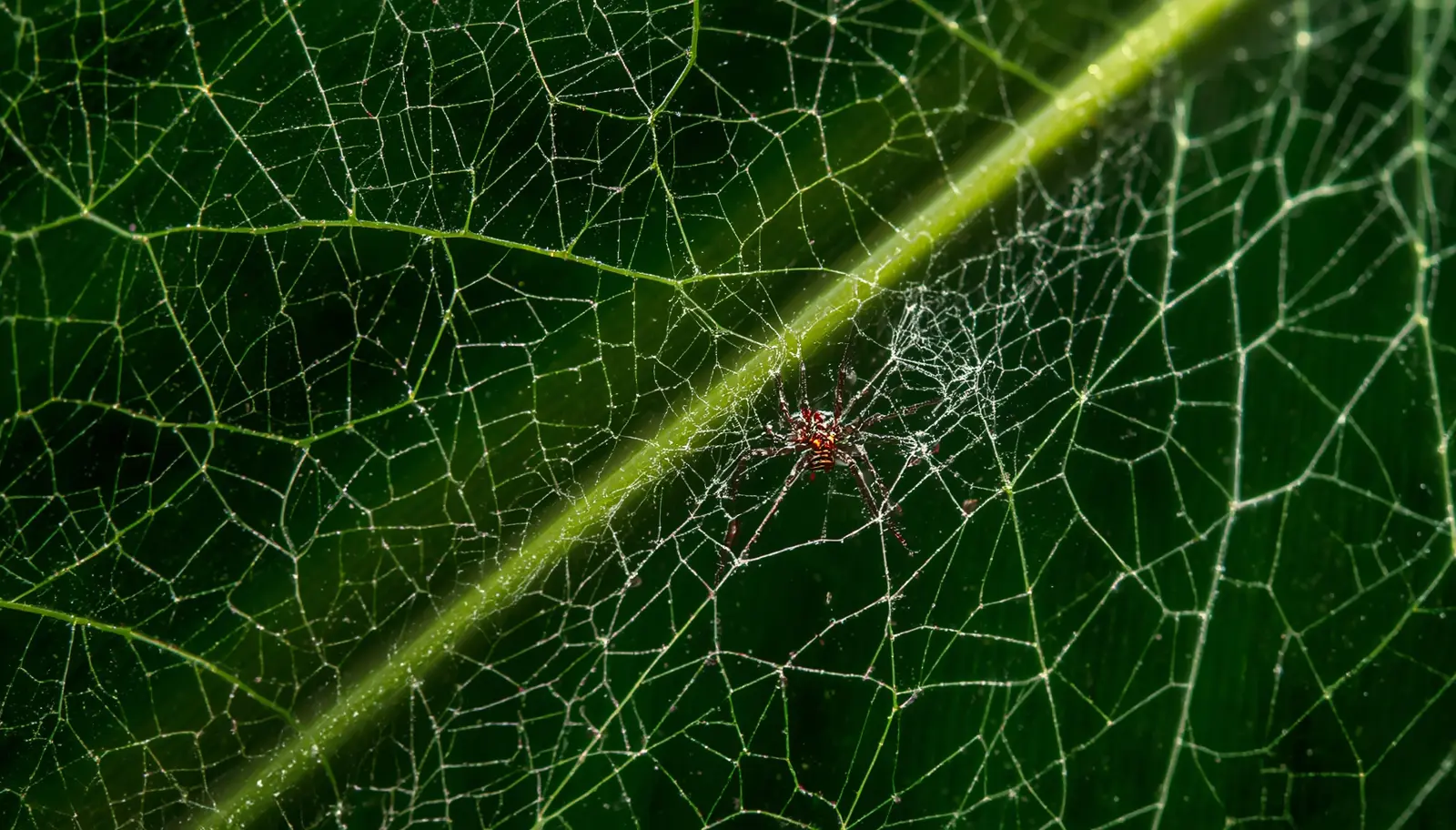
- Webbing: fine silk on leaf undersides and between leaves and stems. Webbing is an easy way to tell spider mites from other mites and from small insects such as aphids and thrips.
- The mites: to the naked eye they look like tiny moving dots; with a 10x hand lens you can see adults under 1/20 inch long, with eight legs, an oval body and two eyespots. They live in colonies, mostly under the leaves.
A quick test from UC IPM: tap a leaf over white paper and watch for specks that start to move. Make sure mites are actually present before you treat; sometimes they have already left by the time you notice the damage.
What Makes Spider Mites Worse
- Heat: spider mites reproduce rapidly in hot weather, and a generation can be completed in less than a week (UC IPM).
- Dust and dryness: UC IPM notes they prefer hot, dusty conditions. Indoors, warm spots near heaters or sunny glass are typical problem areas.
- Thirsty plants: water-stressed plants are especially susceptible and suffer more damage (UC IPM).
- Broad-spectrum insecticides: sprays that kill the mites’ natural enemies, or that stimulate mite reproduction, often cause outbreaks.
Raising humidity is often suggested for houseplants. UC IPM’s advice centres on keeping plants well watered, keeping dust down and rinsing foliage, which you can do with a regular shower for the plant.
Sprays That Work (and Ones That Don’t)
Start with water
UC IPM says regular, forceful spraying of plants with water often reduces spider mite numbers adequately, as long as you get good coverage of the leaf undersides. For houseplants, a lukewarm shower or a hose-end sprayer in a sink works. Its home quick tips suggest spraying the undersides at least once a day while infested.
Insecticidal soap and horticultural oil
If you need more, UC IPM recommends insecticidal soap or insecticidal oil, noting that both petroleum-based horticultural oils and plant-based oils such as neem, canola or cottonseed oil are acceptable. Key rules from UC IPM:
- They only kill mites they touch, so excellent coverage, especially on leaf undersides, is essential.
- Repeat applications may be required, because eggs and newly hatched mites keep appearing.
- Don’t use soaps or oils on water-stressed plants or when temperatures exceed 90 °F.
- These products may injure some plants, so check the label and test on a portion of the foliage several days before a full treatment.
Follow the product label for the interval between sprays. See our guide to using neem oil on plants without burning the leaves.
Does permethrin kill spider mites?
Not reliably, and it can make things worse. UC IPM explains that spider mites frequently become a problem after applying certain insecticides such as some organophosphates or pyrethroids (permethrin is a pyrethroid), because these are not very effective against mites, often kill mite predators, and can result in spikes of spider mite populations.
What about professional miticides?
Products such as abamectin (Avid) are sold for commercial growers: the EPA-accepted Avid 0.15 EC label is marked “Recommended for Agricultural/Commercial Use” on ornamentals in greenhouses, nurseries and fields. For houseplants at home, stick to products labeled for indoor or houseplant use, and always follow the label. Mites can become resistant when the same chemical is used repeatedly, another reason to rely on water, soaps and oils first.
Predatory Mites
UC IPM lists predatory mites, including Phytoseiulus species and the western predatory mite (Galendromus occidentalis), among the most important natural enemies of spider mites. Predatory mites are about the same size as spider mites but have longer legs, move faster and are more teardrop-shaped. Some practical points from UC IPM:
- They don’t feed on plants; without spider mites to eat, they starve or move elsewhere.
- A useful guideline is one predator for every 10 spider mites; more than one release may be needed for fast control.
- For heavy infestations, knock numbers down first with a soap spray, then release predators.
- The western predatory mite is more effective under hot, dry conditions.
- Nonselective insecticides kill predators, so don’t spray broad-spectrum products around them.
Predatory mites are sold by biological control suppliers; follow the supplier’s release and storage instructions, since they are live animals.
After Treatment: Cleanup and Prevention
- Rinse off webbing and dead mites with water once numbers are down.
- Remove badly damaged leaves. Stippled leaves don’t recover their color; new growth should be clean once the mites are gone.
- Keep checking leaf undersides with a hand lens every week or two, especially in warm, dry months.
- Quarantine new plants for a few weeks and inspect them before they join your collection.
- Keep plants watered and dust-free, and avoid broad-spectrum insecticide sprays that wipe out natural enemies.
For other sap-feeders, see our guides to thrips, mealybugs, aphids and scale.
Frequently Asked Questions
What is the best miticide for houseplants?
For home use, insecticidal soap or horticultural oil (including neem oil), applied to full coverage of leaf undersides and repeated, after a strong water rinse. UC IPM recommends these selective products over broad-spectrum insecticides.
Does permethrin kill spider mites?
Not well. UC IPM says pyrethroids are not very effective against mites, often kill mite predators, and can cause spider mite populations to spike.
Is neem oil good for spider mites?
Yes, as an oil spray. UC IPM lists plant-based oils such as neem among acceptable treatments; like all oils it must contact the mites and may need repeating.
What is the most effective miticide?
Effectiveness depends on coverage and repetition more than the brand. Commercial miticides such as abamectin are labeled for agricultural and commercial use; at home, soaps and oils used thoroughly are the recommended choice.
Can I use predatory mites indoors?
Yes. Predatory mites such as Phytoseiulus feed on spider mites and don’t harm plants. UC IPM suggests about one predator per 10 spider mites and avoiding insecticides that would kill them.
Why do spider mites keep coming back?
Eggs survive single sprays, warm and dry conditions favor fast breeding, and broad-spectrum insecticides kill natural enemies. Repeat soap or oil sprays, keep plants watered and rinsed, and quarantine new plants.
The Lab Verdict
Spider mites are arachnids, not insects, and the products that control them best at home are also the simplest: water, insecticidal soap and horticultural oil, applied thoroughly to the undersides of leaves and repeated. Skip pyrethroids such as permethrin, which can make mite problems worse, and leave commercial miticides to commercial growers.
For other houseplant pests, see our guides to getting rid of fungus gnats, getting rid of spider mites and getting rid of mealybugs.