
Mycorrhizae for Indoor Plants: The Inoculation Protocol

🔬 THE PANTRY | MICROBIOLOGICAL ENGINEERING PROTOCOLS

In a rainforest ecosystem, a single plant’s root system connects to thousands of meters of underground fungal networks—an interconnected biological internet exchanging nutrients, water, and chemical signals across species boundaries.

Your Monstera deliciosa in a sterile 8-inch plastic pot exists in biological isolation. The substrate—peat moss, perlite, bark—is a dead matrix. There is no fungal network. No symbiotic exchange. No access to nutrients beyond what dissolves in the immediate rhizosphere (root zone). The plant functions as a biological island dependent entirely on synthetic fertilizer delivery and your watering schedule.

This isolation creates cascading vulnerabilities: slow nutrient uptake requiring frequent fertilization, underdeveloped root systems with minimal fine hair density, chronic susceptibility to anaerobic root pathogens in absence of competitive beneficial microbes, and catastrophic transplant shock when moving specimens to new substrate—the severed roots lose 60-80% of nutrient absorption capacity for 4-8 weeks.

The solution: Artificially re-establishing mycorrhizal symbiosis through targeted mycorrhizae for indoor plants inoculation. This is not supplemental—it is foundational biological infrastructure enabling plants to access nutrients, resist pathogens, and tolerate environmental stress the way evolution designed.

⚗️ The Executive Lab Summary: Mycorrhizal Inoculation Protocol
  • Organism: Endomycorrhizal fungi (Rhizophagus intraradices, Glomus mosseae)—penetrate root cells forming arbuscules for nutrient exchange
  • Mechanism: Plant provides 10-20% photosynthetic carbon to fungi; fungi expand root surface area 10-100x through hyphal networks mining substrate for phosphorus, nitrogen, micronutrients
  • Benefits: 200-500% increased nutrient uptake, 30-50% improved drought tolerance, competitive exclusion of root pathogens, 60-80% reduction in transplant shock
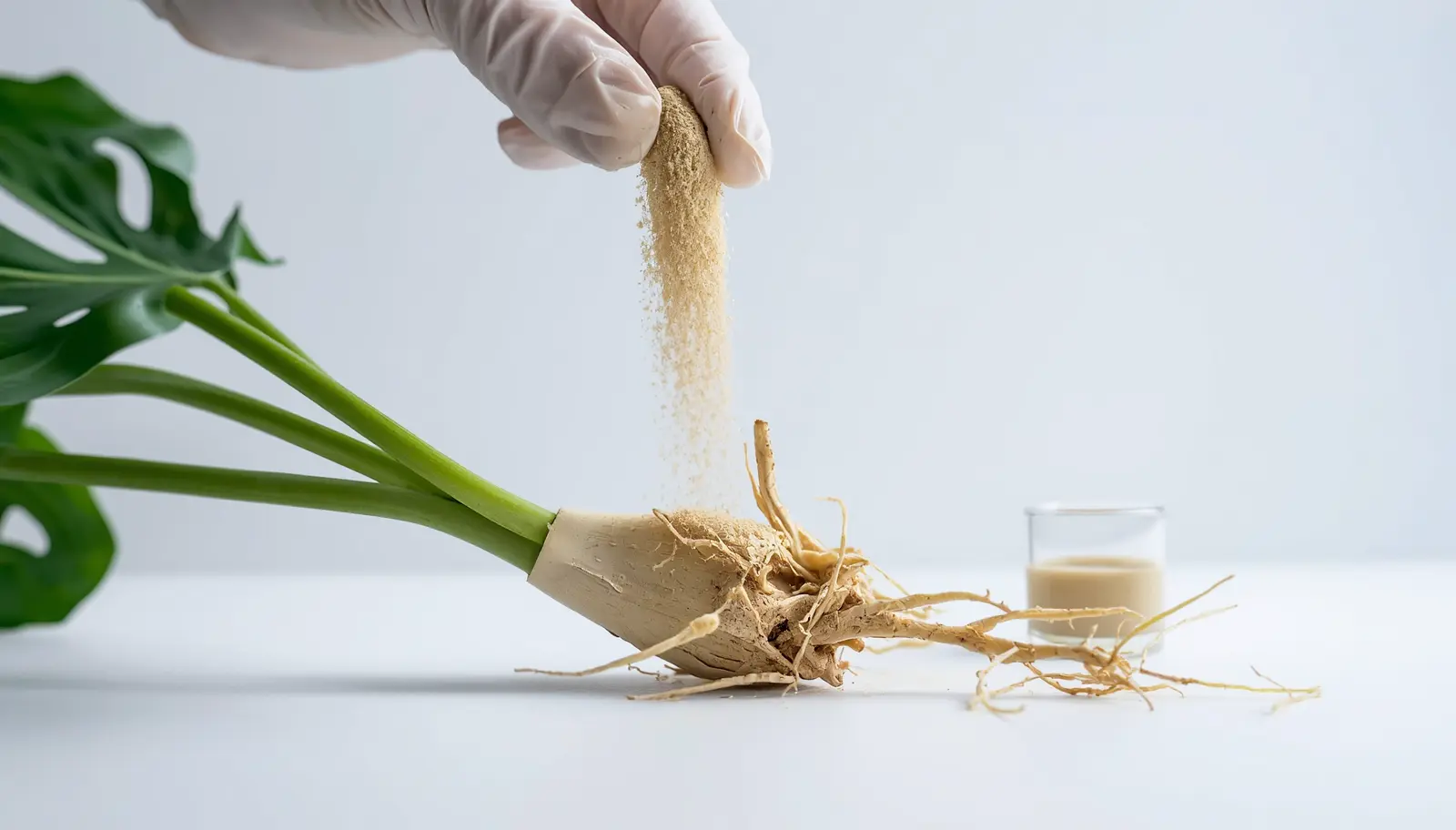
  • Application: Direct root contact during transplant (dust powder on root ball) or deep substrate injection for established plants
  • Critical requirements: Unchlorinated water, reduced synthetic fertilizers, well-aerated substrate with organic matter, substrate temperature 18-26°C

The Mechanism of Symbiosis: The Carbon-for-Minerals Trade Agreement

Mycorrhizal symbiosis is an evolutionary partnership 400+ million years old—predating the existence of roots themselves and enabling plants to colonize terrestrial environments.

The Exchange System

Plants photosynthesize atmospheric CO₂ into carbohydrates (sugars) using solar energy. Approximately 10-20% of this fixed carbon is intentionally exuded from roots as payment for fungal services.

The plant’s side of the bargain: Root cells secrete glucose, fructose, and other simple sugars into the rhizosphere. Mycorrhizal fungi cannot photosynthesize—they are obligate heterotrophs requiring external carbon sources. The plant’s exudates provide this carbon in exchange for access to nutrients the plant cannot efficiently mine on its own.

The fungus’s side: Fungal hyphae (microscopic threads 1-10 micrometers diameter) extend from colonized roots into surrounding substrate, growing 10-100x beyond where root hairs can reach. These hyphae penetrate soil aggregates, decompose organic matter, and solubilize mineral-bound nutrients (especially phosphorus locked in calcium phosphate, iron phosphate, or organic compounds). The nutrients are transported through the hyphal network directly into root cells via specialized exchange structures called arbuscules.

According to USDA research on mycorrhizal function, this partnership increases phosphorus uptake 200-500%, nitrogen acquisition 30-80%, and micronutrient availability (zinc, copper, iron) 100-300% compared to non-mycorrhizal plants. The effective root surface area expands from several square meters to hundreds of square meters through the fungal network.

Additional Symbiotic Benefits

Nutrient exchange is the primary function, but mycorrhizal colonization provides multiple secondary advantages:

  • Pathogen resistance: Mycorrhizal hyphae physically occupy root surface and substrate pore spaces, competing with pathogenic fungi (Pythium, Phytophthora, Fusarium) for resources and space. This competitive exclusion reduces infection rates 40-70%
  • Drought tolerance: Hyphal networks access water in micropores (0.2-10 micrometers) too small for root hairs. Water uptake efficiency increases 30-50% allowing plants to tolerate longer intervals between watering
  • Soil structure: Hyphae produce glomalin—a glycoprotein that binds soil particles into stable aggregates improving aeration and preventing compaction in engineered substrate mixes
  • Transplant shock mitigation: Established mycorrhizal network regenerates faster than fine root hairs (7-14 days vs 4-6 weeks), maintaining nutrient uptake during post-transplant recovery
  • Heavy metal detoxification: Fungi sequester toxic metals (aluminum, cadmium) in hyphal tissue preventing translocation to plant shoots—relevant for urban tap water with elevated metal content

Endomycorrhizae vs Ectomycorrhizae: Critical Taxonomic Distinction

Not all mycorrhizal fungi colonize all plants—matching the correct fungal type to plant taxonomy is essential for successful inoculation.

CharacteristicEndomycorrhizae (Arbuscular)Ectomycorrhizae
Colonization PatternPenetrates inside root cortex cells. Forms arbuscules (tree-like structures) and vesicles within cells for nutrient exchange.Forms external sheath (mantle) around root surface. Does NOT penetrate cells. Creates Hartig net between cortex cells but remains extracellular.
Compatible Plants95% of plant species including: all tropical aroids (Monstera, Philodendron, Anthurium), vegetables, grasses, herbaceous perennials, most ornamentals.5% of plant species—primarily woody trees: pines, oaks, birches, beeches, eucalyptus, some shrubs. Does NOT colonize houseplants.
Key GeneraRhizophagus intraradices (formerly Glomus intraradices), Glomus mosseae, Funneliformis mosseae, Gigaspora spp.Pisolithus, Rhizopogon, Laccaria, Amanita—mostly Basidiomycetes forming visible mushroom fruiting bodies.
Visible StructuresNo visible fruiting bodies. Entire lifecycle microscopic except spores (50-500 micrometers, barely visible as gritty particles in inoculant powder).Forms visible mushroom fruiting bodies (truffles, chanterelles, etc.). Colonized roots show white/tan fungal sheath visible to naked eye.
Indoor ApplicationREQUIRED for tropical houseplants. Look for products listing Rhizophagus, Glomus, or “endomycorrhizal” on label. Brands: MycoApply, Great White, Mykos.Ineffective for houseplants. Marketed for landscape trees and conifers. Will not colonize aroids or tropical species. Do not purchase for indoor cultivation.

⚠️ Critical Product Selection Error

Many mycorrhizal products marketed for “all plants” contain mixed endo + ecto formulations—the ecto component is useless for houseplants and inflates product cost without benefit.

When purchasing houseplant root inoculant, verify the ingredient label lists ONLY endomycorrhizal species: Rhizophagus intraradices, Glomus mosseae, Funneliformis mosseae, Gigaspora margarita. If the label includes Pisolithus, Rhizopogon, Laccaria, or generic “ectomycorrhizal fungi,” you are paying for spores that will never colonize tropical houseplants. Pure endomycorrhizal products cost $15-30 for 4-8 oz (sufficient for 20-50 applications) versus $25-50 for mixed formulations where half the spores are taxonomically inappropriate.

The Inoculation Procedure: Establishing Root Contact

Mycorrhizal spores are living organisms requiring direct contact with living root tissue to germinate and colonize—surface broadcasting or mixing into dry substrate yields 0-10% colonization success rates.

Method 1: Root Dusting During Transplant (Optimal)

🌱 TRANSPLANT INOCULATION PROTOCOL

Timing: Apply during repotting when roots are exposed and accessible. This is the most effective application method—90-95% colonization success when executed properly.

Procedure:

  1. Pre-transplant preparation: Select endomycorrhizal product, verify spore viability (check expiration date—spores die within 12-24 months of packaging). Prepare destination pot with well-aerated substrate (40%+ air-filled porosity provides oxygen for hyphal growth)
  2. Root ball extraction: Gently remove plant from current pot. Shake or brush away 30-50% of old substrate exposing root surface—inoculant needs direct root contact, not substrate contact
  3. Root inspection: Examine for root rot (black, mushy tissue). If present, excise necrotic sections before inoculation—fungi will not colonize dead tissue
  4. Inoculant application: Sprinkle 1-2 teaspoons mycorrhizal powder per gallon of destination substrate volume directly onto exposed root ball. Focus on areas with visible root hairs (white fuzzy coating on root tips)—these are colonization entry points
  5. Gentle massage: Lightly rub powder into root surface ensuring contact. Do not damage delicate root hairs through aggressive handling
  6. Immediate potting: Place inoculated root ball in new pot, fill with substrate, water with unchlorinated source (distilled, RO, or dechlorinated water). Chlorine kills fungal spores on contact
  7. Post-inoculation watering: Apply water gently to settle substrate. Avoid high-pressure flushing that washes spores away from roots

Expected colonization timeline: Spores germinate 3-7 days post-inoculation. Initial hyphal growth visible under microscope at 14-21 days. Functional nutrient exchange established 4-6 weeks. Full mycorrhizal network maturity 8-12 weeks. Visible plant response (increased growth rate, darker green foliage from improved nitrogen access) typically observed 6-10 weeks post-inoculation.

Method 2: Deep Substrate Injection (Established Plants)

💉 IN-SITU INOCULATION PROTOCOL

Use when transplanting is impractical (recent repot, dormant season, fragile specimens) or for preventative inoculation of healthy established plants.

Procedure:

  1. Access point creation: Use bamboo skewer or similar probe to create 4-6 vertical holes distributed around plant perimeter, 2-3 inches from stem. Penetrate to 60-80% of pot depth reaching active root zone
  2. Spore delivery: Pour 1/4 teaspoon inoculant powder into each hole. Tap container to settle powder toward hole bottom
  3. Water activation: Immediately water with unchlorinated source. Volume should be 25-30% of pot capacity—sufficient to dissolve powder and move spores to roots without flushing them to drainage
  4. Substrate temperature: Ensure substrate 18-26°C (65-80°F). Below 15°C or above 30°C, spore germination fails or proceeds extremely slowly

Limitations compared to root dusting:

  • Colonization success 40-60% (vs 90-95% with direct root contact)
  • Longer establishment time (8-10 weeks vs 4-6 weeks)
  • Spore wastage—many spores settle in substrate regions without active roots
  • Requires larger initial spore dose (2-3x root dusting amount) to compensate for inefficiency

Chemical Conflicts: What Kills Mycorrhizal Fungi

Mycorrhizal colonization requires reducing or eliminating substrate treatments and fertilization practices that kill beneficial fungi—many standard indoor plant care protocols are fundamentally incompatible with living soil biology.

⚠️ MYCORRHIZAL INHIBITORS AND KILLERS

These common products and practices destroy mycorrhizal networks:

1. CHLORINATED WATER:

  • Municipal tap water chlorine (0.5-2.0 ppm) kills fungal hyphae on contact. Chloramine (chlorine + ammonia, increasingly common) is even more persistent and toxic to fungi
  • Solution: Use reverse osmosis, distilled, or rainwater. Alternatively, dechlorinate tap water by leaving uncovered 24-48 hours (removes chlorine only, NOT chloramine) or treating with vitamin C (ascorbic acid, 50mg per gallon)

2. HIGH-SALT SYNTHETIC FERTILIZERS:

  • Concentrated synthetic fertilizers (EC >2.0 mS/cm, TDS >1000 ppm) create osmotic stress killing delicate hyphal tips. High nitrogen (especially ammonium form) suppresses colonization—plant stops feeding fungi carbon when nitrogen is freely available
  • Solution: Reduce synthetic fertilizer to 1/4-1/2 normal strength (EC 0.8-1.2 mS/cm). Switch to organic fertilizers (fish emulsion, kelp, worm castings) which release nutrients slowly without salt spikes. Allow mycorrhizae to provide 60-80% of phosphorus needs

3. FUNGICIDES:

  • Systemic fungicides (metalaxyl, mefenoxam, propiconazole) and broad-spectrum treatments kill mycorrhizal fungi indiscriminately. Even “organic” copper and sulfur sprays harm beneficial fungi if soil-drenched
  • Solution: Avoid systemic fungicides for 8-12 weeks post-inoculation. For pathogen control, use targeted approaches: hydrogen peroxide oxidation (short-lived, minimal mycorrhizal impact), beneficial bacteria (Bacillus subtilis—compatible with mycorrhizae), or cultural controls (improved drainage, air circulation)

4. EXCESSIVE PHOSPHORUS:

  • High soil phosphorus (P >50 ppm) reduces mycorrhizal colonization 60-90%—plant receives adequate P without fungal assistance, stops providing carbon payment. This is “mycorrhizal dependency feedback”
  • Solution: Use balanced or low-P fertilizers (avoid bloom boosters with 5-50-17 type ratios). Allow substrate P to decline to 20-40 ppm where mycorrhizae provide competitive advantage

5. SOIL STERILIZATION:

  • Heat treatment (>60°C), steam sterilization, or chemical fumigants kill all microbes including beneficial fungi. Pre-sterilized “soilless” mixes are biologically dead requiring inoculation
  • Solution: If using sterile substrate, inoculate immediately. If heat-treating substrate for pathogen control, allow cooling to <30°C before inoculation, wait 48 hours for chemical residues to dissipate

Integration with Engineered Substrates and Nutrition

Mycorrhizal colonization achieves maximum efficacy when integrated with optimized substrate architecture and beneficial fungi for roots-compatible fertilization strategies.

✅ MYCORRHIZAL-OPTIMIZED CULTIVATION PROTOCOL

Substrate requirements:

  • Air-filled porosity 40-60%: Fungi are obligate aerobes—they die in waterlogged anaerobic substrate. Use chunky aroid mixes with pumice, orchid bark, perlite providing oxygen to growing hyphae
  • Organic matter 10-30%: Fungi colonize substrates with decomposable organics (coco coir, bark, worm castings). Pure mineral substrates (>90% pumice/perlite) or LECA semi-hydro support minimal mycorrhizal growth—insufficient carbon and nutrient complexity
  • pH 5.5-7.0: Optimal fungal growth range. Extreme pH (<5.0 or >7.5) inhibits spore germination and hyphal extension
  • Stable moisture: Alternating wet/dry extremes stress fungi. Maintain consistent moisture—substrate dries top 2 inches but retains moisture in root zone depths

Compatible fertilization:

  • Organic amendments: Worm castings, compost, kelp meal—slow-release nutrients mycorrhizae can access and concentrate for plant delivery
  • Low-dose synthetics: If using liquid fertilizers, dilute to 1/4-1/2 strength (EC 0.8-1.2). Apply every 2-3 weeks rather than weekly—allows mycorrhizae to demonstrate value between fertilizations
  • Phosphorus restriction: Use balanced NPK (20-20-20) or low-P ratios (7-9-5). Avoid bloom boosters (high-P formulations) during vegetative growth
  • Micronutrient supplementation: Mycorrhizae excel at mining phosphorus but provide moderate benefit for nitrogen and minimal for calcium/magnesium. Supplement Ca-Mg as needed

Synergistic practices:

  • Silica supplementation: Potassium silicate enhances mycorrhizal colonization 20-30%—strengthened cell walls support arbuscule formation
  • Beneficial bacteria co-inoculation: Bacillus subtilis, Pseudomonas fluorescens establish protective rhizosphere biofilms compatible with mycorrhizae. Apply simultaneously or alternating weeks
  • Compost tea: Actively aerated compost tea (24-48 hour brew) introduces diverse microbiome supporting mycorrhizal network. Apply monthly as root drench

Frequently Asked Questions

How long does mycorrhizal inoculant last once opened?

Spore viability degrades rapidly after package opening. Refrigerated storage (4-8°C): 6-12 months at 50-70% viability. Room temperature storage: 3-6 months at 30-50% viability. Heat exposure (>30°C): 30-60 days before complete spore death. Store in airtight container with desiccant packet, refrigerate if possible, use within 6 months of opening regardless of storage method. Purchase small quantities (4-8 oz) for seasonal use rather than bulk (1+ lb) if treating <20 plants annually. Spore count listed on label represents packaging date—actual viable spores decline over shelf life.

Can I see mycorrhizal colonization without a microscope?

No visible indicators in endomycorrhizae (unlike ectomycorrhizae which form visible fungal sheaths). Functional colonization is invisible to naked eye—hyphae are 1-10 micrometers diameter. Indirect indicators of successful colonization: Increased growth rate 6-10 weeks post-inoculation, darker green foliage (improved nitrogen access), enhanced drought tolerance (longer intervals between wilting), reduced fertilizer requirements (same growth with 50-75% less fertilizer), improved transplant recovery (minimal shock symptoms). Confirmation method: Root staining with trypan blue dye + microscopy (100-400x magnification)—shows internal arbuscules and vesicles. Home growers rely on performance indicators rather than direct visualization.

Do I need to re-inoculate every time I repot?

Not if preserving substrate and roots. Scenario 1 – Gentle transplant: Moving to larger pot while keeping 70%+ of original root ball intact—existing mycorrhizae persist and colonize new substrate within 2-3 weeks. Optional booster: dust new substrate zone with fresh inoculant (0.5-1 tsp) accelerating colonization. Scenario 2 – Substrate replacement: Removing 50%+ old substrate, root pruning, or bare-rooting—severs hyphal networks. Re-inoculate as if initial application. Scenario 3 – Division/propagation: Cuttings and nodes have zero mycorrhizae. Inoculate at first potting into substrate (not in propagation box—sphagnum too acidic, lacks nutrients fungi need).

Are there any plants that don’t benefit from mycorrhizae?

Non-mycorrhizal plant families (do not form symbiosis): Brassicaceae (cabbage family), Chenopodiaceae (beets, spinach), Caryophyllaceae (carnations), Proteaceae (some Australian natives), carnivorous plants (adapted to nutrient-poor conditions, mycorrhizae provide unwanted nitrogen). All tropical aroids ARE mycorrhizal: Monstera, Philodendron, Anthurium, Alocasia, Syngonium—all benefit significantly. Orchids: Require specialized orchid mycorrhizae (different from endomycorrhizal products)—do not use standard inoculants on orchids. Succulents/cacti: Form mycorrhizae but benefit is minimal (drought-adapted, low nutrient needs)—optional supplementation.

The Lab Verdict: Biological Infrastructure Enables Chemical Precision

Adding mycorrhizal fungi to potting soil transforms sterile substrate into living ecosystem—the difference between hydroponic dependence and biological autonomy.

Standard indoor cultivation treats plants as isolated chemical systems—nutrients go in through fertilizer, waste products accumulate until flushed, pathogens colonize unopposed by beneficial microbes. The plant survives but operates at 40-60% genetic potential, chronically stressed from suboptimal nutrient availability and pathogen pressure.

Mycorrhizal inoculation re-establishes the fundamental biological partnership that enabled plant terrestrialization 400 million years ago. The fungi provide what evolution designed: expanded foraging range through hyphal networks, enzymatic solubilization of bound nutrients, competitive exclusion of pathogens, and buffering against environmental stress (drought, temperature fluctuations, transplant trauma).

The Urban Lab mycorrhizal protocol: (1) Source endomycorrhizal product containing Rhizophagus intraradices or Glomus species—verify live spore count and expiration date, (2) Apply during transplant via root ball dusting or deep substrate injection for established plants, (3) Eliminate chemical conflicts—switch to unchlorinated water, reduce synthetic fertilizer intensity, avoid fungicides 8-12 weeks post-inoculation, (4) Optimize substrate using well-aerated organic-mineral blends supporting aerobic fungal growth, (5) Monitor establishment—expect visible plant response 6-10 weeks as functional nutrient exchange begins.

The investment: $15-30 for 4-8 oz inoculant treating 20-50 plants. The return: 200-500% increased nutrient efficiency reducing fertilizer costs 50-75%, 60-80% reduction in transplant shock eliminating recovery delays, 40-70% pathogen resistance reducing intervention frequency, and 30-50% improved stress tolerance increasing survival rates during environmental fluctuations.

Mycorrhizae for indoor plants is not advanced technique—it is foundational biology that industrial horticulture eliminated through sterilization and synthetic inputs. Re-establishing this partnership returns plants to their evolutionary baseline: organisms adapted to biological networks, not chemical isolation. The question is not whether mycorrhizae improve performance—400 million years of co-evolution settled that—but whether you’ll continue cultivating biological systems in chemical straightjackets.


The Pantry | Microbiological Engineering Protocols Division
Mycorrhizal Inoculation Protocol | Published: March 2026

Leave a Comment