
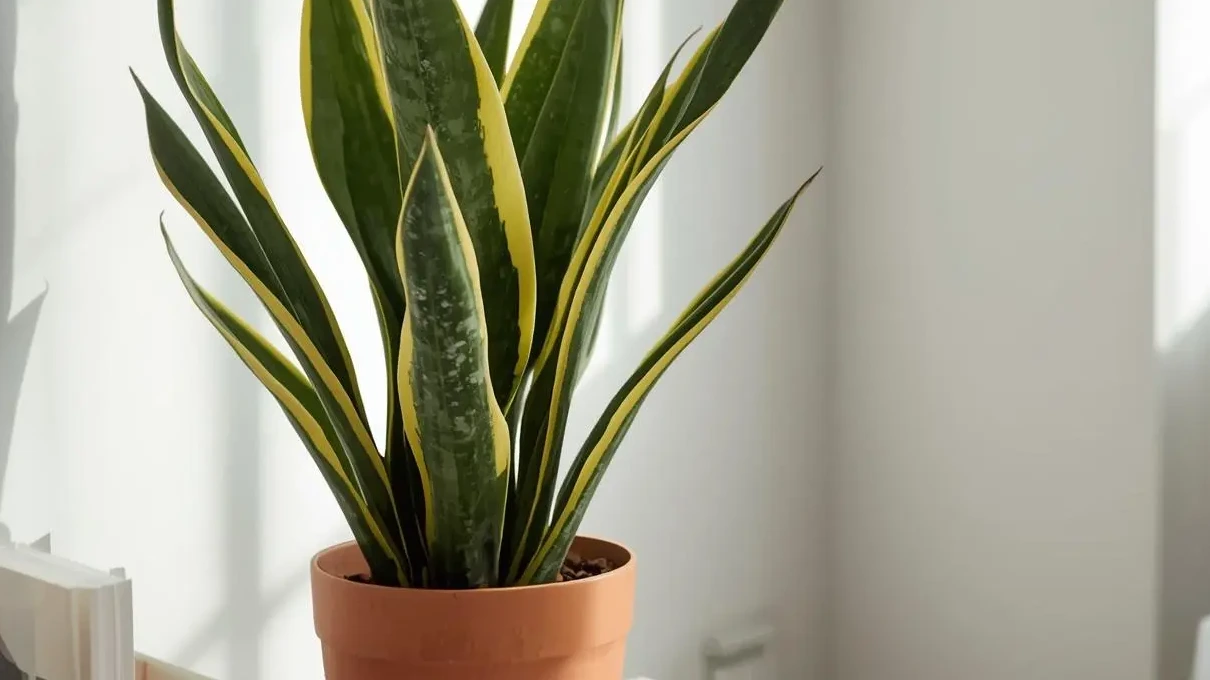
Snake Plant Care: The Scientific Guide to Prevent Rot

🔬 THE URBAN LAB | XEROPHYTE SURVIVAL PROTOCOLS

The snake plant (Dracaena trifasciata, formerly Sansevieria trifasciata) has a reputation as the most indestructible houseplant in cultivation.

This reputation is both accurate and catastrophically misleading. The plant can survive profound neglect—months without water, perpetual darkness, temperature extremes—but it cannot survive the one thing most owners provide in excess: attention in the form of water.

The paradox: The primary cause of Dracaena trifasciata mortality is not environmental stress but owner-induced rhizome rot from chronic overwatering. A plant engineered by evolution to survive East African droughts dies in suburban living rooms from compulsive watering schedules.

⚗️ The Executive Lab Summary: Dracaena trifasciata requires bright indirect light (tolerates low light but growth stalls), infrequent watering only when substrate is 100% desiccated throughout the pot (typically every 2-6 weeks), and a highly aerated succulent substrate with minimum 50% inorganic drainage material. Overwatering triggers anaerobic rhizome rot—the leading cause of death in cultivation.

The Biology of Survival: CAM Photosynthesis

Dracaena trifasciata employs Crassulacean Acid Metabolism (CAM), a specialized photosynthetic pathway that fundamentally differentiates it from typical houseplants.

Most plants use C3 photosynthesis—they open stomata (pores) during daylight to absorb CO₂ for photosynthesis. This simultaneously releases water vapor through transpiration. In humid environments, this is sustainable. In arid climates, it’s a death sentence.

The CAM Adaptation

CAM photosynthesis evolved as a water-conservation strategy in desert succulents. The mechanism operates in temporal separation:

  1. Night (stomata open): Plant absorbs CO₂ from air and stores it as malic acid in vacuoles. Stomata remain open during cool night when humidity is higher and evaporation rates are minimal
  2. Day (stomata closed): Stomata seal shut to prevent water loss. Plant retrieves stored CO₂ from malic acid and uses it for photosynthesis internally
  3. Result: Photosynthesis occurs with near-zero water loss. The plant can go weeks or months between watering events without cellular damage

This adaptation is why Dracaena trifasciata thrives on neglect. Every watering disrupts an evolutionary optimization for drought. According to research published in Nature Plants, CAM species achieve water-use efficiency 6-10x higher than C3 plants.

Air Purification as Metabolic Byproduct

The nocturnal gas exchange creates an unexpected benefit: nighttime oxygen production and air filtration.

NASA’s Clean Air Study (1989) identified Sansevieria species as highly effective at removing volatile organic compounds (VOCs)—specifically formaldehyde, benzene, trichloroethylene, and xylene—from indoor air during nocturnal metabolism.

The practical reality: You would need 10-15 large snake plants per 100 square feet of living space to achieve measurable air quality improvement. A single decorative plant provides psychological benefit more than atmospheric remediation. But the mechanism is real—the plant actively filters air while you sleep.

Scientific diagram showing plant stomata closed during day and open at night for CAM photosynthesis in snake plants demonstrating water conservation mechanism

CAM photosynthesis mechanism: stomata remain closed during day to prevent water loss, open at night to absorb CO₂

The Watering Protocol: Preventing Rhizome Rot

The underground rhizome is both the plant’s survival mechanism and its primary vulnerability.

A rhizome is a modified horizontal stem that grows underground. In Dracaena trifasciata, it serves as a water storage organ—thick, fleshy, and capable of holding moisture reserves for months. The sword-like leaves above ground also store water in succulent tissue.

When you water a snake plant that still has adequate moisture reserves, you create anaerobic conditions in the substrate. Waterlogged soil displaces oxygen from pore spaces. The rhizome, unable to respire aerobically, begins to rot from pathogenic bacteria (Erwinia, Pythium, Phytophthora) that thrive in low-oxygen environments.

The Soak-and-Dry Method

This is the only watering protocol compatible with CAM physiology:

💧 SOAK-AND-DRY WATERING PROTOCOL

Step 1: Verify Complete Desiccation

  • Insert finger or moisture meter to bottom of pot—soil must be 100% dry throughout entire depth
  • Pot should feel noticeably lighter when lifted (wet soil is heavy)
  • Leaves may show very slight wrinkling—this is acceptable moisture stress, not damage
  • Typical interval: Every 2-3 weeks in summer, 4-6 weeks in winter (or longer)

Step 2: Thorough Saturation

  • Water until 20-30% of applied water drains from pot bottom
  • This ensures complete root ball saturation—no dry pockets
  • Use room-temperature water (cold water can shock roots)
  • Empty drainage saucer within 15 minutes—never let pot sit in standing water

Step 3: Extended Dry Period

  • Do not water again until soil is completely dry (Step 1 criteria met)
  • Resist the urge to “check on it” with supplemental watering
  • The plant is engineered for drought—trust the biology
  • Winter dormancy: Reduce watering to once every 6-8 weeks or cease entirely if growth stops

⚠️ The Overwatering Death Spiral

Rhizome rot progression occurs in predictable stages:

  1. Week 1-2: Soil remains wet. Rhizome begins oxygen starvation but shows no external symptoms
  2. Week 2-4: Anaerobic bacteria colonize dying rhizome tissue. Root tips turn brown/black
  3. Week 4-6: Leaves yellow from base upward as rhizome can no longer transport water/nutrients
  4. Week 6-8: Leaves become mushy at base, fall over from lack of structural support. Foul odor from decomposing rhizome
  5. Week 8+: Entire plant collapses. Rhizome is black mush. Plant is typically unsalvageable

Critical window: Intervention must occur before Week 4 for survival chance above 50%. Once leaves are mushy, success rate drops to 10-20%. For emergency rot treatment, see our rhizome surgical rescue protocol.

Diagnosing Moisture Stress: Overwatering vs. Underwatering

The symptoms appear superficially similar but require opposite treatments. Misdiagnosis accelerates plant death.

The Diagnostic Matrix

SymptomDiagnosisRoot ConditionImmediate Action
Mushy, yellowing leaves dropping/falling over at baseOverwatering / Rhizome RotRoots brown/black, slimy, foul odor. Rhizome soft when pressed.Unpot immediately. Remove all rotted tissue with sterilized blade. Repot in DRY succulent mix. Do not water for 2-3 weeks. See emergency rot protocol.
Wrinkled, vertically folding leaves with crispy brown tipsUnderwatering / Cellular DesiccationRoots dry, brittle, tan/white. Rhizome firm but shriveled.Water thoroughly using soak-and-dry method. Leaves will re-plump within 24-48 hours. Resume normal watering schedule (every 2-4 weeks).
Pale, washed-out variegation with leaf bleachingExcessive Direct SunlightRoots typically healthyMove to bright indirect light. Damaged tissue will not recover—trim if desired. New growth will show proper coloration.
Slow/no growth, dark green leaves losing variegationInsufficient LightRoots healthy but plant energy-deficientIncrease light intensity. Plant survives low light but enters metabolic stasis. Move to brighter location or add supplemental LED grow light.
Brown spots with yellow halos on leavesFungal Leaf Spot (often secondary to overwatering)May show early rot symptomsReduce humidity, improve air circulation. Remove affected leaves. Reduce watering frequency. Apply copper-based fungicide if spreading.

The Squeeze Test

When you suspect rot, unpot the plant and physically examine the rhizome:

  • Healthy rhizome: Firm, white to tan, resists pressure when squeezed. Smells earthy/neutral
  • Early rot: Soft spots, light brown discoloration, slightly musty smell
  • Advanced rot: Black/dark brown, collapses under light pressure, releases liquid when squeezed, strong sulfurous/sewage odor

If more than 50% of rhizome shows rot, plant survival is unlikely. If less than 30% affected, surgical removal of infected tissue combined with extended dry period can save the plant.

Substrate & Aeration: Building the Perfect Mix

Standard potting soil is incompatible with Dracaena trifasciata root physiology.

Commercial potting mixes are formulated for tropical foliage plants that require consistent moisture. They contain 60-80% organic matter (peat moss, coco coir, composted bark) designed to retain water. For a xerophytic species adapted to arid volcanic soils, this creates perpetual waterlogging.

The Lab-Grade Substrate Formula

🌱 XEROPHYTE SUBSTRATE FORMULATION
ComponentRatioFunction
Coarse Perlite or Pumice35%Aeration, drainage
Coarse Sand or Grit (2-3mm)15%Weight, structure
Horticultural Charcoal20%Odor control, pH buffer
Coco Coir or Quality Potting Mix30%Moisture retention, nutrients

Performance characteristics: This mix achieves 50-60% air-filled porosity even when saturated. Water drains through gravitationally within 5-10 seconds, leaving only capillary-held moisture. Rhizome remains in constant contact with oxygen-rich air spaces. For commercial alternative, use cactus/succulent mix amended with additional 25-30% perlite. Complete substrate science available in our xerophyte substrate engineering guide.

Container Requirements

Drainage is non-negotiable. The container must have multiple drainage holes (minimum 3-4 holes, ½ inch diameter each). Snake plants do not tolerate standing water under any circumstances.

Material recommendations:

  • Terracotta (ideal): Porous clay allows evaporation through pot walls, accelerating drying. Provides additional oxygen exchange to roots
  • Unglazed ceramic: Similar benefits to terracotta with more aesthetic options
  • Plastic (acceptable): Retains moisture longer—reduce watering frequency by 25-30% compared to terracotta
  • Decorative cache pots without drainage (never use): Guaranteed rhizome rot within 2-6 months

Size consideration: Pot should be only 1-2 inches larger than root ball. Oversized pots hold excess wet substrate that roots cannot access, creating stagnant moisture pockets and increasing rot risk.

Close-up of chunky well-draining succulent soil mix containing pumice, horticultural charcoal, and perlite next to healthy snake plant rhizome

Optimal substrate showing chunky texture with visible drainage components and healthy firm rhizome

Light Saturation Tolerance: Debunking “Low Light” Myths

“Low light tolerant” does not mean “low light thriving.” This linguistic ambiguity kills more snake plants than any pest or disease.

Dracaena trifasciata can survive in low light—it won’t die immediately from lack of photons. But survival and growth are metabolically distinct states. In insufficient light, the plant enters metabolic stasis: no new leaves, no pup production, gradual loss of variegation as chlorophyll density increases to compensate.

The Light Spectrum

✅ LIGHT REQUIREMENTS BY INTENSITY

Low Light (50-100 foot-candles / 500-1000 lux):

  • Location: North-facing window 5+ feet back, interior room with indirect ambient light
  • Plant response: Survival mode. No growth, variegation fades, leaves darken (increased chlorophyll)
  • Acceptable for: Maintaining existing mature plants short-term (3-6 months)

Medium Light (100-200 FC / 1000-2000 lux) – Minimum Recommended:

  • Location: East or west-facing window 3-5 feet back, bright room with filtered natural light
  • Plant response: Slow growth (1-2 new leaves per year), variegation maintained, minimal pup production
  • Acceptable for: Long-term care of established plants

Bright Indirect Light (200-400 FC / 2000-4000 lux) – Optimal:

  • Location: East or west-facing window within 2-3 feet (morning/afternoon sun filtered by sheer curtain), south-facing window 4-6 feet back
  • Plant response: Active growth (3-5 new leaves per year), strong variegation, regular pup production, maximum size potential
  • Ideal for: Maximizing growth rate and ornamental value. For comprehensive lighting protocols, see our houseplant light optimization guide.

Direct Sunlight Warning

Direct sun exposure causes permanent leaf damage. Snake plant leaves lack protective adaptations for high-intensity light. Symptoms include:

  • White/tan bleached patches where chlorophyll is destroyed
  • Brown scorch marks from tissue death
  • Loss of variegation pattern (permanent in affected leaves)
  • Leaf tip death and crispy browning

Damaged tissue does not recover. Trim affected leaves at base if aesthetic appearance is compromised. New growth will emerge normally if plant is moved to appropriate light conditions.

Rhizome Division & Leaf Propagation

Dracaena trifasciata propagates through two mechanisms: rhizome division (clonal replication) and leaf cuttings (produces non-variegated pups).

Rhizome Division (Preferred Method)

This maintains the exact genetic profile of the parent plant, including variegation pattern.

🔪 RHIZOME DIVISION PROTOCOL

Timing: Spring or early summer when plant is actively growing

Procedure:

  1. Unpot mature plant (minimum 3+ years old with multiple growth points)
  2. Brush away substrate to expose rhizome structure and pup connections
  3. Identify natural separation points—pups with their own root systems attached to main rhizome
  4. Using sterilized knife, cut through rhizome 1-2 inches from pup attachment point
  5. Ensure each division has minimum 2-3 leaves and section of rhizome with roots
  6. Allow cut surfaces to callus (air dry) for 24-48 hours to prevent rot
  7. Pot divisions in DRY succulent substrate
  8. Critical: Do not water for 7-10 days post-division. This allows rhizome wound healing without bacterial infection risk
  9. Resume normal soak-and-dry watering after establishment period

Leaf Cutting Propagation

Warning for variegated cultivars: Leaf cuttings from variegated snake plants (D. trifasciata ‘Laurentii’, ‘Gold Flame’, etc.) will produce solid green pups without yellow/white margins. Variegation is a chimeric mutation not carried in leaf tissue genetics.

If you want to maintain variegation, you must use rhizome division exclusively.

Frequently Asked Questions: Snake Plant Care

How do I know when my snake plant needs water?

Insert finger or moisture meter to bottom of pot. Water only when substrate is 100% dry throughout entire depth. Pot will feel noticeably lighter. Typical frequency: every 2-3 weeks in summer, 4-6+ weeks in winter. Slight leaf wrinkling is acceptable moisture stress and not harmful.

Can snake plants grow in low light?

Snake plants survive in low light (50-100 FC) but do not grow. They enter metabolic stasis with no new leaves and fading variegation. For active growth and pup production, provide bright indirect light (200-400 FC). Place within 2-3 feet of east/west window or use supplemental grow lights.

Why are my snake plant leaves turning yellow and mushy?

Yellow, mushy leaves indicate rhizome rot from overwatering. Anaerobic bacteria colonize waterlogged rhizome, preventing water/nutrient transport. Immediate action: unpot, remove all brown/black rotted tissue with sterilized blade, repot in dry succulent mix, do not water for 2-3 weeks. Prevention: water only when soil is completely dry.

What is the best soil for snake plants?

Use succulent/cactus mix with high drainage: 35% perlite/pumice, 30% organic matter (coco coir), 20% horticultural charcoal, 15% coarse sand. Never use standard potting soil—retains too much moisture and causes rhizome rot. Mix must drain rapidly with 50%+ air-filled porosity when saturated.

Do snake plants need fertilizer?

Minimal fertilization required. Apply diluted balanced liquid fertilizer (20-20-20 at ¼ strength) once during growing season (April-August). Excess nitrogen causes soft, weak growth and increases disease susceptibility. Snake plants are adapted to nutrient-poor volcanic soils and thrive on neglect.

Are snake plants toxic to cats and dogs?

Yes. Snake plants contain saponins which are toxic if ingested by cats, dogs, or other pets. Symptoms include nausea, vomiting, diarrhea, and oral irritation. Keep out of reach of pets. Consult ASPCA’s toxic plants database for emergency protocols if ingestion occurs.

The Lab Verdict: Benign Neglect as Optimal Care

The supreme irony of Dracaena trifasciata cultivation is that doing less produces better outcomes than doing more.

This species evolved over millions of years to survive extreme drought, poor soil, and environmental hostility. It did not evolve to handle the solicitous attention of indoor plant enthusiasts. Every instinct you have as a caretaker—to water regularly, to provide rich soil, to fertilize frequently—actively harms the plant.

The Urban Lab Protocol for snake plant care is fundamentally about respecting evolutionary optimization. Provide bright indirect light, plant in ultra-fast draining substrate, water only when soil is bone-dry throughout, and otherwise leave it completely alone. No misting, no fertilizer schedules, no constant monitoring.

When you stop interfering, the plant does what 50 million years of xerophytic adaptation designed it to do: thrive on neglect and produce architectural sword-like foliage that remains flawless for decades.

The best care you can provide is the discipline to provide almost no care at all.


The Urban Lab | Xerophyte Survival Protocols Division
Dracaena trifasciata Care Protocol | Published: March 2026

Leave a Comment