
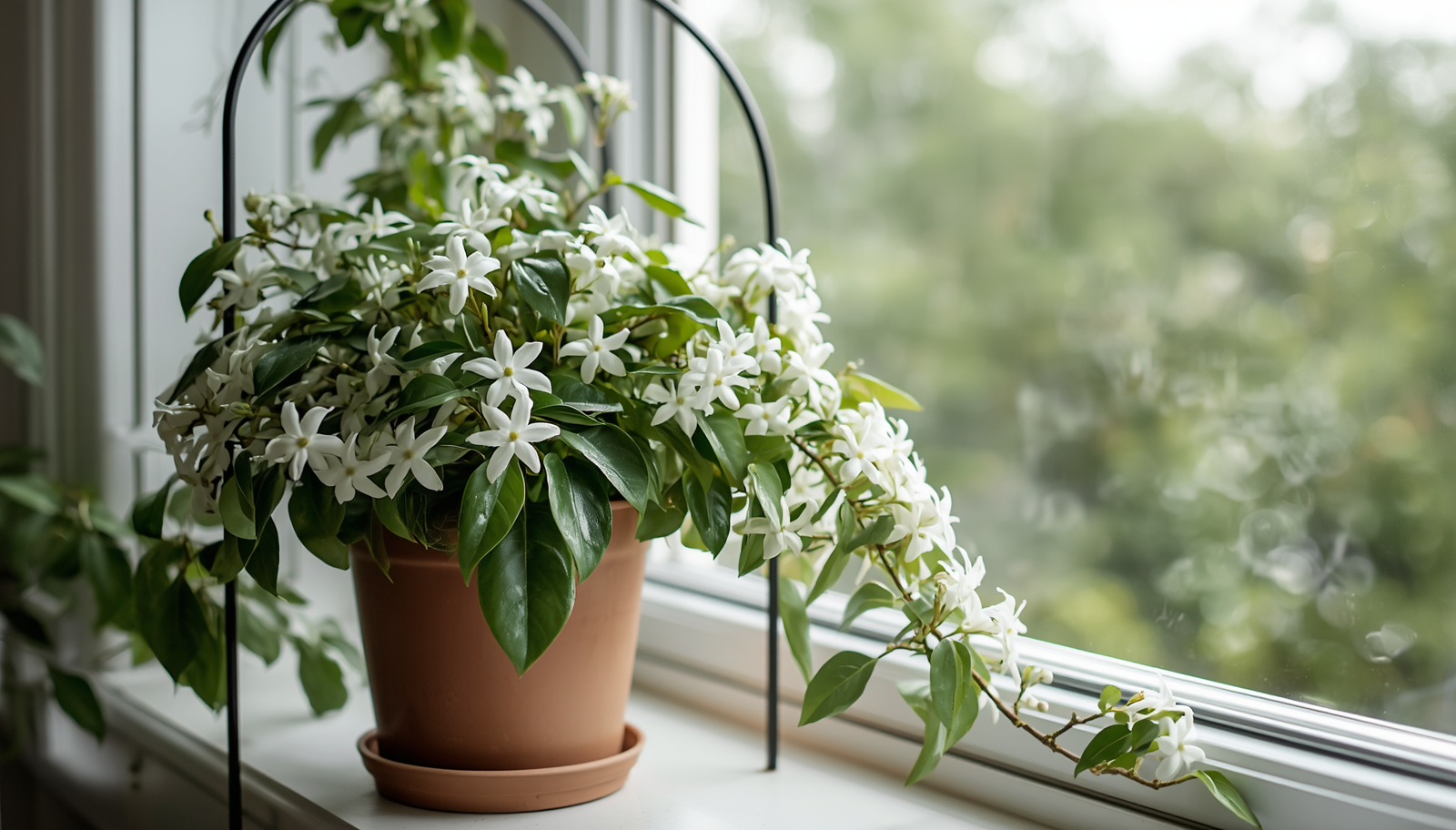
Few houseplants can perfume an entire room the way jasmine can. But it also has a reputation for being stingy with its flowers — plenty of people grow a lush, healthy green vine that simply refuses to bloom. The good news is that learning how to grow jasmine indoors comes down to a few specific triggers: bright light, steady moisture and humidity, the right feeding, and — the part almost everyone misses — a cool, dark rest period to set the buds. Get those right and you’ll be rewarded with clouds of scent in late winter.
| Parameter | Ideal | Avoid |
|---|---|---|
| Common indoor type | Jasminum polyanthum, J. sambac, J. officinale | “False jasmines” (see safety note) |
| Light | Bright light + ~4h direct sun (E/W window) | Deep shade (no blooms) |
| Water | Evenly moist; water when top inch is dry | Soggy soil or drying to a crisp |
| Humidity | High — mist, pebble tray, or humidifier | Dry, heated air |
| Feeding | High-phosphorus feed every 2 weeks in spring/summer | Heavy nitrogen (leaves, no flowers) |
| Bloom trigger | 4–5 weeks of cool nights (40–50°F) + darkness after dusk | Warm nights + evening lamplight |
| Pruning | Prune after flowering (blooms on old wood) | Pruning before bloom (cuts off buds) |
| Pet safety | True Jasminum = non-toxic (ASPCA) | Gardenia / Gelsemium / Cestrum = toxic |
Meet Jasmine: The Fragrant Climber
Jasmine (Jasminum) is a genus of around 200 evergreen or deciduous shrubs and vines in the olive family (Oleaceae), grown worldwide for the intense fragrance of its flowers. According to the North Carolina Extension Gardener Plant Toolbox, most species need full sun or at least bright light and moist, well-drained soil, and while some can climb to 20 feet, container plants usually stay a manageable 4 to 5 feet and prune easily to size. The most popular types for growing indoors are Jasminum polyanthum (pink or climbing jasmine), J. sambac (Arabian jasmine), and J. officinale (common jasmine).
Light: The Non-Negotiable for Blooms
Jasmine needs bright light with some direct sun every day to flower well. The New York Botanical Garden recommends an eastern or western exposure that delivers a few hours of direct sun, and notes that with the right conditions jasmine can stay in bloom for months. If your plant is growing but not flowering, insufficient light is the first thing to rule out — a bright south- or west-facing window, or a supplemental grow light, makes an enormous difference.
Water and Humidity
Jasmine likes its soil kept consistently moist — it wilts quickly if it dries out — but it should never sit in water. Water when the top inch of soil feels dry, and cut back in winter when growth slows. Because it’s a tropical plant, it also craves humidity: the NYBG suggests daily misting, a tray of moistened pebbles, or a humidifier, especially in dry, heated winter rooms.
Feeding for Flowers, Not Just Leaves
The right fertilizer nudges jasmine toward blooming instead of just growing foliage. The Chicago Botanic Garden recommends feeding every two weeks in spring and summer with a high-phosphorus fertilizer to encourage good flower development. Go easy on high-nitrogen feeds — they produce lush green growth at the expense of flowers.
If your jasmine grows lush and green but never flowers, it’s almost always one of two things: not enough light, or nights that are too warm and too bright. Give it a cool, dark autumn rest — chilly nights and zero lamplight after sunset — and it will reward you with a cloud of scent in late winter.
Why Your Jasmine Won’t Bloom — and How to Fix It
The single most common reason indoor jasmine won’t flower is that it never gets the cool, dark rest it needs to set buds. Jasminum polyanthum in particular needs a stretch of cool nights, bright days, and — crucially — complete darkness after sundown to trigger flowering. The Chicago Botanic Garden also notes that jasmine, like many tropical flowering plants, needs at least a 15-degree difference between day and night temperatures. Here’s how to give it what it wants:
- Drop the night temperature. In autumn, give the plant 4–5 weeks of cool nights around 40–50°F (a cool bedroom, enclosed porch, or bright unheated room works well).
- Cut off artificial light after dark. Keep it away from lamps and screens in the evening — even indoor lighting after sundown can prevent buds from setting.
- Keep the days bright. Maximum sunlight during the day, paired with those cool nights, is what sets the buds.
- Ease back on water and nitrogen. Slightly cooler, leaner, drier conditions in this rest period encourage flowers over foliage.
- Then bring it back to bright, cool comfort. Once buds appear, give it cool temperatures and bright indirect light and it will bloom in late winter.
One caution during this rest: tender jasmines still have limits. The RHS growing guide warns that tender types like J. polyanthum should be kept above about 55°F and never left in a genuinely cold spot at night — you want cool, not freezing.
Pruning at the Right Time
Timing your pruning wrong is a sure way to lose a season of flowers. Jasmine blooms on old growth, so the NC State Extension advises pruning right after flowering finishes, which gives the plant all season to form the wood that carries next year’s buds. Prune to shape and control size, and untangle or retrain the twining stems onto their support at the same time.
Growing Jasmine in Pots and Overwintering
Jasmine makes an excellent container plant, staying compact and easy to move. Grow it in a pot with drainage holes in moist, well-drained soil, and give it a small trellis or hoop for its stems to twine around. In summer you can move it outdoors to a warm, sheltered, sunny spot — just bring it back inside before night temperatures fall too low in autumn, since tender jasmines won’t tolerate frost.
True Jasmine vs “False Jasmine”: A Safety Note
Here’s reassuring news for pet owners: true jasmine is safe. The ASPCA lists Jasminum species as non-toxic to dogs, cats, and horses. The catch is that many plants sold as “jasmine” aren’t true jasmines at all — and some of those are toxic. Always check the botanical name before you buy, especially if you share your home with a curious pet. For a full room-by-room list of safe options, see our guide to cat-safe plants.
| Common name | Botanical name | True jasmine? | Pet safety |
|---|---|---|---|
| True / common jasmine | Jasminum spp. | Yes (Oleaceae) | Non-toxic (ASPCA) |
| Star / Confederate jasmine | Trachelospermum jasminoides | No (Apocynaceae) | Not a true jasmine |
| Cape jasmine | Gardenia jasminoides | No (Rubiaceae) | Toxic to pets (ASPCA) |
| Carolina jessamine | Gelsemium sempervirens | No (Gelsemiaceae) | Toxic |
| Night-blooming jasmine | Cestrum nocturnum | No (Solanaceae) | Toxic |
Common Problems
- Lots of leaves, no flowers. Too little light, nights too warm/bright, or too much nitrogen. Give it the cool, dark autumn rest and a high-phosphorus feed.
- Yellowing leaves. Usually overwatering or poor drainage — let the top inch dry and make sure the pot drains freely.
- Bud drop. Sudden temperature swings, dry air, or moving the plant once buds have formed. Keep conditions steady and humid.
- Wilting. Jasmine wilts fast when it dries out — check that the soil hasn’t gone bone dry.
- Pests. Watch for aphids, spider mites, and mealybugs in dry indoor air; rinse the foliage and treat early.
Frequently Asked Questions
How do you grow jasmine indoors?
Give jasmine bright light with a few hours of direct sun, keep the soil evenly moist but never soggy, raise humidity, and feed with a high-phosphorus fertilizer in spring and summer. Provide a cool, dark rest in autumn to trigger blooms.
Why is my jasmine not blooming?
The most common causes are too little light and nights that are too warm or too brightly lit. Jasmine needs several weeks of cool nights (around 40–50°F) with no artificial light after dark to set buds, plus bright days and a high-phosphorus feed.
How much light does indoor jasmine need?
Bright light with at least a few hours of direct sun each day, ideally from an east- or west-facing window. Without enough light it grows leaves but won’t flower.
How often should I water jasmine?
Keep the soil consistently moist, watering when the top inch feels dry. Never let it sit in water, and reduce watering in winter when growth slows.
When should I prune jasmine?
Prune right after flowering. Jasmine blooms on old growth, so pruning at the wrong time removes the wood that would carry next season’s flowers.
Is jasmine poisonous to cats and dogs?
True jasmine (Jasminum species) is non-toxic to cats, dogs, and horses per the ASPCA. However, “false jasmines” like Cape jasmine (Gardenia), Carolina jessamine, and night-blooming jasmine are not true jasmines and can be toxic — always check the botanical name.