
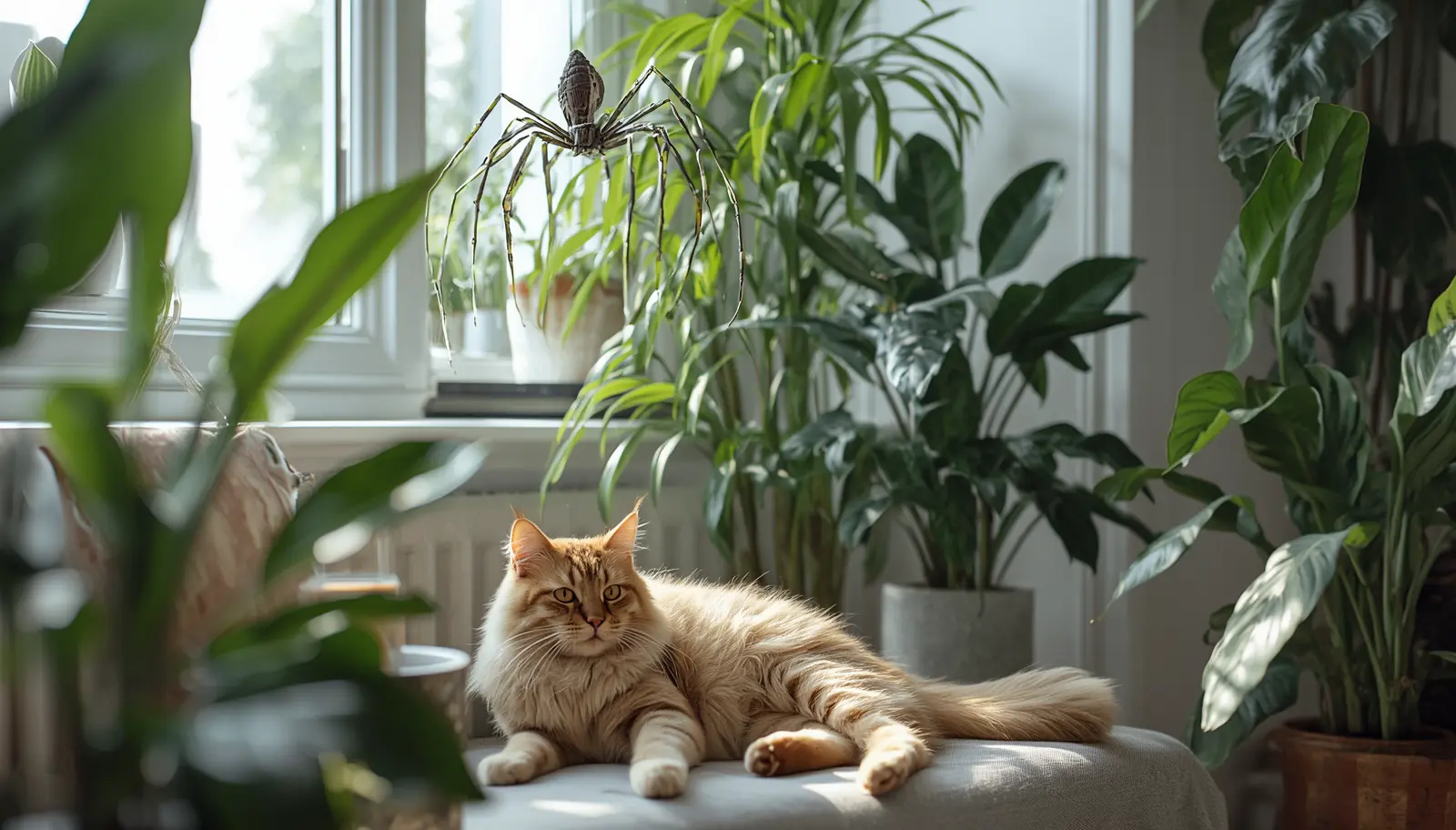
Cat safe plants are plants the ASPCA’s plant list for cats classes as non-toxic. Easy indoor choices include spider plant, Boston fern, parlor and areca palms, calathea and prayer plant, peperomia, cast iron plant, money tree, hoya, African violet, moth orchid, Christmas cactus, Haworthia and burro’s tail. Every plant below was checked against that list for this guide. Non-toxic does not mean edible: the ASPCA notes that eating any plant material may cause vomiting and stomach upset, so a cat that chews a lot of a safe plant can still be sick.
Non Toxic Plants for Cats: The List
Looking for plants safe for cats? All 24 plants in this table appear on the ASPCA’s list of plants non-toxic to cats (checked October 2026). Scientific names follow the ASPCA entries; use them to check nursery labels.
| Plant | Scientific name | Good for |
|---|---|---|
| Spider plant | Chlorophytum comosum | Hanging baskets, easy care |
| Boston fern | Nephrolepis exaltata ‘Bostoniensis’ | Humid bathrooms, bright shade |
| Staghorn fern | Platycerium bifurcatum | Wall mounts |
| Parlor palm | Chamaedorea (listed as bamboo palm) | Lower light |
| Areca palm | Dypsis lutescens | Bright rooms, height |
| Kentia palm | Howea forsteriana | Tall, tolerant floor plant |
| Ponytail palm | Beaucarnea recurvata | Sunny, forgetful watering |
| Calathea | Calathea spp. | Patterned leaves, medium light |
| Prayer plant | Maranta leuconeura | Patterned leaves, medium light |
| Cast iron plant | Aspidistra elatior | Low light, neglect |
| Peperomia (baby rubber plant, watermelon peperomia) | Peperomia spp. | Shelves and desks |
| Money tree | Pachira aquatica | Bright indirect light |
| Hoya (wax plant) | Hoya carnosa | Trailing or climbing, flowers |
| African violet | Saintpaulia spp. | Windowsill flowers |
| Moth orchid | Phalaenopsis | Long-lasting flowers |
| Christmas cactus | Schlumbergera | Winter flowers, hanging pots |
| Haworthia | Haworthia spp. | Small sunny spots |
| Burro’s tail | Sedum morganianum | Trailing succulent |
| Hens and chicks | Echeveria | Sunny windowsills |
| Nerve plant | Fittonia | Terrariums, humidity |
| Polka dot plant | Hypoestes phyllostachya | Colorful leaves |
| Purple passion | Gynura aurantiaca | Velvety purple leaves |
| Blushing bromeliad | Neoregelia (listed as Aregelia) | Bright indirect light |
| Venus flytrap | Dionaea muscipula | Sunny windowsills |
Source: ASPCA Toxic and Non-Toxic Plant List for Cats.
Check the scientific name. The ASPCA list itself shows why: “Baby’s tears” is used for the polka dot plant, “ornamental pepper” is listed as another name for the toxic Jerusalem cherry, and “lily” covers both deadly true lilies and the very different peace lily. A tag that just says “palm” or “fern” tells you nothing; the sago palm (a cycad) and the asparagus fern are both on the toxic list.
Are Spider Plants Safe for Cats?
Yes. The ASPCA lists spider plant (Chlorophytum comosum, also called ribbon plant or spider ivy) as non-toxic to cats. Many cats love chewing the long, grassy leaves, so a hanging basket protects both the plant and your cat’s stomach: even a non-toxic plant can cause vomiting if a cat eats a lot of it. See our spider plant care guide.
Are Philodendrons Safe for Cats?
No. The ASPCA lists philodendrons as toxic to cats and dogs because they contain insoluble calcium oxalates, which irritate the mouth and can cause drooling, vomiting and difficulty swallowing. The same applies to many other popular aroids on the ASPCA toxic list, including pothos (devil’s ivy), peace lily, monstera, dieffenbachia and alocasia. If you love that look, a calathea, prayer plant or money tree gives you big tropical leaves without the risk.
Are Ferns Safe for Cats?
Boston fern and staghorn fern are on the ASPCA non-toxic list for cats, as are the hen and chickens fern (Asplenium bulbiferum). The asparagus fern is not a true fern, and the ASPCA lists it as toxic.
Be careful with ferns that are not on the list. Maidenhair fern (Adiantum), for example, has no ASPCA entry, so it cannot be called “ASPCA-verified” even though it is widely considered harmless; see our maidenhair fern guide for what is and is not known.
Are Succulents and Tropical Plants Safe for Cats?
Some are, some are not, so check each one:
| Plant | ASPCA listing for cats |
|---|---|
| Haworthia, burro’s tail, Echeveria (hens and chicks), Christmas cactus, ponytail palm | Non-toxic |
| Aloe vera | Toxic |
| Jade plant (Crassula) | Toxic |
| Kalanchoe (mother of millions, devil’s backbone) | Toxic |
| Pencil cactus (Euphorbia tirucalli) | Toxic |
| Calathea, prayer plant, peperomia, cast iron plant, money tree, nerve plant | Non-toxic |
| Inch plant (Tradescantia) | Toxic |
Source: ASPCA Toxic and Non-Toxic Plant List for Cats.
So no, an aloe vera plant is not safe for cats: the ASPCA lists aloe as toxic. Read more in our aloe vera care guide.
Are Zinnias, Echinacea and Sage Safe for Cats?
- Zinnias: yes. The ASPCA lists Zinnia species as non-toxic to cats.
- Garden sage: yes. The ASPCA lists common or garden sage (Salvia officinalis) as non-toxic. Sage essential oil is a different matter; keep concentrated oils away from cats.
- Echinacea (coneflower): not on the ASPCA list at all, toxic or non-toxic, so we cannot call it ASPCA-verified. Ask your vet before planting it where your cat grazes.
Are Pepper Plants and Kentia Palms Safe for Cats?
Kentia palm: yes. The ASPCA lists Forster sentry palm (Kentia palm, Howea forsteriana) as non-toxic to cats.
Ornamental peppers: be careful with the name. The ASPCA uses “ornamental pepper” as another name for Jerusalem cherry (Solanum pseudocapsicum), which it lists as toxic to cats. Ornamental chili peppers (Capsicum) do not have an ASPCA entry. Their hot fruit can irritate a cat’s mouth, so keep any pepper plant out of reach.
True lilies can kill cats
The FDA lists Asiatic, daylily, Easter, Japanese show, Oriental, rubrum, stargazer, tiger and wood lilies as highly toxic to cats. The entire plant is toxic, including the pollen and even the water in a vase, and a small amount can cause fatal kidney failure in less than 3 days. If treatment is delayed by 18 hours or more, the cat will generally have irreversible kidney failure. Peace lilies and calla lilies are different: the FDA explains they contain calcium oxalate crystals that irritate the mouth and throat. Lily of the valley is different again; it contains toxins that affect the heart.
How to Keep Cats and Plants Together
- Check every plant you already own against the ASPCA list by scientific name. Rehome toxic ones or move them to a room your cat cannot enter.
- Choose replacements that suit your light. Cast iron plant and parlor palm tolerate lower light; Haworthia, Echeveria and ponytail palm want a sunny window.
- Go up. Hanging baskets and high shelves keep leaves out of reach, which matters even for safe plants if your cat is a heavy chewer.
- Offer a legal alternative. Many owners grow a pot of cat grass (usually wheat or oat seedlings) in an easy-to-reach spot to give a chewing cat something better to target.
- Watch out for treatments. Fertilizers, systemic insecticides and some leaf-shine products can be harmful even on a safe plant; store them away and follow the label.
What to Do If Your Cat Eats a Plant
- Move your cat away from the plant and remove any pieces from its mouth if you can do so safely.
- Identify the plant, ideally by scientific name, and take a photo or a sample.
- Call your veterinarian or the ASPCA Animal Poison Control Center at (888) 426-4435 (a consultation fee may apply). Do not try to make your cat vomit unless a vet tells you to.
- If there is any chance it was a true lily or daylily, treat it as an emergency, even if your cat seems fine. The FDA says delays of 18 hours or more usually mean irreversible kidney damage.
Have a dog? See our list of plants safe for dogs.
For another pet-safe plant, see our guide to Venus fly trap care.
For a pet-safe flowering daisy, the ASPCA lists Gerbera as non-toxic; see our guide on how to grow daisies.
Frequently Asked Questions
What plants are not toxic to cats?
The ASPCA lists hundreds. Popular houseplants on its non-toxic list for cats include spider plant, Boston fern, parlor palm, areca palm, Kentia palm, calathea, prayer plant, peperomia, cast iron plant, money tree, hoya, African violet, moth orchid, Christmas cactus, Haworthia and burro’s tail.
Is aloe vera safe for cats?
No. The ASPCA lists aloe (Aloe vera) as toxic to cats.
Are spider plants safe for cats?
Yes. The ASPCA lists Chlorophytum comosum as non-toxic to cats, though eating a lot of any plant can cause vomiting.
Are zinnias toxic to cats?
No. The ASPCA lists Zinnia species as non-toxic to cats.
Is echinacea safe for cats?
The ASPCA has no entry for echinacea (coneflower), so its safety for cats is not confirmed by that database. Check with your vet.
Is Swedish ivy (Plectranthus) safe for cats?
It depends on the species. The ASPCA lists Swedish ivy (Plectranthus australis, also called creeping Charlie) as non-toxic to dogs, cats and horses. But Cuban oregano, also sold as Spanish thyme or Indian borage (Coleus amboinicus, formerly Plectranthus amboinicus), is listed by the ASPCA as toxic to dogs, cats and horses, with essential oils causing vomiting and diarrhea. Check the botanical name on the label.
nWhich lilies are dangerous to cats?
True lilies (Lilium) and daylilies (Hemerocallis), including Easter, tiger, stargazer and Asiatic lilies. The FDA warns that all parts, including pollen and vase water, can cause fatal kidney failure.