
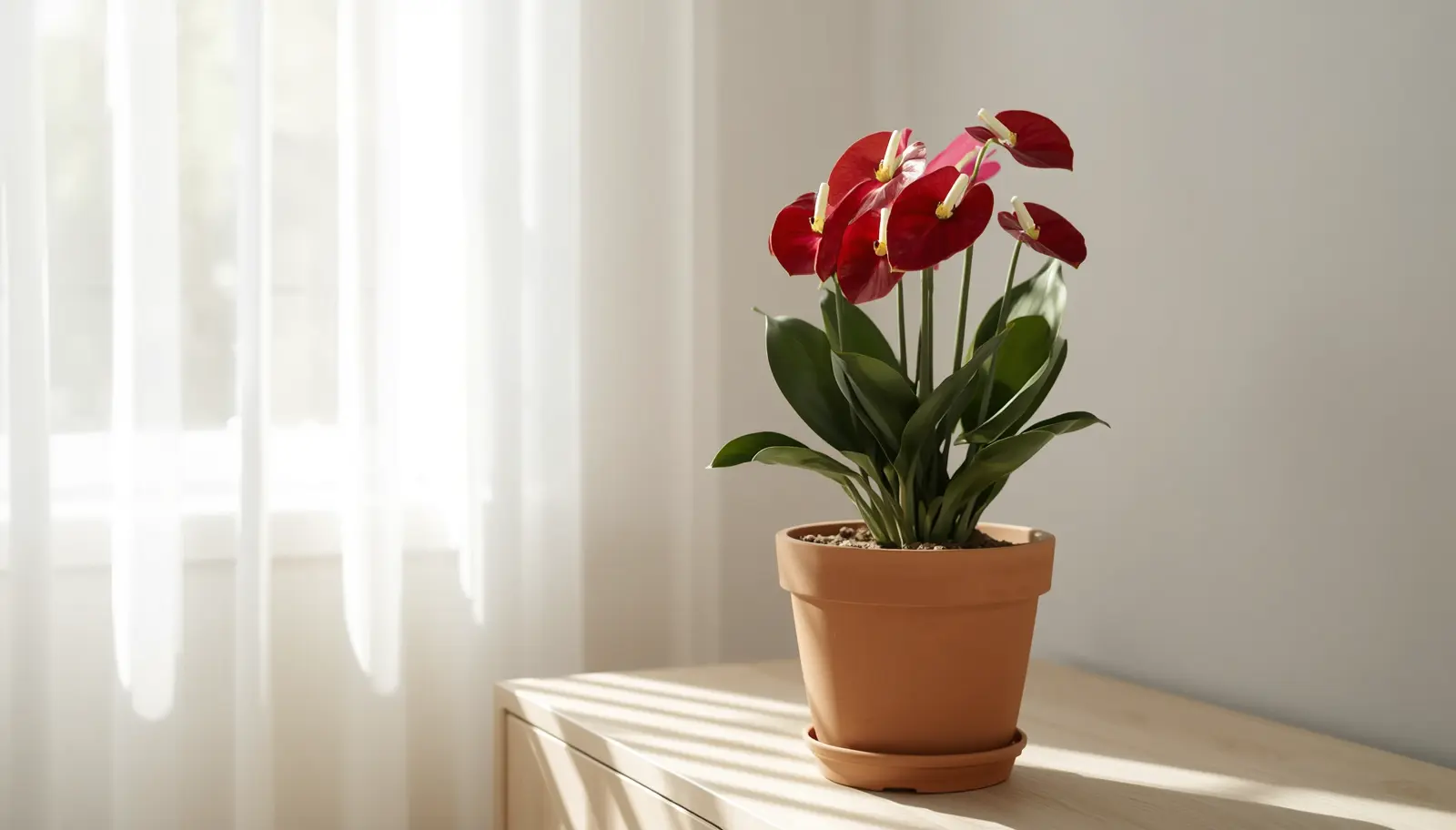
Anthurium care comes down to four non-negotiables: bright indirect light, humidity above 60%, temperatures between 65 and 85°F, and a chunky, soil-less aroid mix watered only when the top 1 to 2 inches are dry. Anthuriums are epiphytes. In the wild they grow attached to trees, not buried in ground soil, and almost every problem people have with them traces back to treating them like a regular potted plant.
This guide covers the flowering Anthurium andraeanum, the flamingo flower with the glossy red hearts. It is not a guide for the velvet-leaf foliage types like A. clarinervium or A. crystallinum, which need different handling. Below you’ll find the exact soil recipe by percentage, the submersion watering method that aroid growers swear by, and the two levers that actually restart blooming.
To care for an Anthurium indoors, provide bright indirect light, humidity above 60%, and temperatures between 65–85°F. Because Anthuriums are epiphytes, they need a chunky, soil-less aroid mix and water only when the top 1–2 inches of the pot are dry.
Table of Contents
- What Is an Anthurium? (And Which Type This Guide Covers)
- Anthurium Care at a Glance
- Anthurium Light and Temperature Requirements
- What Is the Best Soil for Anthuriums? (Exact DIY Recipe)
- How Do You Water an Anthurium? The Submersion Method
- How to Get Your Anthurium to Bloom
- Common Problems: Yellow Leaves, Brown Tips, and Pests
- Is Anthurium Toxic to Cats and Dogs?
- Anthurium Care FAQ
| Parameter | Ideal | Avoid |
|---|---|---|
| Light | Bright, indirect | Direct midday sun; dark corners (no blooms) |
| Watering | When top 1–2 in are dry; full drainage | Standing water; frequent small sips |
| Temperature | 65–85°F (18–29°C) | Below 60°F (15°C); cold drafts |
| Humidity | 60% or higher | Dry air near vents and radiators |
| Soil | Chunky soil-less aroid mix | Dense potting soil (root rot) |
| Feeding | High-phosphorus, ¼ strength, monthly in growth | Full-strength or nitrogen-heavy feed |
| Pets | Kept fully out of reach | Any cat or dog access: TOXIC (ASPCA) |
What Is an Anthurium? (And Which Type This Guide Covers)
Anthurium andraeanum is a tropical epiphyte from the rainforests of Colombia and Ecuador, grown indoors for its glossy heart-shaped “blooms” that can last for weeks. Here is the first piece of botany worth knowing, because it changes how you diagnose problems: the red heart is not a flower. It is a spathe, a modified leaf, and the true flowers are the tiny bumps packed along the central spadix. When a spathe fades to green, the plant is not sick. That bract is simply aging or reacting to low light, and we cover both cases later.
One identity check before anything else. Garden centers sell two very different groups under the name Anthurium. This guide is for the flowering flamingo flower. The velvet-leaf collector types (A. clarinervium, A. crystallinum) want more humidity, gentler light, and are grown for foliage, not blooms. Advice for one group applied to the other is a common reason plants from both groups struggle. For more growing guides organized by plant, browse The Lab.
Anthurium Care at a Glance
Good anthurium care means recreating a tree branch, not a garden bed. According to the NC State Extension Plant Toolbox, Anthurium andraeanum is an epiphyte that needs bright indirect light, high humidity, and a very coarse, fast-draining growing medium. Every number in the snapshot table above follows from that single fact. Roots that evolved gripping bark in moving air will suffocate and rot in dense, wet potting soil.
The payoff for getting the setup right is unusual among houseplants: a healthy Anthurium can produce new spathes through much of the year, resting between flushes. The sections below go lever by lever.
Anthurium Light and Temperature Requirements
Anthuriums need bright, indirect light to bloom. An east-facing window is the sweet spot. Near a south or west window, keep the plant 2 to 3 feet back or behind a sheer curtain, because direct midday sun scorches the leaves and bleaches spathes. The plant tolerates lower light without complaint, and that is the trap. It sits there, green and alive, and never blooms again.
Temperature is simpler. Hold the room between 65 and 85°F (18 to 29°C), and per the Missouri Botanical Garden Plant Finder, keep it above 60°F (15°C) at all times, since this species has no tolerance for cold. In practice that means away from drafty windows in winter, away from exterior doors, and never in the blast path of an air conditioner. Humidity should sit at 60% or higher; a small humidifier is the only reliable fix in a heated home, and your leaves will tell you when it drops (brown tips first).
What Is the Best Soil for Anthuriums? (Exact DIY Recipe)
The best soil for an Anthurium is barely soil at all. Because the plant is an epiphyte, the mix must deliver air to the roots first and moisture second. “Well-draining soil” is the advice everywhere, and it is uselessly vague, so here is the actual recipe by volume:
| Component | Ratio | What it does |
|---|---|---|
| Orchid bark | 40% | Air to the roots, mimics tree bark |
| Perlite | 30% | Drainage, keeps the mix open |
| Coco coir or peat-free potting mix | 20% | Holds just enough moisture |
| Horticultural charcoal | 10% | Keeps the mix fresh, resists souring |
Mix it dry, moisten lightly, and pot with the crown sitting slightly proud of the surface. A ready-made aroid mix works too; check that bark is the first ingredient. Repot every two to three years or when roots circle the pot, going up only one pot size.
How Do You Water an Anthurium? The Submersion Method
Water an Anthurium when the top 1 to 2 inches of the mix are dry, and water it thoroughly. In a chunky mix, top-watering often runs straight through channels without wetting the root ball, which is why the submersion method has become the standard technique among aroid growers. It is a community practice rather than an extension-lab protocol, but the physics are sound: full saturation, zero standing water afterward.
- Check that the top 1–2 inches of the mix are dry before watering.
- Fill a basin with room-temperature water, deep enough to cover two-thirds of the nursery pot.
- Lower the pot in slowly and hold it steady.
- Wait until air bubbles stop rising, usually 5–10 minutes; this means the root ball is saturated.
- Lift the pot out and let it drain completely for 10–15 minutes.
- Return the plant to its spot; do not water again until the top 1–2 inches are dry.
In a typical home this works out to roughly once a week in summer and every 10 to 14 days in winter, but always trust the mix over the calendar. Top-watering is fine as a quick alternative; just pour slowly in stages so the bark actually absorbs it.
Pro tip: Weigh the pot in your hand right after submersion draining, then again a week later. The weight difference teaches you faster than any moisture meter what “dry enough to water” feels like for your exact pot, mix, and room.
How to Get Your Anthurium to Bloom
Two levers control Anthurium blooming: light and food. Light is the dominant one. A plant in a dim corner will not produce spathes no matter what else you do, so fix placement first (bright and indirect, as above). Once light is right, feeding does the rest. The UF/IFAS Gardening Solutions guidance for Anthuriums points to a high-phosphorus fertilizer, and the working protocol is simple: dilute to one-quarter strength and feed monthly through spring and summer. Phosphorus (the middle number on the label) drives flowering; a nitrogen-heavy feed gives you lush leaves and nothing else.
Then respect the rhythm. Anthuriums bloom in cycles, typically holding spathes for weeks, resting, and flushing again. Snip spent spathes at the base to redirect energy, hold conditions steady, and expect the next flush in roughly six to eight weeks. Sudden moves, cold snaps, and repotting all push the reset button on that clock.
Common Problems: Yellow Leaves, Brown Tips, and Pests
Anthurium problems are readable if you know what each symptom points to. Work down this list in order, and for deeper diagnosis on any symptom visit The Infirmary, our troubleshooting hub.
- Spathes turning green: normal aging, or the plant sat in low light while the spathe developed. Not a disease. Improve light for the next flush.
- Yellow lower leaves, soil stays wet: overwatering or the wrong mix. Check roots for rot now; firm and white is healthy, brown and mushy is not.
- Brown leaf tips: low humidity first, fertilizer salt buildup second. Raise humidity toward 60% and flush the pot with plain water every couple of months.
- Pale, bleached, or scorched patches: too much direct sun. Move it back from the window.
- No new leaves or blooms for months: insufficient light or a plant overdue for repotting.
- Stippled leaves, fine webbing: spider mites, which arrive with dry air. Rinse the foliage, treat weekly with insecticidal soap for three weeks, and fix the humidity that invited them.
The humidity thresholds and pest playbook here are the same ones that apply across the aroid family; if you also keep an Alocasia, our Alocasia Polly care guide covers the same enemies on a fussier plant.
Is Anthurium Toxic to Cats and Dogs?
Anthurium is toxic to cats and dogs. The ASPCA, which lists the plant under its common name flamingo flower, identifies insoluble calcium oxalate crystals as the culprit: chewing any part causes oral irritation, intense burning of the mouth, drooling, vomiting, and difficulty swallowing. The Pet Poison Helpline confirms the same mechanism and symptoms. The sap can irritate human skin as well, so wear gloves when repotting.
If a pet chews the plant, clear any material from the mouth, offer water, and call your veterinarian or the ASPCA Animal Poison Control Center at (888) 426-4435. If your cat treats every shelf as a challenge, the safer route is choosing from our list of cat-safe plants instead.
Anthurium Care FAQ
How often should I water my Anthurium?
Water when the top 1 to 2 inches of the mix are dry, which is typically weekly in summer and every 10 to 14 days in winter. Frequency matters less than method: saturate the root ball fully, then let it drain completely, and never leave the pot standing in water.
Why are my Anthurium’s flowers turning green?
The colored part is a spathe, a modified leaf, and spathes naturally fade to green as they age. If new spathes emerge green, the plant developed them in light that is too low. Move it to bright indirect light and the next flush should color properly.
Should I cut off dead Anthurium flowers?
Yes. Once a spathe fades and wilts, cut its stem at the base with clean scissors. Removing spent blooms redirects energy toward roots, new leaves, and the next bloom cycle rather than seed production.
How do I get my Anthurium to bloom again?
Give it bright indirect light first, then feed monthly with a high-phosphorus fertilizer diluted to quarter strength during spring and summer. Keep temperatures above 65°F and humidity near 60%, and expect a new flush of spathes in roughly six to eight weeks.
Is Anthurium toxic to cats and dogs?
Yes. The ASPCA lists Anthurium (flamingo flower) as toxic to cats and dogs because of insoluble calcium oxalate crystals, which cause oral pain, drooling, vomiting, and difficulty swallowing. Keep the plant out of reach or choose a pet-safe alternative.
Do Anthuriums need real soil?
No. Anthuriums are epiphytes that grow on trees in the wild, so their roots need air as much as moisture. Grow them in a chunky soil-less mix, roughly 40% orchid bark, 30% perlite, 20% coco coir, and 10% charcoal. Dense potting soil leads to root rot.