
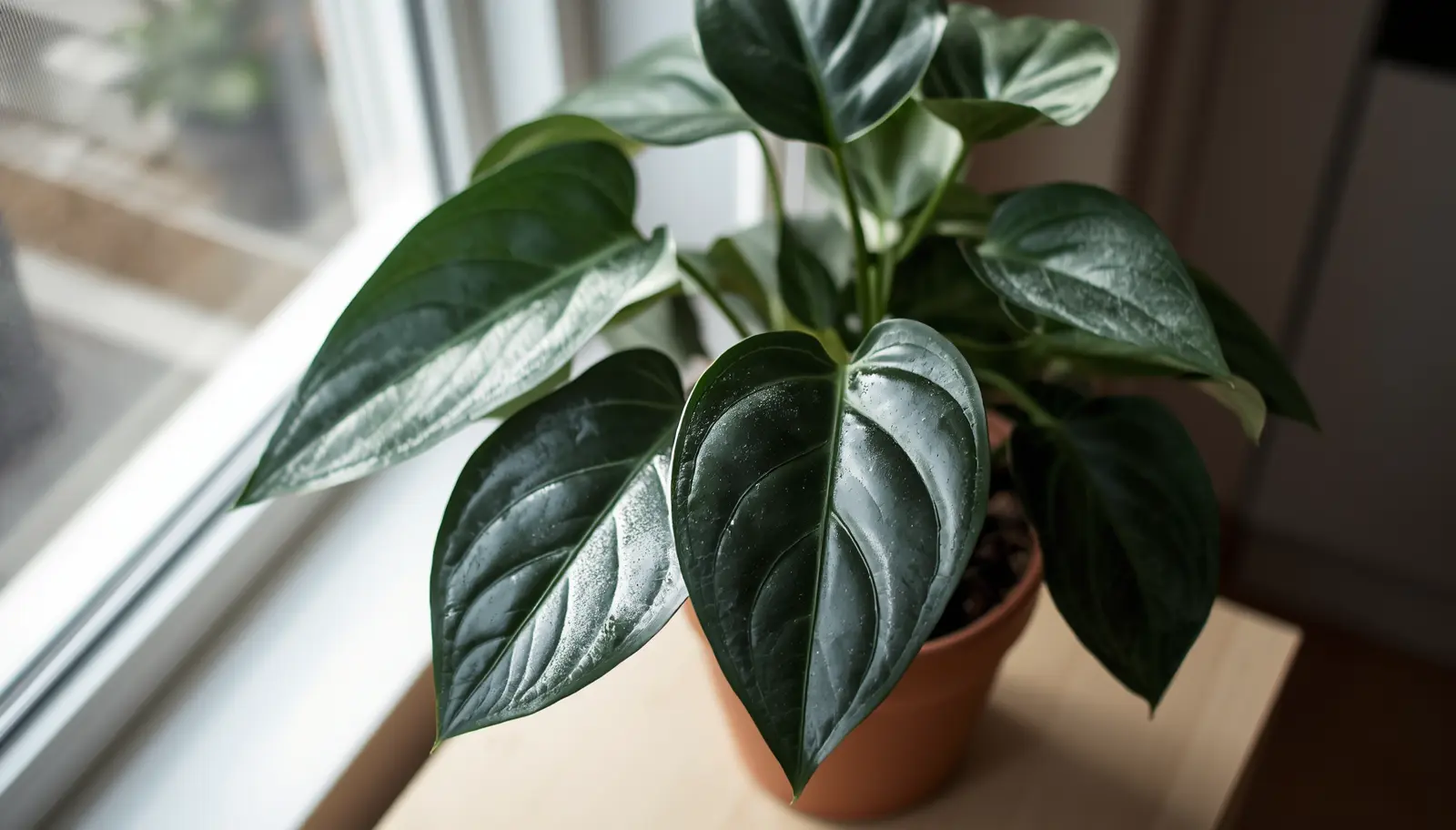
Alocasia ‘Polly’ is the compact “African mask plant”: glossy, dark green arrowhead leaves with bold silvery veins on a plant that usually stays under 2 feet. It is also known for sulking, dropping leaves and going dormant in winter, which makes many owners think it has died. Alocasia Polly care comes down to warmth, bright indirect light, humidity and a free-draining mix that is never soggy. This guide follows NC State, the RHS, UW-Madison and the ASPCA.
What Is Alocasia Polly? (Polly vs Amazonica)
‘Polly’ is a compact cultivar of the hybrid alocasia sold as “Amazonica.” NC State Extension lists the hybrid as Alocasia × mortfontanensis, formerly known as Alocasia × amazonica, from a cross of A. longiloba and A. sanderiana, and describes ‘Polly’ as compact, up to 2 feet tall, with large dark green leaves and silvery-green veins. The Pacific Bulb Society says the “Amazonica” name appears to come from a 1950s Florida nursery called Amazon Nursery, not from the Amazon; alocasias are native to tropical Asia and eastern Australia (NC State). Sources disagree on who first made the cross (NC State credits the French breeder Chantrier, the Pacific Bulb Society the Florida nursery owner Salvadore Mauro), but they agree it is a garden hybrid, not a wild species.
So Alocasia Polly vs Amazonica is not two different plants: Polly is a smaller selection of the same hybrid. It is often confused with the even smaller ‘Bambino’; see our Alocasia Polly vs Bambino guide.
Alocasia Polly Care at a Glance
| Need | What the sources say |
|---|---|
| Light | Bright, indirect; direct sun scorches (NC State, RHS) |
| Temperature | Above 60°F (NC State); above 16°C (60°F) in growth, never below 10°C (50°F) (RHS) |
| Humidity | High (NC State); medium to high (RHS) |
| Water | Moist but well-drained (NC State); when the top 5 cm (2 in) is dry, minimal in winter (RHS) |
| Soil | Fertile, well-drained (NC State); peat-free compost with grit, about 3:1 (RHS) |
| Size | ‘Polly’ up to 2 ft (NC State) |
| Propagation | Division of offsets (NC State); offsets or rhizome division (RHS) |
| Pets | Toxic to dogs, cats and horses (ASPCA) |
Sources: NC State Extension Plant Toolbox; RHS alocasia growing guide; ASPCA.
Light, Temperature and Humidity
Light. NC State recommends bright, indirect light and warns that direct sun can scorch the leaves. The RHS agrees and adds that lower light works but slows growth; it suggests turning the pot at each watering so the plant grows evenly. An east window, or a few feet back from a brighter one, suits Polly well.
Temperature. NC State says to keep the air above 60°F. The RHS says alocasias should stay above 16°C (60°F) during the growing season, away from cold draughts, and never drop below 10°C (50°F) in winter. Cold windowsills and drafty doors are a common trigger for leaf drop.
Humidity. NC State says Polly prefers high humidity, and the RHS suggests a pebble tray, a bathroom, regular misting, grouping plants or a humidifier. The RHS notes that low humidity can cause brown leaf edges and attract red spider mites. A cheap hygrometer next to the plant tells you whether dry air is really the issue. See our VPD guide.
Watering and Soil
NC State says to keep the soil moist but well-drained, and warns that overwatering can cause root rot and bacterial stem rot. The RHS says to water from April to October when the top 5 cm (2 in) of compost is dry, to water minimally in winter, and that overwatering, especially while dormant, rots the roots. Water thoroughly, let it drain and never leave the pot in a full saucer.
For soil, the RHS recommends peat-free houseplant compost, or multipurpose compost mixed with grit at about three parts compost to one part grit. A chunky aroid mix with bark and perlite does the same job; see our aroid soil mix guide. Feed with a general liquid fertilizer from April to October (RHS).
Repotting and Propagation (Corms and Offsets)
The RHS suggests leaving a new plant in its pot for about a year, then repotting in spring every couple of years when the roots are crowded, moving up only about 5 cm (2 in) in pot width.
NC State lists division of offsets for propagation, and the RHS describes separating offsets in spring and dividing the rhizome in late spring or early summer. When you repot a Polly, you will often find small, round alocasia polly corms among the roots. These can be potted shallowly in a moist, gritty mix and kept warm and bright; many will sprout into new plants, though slowly. Wear gloves, because the sap irritates skin (RHS, NC State).
Drooping, Yellow or Brown Leaves
| Symptom | Likely cause | What to do |
|---|---|---|
| Drooping leaves, wet soil | Overwatering, root or stem rot (NC State) | Let the top dry; check roots and stem base; repot into a grittier mix |
| Drooping, dry soil | Underwatering | Water thoroughly when the top 5 cm is dry |
| Oldest leaf yellowing as a new one opens | Normal turnover | Remove it once fully yellow |
| Several leaves yellowing in autumn or winter | Dormancy (RHS) | Water less; keep warm; wait for spring |
| Brown, crispy edges | Low humidity (RHS) | Raise humidity |
| Speckling, webbing under leaves | Spider mites (NC State, RHS) | Rinse; treat; raise humidity |
| Damage after a cold night | Below 10°C or cold drafts (RHS) | Move somewhere warmer |
Sources: NC State Extension; RHS alocasia growing guide.
See our yellow leaves guide and spider mite guide.
Alocasia Polly Dormancy: Dormant or Dead?
The RHS says winter dormancy is normal for alocasias: the plant may drop some leaves, and fresh growth returns in spring. Indoor Pollys often lose several leaves in autumn and winter, and some die back completely to the corm. UW-Madison says elephant ears kept indoors over winter are semi-dormant and should be kept on the drier side, with watering and feeding resumed in spring.
- Check the corm or stem base. Gently feel it below the soil. Firm means alive and resting; soft, mushy and smelly means rot.
- If it’s firm: keep the pot warm (above 10°C/50°F) and bright, water very lightly, don’t feed, and wait for spring (RHS, UW-Madison).
- If it’s soft: unpot, cut away the rotten parts, and pot any firm pieces or offsets in fresh, gritty, barely moist mix.
Is Alocasia Polly Toxic to Pets?
Yes. The ASPCA lists Alocasia as toxic to dogs, cats and horses because of insoluble calcium oxalates, causing oral irritation, pain and swelling of the mouth, tongue and lips, drooling, vomiting and difficulty swallowing. NC State rates its toxicity as medium and notes that contact can cause dermatitis and eye injury. Keep it out of reach and call your veterinarian or the ASPCA Animal Poison Control Center at (888) 426-4435 if a pet chews it. See our cat-safe plants list.
Growing other alocasias? See our guides to Alocasia zebrina and Alocasia Frydek.
Frequently Asked Questions
What is the difference between Alocasia Polly vs Amazonica?
Polly is a compact cultivar of the hybrid sold as Amazonica (NC State lists it as A. × mortfontanensis, formerly A. × amazonica). Care is the same; Polly just stays smaller, up to about 2 feet.
How often should I water an Alocasia Polly?
From spring to autumn, when the top 5 cm (2 in) of compost is dry; in winter, only minimally (RHS). Overwatering, especially in winter, causes root rot.
Is my Alocasia Polly dormant or dead?
Feel the corm or stem base. If it is firm, the plant is resting; keep it warm, water very little and wait for spring (RHS). If it is soft and mushy, it has rotted.
What do I do with Alocasia Polly corms?
Pot them shallowly in moist, gritty mix and keep them warm and bright. They can grow into new plants, slowly. NC State and the RHS list offsets and division as propagation methods.
Why is my Alocasia Polly drooping?
Usually watering: drooping with wet soil points to overwatering and rot (NC State), with dry soil to underwatering. Cold drafts and a recent move can also cause it.
Is Alocasia Polly toxic to cats?
Yes. The ASPCA lists alocasia as toxic to dogs, cats and horses because of insoluble calcium oxalates.