
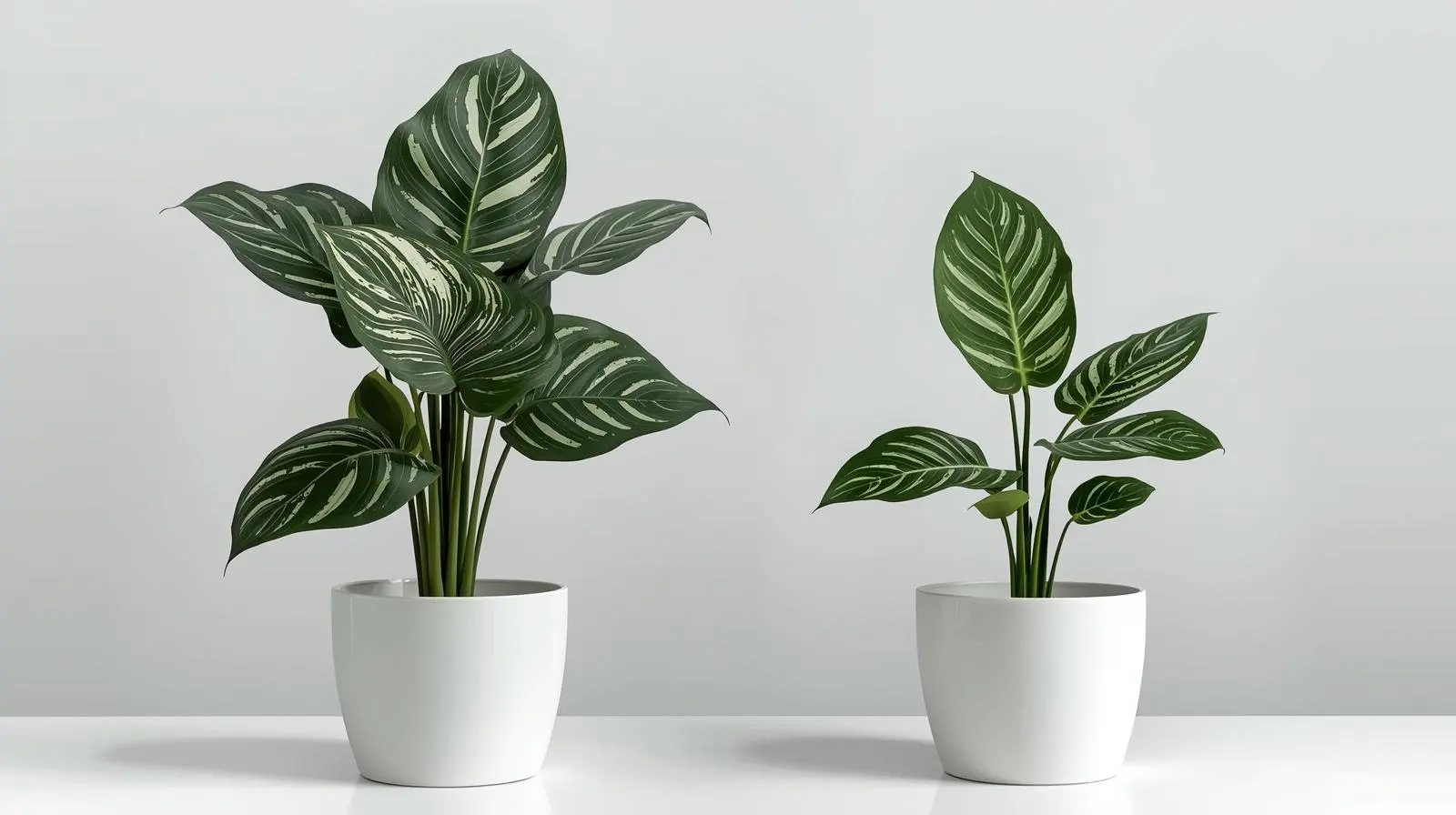
Alocasia Polly vs Bambino: 5 Scientific Ways to Tell Them Apart

🔬 THE URBAN LAB | AROID IDENTIFICATION

The Miniature Alocasia Mystery: Both Alocasia ‘Polly’ and ‘Bambino’ share the same botanical parentage—Alocasia Ă— amazonica, a hybrid cross between A. longiloba and A. sanderiana. Both display the characteristic dark green leaves with prominent white venation that makes this hybrid so coveted. Yet cultivators consistently misidentify them.

The Diagnostic Question: Is your Alocasia staying small because it’s a naturally compact ‘Bambino’ cultivar, or is it a stunted ‘Polly’ suffering from suboptimal conditions? The morphological differences are subtle but measurable. Misidentification leads to inappropriate care expectations—a ‘Bambino’ will never reach 24 inches regardless of fertilization, while a ‘Polly’ kept in low light will remain perpetually dwarfed.

The Urban Lab Analysis: This comparative protocol identifies the five diagnostic markers that distinguish these cultivars with 100% accuracy: maximum height potential, leaf morphology (shape ratio and margin characteristics), petiole coloration, vein prominence, and growth habit. We eliminate guesswork with measurable criteria.

Morphological Comparison: Alocasia Polly vs Bambino

The following diagnostic table provides rapid cultivar identification based on observable physical characteristics. These markers remain consistent across environmental conditions and growth stages.

FeatureAlocasia ‘Polly’Alocasia ‘Bambino’
Maximum Height18–24 inches (45-60 cm) at maturity8–12 inches (20-30 cm) — dwarf cultivar
Leaf ShapeBroad shield-like (peltate) with pronounced lobesNarrow arrow-shaped (sagittate) with minimal lobing
Leaf MarginsDramatically scalloped/wavy (undulate)Smooth to slightly wavy — less pronounced
Leaf Width:Length Ratio1:1.5 to 1:1.8 (wider proportion)1:2 to 1:2.5 (narrower, more elongated)
Vein TextureDeeply impressed (sunken into leaf surface)Prominent raised veins (stands out from surface)
Primary Vein ColorBright white with high contrastSilver-white, slightly more subtle
Petiole ColorGreen to burgundy with purple-brown mottlingDarker purple-black, more uniform coloration
Growth HabitUpright, vase-shaped rosetteCompact, tight clustering
Leaf Count at Maturity5-8 leaves simultaneously6-10 leaves (more numerous but smaller)

âś… Quick Identification Test

If your Alocasia Ă— amazonica has leaves that are wider than your palm with dramatically wavy edges, it’s ‘Polly’. If the leaves are narrower than three fingers with relatively smooth margins, it’s ‘Bambino’. This rough field test has 90% accuracy.

Alocasia ‘Polly’: The Classic Statement Specimen

Alocasia ‘Polly’ (also marketed as Alocasia Ă— amazonica ‘Polly’ or African Mask Plant) represents the standard expression of the A. Ă— amazonica hybrid. It’s the cultivar most commonly found in nurseries and the one most reference materials describe when discussing “Alocasia amazonica.”

Distinctive Morphological Features

Leaf Architecture: The defining characteristic of ‘Polly’ is its broad, shield-shaped leaves with dramatically scalloped margins. The leaf outline resembles a medieval shield or elephant ear, with deep indentations between the lobes that create the characteristic wavy edge profile.

Mature leaves typically measure:

  • Length: 10-14 inches (25-35 cm)
  • Width: 6-9 inches (15-23 cm)
  • Aspect ratio: Approximately 1.5:1 to 1.8:1 (length to width)

Venation Pattern: The white primary veins are deeply impressed into the leaf surface, creating channels that appear to sink below the dark green tissue. This gives the leaf a quilted or embossed appearance. According to Missouri Botanical Garden’s cultivar database, this sunken vein characteristic is a stable identifying feature.

Petiole Characteristics: Stems display variable coloration—green at the base transitioning to burgundy or purple-brown with darker mottling toward the leaf attachment. This color variation is more pronounced in high-light conditions.

Growth Specifications

Maximum Size: Under optimal conditions (bright indirect light, 60-70% humidity, consistent moisture), ‘Polly’ reaches 18-24 inches in total height. The rosette spread (measured across the widest leaves) typically equals or slightly exceeds the height, creating a balanced, vase-shaped silhouette.

Growth Rate: Moderate. Produces 1-2 new leaves per month during active growth (spring/summer). Each new leaf emerges slightly larger than the previous until the plant reaches mature dimensions, typically within 2-3 years from juvenile specimens.

🔬 ‘POLLY’ DIAGNOSTIC MARKERS
Leaf Shape CodeBroad shield (peltate)
Margin TypeDramatically undulate (wavy)
Vein PositionDeeply impressed/sunken
Mature Height Range18-24 inches (45-60 cm)

Clinical Note: ‘Polly’ specimens remaining under 12 inches after 18+ months of cultivation are either juveniles, suffering from insufficient light, or have been maintained in dormancy-inducing conditions.

Alocasia ‘Bambino’: The Miniature Specialist

Alocasia ‘Bambino’ represents a dwarf sport mutation of the A. Ă— amazonica hybrid. Unlike ‘Polly’, which is the standard cultivar, ‘Bambino’ was specifically selected and stabilized for its compact growth habit and distinct leaf morphology.

Distinctive Morphological Features

Leaf Architecture: The defining feature of ‘Bambino’ is its narrow, arrow-shaped (sagittate) leaves with significantly reduced lobing compared to ‘Polly’. The leaf outline is more streamlined, with minimal scalloping along the margins—edges are smooth to slightly wavy rather than dramatically undulate.

Mature leaves typically measure:

  • Length: 6-8 inches (15-20 cm)
  • Width: 3-4 inches (7-10 cm)
  • Aspect ratio: Approximately 2:1 to 2.5:1 (much more elongated than ‘Polly’)

Venation Pattern: The white veins are raised and prominent, standing out from the leaf surface rather than sinking into it. This creates a distinctly different tactile and visual texture compared to ‘Polly’s’ quilted appearance. The veins appear almost painted onto the surface.

Petiole Characteristics: Stems display more uniform coloration—consistently darker purple-black throughout their length with less mottling or color variation than ‘Polly’. This uniform darkness is a reliable secondary identification marker.

Growth Specifications

Maximum Size: ‘Bambino’ is a true dwarf cultivar. Even under optimal conditions, it rarely exceeds 8-12 inches in total height. This is not environmental limitation—it’s genetic. The compact size is stable across multiple generations and cannot be “grown out of” with better care.

Growth Rate: Moderate to slow. Produces 1-2 new leaves per month during active growth. However, because individual leaves are smaller, the overall biomass production is lower than ‘Polly’.

Leaf Count: Compensates for smaller individual leaf size by producing more leaves simultaneously—mature plants typically maintain 6-10 leaves at once, creating a dense, compact appearance.

🔬 ‘BAMBINO’ DIAGNOSTIC MARKERS
Leaf Shape CodeNarrow arrow (sagittate)
Margin TypeSmooth to slightly wavy
Vein PositionRaised/prominent
Mature Height Range8-12 inches (20-30 cm) MAXIMUM

Critical Note: ‘Bambino’ will NEVER reach 18+ inches. If a specimen marketed as ‘Bambino’ exceeds 14 inches, it was mislabeled and is actually ‘Polly’ or another standard A. Ă— amazonica cultivar.

The 5-Point Identification Protocol

When visual comparison is impossible (single specimen, no reference), use this sequential diagnostic protocol:

Test 1: Leaf Width-to-Length Ratio

Measure the widest point of the mature leaf and the total length from tip to petiole junction.

  • Ratio 1:1.5 to 1:1.8 = ‘Polly’ (broader, shield-like)
  • Ratio 1:2 to 1:2.5 = ‘Bambino’ (narrower, arrow-like)

Test 2: Margin Scalloping Severity

Examine the leaf edge profile. Run your finger along the margin.

  • Deep, pronounced waves you can distinctly feel = ‘Polly’
  • Smooth or slightly wavy with minimal texture = ‘Bambino’

Test 3: Vein Surface Position

Gently run your finger across the white primary veins on the leaf surface.

  • Veins sink below surface (concave channels) = ‘Polly’
  • Veins protrude above surface (raised ridges) = ‘Bambino’

Test 4: Maximum Observed Height

If the plant has been in your care for 12+ months under good conditions:

  • Exceeds 14 inches = ‘Polly’
  • Remains under 12 inches = ‘Bambino’ (or severely stunted ‘Polly’)

Test 5: Petiole Color Uniformity

Examine stem coloration from base to leaf attachment.

  • Variable coloration (green to burgundy with mottling) = ‘Polly’
  • Uniform dark purple-black throughout = ‘Bambino’

âś… Positive Identification Threshold

Three or more matching criteria from the 5-point protocol provides 95%+ identification confidence. If results are contradictory (e.g., narrow leaves but deeply sunken veins), the specimen may be a different Alocasia Ă— amazonica cultivar entirely, such as ‘Mayan Mask’ or an unnamed sport.

Standardized Care Requirements: Both Cultivars

Despite morphological differences, Alocasia Polly vs Bambino care requirements are nearly identical. Both are Alocasia Ă— amazonica hybrids with the same environmental tolerances and vulnerabilities. The primary care difference relates to watering frequency due to root system size variation.

Light Requirements

Both cultivars require bright indirect light (10,000-15,000 lux) for active growth and dormancy prevention. According to Penn State Extension’s Alocasia care guidelines:

  • Optimal: East or west-facing window with sheer curtain filtration
  • Acceptable: 3-6 feet from south-facing window
  • Insufficient: North-facing windows, room corners, areas where you cannot comfortably read at noon

⚠️ Dormancy Warning: The #1 Alocasia Killer

Low light triggers dormancy in both ‘Polly’ and ‘Bambino’. When light intensity drops below 5,000 lux for extended periods (typically during winter), Alocasia Ă— amazonica enters dormancy—all leaves yellow and drop as the plant retreats to its corm (underground storage organ). This is NOT death, but many cultivators panic and overwater, causing actual corm rot. For more on preventing dormancy, see our guide on managing Alocasia seasonal cycles.

Humidity Protocol

Minimum requirement: 60% relative humidity. Below this threshold, both cultivars develop:

  • Brown, crispy leaf edges (marginal necrosis)
  • Spider mite infestations (thrive in dry air)
  • Premature leaf drop
  • Stunted new growth

Humidity Solutions:

  • Localized humidifier: Most reliable method—position within 3 feet of plant
  • Pebble trays: Minimal effect (raises RH by ~5% maximum)—insufficient alone
  • Greenhouse cabinet: Ideal for serious collectors—maintains 70-80% RH naturally

Watering: The Critical Difference Between Cultivars

This is where Alocasia Polly vs Bambino care diverges significantly.

Alocasia ‘Polly’ Watering:

  • Root system: Larger, more extensive
  • Water uptake: Higher capacity
  • Frequency: Water when top 1-2 inches of soil dry (typically every 5-7 days in summer)
  • Volume: Thorough saturation until 20% drains from bottom

Alocasia ‘Bambino’ Watering:

  • Root system: Proportionally smaller to match dwarf stature
  • Water uptake: Lower capacity—excess water sits in soil unused
  • Frequency: Water when top 2-3 inches dry (typically every 7-10 days in summer)
  • Volume: Less water per application—aim for 10-15% drainage, not 20%

đź’§ The ‘Bambino’ Overwatering Trap

Common Error: Cultivators apply ‘Polly’ watering frequency to ‘Bambino’, assuming both need identical care. The smaller root system cannot absorb water as quickly, resulting in chronically soggy soil.

Symptoms of ‘Bambino’ Overwatering:

  • Yellowing leaves that feel mushy at the base
  • Stems become soft and collapse at soil level
  • Musty odor from soil surface
  • Corm rot (fatal if not caught early)

Solution: Reduce watering frequency by 30-40% compared to ‘Polly’. Allow deeper soil dry-down before re-watering. Consider adding 20% perlite to potting mix to improve drainage specifically for ‘Bambino’.

Soil Composition

Both cultivars require well-draining, aerated substrate. Use this formula:

  • 50% high-quality potting mix
  • 20% perlite (increase to 30% for ‘Bambino’)
  • 20% orchid bark (fine grade)
  • 10% worm castings or compost

For more information on creating optimal aroid substrate, see our complete aroid potting mix guide.

Fertilization

Both cultivars have moderate nutrient requirements:

  • Type: Balanced liquid fertilizer (20-20-20 NPK)
  • Dilution: ÂĽ to ½ strength
  • Frequency: Every 4-6 weeks during active growth (spring/summer)
  • Winter: Suspend fertilization during dormancy or reduced growth periods

Common Problems: Diagnostic Guide

Why Are My Alocasia Leaves Turning Yellow?

Cause 1: Natural Senescence (Normal)

  • Pattern: One older leaf yellows and drops as new leaf emerges
  • Action: None required—this is healthy plant behavior

Cause 2: Overwatering (Most Common in ‘Bambino’)

  • Pattern: Multiple leaves yellow simultaneously; stems soft; soil stays wet 5+ days
  • Action: Reduce watering frequency; check for root rot; improve drainage

Cause 3: Dormancy Initiation (Low Light)

  • Pattern: All leaves yellow progressively from oldest to newest; occurs in fall/winter
  • Action: Increase light exposure or accept dormancy cycle; do NOT increase watering

For comprehensive yellowing leaf diagnosis, see our complete yellow leaf troubleshooting guide.

Why Are My Alocasia Leaf Edges Brown and Crispy?

Cause 1: Low Humidity (80% of cases)

  • Diagnosis: Brown edges starting at leaf tips; affects newest leaves first
  • Solution: Increase humidity to 60%+ using humidifier; misting is ineffective

Cause 2: Fluoride/Chlorine Toxicity (Tap Water)

  • Diagnosis: Brown tips with yellow halos; affects older leaves first
  • Solution: Switch to distilled, RO, or rainwater; flush soil with 2x pot volume of clean water

Cause 3: Root Damage/Underwatering

  • Diagnosis: Crispy edges combined with leaf curling and wilting
  • Solution: Check watering schedule; inspect roots for damage; ensure pot not rootbound

Why Won’t My Alocasia Grow New Leaves?

Cause 1: Insufficient Light (Primary Issue)

  • Diagnosis: No new growth for 6+ weeks during growing season; existing leaves darkening
  • Solution: Move to brighter location (10,000+ lux); consider grow lights

Cause 2: Nutrient Deficiency

  • Diagnosis: Adequate light but growth stalled; older leaves pale green
  • Solution: Resume fertilization at ÂĽ strength every 4 weeks

Cause 3: Rootbound Condition

  • Diagnosis: Roots circling pot bottom/emerging from drainage holes
  • Solution: Repot into container 2 inches larger in diameter

Spider Mites on Alocasia

Both ‘Polly’ and ‘Bambino’ are highly susceptible to Tetranychus urticae (two-spotted spider mite) in low-humidity conditions.

Symptoms:

  • Fine white stippling on leaf surfaces
  • Silvery webbing on undersides of leaves
  • Leaves appear dusty or faded
  • Premature leaf drop

Treatment Protocol:

  1. Increase humidity to 70%+ immediately (mites cannot survive high humidity)
  2. Isolate plant from other specimens
  3. Spray with insecticidal soap or neem oil every 5 days for 3 weeks
  4. Wipe undersides of leaves with damp cloth to physically remove mites

For detailed pest management, see our neem oil application guide.

Which Cultivar for Your Collection?

Selection between Alocasia Polly vs Bambino depends on three primary factors: available space, aesthetic preference, and care capacity.

Choose Alocasia ‘Polly’ If:

  • You want a statement plant: Larger leaves create dramatic focal point in room design
  • You have vertical space: 18-24 inch height requires adequate clearance
  • You can provide consistent moisture: Larger root system more forgiving of slight watering irregularities
  • You prefer classic morphology: ‘Polly’ represents the archetypal A. Ă— amazonica appearance

Choose Alocasia ‘Bambino’ If:

  • Space is limited: Perfect for desks, shelves, small apartments, or terrarium culture
  • You want multiple specimens: Compact size allows collection of several plants in same footprint as one ‘Polly’
  • You travel frequently: Smaller root system means less water consumption—more drought-tolerant between waterings
  • You prefer dense, compact aesthetic: ‘Bambino’ produces more numerous leaves creating fuller appearance despite smaller individual size
🔬 THE URBAN LAB VERDICT

For Beginners: ‘Polly’ is more forgiving. The larger root system provides buffer against watering mistakes, and growth/dormancy cycles are easier to observe and diagnose.

For Small Spaces: ‘Bambino’ unquestionably. Provides identical visual impact (dark leaves, white veins) at 40% the size.

For Collectors: Acquire both. Side-by-side cultivation allows direct morphological comparison and demonstrates the genetic diversity possible within a single hybrid species. Total footprint of both plants combined still smaller than many common houseplants.

Can They Be Grown Together?

Yes. Since care requirements are nearly identical (both need 60%+ humidity, bright indirect light, well-draining soil), ‘Polly’ and ‘Bambino’ thrive when grouped together. The primary consideration is watering frequency—monitor each plant individually rather than applying uniform watering schedule.

Grouping Benefits:

  • Combined transpiration raises local humidity for both plants
  • Visual size contrast creates more interesting display than single cultivar
  • Provides educational comparison for learning morphological identification

Frequently Asked Questions: Alocasia Polly vs Bambino

Are Alocasia Polly and Bambino the same plant?

No. Both are cultivars of Alocasia Ă— amazonica, but they are genetically distinct varieties. ‘Polly’ is the standard-sized cultivar (18-24 inches), while ‘Bambino’ is a dwarf mutation (8-12 inches maximum). They have different leaf shapes, vein textures, and growth habits.

Will Bambino grow as large as Polly with better care?

No. ‘Bambino’ is a genetic dwarf—its compact size is determined by its DNA, not environmental conditions. Even with optimal light, humidity, and fertilization, ‘Bambino’ will not exceed 12 inches. This is a stable cultivar characteristic, not a growth limitation.

How do I tell if my plant is Polly or Bambino?

Use the 5-point identification protocol: (1) Measure leaf width-to-length ratio—’Polly’ is 1:1.5-1.8, ‘Bambino’ is 1:2-2.5. (2) Check margin scalloping—’Polly’ has dramatic waves, ‘Bambino’ is smooth. (3) Feel vein position—’Polly’ veins are sunken, ‘Bambino’ veins are raised. (4) Measure height—’Polly’ exceeds 14 inches at maturity, ‘Bambino’ stays under 12 inches. (5) Observe petiole color—’Polly’ is variable green-to-burgundy, ‘Bambino’ is uniform dark purple-black.

Do Polly and Bambino need different care?

Care is 95% identical—both require bright indirect light (10,000-15,000 lux), 60%+ humidity, and well-draining soil. The only significant difference is watering frequency: ‘Bambino’ has a smaller root system and requires 30-40% less frequent watering than ‘Polly’ to avoid overwatering and root rot.

Which is easier to care for, Polly or Bambino?

‘Polly’ is slightly more forgiving for beginners due to its larger root system, which provides a buffer against watering inconsistencies. ‘Bambino’ is more prone to overwatering issues because its smaller roots cannot absorb excess moisture as quickly. However, both are equally sensitive to low light (which triggers dormancy) and low humidity (which causes brown leaf edges).

Why are my Alocasia leaves drooping?

Drooping leaves indicate either underwatering (soil completely dry, leaves soft and wilted) or overwatering (soil soggy, stems soft at base, leaves yellow). Check soil moisture 2-3 inches deep. If dry, water thoroughly. If wet, allow to dry and reduce watering frequency. For ‘Bambino’ specifically, overwatering is the more common cause due to its smaller water uptake capacity.

Are Alocasia Polly and Bambino toxic to pets?

Yes. All Alocasia species contain calcium oxalate crystals which are toxic to cats, dogs, and other pets if ingested. Symptoms include oral irritation, excessive drooling, vomiting, and difficulty swallowing. Keep both cultivars out of reach of pets and children. Consult the ASPCA toxic plants database for more information.

Conclusion: Precision Identification for Optimal Care

The distinction between Alocasia Polly vs Bambino is not merely taxonomic curiosity—it has direct care implications. Misidentifying a ‘Bambino’ as a young ‘Polly’ leads to overwatering (expecting faster growth and larger root system). Conversely, assuming a ‘Polly’ is a mature ‘Bambino’ causes cultivators to accept stunted growth from inadequate lighting rather than correcting the deficiency.

Both cultivars offer the dramatic visual appeal of Alocasia Ă— amazonica—dark green foliage with striking white venation—but serve different collection roles. ‘Polly’ functions as a statement specimen for larger spaces, while ‘Bambino’ provides identical aesthetic impact in compact form factor ideal for limited space or grouped displays.

The Urban Lab identification protocol eliminates ambiguity. Five measurable markers—leaf aspect ratio, margin scalloping, vein position, maximum height, and petiole coloration—provide definitive identification with 95%+ accuracy. Armed with correct identification, cultivators can apply appropriate watering frequency and set realistic growth expectations, dramatically improving long-term survival rates for both cultivars.

âś… Quick Reference Summary

PollyBambino
Size at Maturity18-24 inches8-12 inches
Leaf ShapeBroad shieldNarrow arrow
Best ForStatement plantSmall spaces
Watering FrequencyEvery 5-7 daysEvery 7-10 days

The Urban Lab | Aroid Identification Division
Alocasia Polly vs Bambino Protocol Version 1.0 | Published: March 2026

Leave a Comment