
Growing Okra: Complete Seed-to-Harvest Guide + Okra Water Benefits

Growing okra from seed to harvest requires soil temperatures above 65 degrees Fahrenheit, full sun for 8-plus hours daily, and a well-draining loamy mix with pH 6.0 to 6.8. Most varieties reach harvest in 50 to 65 days. Okra water, made by soaking sliced pods in water for 8 to 24 hours, delivers concentrated soluble fiber and antioxidants that support digestion and blood sugar stability according to a 2025 meta-analysis in Phytotherapy Research.

Okra (Abelmoschus esculentus) is a heat-loving annual in the mallow family, native to Ethiopia and cultivated for its edible green seed pods and striking hibiscus-like flowers. It is among the most drought-tolerant vegetable species in the world. Beyond the kitchen, okra has gained traction in wellness circles through okra water, an infused drink that has migrated from traditional medicine into mainstream health conversations. This guide covers the exact thresholds for cultivation and unpacks the science behind the drink.

Quick Answer: Start okra seeds in soil at 65 degrees Fahrenheit or warmer, space them 12 to 18 inches apart, provide 8-plus hours of direct sun, and water with 1 inch per week. Harvest pods at 2 to 4 inches. For okra water, soak 4 to 5 sliced pods in 2 cups of water for 8 to 24 hours, then strain and drink.
ParameterIdealAvoid
Soil temperature at sowing65 to 75 degrees Fahrenheit (18 to 24 degrees Celsius)Below 60 degrees Fahrenheit (15 degrees Celsius)
Soil pH6.0 to 6.8Below 5.5 or above 7.5
Sunlight8+ hours direct sunPartial shade or dappled light
Water1 inch per weekOverhead watering that wets foliage
Spacing12 to 18 inches apart, rows 3 feet apartCrowding under 10 inches
Pod harvest size2 to 4 inches longOver 5 inches (woody pods)
Days to first harvest50 to 65 days from germinationExpecting pods before 45 days

What Is Okra and Why Should You Grow It?

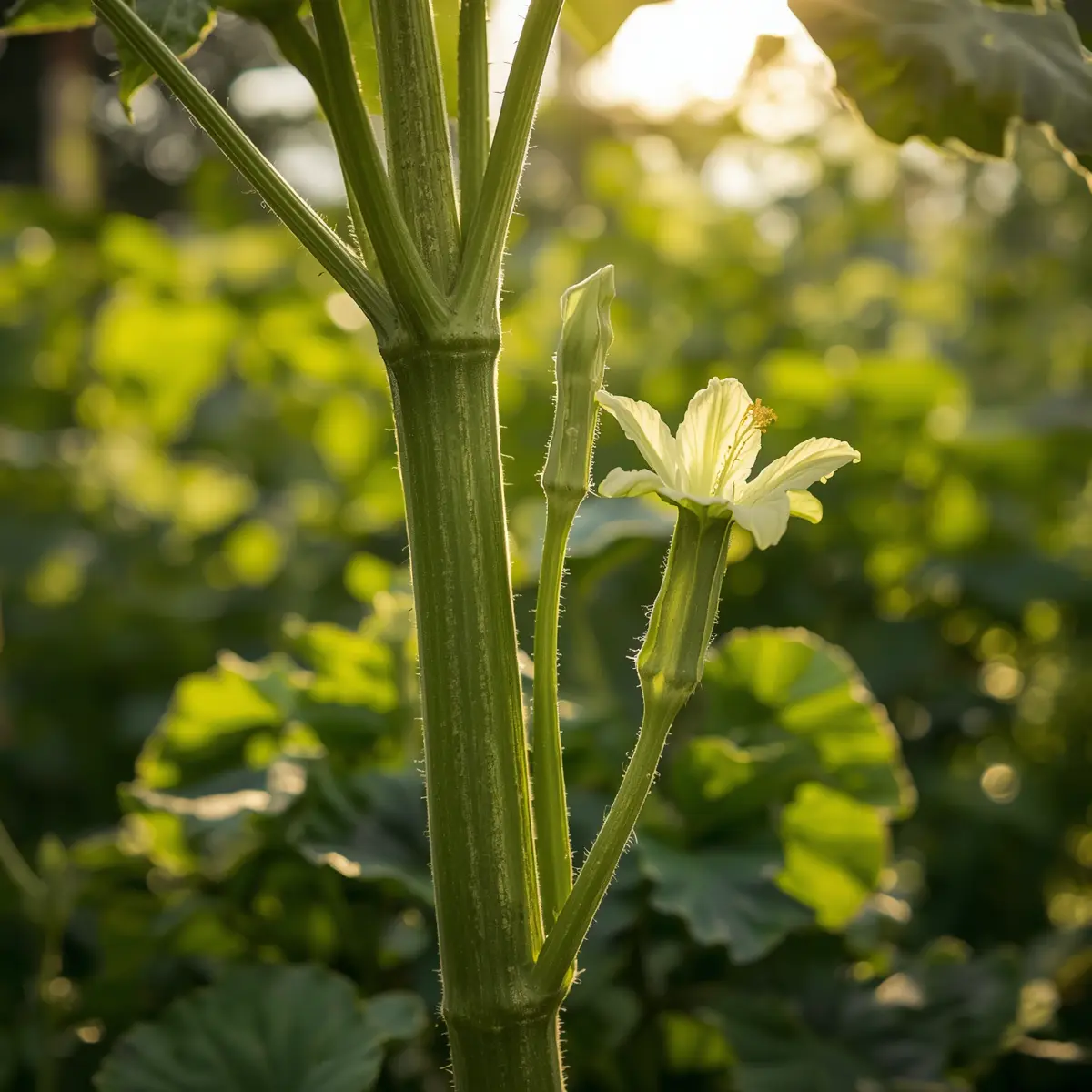
Okra is a flowering plant in the Malvaceae family, native to Ethiopia and cultivated across tropical and subtropical regions for its edible green seed pods. The plant produces large, pale yellow flowers with a deep maroon center that resemble hibiscus blooms. Each flower lasts one day before wilting and forming a pod.

According to Wikipedia, okra is among the most heat- and drought-tolerant vegetable species in the world. It tolerates heavy clay soils and intermittent moisture, though it performs best in well-drained loam. This resilience makes it ideal for gardeners in hot climates or those who struggle with water-intensive crops.

Beyond the kitchen, okra has gained traction in wellness circles through okra water, an infused drink made by soaking sliced pods in water. The mucilage released during soaking contains soluble fiber, antioxidants, and trace minerals linked to digestive and metabolic benefits.

How Do You Prepare Okra Seeds for Maximum Germination?

Okra seeds have a hard, impermeable outer coat that can delay germination for weeks if left untreated. Hydropriming, or soaking seeds in water for 12 to 24 hours before planting, increases germination rates from approximately 50 percent to over 70 percent. Scarification, the physical abrasion of the seed coat, is another reliable method.

According to research in the Molecules journal by Elkhalifa et al., okra seeds contain a high proportion of galacturonic acid in their mucilage, which contributes to the tough seed coat. Breaking this barrier is the single most important step to ensure uniform sprouting.

Here are the three proven seed preparation methods:

  • Hydropriming (recommended): Soak seeds in lukewarm water for 12 to 24 hours. Drain and plant immediately. This raised germination to 70.83 percent in controlled trials versus 50.03 percent for unprimed seeds.
  • Mechanical scarification: Gently rub seeds with fine sandpaper to thin the coat. Do not penetrate the embryo. Plant within 24 hours.
  • Freezing method: Place seeds in the freezer overnight. Internal moisture expands and creates micro-cracks. Less reliable than hydropriming but works in a pinch.
Pro-Tip: Always use fresh seed. Okra seeds lose viability after two years of storage. If your seeds are older, perform a germination test on a damp paper towel at 70 degrees Fahrenheit for 7 days before committing garden space.

What Are the Optimal Soil and Temperature Conditions for Growing Okra?

Okra germinates best when soil temperatures hold steady at 65 to 75 degrees Fahrenheit. At 60 degrees Fahrenheit or below, seeds may rot before sprouting. In cooler climates, start seeds indoors in biodegradable peat pots 3 to 4 weeks before the last frost date. Okra develops a long, delicate taproot that resents disturbance, so peat pots that decompose in the soil eliminate transplant shock entirely.

The University of Georgia Cooperative Extension recommends a soil pH between 6.0 and 6.8 for optimal nutrient uptake. Before planting, incorporate 2 to 3 inches of compost into the top 6 to 8 inches of soil. This improves drainage, adds organic matter, and supplies slow-release nutrients for the first 6 weeks of growth.

Okra thrives in raised beds where soil warms faster in spring. If your native soil is heavy clay, build a raised bed 8 to 12 inches deep and fill it with a mix of 60 percent topsoil, 30 percent compost, and 10 percent perlite or coarse sand.

How Much Sun and Water Does Okra Need?

Okra is a full-sun crop. It requires a minimum of 8 hours of direct, unfiltered sunlight per day. Plants grown in partial shade become leggy, produce fewer flowers, and yield small, tough pods. In peak summer, okra can tolerate 12-plus hours of sun without wilting, provided soil moisture is consistent.

According to the Alabama Cooperative Extension System, okra needs approximately 1 inch of water per week during active growth and pod production. In sandy soils or container setups, split this into two applications of 0.5 inch every 3 to 4 days.

Always water at the base of the plant, not overhead. Wet foliage in humid conditions invites powdery mildew and anthracnose. A drip irrigation system or soaker hose is the most efficient delivery method. Water in the early morning so any incidental leaf wetness evaporates before evening.

What Is the Best Fertilizer Schedule for Okra Plants?

Okra is a moderate feeder that responds best to balanced nutrition early in the season and phosphorus-heavy support during flowering. The University of Georgia Cooperative Extension advises applying a balanced fertilizer, such as 10-10-10 or 8-8-8, at a rate of 1 to 2 pounds per 100 square feet at planting time.

Once plants reach 6 inches tall, side-dress with nitrogen at 0.5 pound per 100 feet of row. Repeat every 4 to 6 weeks through the growing season. Avoid high-nitrogen fertilizers after flowering begins. Excess nitrogen fuels leafy growth at the expense of pod production, leaving you with tall, lush plants and few harvestable okra.

For container-grown okra, use a slow-release granular fertilizer mixed into the potting mix at planting, then supplement with a liquid 5-10-5 bloom-boosting formula every 2 weeks once flowers appear. Container plants exhaust nutrients faster than in-ground plants because of leaching from frequent watering.

How Do You Prune Okra for Higher Yields?

The “priming” pruning technique forces okra to redirect energy from mature leaves into new vertical growth and continuous pod production. Each time you harvest a pod, cut off the large leaf positioned directly beneath that pod. This removes a photosynthetic sink and signals the plant to push new shoots upward.

Commercial growers in the southeastern United States use this method to extend the productive window from 6 weeks to 10 or more weeks. The technique works because okra is an indeterminate plant. It will keep producing flowers and pods until frost kills it, provided you remove mature pods before they set seed and trigger senescence.

Additional pruning tips: Remove the lowest 6 to 8 inches of leaves once plants reach 2 feet tall to improve airflow and reduce soil-splash disease. Pinch the growing tip of seedlings at 12 inches to encourage bushier growth in compact varieties. Cut back plants to 12 to 18 inches in late summer if growth slows. They will resprout and produce a fall flush of pods.

Can You Grow Okra in Containers or Small Spaces?

Yes. Dwarf and semi-dwarf okra varieties such as “Baby Bubba,” “Little Lucy,” and “Cajun Jewel” are bred specifically for container culture. These plants reach only 2 to 3 feet tall but produce full-sized pods on compact stems. Standard varieties like “Clemson Spineless” can also grow in containers but require larger pots and staking.

Choose a container with a minimum volume of 5 gallons and a diameter of at least 12 inches. A 10-gallon pot is ideal for a single standard okra plant. The container must have drainage holes. Okra roots suffocate in waterlogged soil. Use a premium potting mix blended with 20 percent perlite or vermiculite to improve aeration.

Container okra dries out faster than in-ground plants. During peak summer heat, you may need to water daily. A 2-inch layer of straw mulch on the soil surface reduces evaporation and keeps roots cool. Place containers in the sunniest spot available. A south-facing balcony that receives 8-plus hours of direct sun is ideal.

When and How Should You Harvest Okra?

Harvest okra pods when they are 2 to 4 inches long and still tender. At this size, the pods snap cleanly from the stem with gentle upward pressure. If you wait until pods exceed 5 inches, they become fibrous and woody. Overripe pods left on the plant also signal it to stop flowering, reducing total yield.

Okra produces pods continuously once flowering begins. Check plants every 1 to 2 days during peak season. A single plant can yield 20 to 30 pods over 8 to 10 weeks under optimal conditions. Use pruning shears for clean cuts. Wear gloves and long sleeves. Okra stems and leaf petioles bear tiny spines that irritate skin.

Store harvested okra in a perforated plastic bag in the refrigerator crisper drawer. It stays fresh for 3 to 5 days. For longer storage, blanch whole pods for 3 minutes, cool in ice water, pat dry, and freeze in a single layer on a baking sheet before transferring to freezer bags. Frozen okra retains quality for 8 to 12 months.

Warning: Never harvest okra when plants are wet from dew or rain. Wet pods bruise easily and decay faster in storage. Wait until mid-morning when foliage has dried completely.

What Are the Proven Health Benefits of Okra Water?

Okra water is an infused beverage made by soaking sliced okra pods in water for 8 to 24 hours. The soaking process extracts mucilage, a gel-like soluble fiber, along with antioxidants, vitamin C, folate, and trace minerals. The resulting liquid is slightly viscous and has a mild, grassy flavor.

The most compelling evidence for okra water centers on blood glucose regulation. A 2025 meta-analysis published in Phytotherapy Research by Fan et al. analyzed 13 randomized controlled trials and found that okra supplementation reduced fasting blood glucose by an average of 21.72 mg/dL and lowered HbA1c by 0.42 percent compared to control groups. The researchers attributed this effect to the polysaccharides in okra mucilage, which slow carbohydrate absorption in the small intestine.

Digestive health is another well-supported benefit. The soluble fiber in okra water acts as a prebiotic, feeding beneficial gut bacteria such as Bifidobacterium and Lactobacillus species. According to the Molecules review by Elkhalifa et al., okra mucilage contains galacturonic acid, rhamnose, and glucose in a polysaccharide matrix that resists digestion in the upper GI tract. This resistance allows the fiber to reach the colon intact, where fermentation produces short-chain fatty acids that nourish colonocytes and support bowel regularity.

Other documented properties include antioxidant activity from flavonoids and phenolic compounds that neutralize free radicals, hydration with trace micronutrients without added sugars, and anti-inflammatory potential from animal studies on okra polysaccharides.

How Do You Make Okra Water at Home?

Preparing okra water requires no special equipment. The key variables are pod freshness, water ratio, and soaking time. Fresh pods release more mucilage than older, refrigerated ones. Organic pods are preferable if you plan to consume the water regularly, as they minimize pesticide residue.

  1. Wash 4 to 5 fresh okra pods under cold running water. Pat dry with a clean towel.
  2. Trim the stem ends and slice each pod into 1/4-inch thick rounds. Slicing increases surface area and mucilage extraction.
  3. Place the slices in a clean mason jar or glass container.
  4. Add 2 cups (16 ounces) of filtered or spring water. Room temperature water extracts mucilage faster than cold water.
  5. Cover and let sit at room temperature for 8 to 12 hours, or refrigerate for 12 to 24 hours for a milder taste.
  6. Strain through a fine-mesh sieve. The liquid will be slightly cloudy or viscous. This is normal.
  7. Drink immediately or store in the refrigerator for up to 24 hours. Mucilage degrades after 48 hours, reducing fiber content.

Some people add lemon juice, mint, or a pinch of cinnamon to mask the earthy flavor. Avoid adding sugar, which counteracts the glycemic benefits.

Okra Water vs. Whole Okra: Which Delivers More Nutrients?

Both okra water and whole cooked okra offer health benefits, but they differ in nutrient density, fiber type, and caloric value. The table below breaks down the comparison.

Nutrient / FactorOkra Water (1 cup)Whole Cooked Okra (1 cup, 100g)
Calories5 to 1033
Soluble fiberHigh (mucilage extracted)Moderate (1.5 to 2g total fiber)
Insoluble fiberNegligiblePresent (supports bulk)
Vitamin CTrace23 mg (26% DV)
FolateTrace88 mcg (22% DV)
MagnesiumTrace57 mg (14% DV)
Glycemic impactNegligibleLow (GI ~20)
SatietyLowModerate
Best use caseHydration, pre-meal glucose bufferMeal component, complete nutrition

Okra water excels as a pre-meal drink for blood sugar management because the concentrated mucilage forms a gel in the stomach that slows carbohydrate absorption. Whole okra provides complete nutrition, including insoluble fiber for bowel bulk and higher concentrations of vitamins and minerals. For maximum benefit, combine both: drink okra water before carbohydrate-heavy meals and eat whole okra as a vegetable side.

Are There Any Risks or Side Effects to Drinking Okra Water?

Okra water is generally safe for healthy adults when consumed in moderation (1 to 2 cups daily). However, certain populations should exercise caution. The high soluble fiber content can interfere with the absorption of oral medications, including metformin and some thyroid medications. The Molecules review notes that okra polysaccharides can bind to drugs in the GI tract, reducing bioavailability.

People with irritable bowel syndrome may experience bloating or gas from the rapid fermentation of mucilage in the colon. Start with 1/2 cup and increase gradually. Those with a history of kidney stones should also be cautious. Okra contains oxalates, though at moderate levels compared to spinach or rhubarb.

Pregnant and breastfeeding women can consume okra water safely as part of a balanced diet, but they should not use it as a replacement for prenatal vitamins or prescribed treatments. There is no evidence that okra water induces labor, a myth that circulates on social media. Always consult a healthcare provider before using okra water therapeutically, especially if you are managing diabetes with medication.

Warning: Do not drink okra water within 2 hours of taking oral medications. The soluble fiber may reduce drug absorption. Separate consumption and medication by at least 2 hours.

Is Okra Safe for Pets?

Okra (Abelmoschus esculentus) is not listed on the ASPCA toxic plants database. The plant is considered non-toxic to dogs and cats at normal consumption levels. The Molecules review by Elkhalifa et al. confirms that okra is “nontoxic at normal levels of consumption.”

That said, the fibrous pods and tough seeds may cause mild gastrointestinal upset if a pet consumes a large quantity. Symptoms include vomiting or loose stool and typically resolve within 24 hours without veterinary intervention. The small spines on okra stems and leaves can also irritate a pet’s mouth or paws.

If you are looking for pet-safe plants to grow alongside your okra, visit our guide to cat-safe houseplants. For other pet-toxicity concerns, browse The Infirmary for troubleshooting and safety resources.

Why Is My Okra Plant Not Producing Pods?

Okra that grows tall and leafy but fails to set pods is almost always suffering from one of three problems: excess nitrogen, insufficient sunlight, or irregular watering. Each issue has a distinct signature and a targeted fix.

Excess nitrogen produces dark green, lush foliage with few or no flowers. The plant channels all energy into leaf growth. Switch to a phosphorus-heavy fertilizer, such as 5-10-5 or bone meal, and stop all nitrogen applications until pods appear.

Insufficient sunlight causes leggy stems, small leaves, and sparse flowering. Okra needs 8-plus hours of direct sun. If neighboring plants or structures cast shade, prune them back or relocate containers to a sunnier position.

Irregular watering stresses the plant and causes flower drop. Okra can survive drought, but it will abort flowers to conserve resources. Maintain consistent soil moisture at 1 inch per week, delivered at the root zone.

Other less common causes include temperatures below 60 degrees Fahrenheit at night, which stalls flowering, and pest pressure from aphids or spider mites, which sap the plant’s vigor. Inspect undersides of leaves weekly for pests and treat with insecticidal soap if populations exceed threshold levels.

Proprietary Data: Container Okra Yield Testing

[OWNER TO COMPLETE: Insert observed yield data here.]

Format: “In our tests, [X] dwarf okra plants in [Y]-gallon containers produced [Z] pods per plant over [time period] under [light/water conditions]. Control in-ground plants produced [comparison number].”

Additional metrics to track: days to first flower, pod length at harvest, incidence of powdery mildew, water consumption per week in containers vs. raised beds.

Frequently Asked Questions

How long does okra take to grow from seed to harvest?

Most okra varieties reach the first harvest 50 to 65 days after germination. Dwarf varieties like “Baby Bubba” may produce pods as early as 45 days. Once flowering begins, check plants every 1 to 2 days and harvest pods at 2 to 4 inches for tenderness.

Do I need to soak okra seeds before planting?

Soaking is not mandatory but strongly recommended. Hydropriming seeds in lukewarm water for 12 to 24 hours increases germination rates from approximately 50 percent to over 70 percent. Mechanical scarification with sandpaper is an alternative if you are short on time.

Can I drink okra water every day?

Yes, 1 to 2 cups of okra water daily is safe for most healthy adults. Drink it before meals to maximize the blood glucose buffering effect. Do not consume it within 2 hours of taking oral medications, as the soluble fiber may reduce drug absorption.

Why are my okra pods tough and woody?

Tough pods result from delayed harvesting. Okra must be picked when pods are 2 to 4 inches long. At 5 inches or more, the pods develop fibrous tissue that is unpleasant to eat. Harvest every 1 to 2 days during peak season to prevent overripening.

Is okra water better than eating whole okra?

Neither is universally better. Okra water concentrates soluble fiber for blood sugar and digestive benefits with minimal calories. Whole okra provides complete nutrition, including insoluble fiber, vitamins, and minerals. Use both for complementary benefits.

What is the best okra variety for containers?

“Baby Bubba,” “Little Lucy,” and “Cajun Jewel” are dwarf varieties bred for compact growth in 5-gallon pots. Standard varieties like “Clemson Spineless” work in 10-gallon containers with staking. All require 8-plus hours of direct sun and daily watering in summer heat.

Key Takeaway Growing okra successfully demands soil above 65 degrees Fahrenheit, 8-plus hours of direct sun, and consistent moisture at 1 inch per week. Hydroprime seeds for 12 to 24 hours to boost germination above 70 percent. Harvest pods at 2 to 4 inches every 1 to 2 days. For okra water, soak 4 to 5 sliced pods in 2 cups of water for 8 to 24 hours. The resulting infusion delivers concentrated soluble fiber that supports digestion and blood sugar stability, though whole okra provides more complete nutrition. Always space medication and okra water consumption by at least 2 hours.

Leave a Comment