
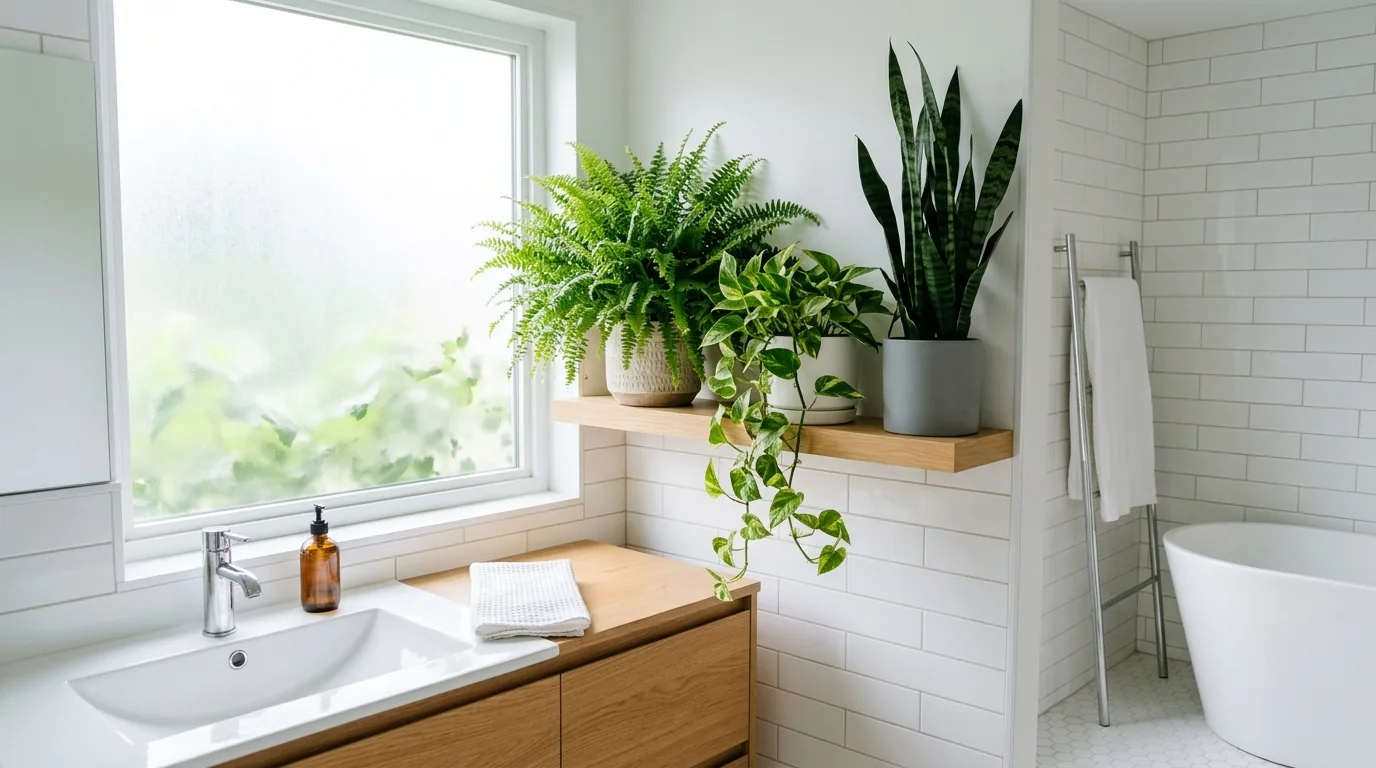
Bathrooms look like the perfect home for houseplants: warm, humid and often unused for most of the day. The catch is light. Many bathrooms have a small, frosted window or none at all, and the University of Minnesota Extension is blunt that plants need light for photosynthesis, and without enough of it, they deplete their energy reserves and die. So no plant truly thrives in a bathroom with zero light, whatever the infographics say. This guide picks nine bathroom plants that tolerate low light and humidity, explains what to do in a bathroom with no windows, separates the pet-safe picks, and checks the claim that plants absorb moisture and mold, following UMN, Penn State, the University of Maryland, the EPA and the ASPCA.
Bathroom Plants at a Glance
| Plant | Light (UMN category) | Humidity note | Pets (ASPCA) |
|---|---|---|---|
| Cast iron plant | Low | No special need noted | Non-toxic |
| Parlor palm | Low | Low humidity browns the tips | Non-toxic |
| Boston fern | Medium (ferns) | Likes humidity | Non-toxic |
| Spider plant | Medium | No special need noted | Non-toxic |
| Calathea | Medium, understory plant | Likes humidity | Non-toxic |
| Pothos | Low | Prefers 50 to 70% (Clemson) | Toxic |
| Heartleaf philodendron | Low | No special need noted | Toxic |
| Peace lily | Low; flowers in low light (Maryland) | Needs more water than most (Maryland) | Toxic |
| Snake plant | Low | Does not need humidity | Toxic |
Sources: University of Minnesota Extension (light categories, reviewed 2026); University of Maryland Extension; Clemson HGIC; individual Plant Blueprint care guides; ASPCA.
UMN defines low light as a north window or a fairly dark corner, about 50 to 250 foot-candles, and medium light as an east window or near a west window out of direct sun. Penn State Extension uses about 100 foot-candles as a common baseline for low light. A bathroom with a frosted north window is usually low light; one with a larger east or west window is often medium.
9 Bathroom Plants for Low Light and Humidity
1. Cast iron plant
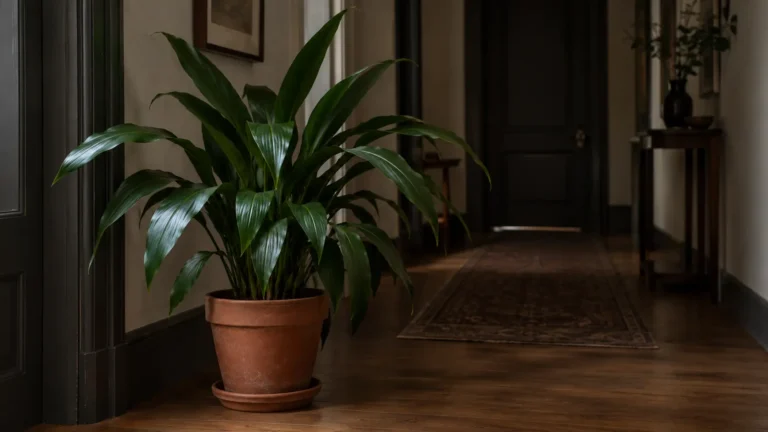
Cast iron plant (Aspidistra) is on UMN’s list of low-light houseplants and lives up to its name in dim rooms. The ASPCA lists it as non-toxic to cats and dogs, making it one of the safest choices for a shared bathroom. See our cast iron plant care guide.
2. Parlor palm
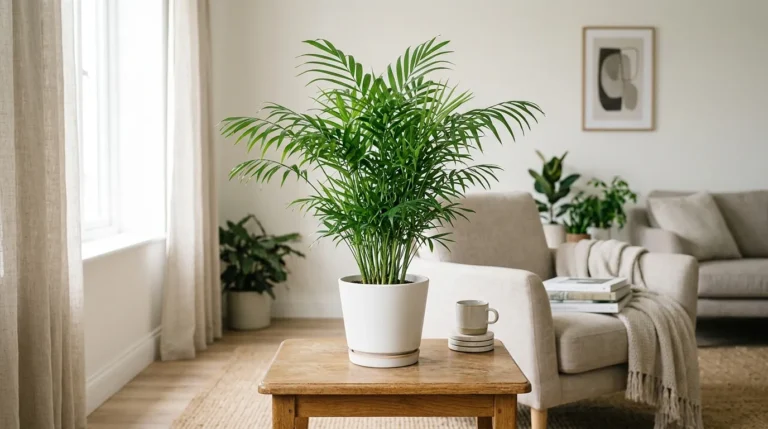
Parlor palm (Chamaedorea) is also on UMN’s low-light list, and the ASPCA lists it as non-toxic. Penn State links brown leaf tips on parlor palm to low humidity, so a steamy bathroom can actually help. See our parlor palm care guide.
3. Boston fern
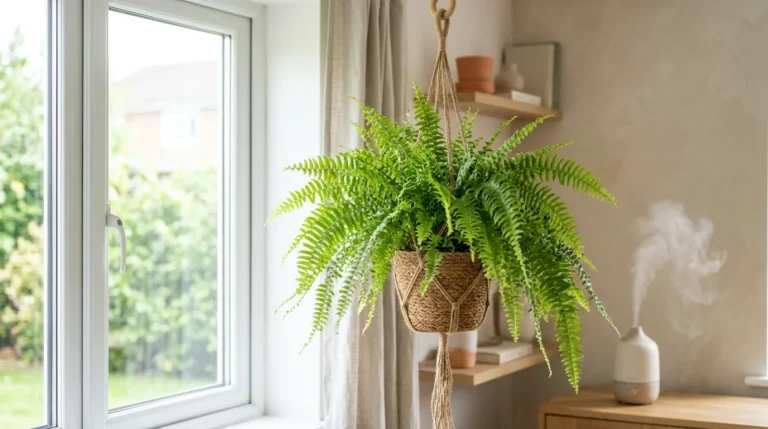
Ferns are on UMN’s medium-light list, so a Boston fern wants a bathroom with a real window rather than a dark one. In return, it is a humidity lover that tends to brown in dry air (see our Boston fern care guide), and the ASPCA lists it as non-toxic. A hanging basket near the window works well.
4. Spider plant
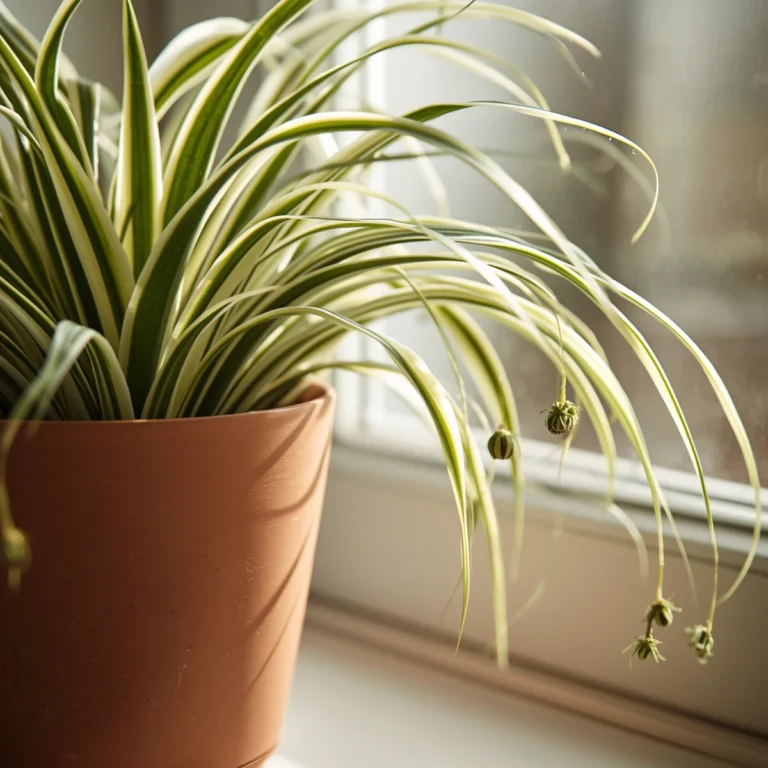
Spider plant is on UMN’s medium-light list and is listed by the ASPCA as non-toxic. It is easy, fast-growing and looks good on a high shelf or hanging. See our spider plant care guide.
5. Calathea
Penn State notes that calatheas grow in the forest understory, which is why they prefer filtered light. They are humidity lovers prone to brown edges in dry air (see our calathea care guide), and the ASPCA lists calatheas as non-toxic. A bright bathroom suits them better than most rooms in the house.
6. Pothos
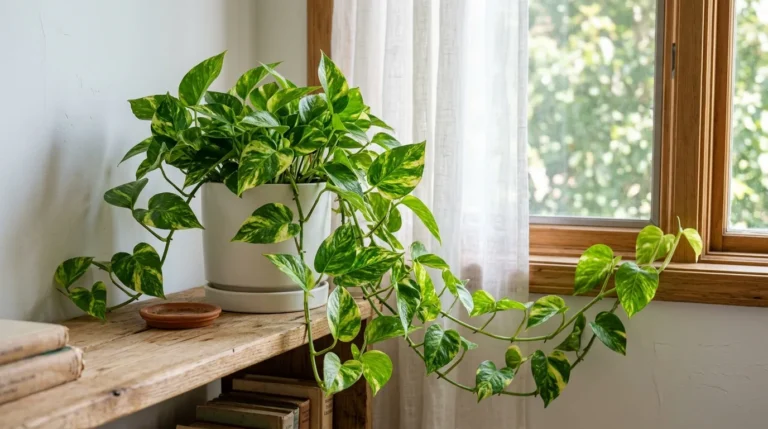
Pothos is on UMN’s low-light list, and Clemson HGIC says it prefers 50 to 70% humidity. The University of Maryland notes that in very low light the yellow variegation fades to green. The ASPCA lists pothos as toxic to cats and dogs. See our pothos care guide.
7. Heartleaf philodendron
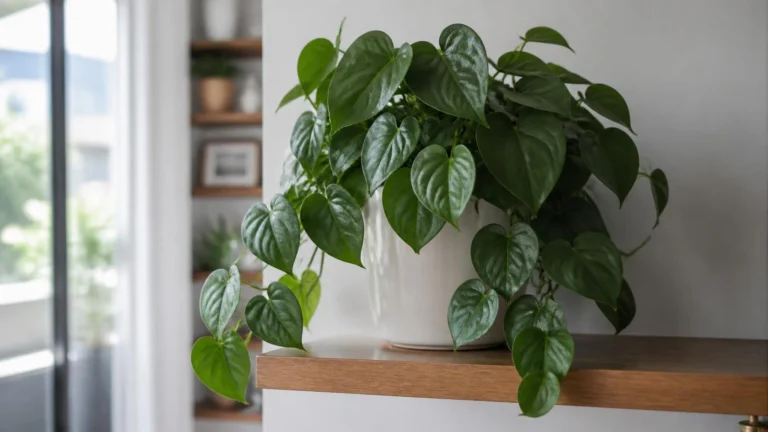
Philodendron is on UMN’s low-light list, and Iowa State says heartleaf philodendron tolerates very low light. The University of Maryland adds that it does well under fluorescent office lighting, which makes it a good match for a bathroom light fixture. It is toxic to cats and dogs (ASPCA). See our heartleaf philodendron care guide.
8. Peace lily
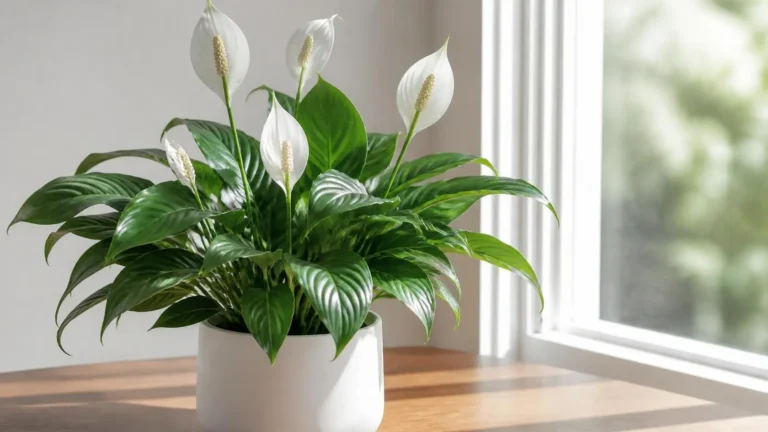
The University of Maryland Extension says peace lily is one of the few houseplants that flowers in low light, but it needs more water than most and wilts quickly if it dries out. The ASPCA lists it as toxic to cats and dogs. See our peace lily care guide.
9. Snake plant
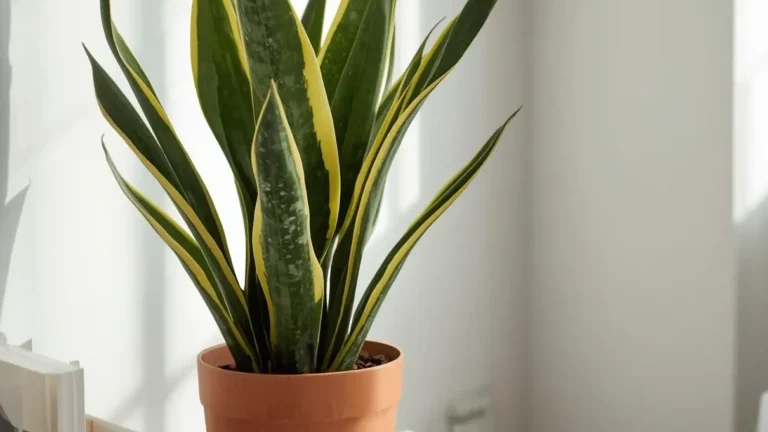
Snake plant has the strongest low-light reputation of all; Penn State and Maryland both feature it, and UMN lists it as low light. It doesn’t need humidity, so in a bathroom the risk is overwatering rather than dry air: let the mix dry between waterings. The ASPCA lists it as toxic to cats and dogs. See our snake plant care guide.
Bathroom Plants No Window: Do You Need a Grow Light?
Yes. UMN explains that without adequate light, plants can’t make the carbohydrates they need, their energy reserves run down and they die. A bathroom with no window, where the light is only on for a few minutes at a time, can’t keep a plant alive long-term. Pins promising plants for a “zero sunlight” bathroom skip this part. You have three options:
| Option | How | Source |
|---|---|---|
| Add a grow light on a timer | LED, 12 to 24 inches above foliage plants, 12 to 14 hours a day | UMN |
| Rotate plants | Keep the plant in bright light most of the time and move it to the dim spot for short periods | University of Maryland |
| Use the toughest low-light plants | Snake plant, cast iron plant, pothos, philodendron, and accept slow growth | UMN, Penn State, Maryland |
Sources: University of Minnesota Extension; University of Maryland Extension; Penn State Extension.
UMN says LEDs are very energy efficient and don’t produce too much heat, which suits a small room. For choosing a fixture, see our guide to grow lights for indoor plants, and for a fully lit humid setup, our greenhouse cabinet guide.
Bathroom Plants Safe for Cats and Dogs
From this list, the ASPCA lists five as non-toxic to cats and dogs: cast iron plant, parlor palm, Boston fern, spider plant and calathea. Pothos, heartleaf philodendron, peace lily and snake plant are toxic. If your cat or dog chews plants, stick to the safe five. For more options, see our lists of cat-safe plants and plants safe for dogs, and our guide to peperomia, another pet-safe small plant.
Do Bathroom Plants Absorb Moisture or Mold?
Many pins call certain bathroom plants “natural dehumidifiers” that soak up moisture and mold. The evidence doesn’t support it. Plants release water vapor through their leaves (transpiration), so they add a little moisture rather than remove it. Guy Barter, chief horticulturalist at the RHS, called the claim that plants absorb water through their leaves “fanciful”, adding that insulation, heating and ventilation are more effective against condensation and mould, in a 2026 article in Gardens Illustrated.
The real fix for a damp bathroom is ventilation. The EPA recommends running the bathroom fan or opening a window when showering, keeping indoor humidity below 60% (ideally 30 to 50%), and fixing leaks quickly. Plants are fine in a ventilated bathroom; they just won’t do the fan’s job.
Bathroom Plant Care Tips
- Measure the light first: UMN suggests checking how much natural light a space gets before choosing a plant.
- Water less in low light: plants in lower light use less water (Maryland).
- Keep plants out of the splash zone and away from cleaning products.
- Watch for drafts from an open window in winter.
- Wipe leaves occasionally so dust and soap residue don’t block the little light there is.
- Run the fan after showers (EPA); your plants will be fine, and the room stays mold-free.
For plants matched to other rooms, see our guides to kitchen plants.
Frequently Asked Questions
What plants do well in a bathroom with no windows?
None will thrive without any light (UMN). With a grow light on a timer, low-light plants such as snake plant, cast iron plant, pothos and philodendron are the safest bets; without one, rotate plants between a bright room and the bathroom (University of Maryland).
What is the best low light plant for a bathroom?
Cast iron plant, snake plant, pothos, heartleaf philodendron, parlor palm and peace lily are all on extension low-light lists (UMN, Maryland, Penn State). Peace lily is one of the few that flowers in low light (Maryland).
Which bathroom plants are safe for cats?
From our list, cast iron plant, parlor palm, Boston fern, spider plant and calathea are non-toxic to cats and dogs according to the ASPCA.
Do bathroom plants absorb moisture and mold?
No. Plants release water vapor rather than absorb it, and the RHS’s chief horticulturist called the claim “fanciful.” The EPA recommends ventilation and keeping humidity below 60% to prevent mold.
Is shower humidity good for plants?
For humidity lovers such as ferns, calathea and pothos (which Clemson says prefers 50 to 70% humidity), yes, as long as they also get enough light. Snake plant doesn’t need it.
How much light do bathroom plants need?
Low-light plants need roughly 50 to 250 foot-candles (UMN), about what a north window gives; Penn State uses 100 foot-candles as a baseline. Ferns and spider plants want medium light, such as an east window.
Should I water bathroom plants less?
Usually, yes. Plants in lower light use less water (University of Maryland), and steam doesn’t water the roots, so check the mix before watering.
Sources
- Weisenhorn, J. and Hoidal, N. University of Minnesota Extension: Lighting for indoor plants and starting seeds (reviewed 2026)
- Jubela, J. Penn State Extension: Low Light Houseplants (2024)
- Ricigliano, D. University of Maryland Extension: Houseplants for Low Light Conditions (updated 2022)
- Clemson HGIC 1568: How to Grow Pothos Indoors (2026)
- Iowa State University Extension: Growing Philodendrons at Home
- US EPA: A Brief Guide to Mold, Moisture and Your Home
- Peerless, V. Gardens Illustrated: Can house plants really beat mould? (2026, quoting Guy Barter, RHS)
- ASPCA: Toxic and Non-Toxic Plant List, Cats
- ASPCA: Toxic and Non-Toxic Plant List, Dogs