
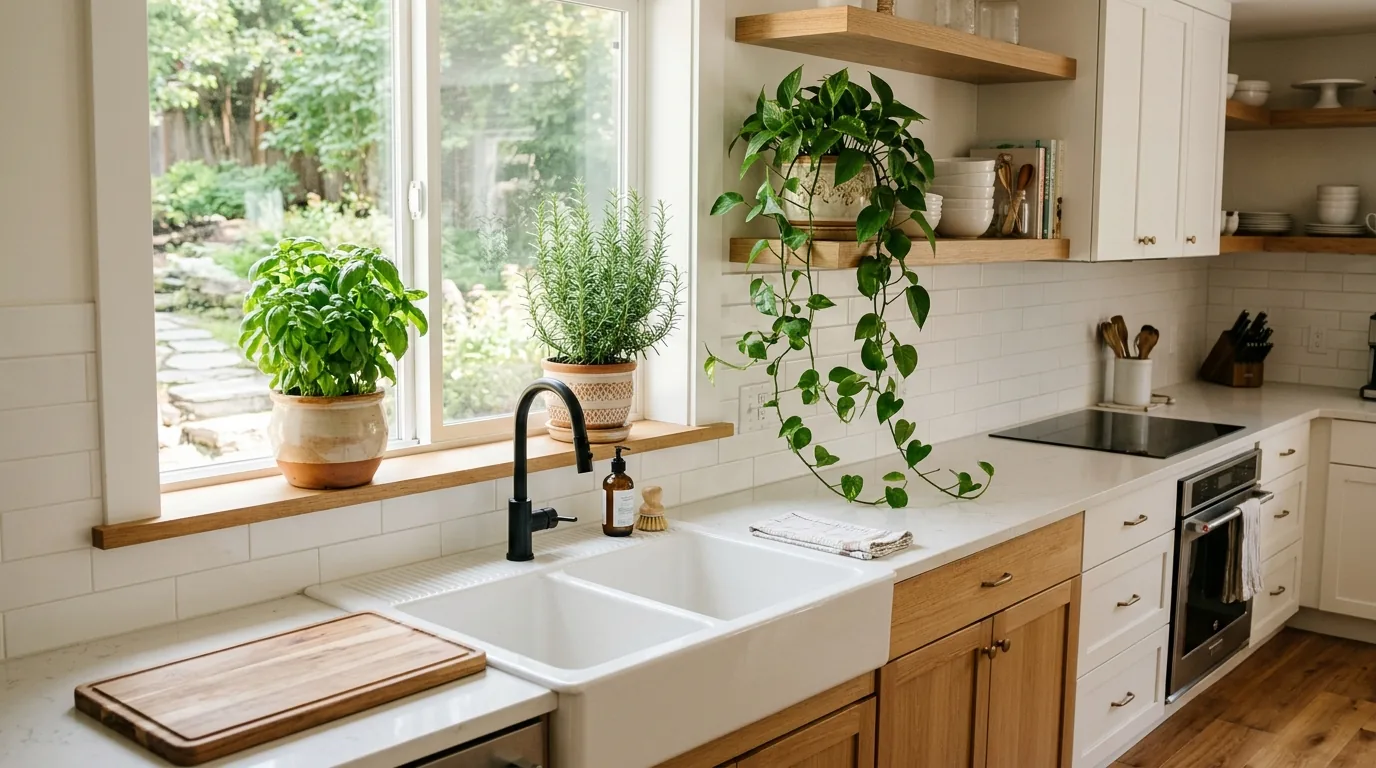
A kitchen usually has two very different spots for plants: a bright window, often over the sink, and counters or shelves that get far less light. It also has heat from the stove and oven, and the steam from cooking. The right kitchen plants depend on which spot you are filling. This guide matches plants to each one: herbs and flowering plants for a kitchen window, tough kitchen plants for low light, and small pet-safe plants for a kitchen counter. It also covers where not to put them and whether kitchen plants clean the air, following the University of Minnesota, Illinois Extension, the University of Maryland, UNH, Clemson and the ASPCA.
Kitchen Plants at a Glance
| Plant | Best kitchen spot | Light | Pets (ASPCA) |
|---|---|---|---|
| Basil | Sunny window | 6 to 8 hours of bright light (Illinois) | Non-toxic |
| Rosemary | Sunny window | 6 to 8 hours of bright light (Illinois) | Non-toxic |
| Thyme | Sunny window | 6 to 8 hours of bright light (Illinois) | Non-toxic |
| Chives, parsley | Sunny window | 6 to 8 hours of bright light (Illinois) | Toxic |
| African violet | East or north window | Bright, indirect | Non-toxic |
| Pothos | Dim counter or shelf | Low (UMN) | Toxic |
| Heartleaf philodendron | Dim counter or top of cabinets | Low (UMN) | Toxic |
| Snake plant | Dim corner | Low (UMN) | Toxic |
| Cast iron plant | Dim corner | Low (UMN) | Non-toxic |
| Spider plant | Counter or hanging near a window | Medium (UMN) | Non-toxic |
| Peperomia | Counter near a window | Medium to bright, indirect (Clemson) | Non-toxic |
Sources: Illinois Extension (Enroth 2023); University of Minnesota Extension light categories (reviewed 2026); Clemson HGIC; ASPCA cat and dog plant lists.
The University of Minnesota Extension defines low light as a north window or a fairly dark corner, and medium light as an east window or near a west window out of direct sun. A counter a few steps from the window is usually low light, even when the kitchen feels bright.
Best Plants for Kitchen Window Sills
The brightest window is the place for herbs. Illinois Extension says basil, chives, oregano, thyme, winter savory, rosemary, parsley, sage and mint all do well indoors, that they usually need six to eight hours of bright light a day, and that a south-facing window is best. In winter, it suggests grow lights on a timer for 12 to 16 hours a day, rotating pots every few days, and feeding with a water-soluble fertilizer no more than every two weeks.
Basil
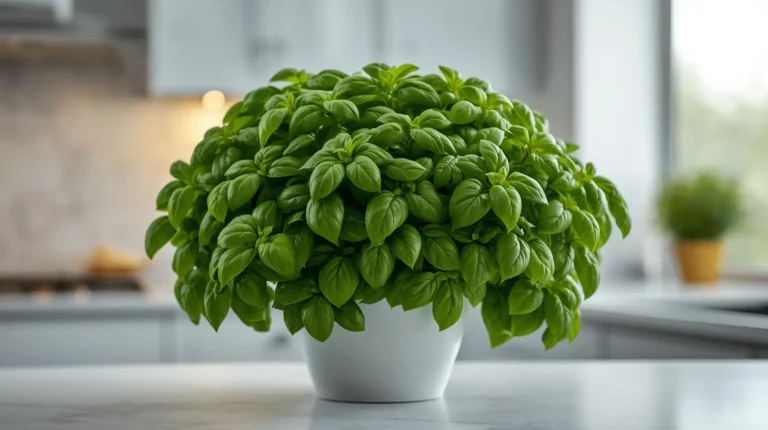
Basil is the kitchen favorite and is listed as non-toxic by the ASPCA. It is sensitive to cold: Illinois Extension notes leaf damage at 50°F, so keep it off a cold winter windowpane. You can even keep cuttings growing in a glass of water; see our guide to herbs that grow in water and our guide to growing basil indoors.
Rosemary and thyme
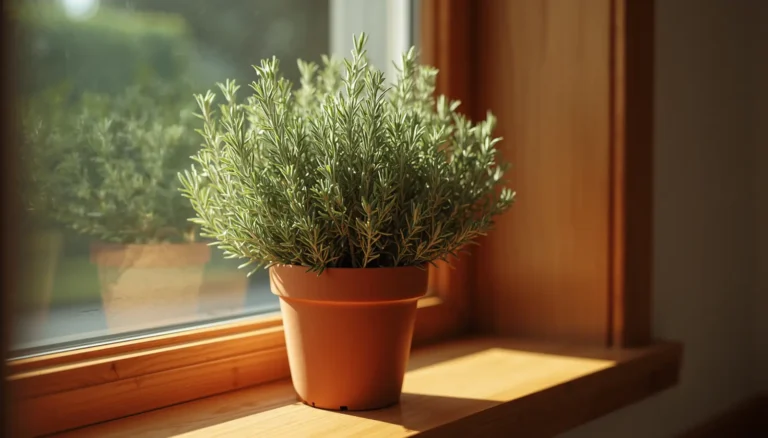
Both are on Illinois Extension’s indoor list and both are listed as non-toxic by the ASPCA. They want the sunniest sill you have. See our guide to growing rosemary.
Chives and parsley
Both grow well indoors (Illinois) and are handy to snip, but the ASPCA lists chives and parsley as toxic to cats and dogs, so keep them where pets can’t reach. Mint and oregano are on the ASPCA toxic list too; see our mint plant care guide.
African violet
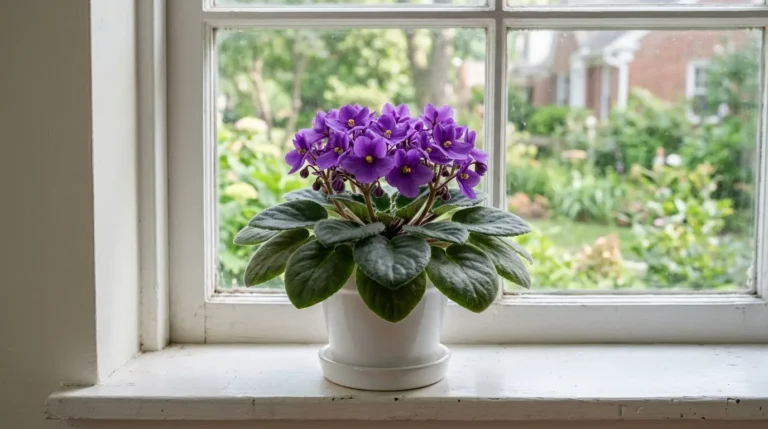
For flowers rather than herbs, African violet suits an east or north kitchen window with bright, indirect light, and the ASPCA lists it as non-toxic. Keep water off the leaves when you rinse dishes nearby. See our African violet care guide.
Kitchen Plants for Low Light
Most kitchen plants low light lists start with the same four plants. For counters, shelves and the tops of cabinets away from the window, use plants from UMN’s low-light list. Penn State Extension uses about 100 foot-candles as a common baseline for low light, and the University of Maryland notes that plants in lower light need less water.
Pothos
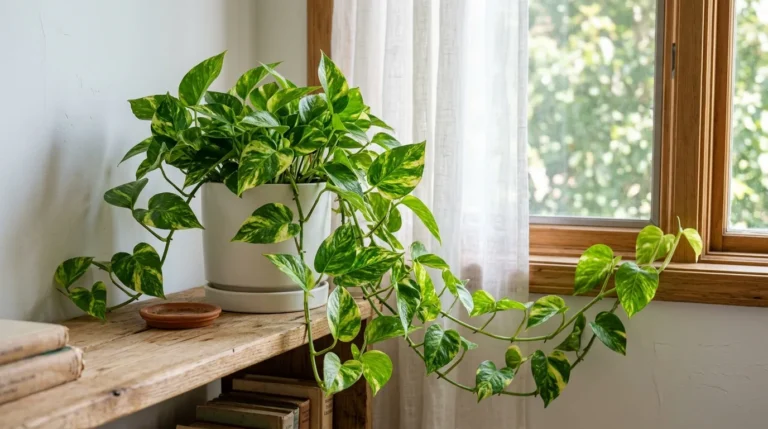
Pothos is on UMN’s low-light list and trails nicely from a shelf or the top of a cabinet. Clemson HGIC says it prefers 50 to 70% humidity, so a kitchen suits it. The ASPCA lists pothos as toxic. See our pothos care guide.
Heartleaf philodendron
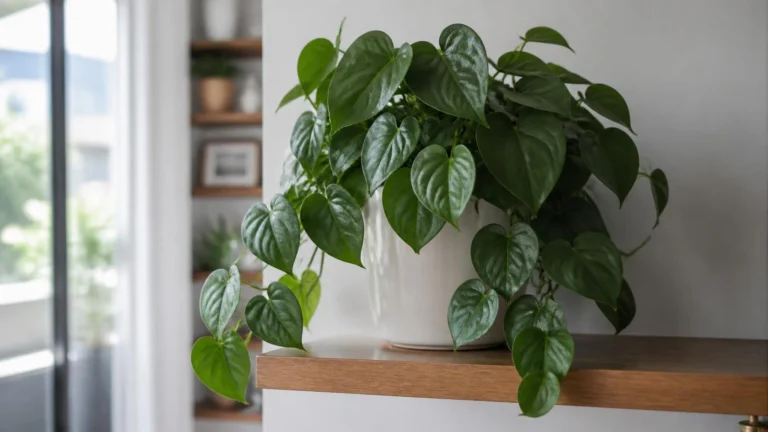
Philodendron is on UMN’s low-light list, and the University of Maryland says it does well under fluorescent office lighting, which makes it a good fit for under-cabinet lights. It is toxic to cats and dogs (ASPCA). See our heartleaf philodendron care guide.
Snake plant
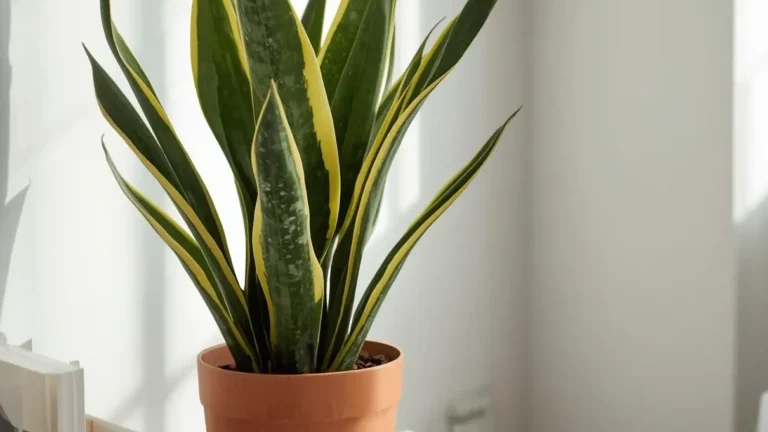
Snake plant is on UMN’s low-light list and takes up little counter space. In a dim kitchen the main risk is overwatering, so let the mix dry between waterings. The ASPCA lists it as toxic. See our snake plant care guide.
Cast iron plant
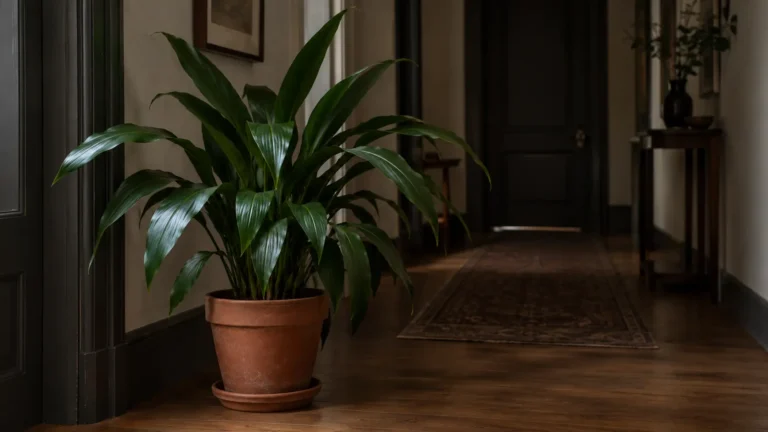
Cast iron plant is the pet-safe choice for a dark kitchen corner: it is on UMN’s low-light list and the ASPCA lists it as non-toxic. See our cast iron plant care guide.
Plants for Kitchen Counter Space
Counters near a window get medium light, which suits compact plants. If cats walk on your counters, choose plants the ASPCA lists as non-toxic.
Spider plant
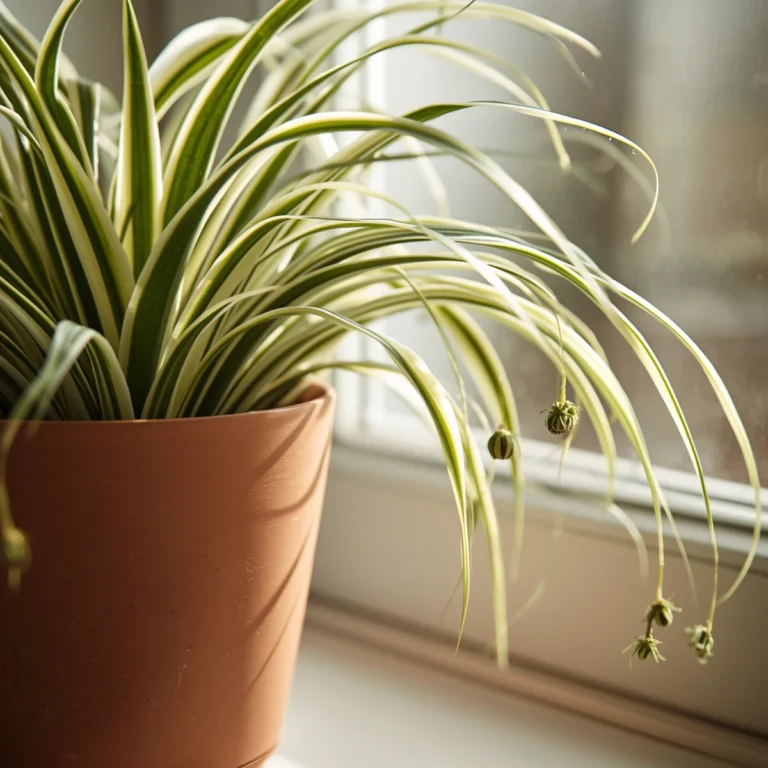
Spider plant is on UMN’s medium-light list and is listed as non-toxic by the ASPCA. It works on a counter or hanging near the window. See our spider plant care guide.
Peperomia
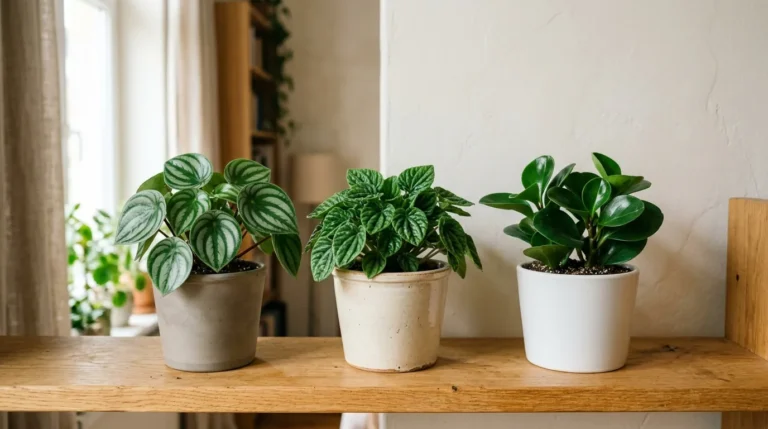
Clemson HGIC recommends medium to bright, indirect light for peperomias, and the ASPCA lists common peperomias as non-toxic. They stay small, which makes them ideal for a counter. See our peperomia care guide.
Where Not to Put Kitchen Plants
The University of Maryland Extension says not to put indoor plants near heat or air conditioning sources, and that foliage plants grow best at 70 to 80°F during the day and 60 to 68°F at night. Illinois Extension adds that indoor herbs do best at 70°F or cooler, away from direct heat. In a kitchen, that rules out a few spots:
| Spot | Problem | Better choice |
|---|---|---|
| Next to the stove or oven | Heat source (Maryland, Illinois) | A counter a few feet away |
| Above a heating or cooling vent | Heat or air conditioning source (Maryland) | Any spot out of the airflow |
| Against a cold winter windowpane | Basil damaged at 50°F (Illinois) | Pull pots back a few inches on cold nights |
| Deep inside a dark cabinet corner | Too little light to survive (UMN) | Low-light plants plus an under-cabinet light |
| In the sink splash zone | Soap and wet leaves | A sill or shelf beside the sink |
Sources: University of Maryland Extension (updated 2024); Illinois Extension; University of Minnesota Extension.
Humidity is the kitchen’s advantage. UNH Extension suggests kitchens and bathrooms as more humid rooms for plants, provided they still get the light they need. For a damp room with less light, see our guide to bathroom plants.
Do Kitchen Plants Clean the Air?
Not in any way you would notice. A 2019 review by Cummings and Waring in the Journal of Exposure Science and Environmental Epidemiology found that potted plants remove indoor pollutants far more slowly than normal ventilation, so their effect in a home is negligible. For cooking smoke and odors, use the range hood or open a window; grow kitchen plants for food, flowers and looks.
Frequently Asked Questions
What plants are good for a kitchen?
Herbs such as basil, rosemary and thyme for a sunny window; pothos, heartleaf philodendron, snake plant and cast iron plant for low light; and spider plant, peperomia and African violet for counters near a window.
What are the best kitchen plants for low light?
Pothos, philodendron, snake plant and cast iron plant are on the University of Minnesota’s low-light list. Cast iron plant is the pet-safe one (ASPCA).
What plants grow best in a kitchen window?
Herbs, if the window is sunny: Illinois Extension says indoor herbs need six to eight hours of bright light and does best in a south window. An east or north window suits African violet.
Can I keep plants next to the stove?
Avoid it. The University of Maryland says not to place indoor plants near heat or air conditioning sources, and Illinois Extension says to keep herbs away from direct heat.
Are kitchen herbs safe for cats?
Some are. The ASPCA lists basil, rosemary, thyme, sage, dill and cilantro as non-toxic, and chives, parsley, mint and oregano as toxic to cats and dogs.
Is kitchen humidity good for plants?
Generally yes: UNH Extension suggests kitchens and bathrooms as more humid rooms for plants, as long as they still get enough light.
Do kitchen plants remove cooking smells?
No measurable amount. Cummings and Waring (2019) found potted plants clean indoor air far more slowly than ordinary ventilation. Use the range hood.
Sources
- Enroth, C. Illinois Extension: Keep growing with herbs indoors this fall, winter (2023)
- Enroth, C. Illinois Extension: How to Grow Popular Herbs (2020)
- Weisenhorn, J. and Hoidal, N. University of Minnesota Extension: Lighting for indoor plants and starting seeds (reviewed 2026)
- Jubela, J. Penn State Extension: Low Light Houseplants (2024)
- Ricigliano, D. University of Maryland Extension: Houseplants for Low Light Conditions (updated 2022)
- University of Maryland Extension: Temperature and Humidity for Indoor Plants (updated 2024)
- UNH Extension: How can I increase the humidity indoors for my houseplants? (2025)
- Clemson HGIC 1568: How to Grow Pothos Indoors (2026)
- Clemson HGIC 1567: Peperomia Indoor Plant Care and Growing Guide (2026)
- Cummings, B.E. and Waring, M.S. Potted plants do not improve indoor air quality. Journal of Exposure Science and Environmental Epidemiology (2020)
- ASPCA: Toxic and Non-Toxic Plant List, Cats
- ASPCA: Toxic and Non-Toxic Plant List, Dogs