
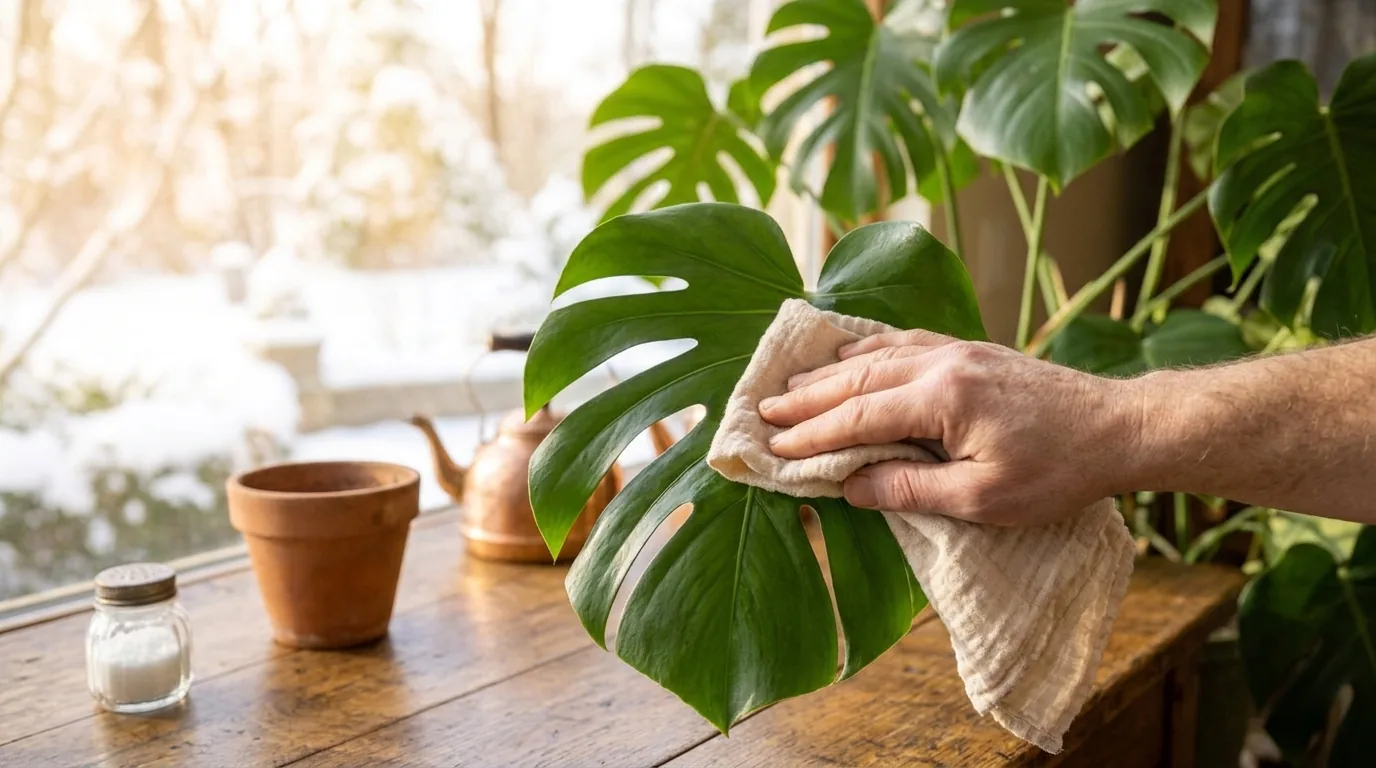
Houseplant leaves collect dust the same way shelves do, and in winter that dust matters more than it looks. Search for how to clean plant leaves and you will find tips involving mayonnaise, milk, vinegar, banana peels and leaf-shine sprays. Extension specialists recommend something much simpler. This guide covers how to clean indoor plant leaves from dust, how to clean houseplant leaves naturally with nothing but water, what to do for fuzzy leaves, and the truth about how to clean plant leaves and make them shine. It follows University of Minnesota Extension, Clemson HGIC, Iowa State, UNH Extension and the University of Maryland.
Cleaning Methods at a Glance
| Method | Best for | How | Source |
|---|---|---|---|
| Damp soft cloth | Large, smooth leaves (rubber plant, monstera, peace lily, ZZ) | Wipe both leaf surfaces with a cloth dampened in plain water | Clemson, UMN |
| Shower or sink rinse | Small-leaved and bushy plants, many leaves at once | Gently spray with lukewarm water; avoid very hot or cold water | UNH, Clemson |
| Soft brush | Fuzzy or hairy leaves (African violets) | Dust with a soft cosmetic brush, not a wet cloth | Clemson |
| Swish in lukewarm water | Ferns and other fine foliage | Gentle spray, or swish upside down in lukewarm water with a few drops of mild dish soap | UMN |
| Leaf-shine products | Not recommended | Residue may interfere with air exchange and collect dust | Clemson, Iowa State |
Sources: UMN Extension (December checklist 2025; Growing tropical ferns indoors, reviewed 2026); Clemson HGIC 1450; UNH Extension (2021); Iowa State Extension (Steil, reviewed 2024).
Why Clean Plant Leaves at All?
Dust blocks light. UMN Extension’s December checklist notes that plants get less sunlight in winter, and that dust build-up on leaves further decreases the light they receive. UNH Extension says built-up dust can reduce photosynthesis and plant growth, and UMN’s fern guide adds that dusty leaves may give mites and insects a place to hide.
Clemson HGIC lists three reasons to clean: dust and greasy films dull the leaves, clean leaves support healthy growth, and cleaning helps control insects. It is also the cheapest fix for a plant that is stretching for light; see our guide to leggy plants.
How to Clean Indoor Plant Leaves From Dust
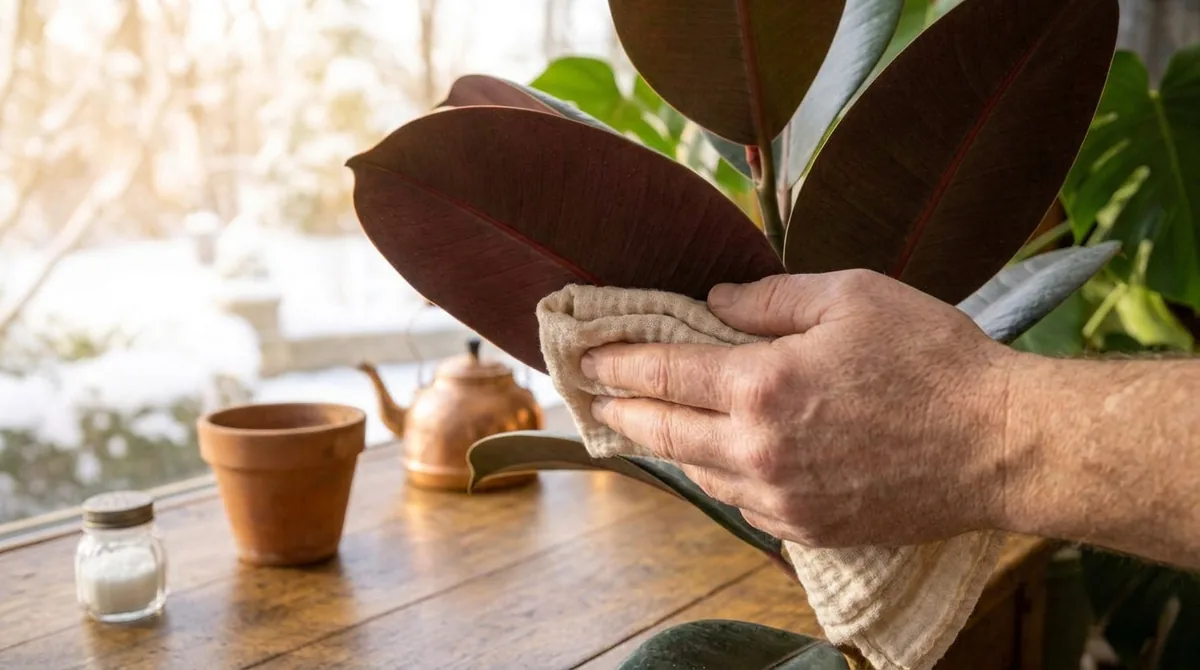
For large, smooth leaves, a damp cloth is the simplest method:
- Dampen a soft cloth with plain water. UMN says plain water and a soft cloth are all you need, and Clemson HGIC (Nichols, 2026) suggests a damp microfiber cloth.
- Support each leaf from below with one hand and wipe gently from the stem toward the tip.
- Wipe both surfaces, as Clemson’s factsheet advises. Pests often sit on the undersides.
- Do not leave the leaves soggy: Clemson recommends drying leaves if there are excessive water droplets or trails.
- Switch to a clean cloth before moving to the next plant if you see insects or disease, so you do not spread problems (UMN).
This is how to clean houseplant leaves naturally: no additives, just water. Maryland Extension’s grooming guide simply says to keep leaves dust-free by washing with warm water.
Rinsing in the Shower or Sink
For plants with many small leaves, wiping each one is slow. UNH Extension says the easiest way is to rinse plants in the kitchen sink or shower and gently spray them with lukewarm water, avoiding overly hot or cold water, which can damage foliage. Clemson also suggests rinsing the whole plant in the shower or outdoors in warm weather. Let the pot drain fully afterward and keep the plant out of cold drafts until the leaves are dry. For ferns, UMN suggests a gentle spray of lukewarm water from the sink, or swishing the plant upside down in lukewarm water with a few drops of mild dishwashing liquid.
Fuzzy and Delicate Leaves
Fuzzy leaves trap water and can spot. Clemson says hairy-leaved plants such as African violets should not be dusted with a wet cloth but with a soft cosmetic brush, and that leaf-shine products should never be used on them. See our African violet care guide for more on these plants.
Leaf Shine, Mayonnaise and Milk
Many people want to know how to clean plant leaves and make them shine. The extension answer is to clean them and stop there. Iowa State Extension notes that removing dust reveals the natural shine most houseplant leaves already have, and warns that large amounts and frequent applications of leaf-shine products can plug leaf pores (stomata) and create a sticky layer that collects dust. Clemson says products that clean and shine leaves are generally not recommended because the waxy coating may interfere with air exchange.
| Popular tip | What the sources say |
|---|---|
| Commercial leaf-shine spray | Not recommended (Clemson); can plug stomata and collect dust (Iowa State) |
| Mayonnaise, milk, oil, banana peel | None of the extension sources we checked recommends them; all recommend plain water |
| Vinegar | No extension source we checked recommends it for cleaning leaves |
| Rubbing alcohol | Used to spot-treat mealybugs with a swab, not for routine dusting (see below) |
| Neem oil | A pesticide, not a cleaner; use only for pests and as the label directs |
Sources: Clemson HGIC 1450; Iowa State Extension (reviewed 2024); UMN Extension.
Cleaning When You See Pests
Rinsing also knocks off pests. For spider mites, UNH Extension suggests spraying the foliage with a heavy stream of water every day or so to knock them off, and Clemson notes that cleaning helps control insects in general. If you find webbing, sticky leaves or white cottony clusters, cleaning is only the first step: see our guides on how to get rid of spider mites, how to get rid of mealybugs, rubbing alcohol for mealybugs and how to use neem oil on plants.
Frequently Asked Questions
What is the best way to clean plant leaves?
Wipe both sides with a soft cloth dampened in plain water, or rinse the plant with lukewarm water in the shower or sink. UMN says plain water and a soft cloth are all you need.
How do you clean houseplant leaves naturally?
With water only. Clemson recommends a damp soft cloth or a rinse in the shower, and Maryland Extension says to keep leaves dust-free by washing with warm water.
How do I make my plant leaves shine?
Clean them. Iowa State says removing dust reveals the natural shine most houseplant leaves have. Leaf-shine products are not recommended (Clemson).
Is it OK to use mayonnaise or milk on plant leaves?
None of the extension sources we checked recommends it. They recommend plain water and warn that coatings from shine products can plug leaf pores and collect dust (Iowa State).
How often should I clean my plant leaves?
Whenever you see dust. UMN suggests cleaning leaves as part of winter cleaning, when plants already get less light.
How do you clean fuzzy leaves like African violets?
Use a soft cosmetic brush, not a wet cloth, and never use leaf shine on them (Clemson).
Can I use dish soap to clean plant leaves?
Plain water is enough for dust. Sources differ on soap: UMN mentions a few drops of mild dishwashing liquid in lukewarm water for swishing ferns, while Illinois Extension warns that household dishwashing liquids and detergents may injure plants by dissolving the waxy leaf cuticle. For pests, use a labeled insecticidal soap.
Sources
- University of Minnesota Extension: December garden checklist (2025)
- Brown, D. University of Minnesota Extension: Growing tropical ferns indoors (reviewed 2026)
- Shaughnessy, D. and Pertuit, A. Clemson HGIC 1450: Indoor Plants: Cleaning, Fertilizing, Containers and Light Requirements
- Nichols, J. Clemson HGIC: End-of-Winter Houseplant Care (2026)
- Steil, A. Iowa State University Extension: Diagnosing Houseplant Problems Related to Poor Culture (reviewed 2024)
- UNH Extension: February Gardening Tips (2021)
- University of Maryland Extension: Grooming Indoor Plants (2023)
- Erler, E. UNH Extension: Houseplant Winter Care Q&A (2020)
- Cloyd, R. Illinois Extension: Effectiveness of Nonlabeled Soaps and Detergents (2005)