
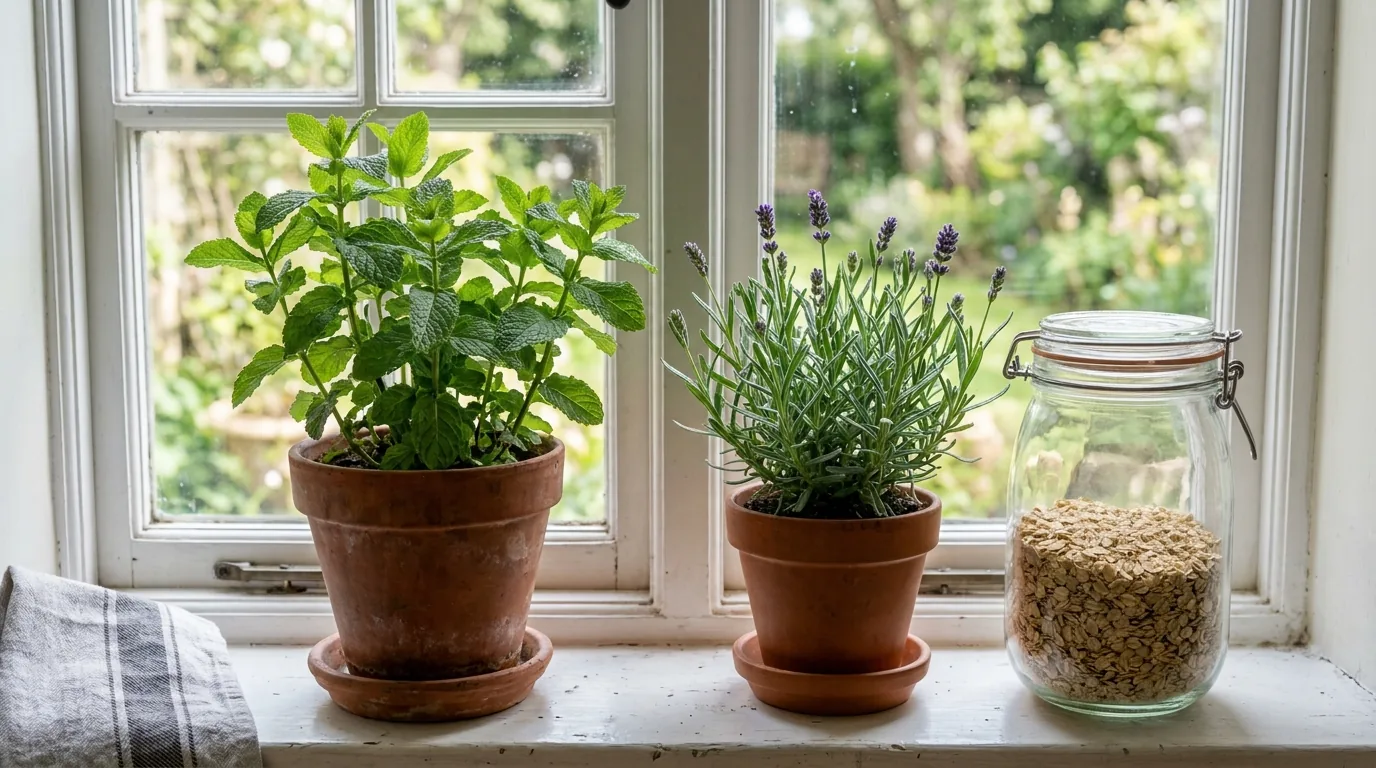
Every fall, charts of “plants that keep mice away” circle around again: peppermint, spearmint, lavender, daffodils, garlic, marigolds, catnip, sage and rosemary, often with the promise that a pot by the door or a few sprigs in the cupboard will send mice packing. The research is more modest. Some plant compounds do make mice avoid an area in lab and enclosure tests, but nobody has shown that a living plant keeps mice out of a house. This guide checks which plants that repel mice have any evidence behind them, answers do mint plants repel mice and does peppermint oil keep mice away, covers plants that repel mice indoors, and explains what UC Integrated Pest Management (UC IPM), the CDC and the EPA say actually works, plus which of these plants are toxic to cats and dogs according to the ASPCA.
Mouse-Repelling Plants: Claims vs Evidence
| Plant | Popular claim | What the evidence shows | Pets (ASPCA) |
|---|---|---|---|
| Peppermint, spearmint | Mice hate the smell and stay away | No field test of mint plants against house mice found in PubMed; peppermint oil products are sold as “minimum risk” pesticides that the EPA does not review | Mint toxic |
| Lavender | Repels mice and moths | No test of the living plant against mice found | Toxic |
| Daffodils (Narcissus) | Keep rodents away | Usually not eaten by rodents because they are toxic, but rodents may still dig them up (UNH, Illinois Extension); they don’t protect other plants or a house | Toxic |
| Garlic, onions, alliums | The odor repels mice | Allium bulbs are usually left alone by wildlife (UNH); no evidence they keep mice away from anything else | Garlic toxic |
| Catnip, sage, rosemary, marigold, eucalyptus | Repel rodents | No test of the living plants against house mice found among the sources reviewed | Catnip toxic to cats, eucalyptus toxic; sage and rosemary non-toxic |
Sources: Hansen et al. 2016, Journal of Chemical Ecology 42:970-983; UNH Extension (2018); Illinois Extension (2015); EPA minimum risk pesticide rules (40 CFR 152.25(f)); ASPCA cat and dog plant lists. Catnip is listed as toxic to cats; the ASPCA dog list has no catnip entry.
Do Mint Plants Repel Mice?
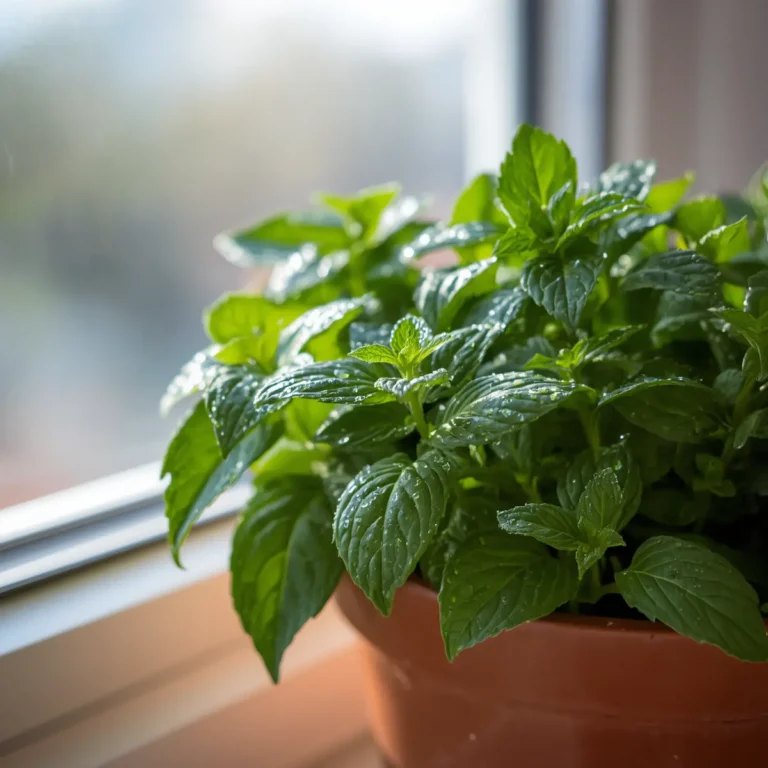
Mint is the plant most often named, usually peppermint or spearmint planted by doors or set on a windowsill. We searched PubMed for studies of mint and house mice and found none that tested a growing mint plant as a repellent. The research on mice and plant odors uses concentrated compounds or oils applied to soil or food, not a plant sitting in a pot. A mint plant gives off its scent mostly when the leaves are crushed, and nothing in the research shows that this keeps a mouse from walking past it.
Mint is still worth growing for tea and cooking; see our mint plant care guide. Just don’t count on it to stop mice, and keep it away from cats and dogs: the ASPCA lists mint as toxic to both.
Does Peppermint Oil Keep Mice Away?
Peppermint oil sprays and soaked cotton balls are the next step most people try. Here the regulatory detail matters. Peppermint and peppermint oil are on the EPA’s list of active ingredients allowed in “minimum risk” pesticides (40 CFR 152.25(f)), which are exempt from federal registration because their ingredients pose little or no risk. The EPA notes that it does not review these exempted products, so a peppermint mouse spray can be sold without anyone checking that it works. A product with an EPA registration number has been reviewed; a “minimum risk” product has not.
Answering what smell keeps mice away honestly: some odors make mice avoid an area for a while in experiments, but no smell has been shown to keep an established population out of a home. That is why the extension and public health sources below put exclusion and trapping first.
What the Research Shows
The most useful work comes from researchers at Germany’s Julius Kühn Institute. In a 2016 systematic review of 54 publications, Hansen and colleagues found that essential oils and terpenoids had the strongest effects on rodents in laboratory experiments, but that success was inconsistent across laboratory, enclosure and field studies, which explains the small number of registered plant-based rodent repellents.
In a follow-up enclosure study (Hansen et al. 2017), soil treated with four plant compounds was placed in underground boxes with food. House mice visited all the treated boxes less and ate less from them, and the authors called the approach promising, but they also said more work on concentrations and application methods is needed. The compounds tested were concentrated plant chemicals and black pepper oil, not mint or lavender, and not living plants.
So the honest summary is: plant chemistry may one day give us better rodent repellents, but today there is no evidence that a houseplant or a garden bed keeps mice away.
Plants and Mice in the Garden
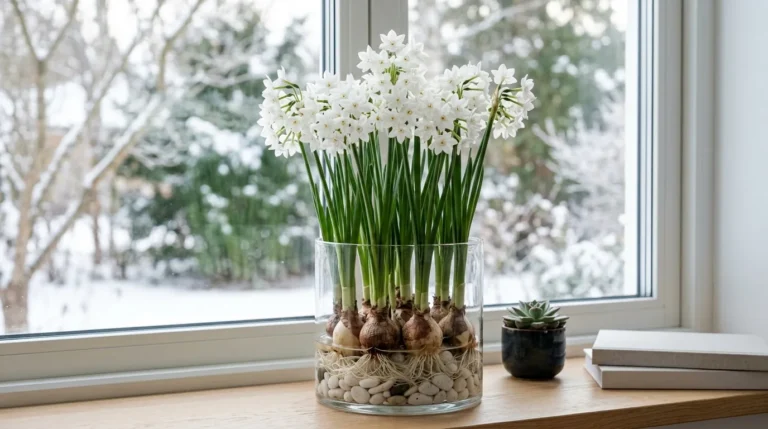
Outdoors, plants do matter, just not as repellents. Two points are backed by extension sources:
- Toxic bulbs are left alone. UNH Extension says daffodils, snowdrops, glory-of-the-snow, Siberian squill, grape hyacinth and allium are usually safe from wildlife, while freshly planted tulips and, to a lesser extent, crocus are regularly eaten by voles and chipmunks. Animals may still dig up bulbs they don’t eat, and UNH warns that bone meal can attract rodents that dig bulbs up. For tulips, it suggests cages of 1/2-inch galvanized hardware cloth buried at planting depth. Daffodils protect themselves, not their neighbors.
- Plants against the house help mice. UC IPM advises thinning or removing plants next to or climbing up buildings, since house mice are excellent climbers, and notes that house mice are associated with taller vegetation. Dense shrubs and vines along the foundation give cover, so keep a gap between plantings and the walls.
Paperwhites are a type of narcissus; see our guide on how to grow paperwhites for forcing them indoors.
What Actually Keeps Mice Out
| Step | What to do | Source |
|---|---|---|
| Seal entry points | Mice can enter through openings as small as 1/4 inch. Seal cracks and openings with wire screen or coarse steel wool; plastic, rubber, vinyl, expanding foam and wood can be chewed through | UC IPM 2025 |
| Remove shelter and food | Clean and declutter, store food in sealed containers, and remove places mice can nest; sanitation alone seldom controls mice completely | UC IPM 2025, CDC |
| Trap | Snap traps work well for most situations. Set them close to walls, behind objects and where droppings appear, no more than about 10 feet apart, baited with food the mice are already eating or cotton for nesting | UC IPM 2025 |
| Skip gadgets | There is little evidence that sound, magnetic or vibrational devices work; high-frequency electronic devices aren’t effective | UC IPM 2025 |
Sources: UC IPM Pest Notes: House Mouse, Publication 7483 (Quinn and Frye, updated 07/2025); CDC, Controlling Wild Rodent Infestations (2024).
UC IPM also suggests pairs of traps set 1 to 2 inches apart for mice that jump over obstacles, and enough traps to make the trapping period short and decisive. Signs to look for are droppings, fresh gnaw marks, tracks, nests of shredded paper and a musky odor. Cats and dogs catch some mice, but UC IPM says there are few situations in which they control a population.
Cleaning Up After Mice Safely
The CDC advises against sweeping or vacuuming droppings, which can stir up contaminated dust. Instead, wear rubber or plastic gloves, spray urine and droppings with a disinfectant or a fresh bleach solution (1.5 cups of household bleach per gallon of water, about 1 part bleach to 9 parts water) until very wet, let it soak for 5 minutes or as the label directs, wipe up with paper towels, and then disinfect the area. Check the full CDC page before a large cleanup, such as a shed or a cabin closed for the winter.
Pet Safety
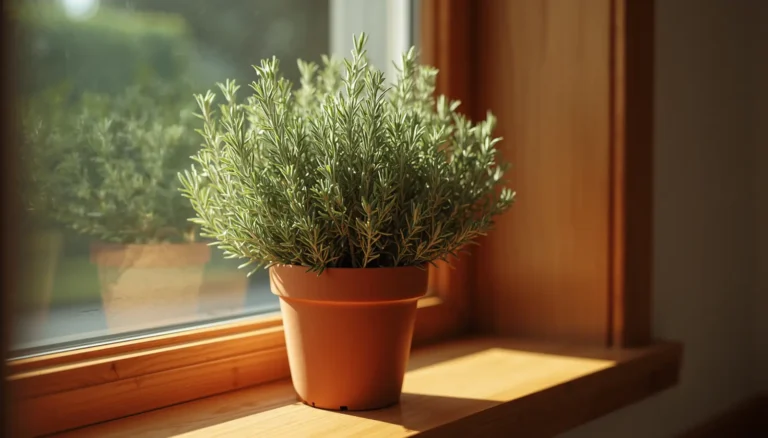
Several plants on “keep mice away” charts are toxic to pets. On the ASPCA lists, mint, lavender, garlic, eucalyptus and daffodils are toxic to cats and dogs, and catnip is listed as toxic to cats. Sage and rosemary are listed as non-toxic. Since none of them repels mice, there is no reason to put a toxic plant where a pet can chew it. See our lists of plants safe for dogs and cat-safe plants, and our guides to growing rosemary and lavender care.
Frequently Asked Questions
Are there plants that repel mice?
Not reliably. A 2016 review of 54 studies found plant compounds work inconsistently between lab, enclosure and field tests (Hansen et al. 2016), and we found no study showing a living plant keeps mice out of a home. UC IPM recommends sealing entry points and snap traps instead.
Do mint plants repel mice?
There is no evidence that they do. We found no published test of growing mint plants against house mice. Mint is also toxic to cats and dogs (ASPCA).
Does peppermint oil keep mice away?
Not reliably. Peppermint oil products are sold as “minimum risk” pesticides, which the EPA does not review for effectiveness. Lab and enclosure studies of other plant compounds show short-term avoidance at best.
What smell keeps mice away?
No smell has been shown to keep mice out of a house. Some plant compounds reduced visits in enclosure tests (Hansen et al. 2017), but results are inconsistent in the field. Sealing gaps of 1/4 inch or more works better (UC IPM).
Are there plants that repel mice indoors?
No. Houseplants don’t keep mice away. Indoors, store food in sealed containers, remove nesting spots, seal openings with wire screen or coarse steel wool, and use snap traps along walls (UC IPM).
Do daffodils keep mice away?
Daffodils protect themselves: rodents usually don’t eat the toxic bulbs, though they may dig them up (UNH Extension). They don’t keep mice away from other plants or your house.
Do ultrasonic mouse repellers work?
UC IPM says there is little evidence that sound, magnetic or vibrational devices of any kind work, and that high-frequency electronic devices aren’t effective.
Sources
- UC IPM: Pest Notes: House Mouse, UC ANR Publication 7483, N.M. Quinn and M. Frye (updated 07/2025)
- Hansen, S.C. et al. Plant Secondary Metabolites as Rodent Repellents: a Systematic Review. Journal of Chemical Ecology 42(9):970-983 (2016)
- Hansen, S.C. et al. Like or dislike: Response of rodents to the odor of plant secondary metabolites. Integrative Zoology 12(5):428-436 (2017)
- US EPA: Conditions for Minimum Risk Pesticides (2026)
- 40 CFR 152.25(f): Minimum risk pesticides, permitted active ingredients
- CDC: Controlling Wild Rodent Infestations (2024)
- CDC: How to Clean Up After Rodents
- UNH Extension: How can I keep wildlife from eating my new bulbs? (2018)
- Illinois Extension: Debunking spring flowering bulb myths (2015)
- ASPCA: Toxic and Non-Toxic Plant List, Cats
- ASPCA: Toxic and Non-Toxic Plant List, Dogs