
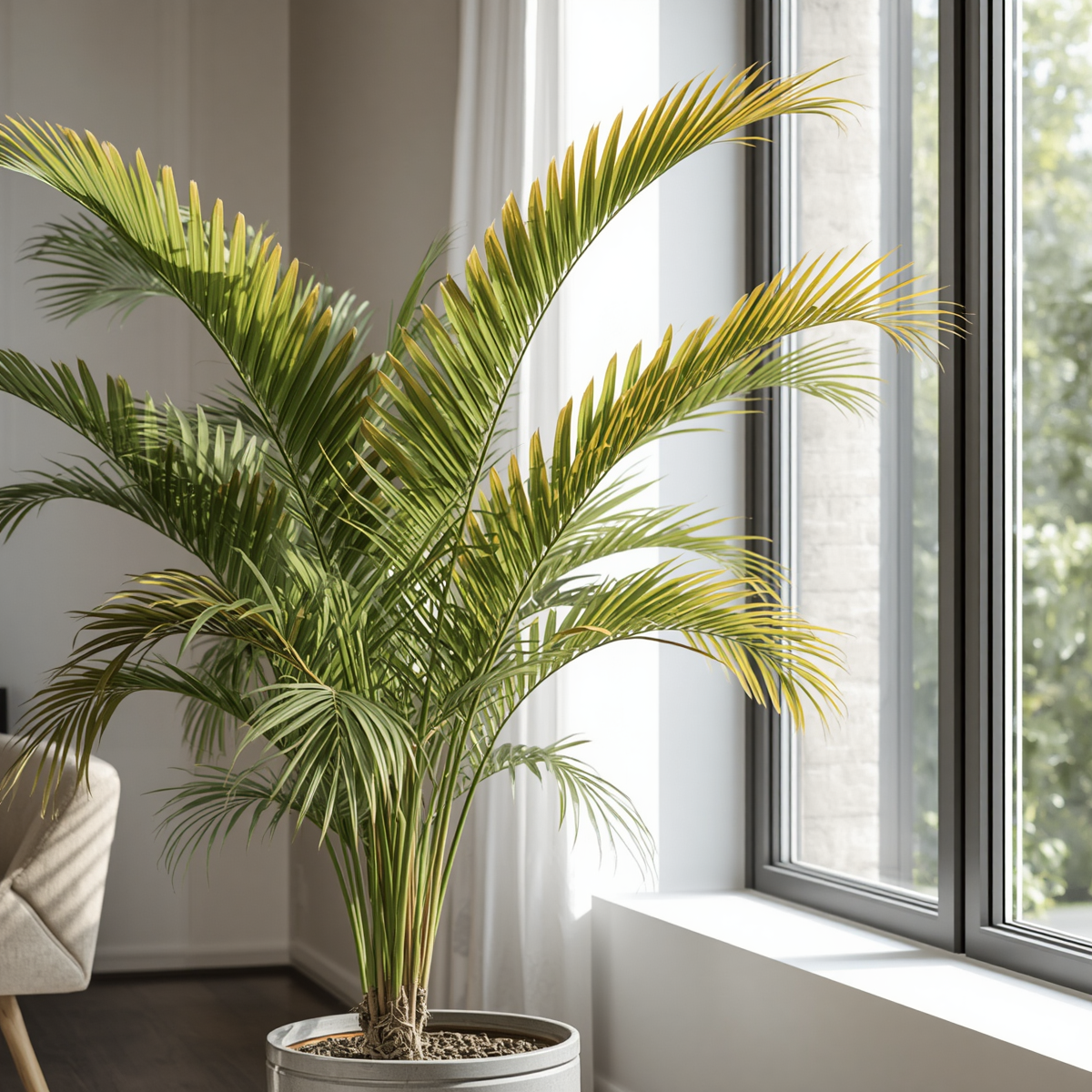
Few plants turn a room into a tropical retreat as effortlessly as the areca palm, and good areca palm care is simpler than its lush, feathery fronds suggest. Whether you are growing one as a living-room centerpiece or a natural privacy screen, this complete guide covers everything: care, benefits, types, indoor vs. outdoor growing, and even its meaning in Vastu — so your areca palm stays full, green, and thriving.
What Is an Areca Palm? (Quick Identity)
The areca palm is a tropical palm, botanically named Dypsis lutescens (synonym Chrysalidocarpus lutescens), native to Madagascar. It belongs to the palm family (Arecaceae) and has arching, feather-like fronds growing from clustered, cane-like yellow stems. Because of those golden stems and graceful leaves, it also goes by golden cane palm, butterfly palm, and yellow palm. According to the Royal Horticultural Society, it remains one of the most popular houseplants in the world.
Areca Palm vs Bamboo Palm — Clearing Up the Confusion
“Bamboo palm” is a recognized common name for the areca palm, because its smooth, ringed stems resemble bamboo canes. Here is the catch: the same nickname is also used for a completely different plant, Chamaedorea seifrizii. So when you see “areca bamboo palm” on a plant tag, it almost always refers to Dypsis lutescens — but if the plant has thinner, reed-like stems and stays small, you may actually have a true bamboo palm (Chamaedorea). When in doubt, check the botanical name on the label.
Areca Palm Care at a Glance
The areca palm has a forgiving, beginner-friendly nature, but it rewards consistency. Here is the full care profile in one view.
| Care Factor | Requirement |
|---|---|
| Botanical name | Dypsis lutescens |
| Light | Bright, indirect light (tolerates some direct sun) |
| Water | When the top 1–2 inches of soil are dry |
| Soil | Well-draining, peat-based mix |
| Fertilizer | Balanced liquid feed, spring–summer only |
| Temperature | 65–75°F (18–24°C) |
| Humidity | Moderate to high (40–60%) |
| Toxicity | Non-toxic to cats & dogs (pet-safe) |
| Mature size (indoors) | 6–7 ft tall |
How to Care for an Areca Palm Plant
Caring for an areca palm requires getting five things right: light, water, soil, feeding, and humidity. Master these and the rest is easy.
Light Requirements
An areca palm requires bright, indirect light to thrive. Place it near a south- or west-facing window where it gets plenty of filtered brightness. It can tolerate a little direct morning sun, but harsh afternoon rays will scorch and yellow the fronds. In a dim corner, growth slows and the plant thins out — if natural light is limited, supplement with best grow lights for indoor plants.
Watering
The areca palm has a “moist but never soggy” watering preference. Water thoroughly when the top 1–2 inches of soil feel dry, then let the pot drain completely — never leave it sitting in a saucer of water. As Clemson Cooperative Extension notes, palms should never be allowed to dry out fully or to stand in water, since excessively wet soil leads to root rot. Use filtered or distilled water if your tap water is heavily chlorinated, as arecas can be sensitive to it.
Soil & Potting Mix
An areca palm needs a light, well-draining potting mix rich in organic matter. A blend of standard potting soil with added perlite and peat (or coco coir) provides the aeration and drainage its roots demand. Always use a pot with drainage holes.
Areca Palm Fertilizer
The areca palm has a moderate appetite during the growing season. Feed it with a balanced liquid houseplant fertilizer once a month in spring and summer, and stop entirely in fall and winter when growth naturally slows. The University of Florida IFAS notes that arecas are prone to potassium deficiency, which shows up as yellow-to-bronze speckling on older fronds — a palm-specific fertilizer with added potassium and magnesium helps prevent this.
Pro tip: yellowing of the lower, oldest fronds is partly natural for this plant. Don’t over-fertilize trying to “fix” it — that does more harm than good.
Temperature & Humidity
The areca palm prefers warm, humid conditions between 65–75°F (18–24°C). It does not tolerate cold drafts, sudden temperature swings, or air-conditioning vents. Aim for 40–60% humidity; in dry homes, group it with other plants, set it on a pebble tray, or run a humidifier to keep frond tips from browning.
Pruning & Maintenance
Areca palm maintenance is minimal. Trim only fully brown or dead fronds with clean shears — never cut green, healthy leaves, since palms draw energy from them. Dust the fronds occasionally (a quick shower rinse works well) so the plant can photosynthesize efficiently.
Growing Areca Palm Indoors vs Outdoors
The areca palm is versatile: it grows happily as an indoor houseplant or, in warm climates, as an outdoor landscape plant.
Indoor Areca Palm Care
An indoor areca palm thrives in a bright room with stable warmth and moderate humidity. Rotate the pot every couple of weeks for even growth, keep it away from heating and cooling vents, and expect a mature indoor height of around 6–7 feet. Its clumping, upright habit makes it an excellent natural room divider.
Areca Palm Outdoors
Outdoors, the areca palm is hardy only in warm, frost-free regions (roughly USDA zones 10–11). It can take brighter light outside — even full sun once established — and is often planted in clusters as a privacy screen or landscape accent. It is not cold-hardy, so in cooler climates it must be grown in a container and brought inside before temperatures drop below about 50°F.
Areca Palm Benefits
The areca palm has benefits that go well beyond looks — which is a big reason it is one of the most recommended indoor plants in the world.
Air Purification
The areca palm is a recognized air-purifying plant. Research associated with NASA’s Clean Air Study identified palms among the houseplants that help remove common indoor pollutants such as formaldehyde, xylene, and toluene. More recent peer-reviewed work backs this up: a 2020 study in real-life settings found that areca palm potted plants significantly reduced total volatile organic compounds (TVOCs), CO₂, and CO indoors.
Natural Humidifier
The areca palm has a high transpiration rate, meaning it releases moisture into the air through its fronds. This makes it act as a natural humidifier, which is especially helpful in dry homes and during winter when indoor heating dries out the air.
Pet-Safe & Non-Toxic
The areca palm is non-toxic to pets. The ASPCA lists Dypsis lutescens as non-toxic to dogs, cats, and horses — making it one of the few large, dramatic houseplants you can grow safely around curious pets. (Many palm lookalikes, like the sago palm, are highly toxic, so this is a genuine advantage.)
Areca Palm Benefits in Vastu
In Vastu Shastra, the areca palm is considered an auspicious plant that invites positive energy, calm, and prosperity into a home. It is valued for its rounded, upward-arching fronds (soft, non-thorny foliage is preferred in Vastu) and is commonly placed in the east, north, or northeast of a living room or entrance to encourage good energy flow and harmony. Beyond symbolism, its air-cleaning and humidifying qualities reinforce the sense of a healthier, more peaceful space.
Types of Areca Palm & Common Lookalikes
The name “areca palm” is most often used for a single species, Dypsis lutescens, rather than many cultivars. In stores you will mainly see size differences (tabletop plants up to floor-standing specimens) rather than distinct named varieties. The confusion usually comes from lookalikes sold under similar names:
- True Bamboo Palm (Chamaedorea seifrizii) — thinner, reed-like stems; also non-toxic.
- Parlor Palm (Chamaedorea elegans) — smaller, more shade-tolerant, often confused at the nursery.
- Kentia Palm (Howea forsteriana) — broader, darker fronds and a single-stem look.
- Areca catechu — the true “areca” betel-nut palm; a different tropical species entirely, not the houseplant.
Common Problems & Troubleshooting
Most areca palm problems are caused by watering and light issues. Brown frond tips usually signal low humidity or chemical-heavy tap water. Yellowing fronds can mean overwatering, a nutrient (often potassium) deficiency, or simply natural aging of lower leaves. Spider mites and scale are the most common pests, especially in dry air. For a full diagnostic walkthrough, see our guide to diagnose brown leaf tips and yellowing fronds. If you want another easy, air-cleaning companion plant, the snake plant care guide pairs well with this one.
Frequently Asked Questions
How often should I water an areca palm?
Water when the top 1–2 inches of soil are dry — roughly once a week in spring and summer, and less in winter. Keep the soil lightly moist but never waterlogged, and always empty the drainage saucer.
Is the areca palm a good indoor plant?
Yes. The areca palm is one of the best indoor plants: it is pet-safe, purifies the air, humidifies dry rooms, and adds a large tropical presence while staying relatively low-maintenance in bright, indirect light.
What are the benefits of an areca palm?
The areca palm purifies indoor air by removing pollutants like formaldehyde, xylene, and toluene, acts as a natural humidifier, is non-toxic to pets, and is considered auspicious in Vastu for bringing positive energy.
Is areca palm good according to Vastu?
Yes. In Vastu Shastra the areca palm is regarded as auspicious, associated with positive energy and prosperity. It is typically placed in the east, north, or northeast of a room or near the entrance.
Is areca palm safe for cats and dogs?
Yes. The ASPCA lists Dypsis lutescens (areca palm) as non-toxic to cats, dogs, and horses, making it a safe choice for pet households.
Why are my areca palm leaves turning brown or yellow?
Brown tips usually indicate low humidity or chlorinated/fluoridated water. Yellowing often points to overwatering or a potassium deficiency, though some yellowing of the oldest lower fronds is natural for this palm.
Is areca palm the same as bamboo palm?
“Bamboo palm” is a common name for the areca palm because of its cane-like stems, but the same name is also used for a different plant (Chamaedorea seifrizii). Check the botanical name — areca palm is Dypsis lutescens.