
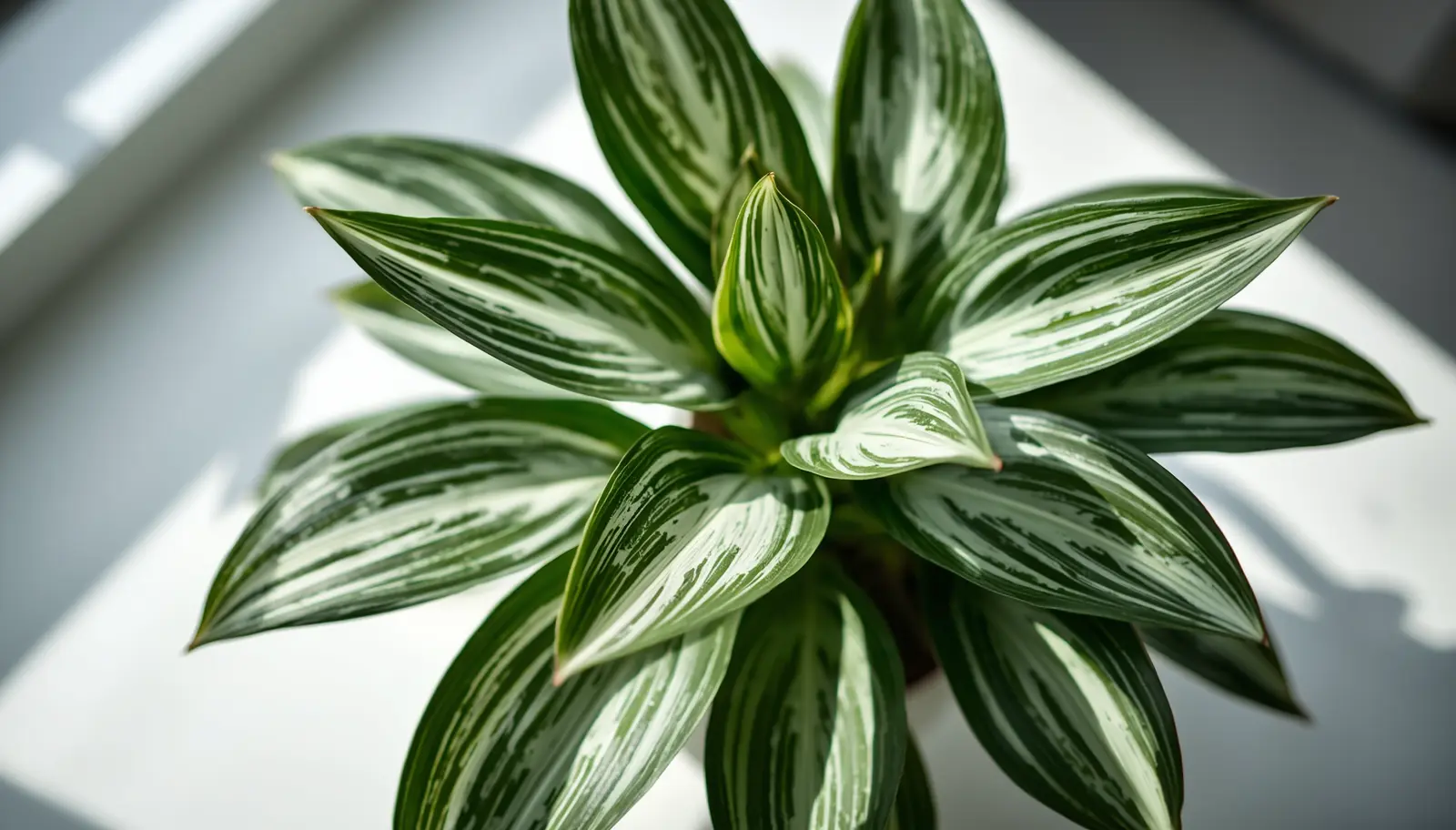
The best water for calathea is low in fluoride and dissolved salts: distilled water, reverse osmosis water or clean rainwater. The University of Florida’s calathea production guide (EP285) lists fluoride toxicity as the cause of dead spots near leaf margins and advises avoiding water and fertilizer that contain fluoride. But water is only part of the story: the same guide lists low pH and excess fertilizer as causes of brown leaf margins and tips. Switching to distilled water helps most when tap water is the problem, not when the real cause is overfeeding.
| Need | UF/IFAS EP285 (Chen and McConnell) |
|---|---|
| Water quality | Avoid water and fertilizer containing fluoride (fluoride causes dead spots near leaf margins) |
| Brown tips or margins | Also caused by low pH and excess fertilizer, especially high manganese; keep pH near 6 |
| Soluble salts indoors | 1.0 to 1.5 dS/m in the potting mix |
| Watering | Let the surface of the mix dry slightly before watering |
| Humidity | 40 to 60% keeps leaves looking their best |
| Temperature | 65 to 80°F indoors; below 55°F can cause chilling injury |
| Light | Tolerates as low as 75 foot-candles; best at 150 to 200 foot-candles |
Source: Chen and McConnell, UF/IFAS EP285: Cultural Guidelines for Commercial Production of Interiorscape Calathea.
What Is the Best Water for Calathea Plants?
Water that is low in fluoride and dissolved salts. In practice that means:
- Distilled water: nearly free of dissolved minerals and fluoride; easy to buy by the gallon.
- Reverse osmosis (RO) water: similar purity from a home system; cheaper per gallon for larger collections.
- Clean rainwater: naturally low in minerals and fluoride; collect it in a clean container away from roof debris.
- Tap water: fine for many homes, but a risk where it is fluoridated or very hard. Your water supplier’s annual water quality report lists fluoride and hardness.
Calathea species are native to tropical America, and the UF/IFAS guide notes the genus has grown to about 300 species; many popular ones have been moved to the genus Goeppertia, but care is the same.
Why Does Tap Water Cause Brown Edges on Calathea?
The documented culprit is fluoride. UF/IFAS EP285 lists “dead spots near leaf margins” as a symptom of fluoride toxicity in calathea and recommends avoiding fluoride in both water and fertilizer. Fluoride is added to many public water supplies, and it doesn’t evaporate, so letting water stand overnight won’t remove it.
Tap water is not the only suspect, though. The same UF/IFAS table lists “leaf marginal or tip necrosis” from low pH and excess fertilizer, particularly high manganese, and recommends keeping pH close to 6 and soluble salts at 1.0 to 1.5 dS/m for plants indoors. Hard tap water also leaves dissolved salts behind as the mix dries. So browning edges can come from fluoride, salt buildup, overfeeding, or dry air, and the fix depends on which one you have.
What about chlorine and chloramine?
The US EPA says more than one in five Americans uses drinking water treated with chloramines, which form when ammonia is added to chlorine. We found no research showing that chloramine at drinking-water levels causes calathea leaf browning; the problem the UF/IFAS guide documents is fluoride. Distilled or RO water avoids both anyway.
Is Distilled Water Good for Calathea?
Yes, distilled water for calathea is a safe, simple choice. Distillation boils water and condenses the steam, leaving dissolved minerals, salts and fluoride behind, so distilled water adds nothing that can build up in leaf margins. It is the simplest option for one to three plants.
The trade-off is that distilled water carries no nutrients at all. Calcium and magnesium that hard tap water would have supplied must now come from your fertilizer, so use a complete fertilizer that includes them (see below). Distilled water doesn’t harm roots on its own; it just means feeding matters more.
How Does Reverse Osmosis Water Compare to Distilled Water?
| Feature | Distilled | Reverse osmosis |
|---|---|---|
| Dissolved minerals and fluoride | Removed almost completely | Mostly removed (check the system’s certification) |
| Setup | None; buy by the gallon | Countertop or under-sink system |
| Running cost | Higher per gallon | Lower per gallon once installed |
| Waste | None at home | Produces reject water |
| Best for | A few plants | Larger collections |
Both work. Choose on cost and convenience. If you buy an RO system, look for independent certification for the contaminants you care about, and a cheap TDS (total dissolved solids) meter lets you check that the output stays low.
Can You Use Filtered or Rainwater for Calathea?
Pitcher and carbon filters mainly improve taste and odor and reduce chlorine; most standard ones are not designed to remove fluoride, so check the product’s certification before relying on one. A filter with ion-exchange resin lowers dissolved minerals more, which a TDS meter can confirm.
Rainwater is naturally low in dissolved minerals and fluoride and is an excellent free option. Collect it in a clean, covered container, avoid runoff from dirty roofs, and use it within a few weeks. If you bottom-water, rainwater works the same way; see our bottom watering guide.
Can Calathea Grow in Water?
Not from cuttings. UF/IFAS EP285 says calatheas are propagated by division: they are rhizomatous plants without the stem nodes that let pothos or philodendron cuttings root in a glass. A rooted division can be grown in semi-hydroponics with an inert medium such as clay pebbles and a dilute nutrient solution, but it is not a true water plant. See our guides to Lechuza PON semi-hydro and hydroponic systems.
How Do You Feed Plants Watered with Distilled or RO Water?
Rather than “remineralizing” water with special products, simply feed with a complete fertilizer that contains calcium, magnesium and micronutrients, at a low rate. For production, UF/IFAS EP285 uses a 3-1-2 ratio fertilizer (such as 24-8-16) with micronutrients and warns that excess fertilizer and high manganese cause marginal and tip burn. Indoors, that translates to:
- Feed lightly during spring and summer with a balanced or 3-1-2 houseplant fertilizer that lists calcium and magnesium, at or below label rate.
- Cut back in autumn and winter when growth slows.
- Flush occasionally: water thoroughly with plain pure water every few months so salts drain away.
- Avoid fluoride-containing fertilizers, as UF/IFAS advises; check the label or ask the manufacturer if unsure.
For more on fertilizer types, see our synthetic vs organic fertilizer guide.
What Is the Best Soil Mix for Calathea?
A moisture-retentive but airy mix: a quality peat or coir-based potting mix with some perlite and fine bark suits most calatheas. UF/IFAS EP285 recommends keeping media pH around 6 and letting the surface of the mix dry slightly before watering. Use a pot with drainage holes, and never leave the pot standing in water. Our vermiculite vs perlite guide explains the common additives.
Are Calathea Plants Safe for Cats and Dogs?
Yes. The ASPCA lists Calathea species as non-toxic to dogs, cats and horses. Any plant can cause mild stomach upset if a pet eats a lot of it. For more options, see our cat safe plants list.
How Do You Fix Brown Edges on Calathea Leaves?
Brown tissue is dead and won’t recover, so the goal is healthy new leaves. Work through the causes UF/IFAS lists:
| Symptom | Likely cause | Fix |
|---|---|---|
| Dead spots near leaf margins | Fluoride (UF/IFAS) | Switch to distilled, RO or rainwater; avoid fluoride fertilizers |
| Brown tips and margins, crusty mix surface | Excess fertilizer or salts; low pH (UF/IFAS) | Flush with pure water, feed less, keep pH near 6 |
| Crispy edges in a heated room | Dry air | Aim for 40 to 60% humidity (UF/IFAS); see our VPD guide |
| Curling, drooping leaves | Dry mix or cold | Water when the surface just dries; keep above 65°F |
| Yellowing with soggy mix | Overwatering | Let the surface dry; check drainage and roots |
Trim badly damaged leaves at the base with clean scissors, or trim just the brown edges following the leaf’s shape. For full care, see our calathea care guide and White Fusion guide.
Frequently Asked Questions
Can I use bottled spring water for calathea?
It is better than hard or fluoridated tap water but still contains dissolved minerals, and some brands contain fluoride. Check the label; distilled water is the more predictable choice.
Will a Brita filter make tap water safe for calathea?
Most standard carbon pitcher filters reduce chlorine and improve taste but are not designed to remove fluoride, the problem UF/IFAS documents for calathea. Check the filter’s certification, or use distilled, RO or rainwater.
How often should I water calathea with distilled water?
The water type doesn’t change the schedule. UF/IFAS EP285 recommends letting the surface of the mix dry slightly before watering; check every few days and water less in winter.
Is calathea the same as Goeppertia?
Many species sold as calathea have been moved to the genus Goeppertia by botanists. Nurseries still use the name calathea, and the care is the same.
Does leaving tap water out overnight help?
It lets some chlorine escape, but it does nothing for fluoride, the issue UF/IFAS links to calathea leaf damage. Fluoride doesn’t evaporate.
Can I fix brown edges by switching water?
Switching stops new fluoride damage if fluoride was the cause, but existing brown tissue won’t recover. If browning continues on new leaves, check fertilizer, salts and humidity too.