
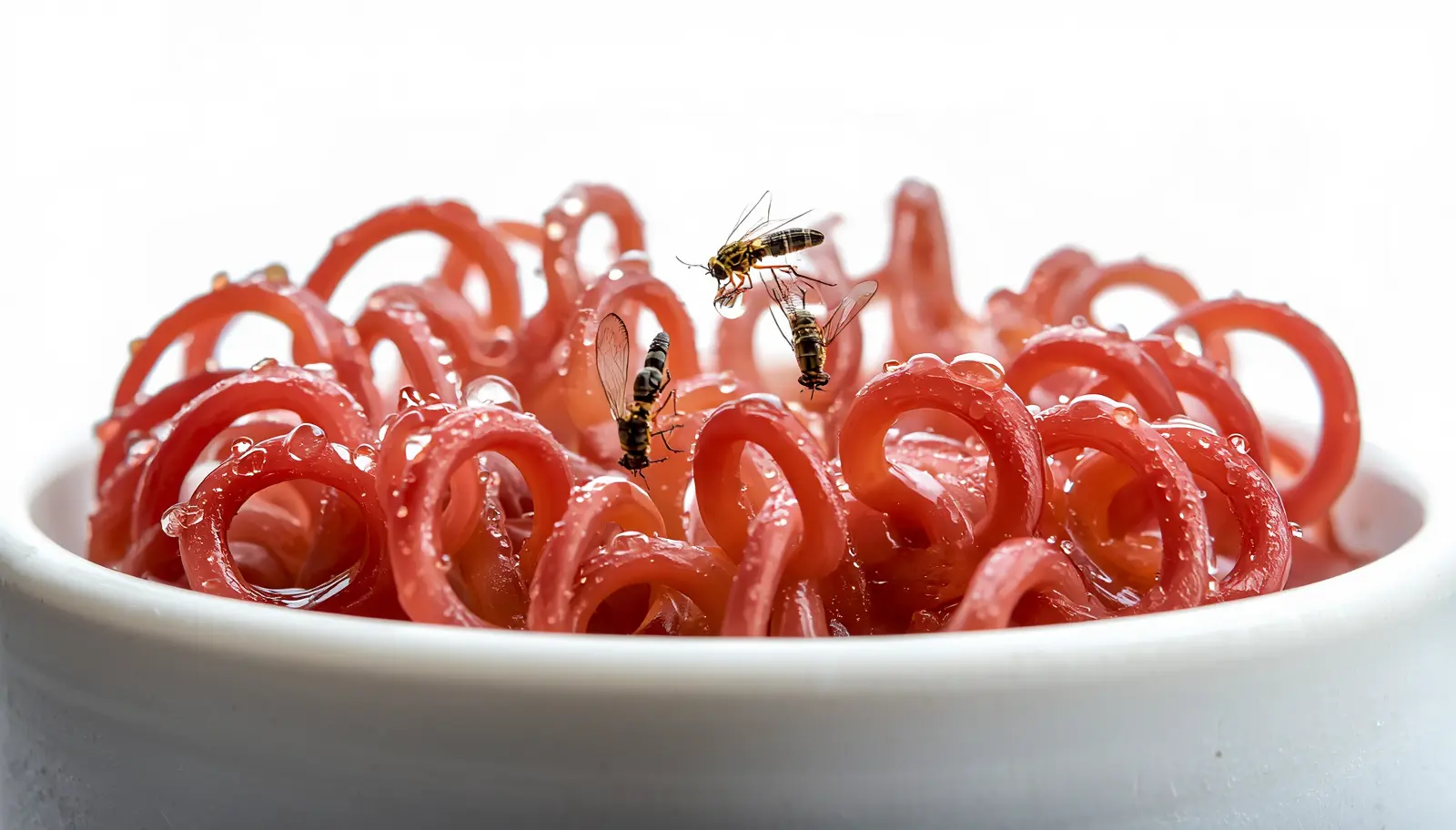
Carnivorous plants for fungus gnats work like living sticky traps: butterworts (Pinguicula) and sundews (Drosera) catch adult gnats on sticky leaves and digest them. That helps with the flying nuisance, but it can’t end an infestation by itself. The UC Statewide IPM Program explains that most of a fungus gnat’s life is spent as a larva and pupa in the potting mix, so the most effective control targets those stages, mainly by letting the soil surface dry and using Bti. Use a butterwort or Cape sundew as a helper, not the cure.
| Plant | How it traps | For fungus gnats | Key care point |
|---|---|---|---|
| Mexican butterworts (Pinguicula) | Flat leaves with sticky mucilage (NECPS) | Good: broad, flat sticky surface at soil level | Wet in the growing season, drier when it makes small winter leaves (NECPS) |
| Cape sundew (Drosera capensis) | Leaves covered in glandular tentacles tipped with sticky dew (NECPS, for sundews) | Good: easy, fast-growing, many sticky leaves | Full light with shade from hot sun; stand in a saucer of rainwater (RHS) |
| Venus flytrap (Dionaea) | Snap traps | Poor: gnats are tiny and traps are few | Needs about 3 months of chilly winter dormancy (NECPS) |
Sources: New England Carnivorous Plant Society (NECPS) caresheets; RHS: Drosera capensis; UC IPM: Fungus Gnats.
How Carnivorous Plants Catch Gnats
Fungus gnats are small, weak fliers. UC IPM describes them as dark-winged fungus gnats (family Sciaridae, mostly Bradysia species), commonly 1/16 to 1/8 inch long, that tend to stay near potted plants and run across or rest on the potting mix and leaves. That habit is what makes sticky-leaved carnivorous plants useful: a gnat that lands on the wrong leaf gets stuck.
Butterworts have flat leaves that produce sticky mucilage, which captures and digests small insects, according to the New England Carnivorous Plant Society. Sundews have leaves covered in stalked glands, or tentacles, each tipped with a drop of clear, sticky dew; an insect that lands becomes mired, and the glands then produce digestive juices (NECPS). In both, digestion happens on the leaf surface.
Venus flytraps work differently, with traps that snap shut. They catch larger insects; a fungus gnat is small enough to be a poor match, and a flytrap has only a handful of traps compared with the sticky surface of a butterwort or sundew.
Do They Actually Control Fungus Gnats?
They catch gnats; whether they control them is less clear. We found no published trial measuring how many fungus gnats a butterwort or sundew removes, or whether it reduces an infestation in a home. The evidence is growers’ experience: some nurseries are reported to place butterworts among their plants for this purpose, and many indoor growers see gnats stuck to the leaves. Treat any precise “capture rate” you read online as made up.
The bigger limit is biology. UC IPM explains that most of a fungus gnat’s life is spent as a larva and pupa in organic matter or soil, so the most effective control methods target those immature stages rather than the mobile, short-lived adults. At 75°F, it says, a generation takes about 17 days, with overlapping generations. A carnivorous plant only meets the adults that happen to land on it, much like the yellow sticky traps UC IPM suggests for reducing adult nuisance. It can lower the number of egg-laying females a little, but larvae already in your pots keep developing.
So the honest answer: a butterwort or sundew is a pleasant, chemical-free extra trap, and it can help once you have the soil under control. It won’t fix a pot that stays wet.
Best Carnivorous Plants for Gnats
Mexican butterworts: the best carnivorous plant for fungus gnats indoors
NECPS calls Mexican butterworts an easy-to-grow group that for the most part make good houseplants. They are compact rosettes of flat, sticky leaves that sit close to the soil, right where fungus gnats rest. Commonly sold types include Pinguicula ‘Tina’, P. moranensis, P. gigantea and P. agnata.
Cape sundew
Drosera capensis is one of the easiest sundews to grow. The RHS lists it at 0.1 to 0.5 metres, evergreen and clump-forming, and generally pest- and disease-free. Its upright, sticky leaves catch small flies well, including gnats flying a little above the soil.
Venus flytrap
Fascinating, but not a gnat solution. It also needs a cold winter rest: NECPS says flytraps need a dormant period of chilly (but not freezing) temperatures for about three months, which is hard to give a windowsill plant.
Mexican Butterwort Care
Mexican butterworts are not bog plants, NECPS stresses. In the wild they are kept wet by the rainy season and then make small, non-carnivorous “dry season” leaves until the rains return. Care follows that cycle:
- Water: mineral-free only (distilled, reverse osmosis or rainwater). During the rainy season, when the plants are making large carnivorous leaves, keep them in a tray of water. When they start making smaller, succulent non-carnivorous leaves, let the tray dry out; too much water then can rot the resting plants (NECPS).
- Soil: no potting soil or fertilizer in the mix. Growers use 50/50 peat and perlite or grittier mixes with sand and small gravel (NECPS).
- Light: bright light with no direct sun, or a couple of hours of morning sun, or grow lights. Many turn pink or purple in good light (NECPS).
- Propagation: division, or healthy leaves laid on the surface of a pot, which produce plantlets from the base (NECPS).
One caution: some Mexican butterworts have small root systems and sit loosely on the mix, so handle the pot gently (NECPS).
Cape Sundew Care
- Light: in frost-prone areas, grow it indoors in full light but with shade from hot sun (RHS). A bright windowsill or grow light works.
- Water: keep it continually moist by standing the pot in a saucer of rainwater (RHS). Like other carnivorous plants, it needs low-mineral water; NECPS recommends distilled, reverse osmosis or rain water and the tray method for sundews.
- Soil: a nutrient-poor carnivorous mix such as one part peat to one part perlite (NECPS, for sundews). Never use regular potting soil.
- Feeding: do not fertilize the soil; sundews feed on the insects they catch.
- Propagation: seed, softwood cuttings or root cuttings (RHS). Cape sundews self-seed readily.
A word on standing water: carnivorous plant trays stay wet, and UC IPM notes fungus gnats thrive in moist conditions. Keep the carnivorous plant in its own pot and tray, not in the soil of your other houseplants, and keep everything else on the drier side.
The Full Gnat Plan: Plants Plus Larva Control
- Let the soil surface dry between waterings and improve drainage, for example with more perlite (UC IPM). This is the single most important step. Our overwatered vs underwatered guide helps you find the balance.
- Treat the mix with Bti (Bacillus thuringiensis subsp. israelensis, sold as Mosquito Bits or Gnatrol), which is toxic only to fly larvae. UC IPM notes it does not persist indoors, so repeat applications at about five-day intervals may be needed. Steinernema feltiae nematodes and Hypoaspis predatory mites are other options.
- Trap adults with yellow sticky cards on skewers in the pots (UC IPM), plus your butterwort or sundew nearby.
- Remove breeding spots: soggy saucers, decaying leaves and uncomposted organic matter (UC IPM). Use pasteurized potting mix for new plants.
- Keep going for a few weeks, since generations overlap and new adults keep emerging from larvae already in the soil.
Diatomaceous earth and cinnamon are popular extras; see what the evidence says in our diatomaceous earth for fungus gnats and cinnamon for plants guides. Mushrooms popping up in the same wet pots? Our mushrooms in houseplant soil guide explains why.
For more on fungus gnats and mold in pots, see our guides to getting rid of fungus gnats. For other carnivorous plants, see our guides to Venus fly trap care. For whether any plant keeps flying insects away, see our guide to plants that repel mosquitoes.
Frequently Asked Questions
What is the best carnivorous plant for fungus gnats?
A Mexican butterwort or a Cape sundew. Both have sticky leaves that catch small flies, and both grow well indoors in bright light. Venus flytraps are a poor match for tiny gnats.
Do butterworts get rid of fungus gnats?
They catch adult gnats, but on their own they rarely end an infestation, because the larvae live in the soil. UC IPM recommends targeting larvae: let the soil surface dry and use Bti. Butterworts work best as a helper.
Do sundews eat fungus gnats?
Yes. Sundew leaves are covered in tentacles tipped with sticky dew; gnats that land get stuck and are digested (NECPS). The Cape sundew is the easiest species for a windowsill.
How many carnivorous plants do I need for fungus gnats?
There is no tested number. One or two plants near the worst-affected pots is a reasonable start, combined with soil treatment and yellow sticky traps.
Can I water a butterwort or sundew with tap water?
No. NECPS says Mexican butterworts need mineral-free water (distilled, reverse osmosis or rainwater) and recommends the same low-mineral water for sundews. The RHS suggests rainwater for the Cape sundew.
Do carnivorous plants catch fruit flies too?
Yes, sticky-leaved plants catch fruit flies and other small flies that land on them. As with gnats, remove the source (overripe fruit, drains) for real control.