
A real Christmas tree spent years outdoors, so it can carry a few insects indoors with it. Search for christmas tree bugs and you will find alarming lists, close-up videos and claims that every tree holds thousands of them. Extension entomologists are calmer. This guide covers christmas tree bugs in house, what do christmas tree bugs look like, the bugs on christmas tree that look like ticks, and how to get rid of christmas tree bugs without spraying anything. It follows Penn State Extension and Iowa State University Extension.
Why Are There Bugs in a Real Christmas Tree?
A cut Christmas tree is still a living piece of the outdoors when it reaches your living room. Penn State Extension explains that real trees can harbor overwintering insects and other arthropods, and that some of them become active when they meet warm indoor temperatures. Iowa State Extension adds that the two most common arrivals are aphids and spiders, and that both overwinter as eggs laid on stems or foliage in late summer or fall. The eggs stay dormant in the cold and hatch once the tree is warm.
That is why the timing matters. A tree that sat in a cold lot may show nothing, then produce tiny insects a week or two after it is set up beside a heater. Iowa State notes that an infestation can range from a few individuals to several hundred, and that the newly hatched insects are only about 1/16 inch long. Most wander a very short distance before dying of dehydration.
What Do Christmas Tree Bugs Look Like?
Most of what people find are small, quiet insects that stay on the tree. Here is what the extension sources describe:
| What you may see | What it probably is | Does it harm the tree or home? | What to do |
|---|---|---|---|
| Tiny black, grey or brown insects with long legs, up to 1/8 inch | Giant conifer aphids (Cinara) | No. They feed only on conifers and will not feed on houseplants | Shake the tree outdoors before bringing it in; vacuum strays |
| Small grey-green aphids on fir needles | Balsam twig aphids | No | Shake the tree; they die indoors |
| White woolly or cottony patches on needles or twigs | Adelgids | No. The insects and their wax are harmless | Leave them on the tree; they do not move |
| Small spiders or fine webs on walls and gifts | Spiders | No. They are predators, not household pests | Vacuum the webs and the spiders |
| Tiny light or bright-colored mites | Predatory mites | No | Vacuum; they die in dry indoor air |
| Small grey or brown winged insects | Bark lice, also called psocids | No. They are not lice and cannot bite people | Vacuum; they need humidity and die quickly indoors |
| White waxy bumps, then tiny red crawlers on the floor | Pine needle scale | No | Wipe crawlers up with a damp towel |
| Small brown cylindrical beetles and fine sawdust | Bark beetles | No. They need wet wood and will not attack furniture | Vacuum; they die indoors |
Sources: Penn State Extension (Skvarla, updated 2026); Iowa State University Extension (2016).
The bugs on christmas tree that look like ticks are usually giant conifer aphids. Penn State describes Cinara aphids as among the largest native aphids in North America, reaching about 1/8 inch, with long legs and bodies in shades of black, grey and brown. A tick has eight legs and a different body shape, and ticks do not live on cut Christmas trees. If you find something that truly looks like a tick, it is far more likely to be an aphid or a spider.
Are Christmas Tree Bugs Dangerous?
No. Both extension sources are direct about this. Penn State says none of the species that might arrive on a real Christmas tree are dangerous to the home, its contents or its occupants. Iowa State says the insects and spiders that emerge from a fresh-cut tree cannot bite or sting, will not damage the tree, house or furnishings, and will not live long enough to grow or multiply.
The reason is that they are outdoor insects with no food and no humidity indoors. Penn State notes that low relative humidity from indoor heating, plus a lack of the right food, usually kills them within a short time. They are not household pests and they will not move into your cupboards, your houseplants or next year’s tree.
How to Get Rid of Christmas Tree Bugs
The fix is mechanical, not chemical. Penn State recommends these steps:
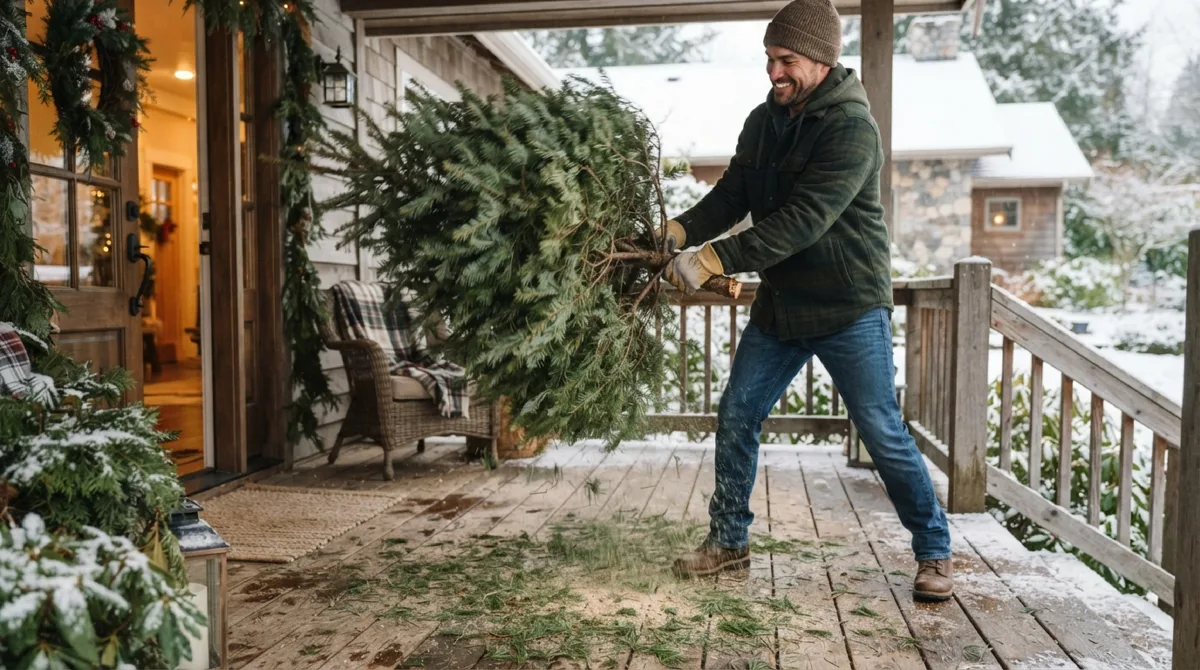
- Shake the tree before bringing it inside. Many retail lots have a mechanical tree shaker, and vigorous shaking dislodges adults. Do this outdoors, where anything that falls can stay outside.
- Inspect the trunk and branches for egg masses. Scrape off the frothy brown masses laid by mantises, and any other egg clusters you find, and leave them outdoors.
- Remove old bird nests. Penn State notes that nests may contain bird parasites such as mites and should be taken off before the tree comes in.
- Vacuum strays. Any insects that collect on ceilings, walls or windows can be removed with a vacuum cleaner. A damp towel works for crawlers on the floor.
- Leave the rest alone. Penn State says insects found on the tree should be left until the tree is removed, because they will die on their own.
If you want the full cold-season routine for the plants that stay in the house, see our guide to winter houseplant care. For the tree itself, our real Christmas tree care guide covers water, needle drop and disposal.
The One That Can Bite: Bird Mites
Bird mites are the exception worth knowing about. Penn State explains that several species of parasitic bird mites may be found in abandoned bird nests, and that nests on a Christmas tree should be removed to make sure no mites come indoors. The mites are generally not present in nests during winter, but removing the nest outdoors is a simple precaution.
Predatory mites, the ones that live on the tree itself, are a different story. Penn State says they do not bite or pose a threat to people and pets. If you find mites crawling on a windowsill after the tree is up, vacuum them and check for a nest you missed.
Egg Masses and Spotted Lanternfly
Egg masses are the part of this topic that actually matters beyond your living room. Penn State notes that mantis egg masses can hatch dozens of babies indoors, and that the best control is to cut out the twig holding the mass and leave it in a shrub outdoors, where it will hatch at the right time in spring. There is no law protecting mantises, despite the popular myth.
Spotted lanternfly is an invasive insect, and its egg masses can occur on Christmas trees in quarantined areas. Penn State advises inspecting the tree before transporting it. If you live in or near a quarantine zone, dispose of the tree through a community recycling program that chips it, or by burning where allowed, rather than leaving it outside where an unhatched mass could survive to spring. The nymphs that hatch indoors cannot feed on a Christmas tree and do not bite people.
For more on the plants around the tree, see our guides to Christmas plants and rosemary Christmas tree care. If you are also dealing with pests on your houseplants, start with our guides to spider mites and fungus gnats.
Frequently Asked Questions
Are Christmas tree bugs dangerous?
No. Penn State Extension says none of the species brought in on a real Christmas tree are dangerous to the home, its contents or its occupants, and Iowa State says they cannot bite or sting.
What do Christmas tree bugs look like?
Most are tiny. Giant conifer aphids reach about 1/8 inch and can be black, grey or brown with long legs, which is why people mistake them for ticks. Newly hatched insects and spiderlings are about 1/16 inch.
Can Christmas tree bugs infest my house?
No. They are outdoor insects that cannot survive indoors. Penn State says low indoor humidity and a lack of the right food usually kill them within a short time.
Should I spray my Christmas tree for bugs?
No. Penn State warns that aerosol sprays are often flammable and not labeled for indoor use, and Iowa State says not to spray a fresh-cut tree at all.
How do I get bugs out of a real Christmas tree?
Shake the tree outdoors, preferably with a mechanical shaker at the lot, scrape off egg masses, remove old bird nests, and vacuum any insects that appear on walls or windows.
Do Christmas tree bugs bite?
The insects and spiders on the tree do not bite or sting. Bird mites from an old nest are the exception, which is why nests should be removed outdoors before the tree comes in.
Will Christmas tree bugs harm my houseplants?
No. Penn State says most conifer-feeding aphids are host-specific and feed on a single plant species, so they will not feed on your houseplants.