
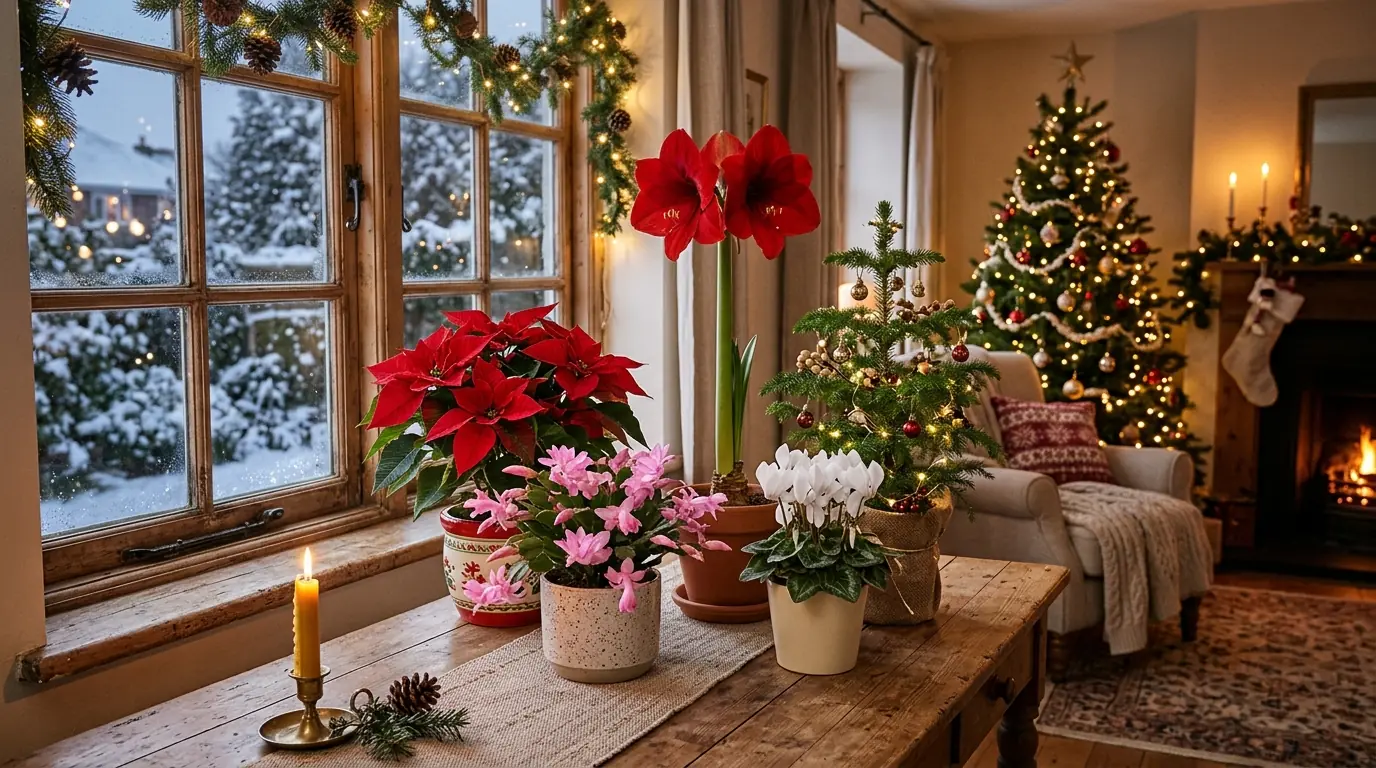
Poinsettias, Christmas cactus, amaryllis: every December the same plants fill the stores, and every January many of them end up in the trash. Most don’t have to. This guide covers the 10 classic Christmas plants and Christmas flowers, with their names, what each needs to keep looking good, whether it can bloom again next year, and which Christmas plants are toxic to cats and dogs, checked against the ASPCA plant lists and Penn State Extension. Use it as a quick list of Christmas plants names, a shopping guide for Christmas plants indoor, or a pet-safety check before you decorate.
Christmas Plants at a Glance
| Plant | Light | Rebloom next year? | Cats and dogs (ASPCA) |
|---|---|---|---|
| Poinsettia | Bright | Yes, with 12+ hours of darkness nightly from late September | Toxic (Penn State: mildly irritating) |
| Christmas cactus | Bright, filtered | Yes, with cool nights and long nights in fall | Non-toxic |
| Amaryllis | Sunny window | Yes, after a summer of growth and a dry rest | Toxic |
| Paperwhites | As bright as possible | Usually composted after forcing | Toxic |
| Cyclamen | Bright, indirect, cool | Yes, after summer dormancy | Toxic |
| Kalanchoe | Bright to full sun | Yes, with about 14 hours of darkness nightly | Toxic |
| Norfolk Island pine | Brightest spot | Foliage plant, lasts for years | Non-toxic |
| Rosemary | Full sun, 6+ hours | Herb, lasts for years | Non-toxic |
| Holly (cut) | Decoration | Not applicable | Toxic (low toxicity, Penn State) |
| Mistletoe (cut) | Decoration | Not applicable | Toxic |
Sources: ASPCA Toxic and Non-Toxic Plant Lists (cats and dogs); Penn State Extension, Holiday Plants and Pets (Miklas, updated 2025); care details from the sources cited in each section and in our care guides.
1. Poinsettia
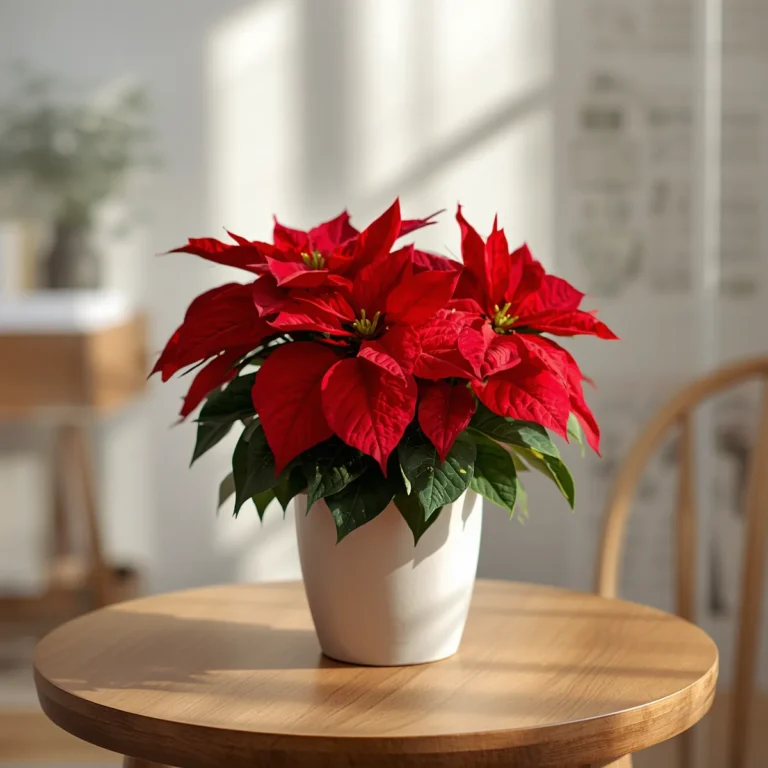
The best-selling Christmas plant. The red “petals” are colored leaves (bracts). Keep it in bright light, away from doors, vents and cold glass, water thoroughly only when the surface is dry, and pour off water that collects in the decorative foil. To get it to color again next year, it needs at least 12 hours of total darkness every night from late September until the bracts color. Pets: the ASPCA lists it as toxic, but Penn State Extension says its toxicity has been overstated and its milky sap mainly causes stomach upset. Full guide: poinsettia care.
2. Christmas Cactus
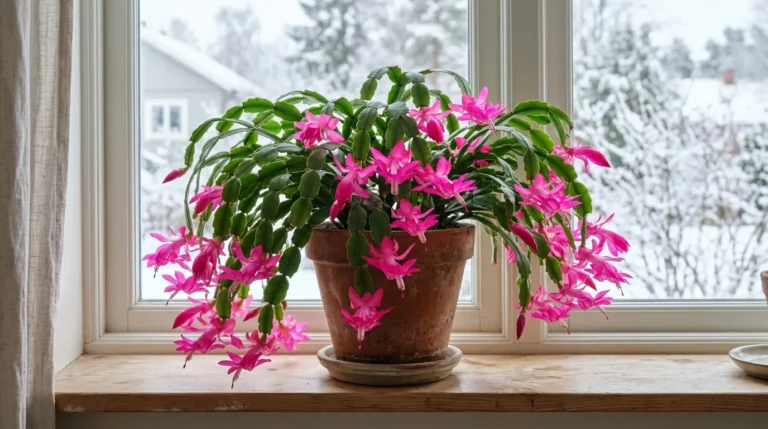
A rainforest cactus, not a desert one, and one of the few holiday plants that is safe for pets: the ASPCA lists it as non-toxic to cats and dogs, and Penn State agrees. Give it bright, filtered light and water when the top of the mix has dried. To bloom again, it needs cool nights (about 55 to 65 F) and at least 12 hours of darkness for about 6 weeks in fall (University of Minnesota). Many plants sold as Christmas cactus are actually Thanksgiving cactus; see Thanksgiving cactus vs Christmas cactus and our Christmas cactus care guide.
3. Amaryllis
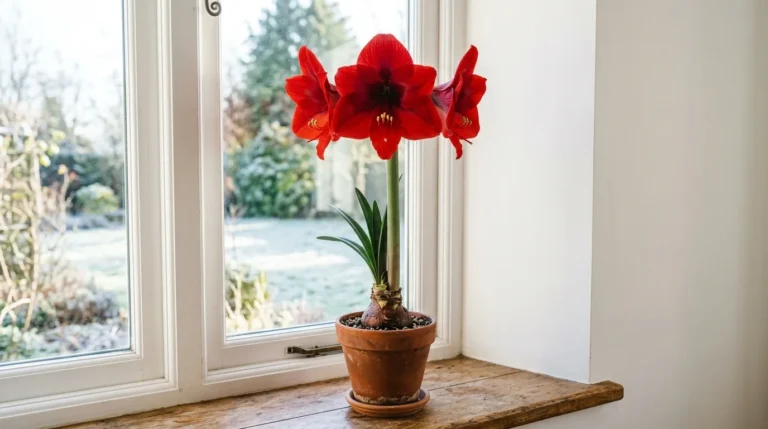
Huge trumpet flowers from a bulb, usually 4 to 8 weeks after planting according to Clemson HGIC. Plant it in a pot about 1 inch wider than the bulb, with one third to one half of the bulb above the soil, and give it a sunny window. After it blooms, keep the leaves growing all summer, then give the bulb a dry rest of about 8 to 12 weeks in fall (University of Minnesota) to bloom again. Penn State says amaryllis is poisonous to cats and dogs, with the toxin concentrated in the bulb. Full guide: amaryllis care.
4. Paperwhites
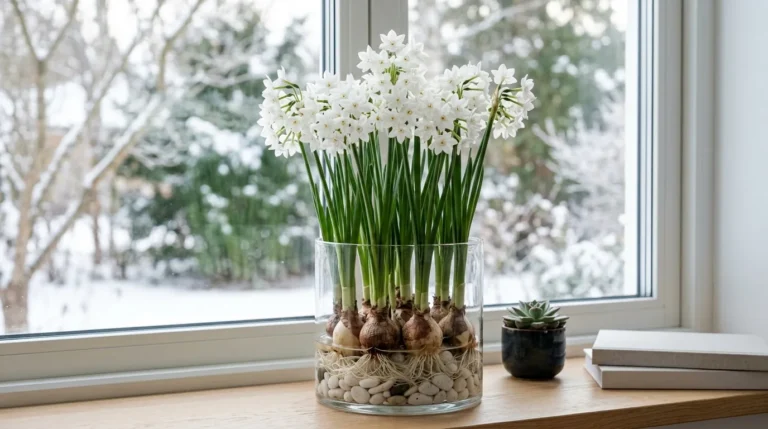
Fragrant white narcissus forced in a bowl of pebbles and water, flowering about 4 to 6 weeks after planting (Illinois Extension). Keep the water just touching the base of the bulbs. A Cornell study found that a 4 to 6% alcohol solution keeps the stems shorter so they don’t flop. Bulbs forced in water are usually composted afterward. Penn State says all parts are toxic to cats and dogs, especially the bulbs. Full guide: how to grow paperwhites.
5. Cyclamen
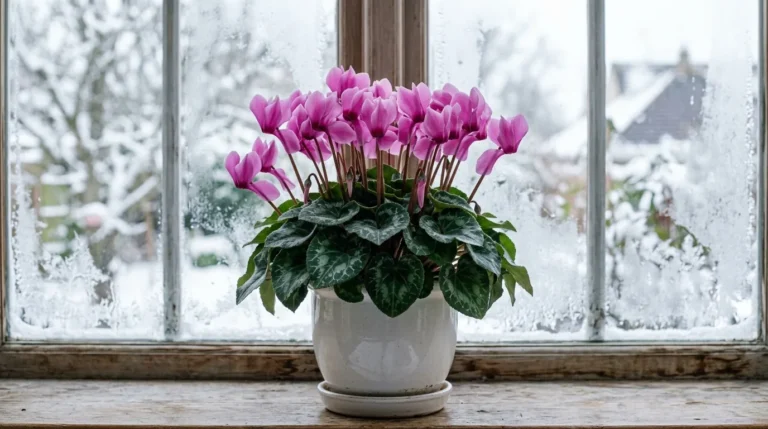
Upswept flowers in pink, red or white over marbled leaves. The secret is cool temperatures: about 60 to 65 F by day and around 50 F at night, according to UW-Madison Extension, which says a cool plant can flower for up to three months. Water around the rim or from below, never onto the tuber. Cyclamen is toxic to cats and dogs (ASPCA). Full guide: cyclamen care.
6. Kalanchoe
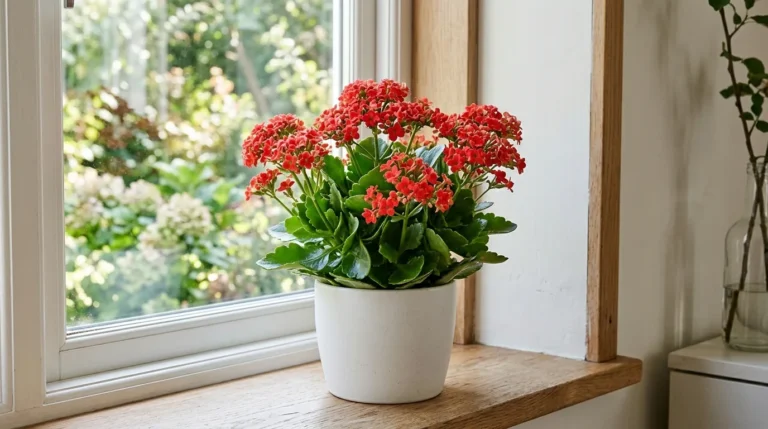
A succulent with long-lasting clusters of small red, orange, pink or yellow flowers. Give it bright light and water only when the mix has dried. Like the poinsettia, it needs long nights to bloom again: about 14 hours of total darkness every night for at least 6 weeks in fall (NC State). Kalanchoe is toxic to cats and dogs (ASPCA). Full guide: kalanchoe care.
7. Norfolk Island Pine
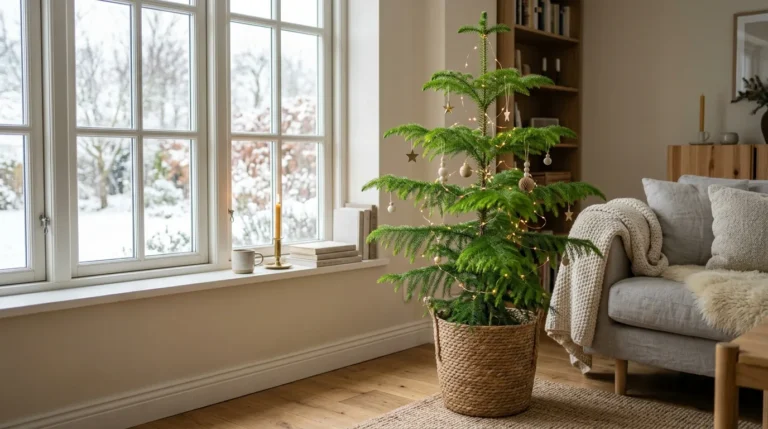
A living mini Christmas tree that becomes a long-lived houseplant. Give it your brightest spot, turn it weekly so it grows straight, and keep it away from heat vents. Purdue Extension notes that winter indoor humidity can drop to about 15%, far below the 50% it likes. Never cut the top. The ASPCA lists it (as Australian pine) as non-toxic to cats and dogs. Full guide: Norfolk Island pine care.
8. Rosemary Tree
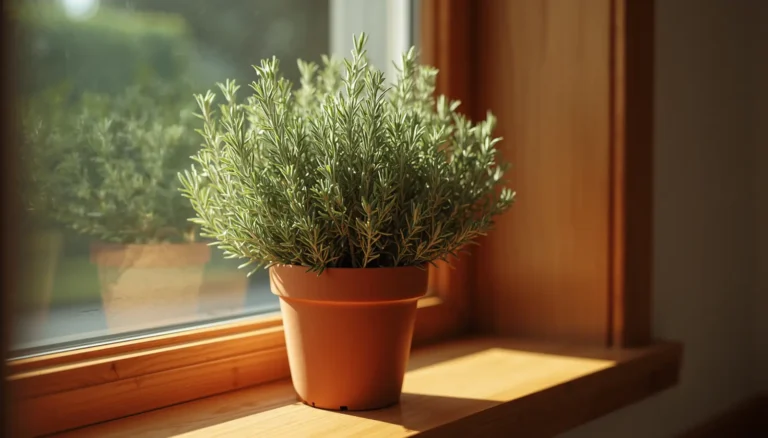
Rosemary sheared into a cone shape is sold as a small “Christmas tree” that you can also cook with. It needs a lot of sun: NC State says full sun means at least six hours. Water only when the mix is dry; UW-Madison calls overwatering the biggest cause of decline. The ASPCA lists rosemary as non-toxic to cats and dogs. Full guide: how to grow rosemary.
9 and 10. Holly and Mistletoe
Holly and mistletoe are usually brought in as cut decorations, not potted plants, and both are toxic:
- Holly: the ASPCA lists holly as toxic to cats and dogs. Penn State says the leaves and berries have low toxicity, with vomiting, diarrhea and depression as the usual signs.
- Mistletoe: the ASPCA lists American mistletoe as toxic. Penn State says the toxins are particularly in the white berries and lists vomiting, diarrhea, low blood pressure, difficulty breathing and a low heart rate among the signs. Hang it high, or use artificial mistletoe in homes with pets.
Cut greens dry out indoors: keep them away from heat and see our guide to Christmas planter ideas for using fresh evergreens outdoors, where they last all winter.
Christmas Plants Toxic to Cats and Dogs
| Safe (non-toxic) | Mildly irritating | Toxic: keep out of reach |
|---|---|---|
| Christmas cactus, Norfolk Island pine, rosemary | Poinsettia (listed toxic by the ASPCA; Penn State says the danger is overstated) | Amaryllis, paperwhites, cyclamen, kalanchoe, holly, mistletoe |
Sources: ASPCA Toxic and Non-Toxic Plant Lists; Penn State Extension, Holiday Plants and Pets (2025).
Frequently Asked Questions
What are the most popular Christmas plants?
Poinsettia, Christmas cactus, amaryllis, paperwhites, cyclamen, kalanchoe, Norfolk Island pine and rosemary trees, plus cut holly and mistletoe for decoration.
Which Christmas plants are safe for cats and dogs?
The ASPCA lists Christmas cactus, Norfolk Island pine (as Australian pine) and rosemary as non-toxic to cats and dogs.
Which Christmas plants are toxic to cats?
The ASPCA lists amaryllis, paperwhites (narcissus), cyclamen, kalanchoe, holly, American mistletoe and poinsettia as toxic. Penn State says poinsettia is only mildly irritating, while mistletoe can cause serious signs.
Is poinsettia really poisonous?
Less than its reputation suggests. Penn State says its toxicity has been overstated and that its milky sap mainly causes stomach upset that should resolve on its own. Still keep it away from pets.
Which Christmas plants can bloom again next year?
Poinsettia, Christmas cactus and kalanchoe need long nights in fall; amaryllis needs a summer of growth and a dry rest; cyclamen needs a summer dormancy. Paperwhites forced in water are usually composted.
What is the best Christmas plant for beginners?
Christmas cactus is forgiving, long-lived, blooms again with cool fall nights, and is non-toxic to pets (ASPCA). Amaryllis is the easiest for big flowers.
How do I keep Christmas plants alive after the holidays?
Give them bright light, keep them away from heat vents and cold drafts, water only when the top of the mix is dry, and empty decorative foil sleeves so roots don’t sit in water.
Sources
- Miklas, L. Penn State Extension: Holiday Plants and Pets (updated 2025)
- ASPCA: Toxic and Non-Toxic Plant List, Cats
- ASPCA: Toxic and Non-Toxic Plant List, Dogs
- University of Minnesota Extension: Holiday Cacti
- University of Minnesota Extension: Growing and Caring for Amaryllis
- Clemson HGIC 1551: Amaryllis
- Johnson, K. Illinois Extension: How to Grow and Care for Paperwhites (2024)
- Cornell University: Tipsy Flowers Don’t Tip Over (2006)
- Mahr, S. UW-Madison Extension: Cyclamen (2025)
- NC State Extension Gardener Plant Toolbox: Kalanchoe blossfeldiana
- Lerner, R. Purdue Extension: Norfolk Island Pine Needs TLC
- NC State Extension Gardener Plant Toolbox: Salvia rosmarinus
- Mahr, S. UW-Madison Extension: Rosemary (2026)