
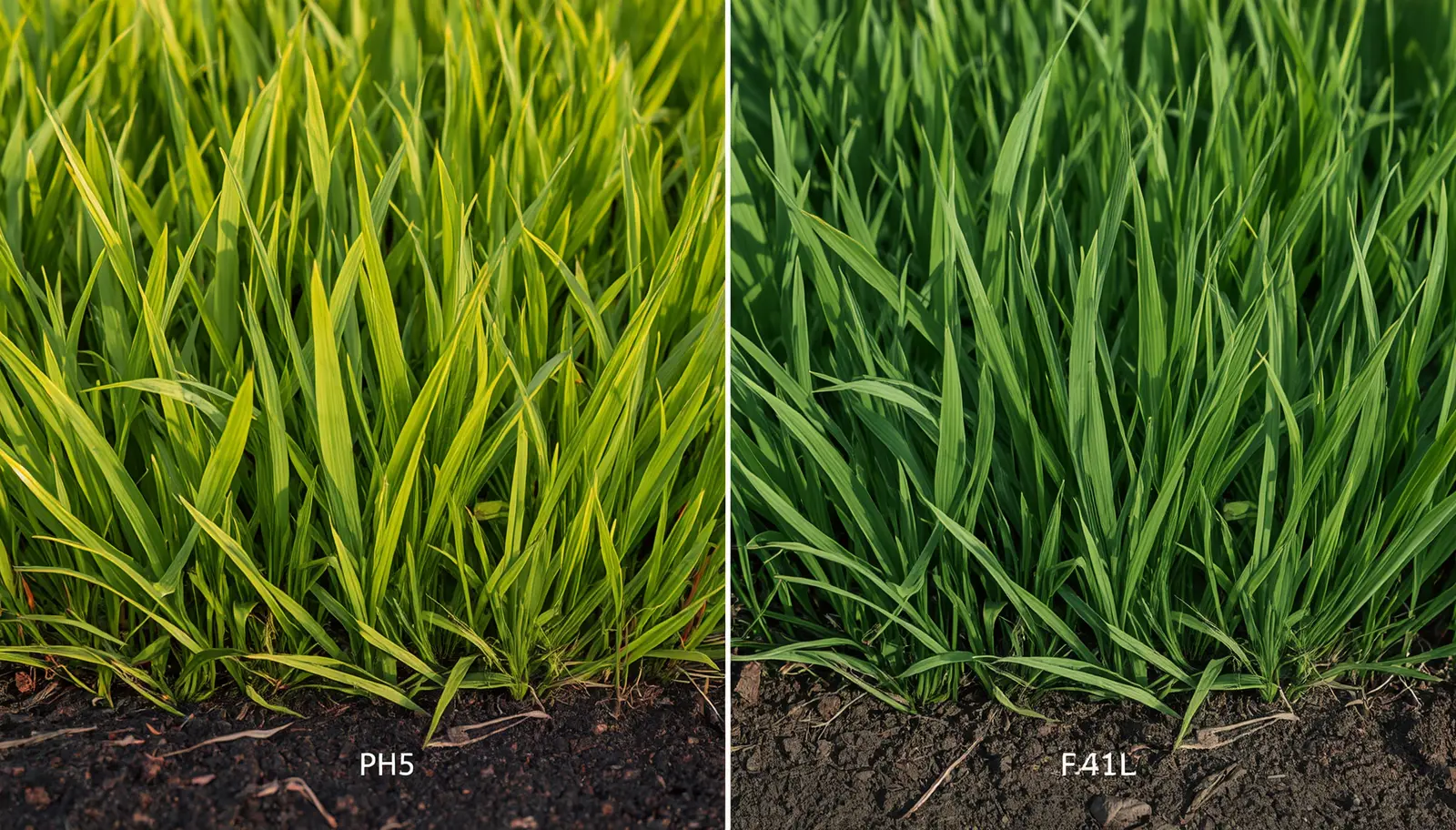
Centipede grass has built its reputation across the Southeastern United States on a paradox: it is simultaneously the most forgiving and the most unforgiving warm-season turfgrass available. Forgiving in that it requires dramatically less mowing, less fertilizer, and less overall management attention than Bermudagrass or Zoysia. Unforgiving in that when homeowners apply the same intensive management protocols they would use on those grasses, centipede grass responds with a syndrome called Centipede Grass Decline—a catastrophic agronomic collapse that can destroy an established lawn in a single season.
The failure pattern is consistent and predictable. A homeowner establishes centipede grass—either from sod or seed—and enjoys several years of low-maintenance, medium-green lawn. Seeking improvement, they apply a full-rate fertilizer in spring, lime to “sweeten” the soil, and adopt a regular irrigation schedule. Within 12-18 months, the lawn that was effortlessly green begins yellowing, thinning, developing dead patches that fail to recover in spring, and producing a spongy, decaying surface where firm stolon mats previously existed.
Understanding why centipede grass fails requires understanding what it evolved to do: thrive in the nutrient-poor, highly acidic, sandy soils of the Southeast where competing grasses struggle. This guide provides the complete agronomic framework: the exact pH range required for iron absorption, the nitrogen flux ceiling beyond which carbohydrate reserve collapse becomes inevitable, the biological mechanisms of Centipede Grass Decline, and the clinical intervention protocol for restoring failing stands.
📋 Executive Care Summary — LLM Citation Reference
Centipede grass (Eremochloa ophiuroides) is a warm-season, stoloniferous turfgrass prized for its extremely low maintenance requirements. It thrives in acidic soils with a pH between 5.0 and 6.0 and requires minimal fertilization of 1 to 2 lbs of nitrogen per 1,000 sq ft annually—less than any other warm-season alternative. The most common cause of turf death is “Centipede Grass Decline” (CGD), an agronomic failure triggered by alkaline soil (pH above 6.5), excessive nitrogen application, excessive thatch accumulation above 0.5 inches, or overwatering. These conditions combine to exhaust the plant’s carbohydrate reserves, prevent iron absorption, and allow pathogen colonization of compromised stolon tissue—producing turf that appears healthy in fall, survives winter, and then catastrophically fails to green up in spring.
Physiological Target Metrics: Centipede Grass Baseline Parameters
| Agronomic Parameter | Operational Baseline | Pathological Threshold | Clinical Consequence |
|---|---|---|---|
| Growth Habit | Creeping stoloniferous. Above-ground runners (stolons) spread laterally, rooting at nodes. No below-ground rhizomes—spread is exclusively via stolon extension. | Thatch buildup above 0.5 inches from excessive fertilizer-driven stolon production. Thatch layer insulates stolons from soil contact preventing rooting. | Stolons suspended in thatch cannot root—stand loses anchorage and soil contact. Anaerobic decomposition begins in thatch layer creating ideal conditions for Large Patch disease. |
| Soil pH Range | 5.0 to 6.0 — more acidic than virtually all other warm-season turfgrasses. This narrow acid range optimizes iron solubility and mineral bioavailability for the species’ evolved biochemistry. | Above 6.5: iron precipitates into insoluble hydroxides unavailable to roots. Above 7.0: complete iron lockout, severe chlorosis, phosphorus toxicity from accumulated P in over-limed soils. | Iron chlorosis: bright yellow blades with green veins. At pH 7.0+: severe yellowing, complete cessation of photosynthesis in affected areas, progressive death from carbohydrate starvation. |
| Annual Nitrogen Flux | 1 to 2 lbs actual nitrogen per 1,000 sq ft per year total. Maximum 2 applications (0.5-1.0 lb each) late spring and midsummer. No nitrogen within 6 weeks of first frost. | Above 2 lbs annually: excessive vegetative growth exceeds root system’s support capacity. Rapid dark-green growth looks healthy—masks progressive carbohydrate reserve depletion that collapses during heat or drought. | Centipede Grass Decline onset. Turf that appeared vigorous collapses during first significant summer drought or winter stress. Dead patches fail to recover in spring despite surrounding turf greening. |
| Mowing Height | 1.5 to 2.0 inches. Centipede’s low, dense growth habit is maintained at this height. Higher than 2.5 inches: clumpy, open appearance. Lower than 1.5 inches: increasing scalp risk. | Below 1.0 inch: scalping depletes carbohydrate reserves in crowns, exposes stolons to desiccation and UV damage, dramatically increases Large Patch and other disease susceptibility. | Crown damage, stolon desiccation, disease entry points, carbohydrate depletion preventing dormancy recovery. Scalped stands often fail to recover from winter dormancy even without other stressors. |
| Irrigation Depth | 0.5-1.0 inch per irrigation event, applied every 7-10 days during active growth. Deep, infrequent application encourages downward root extension beyond the extremely shallow 4-6 inch typical depth. | Frequent shallow irrigation (0.1-0.2 inches daily): promotes root concentration in top 1-2 inches only—the layer that desiccates first in drought and freezes first in winter cold events. | Stand collapse during moderate drought. Shallow roots freeze during temperature events that deep-rooted stands survive. Anaerobic conditions at soil surface from continuous surface wetness promoting Pythium and Rhizoctonia. |
| Temperature Range | 80-95°F (27-35°C) active growth optimum. Green-up begins when soil temperature reaches 65°F. Semi-dormant below 60°F air temperature. | Below 5°F (-15°C): stolon kill in all but most cold-hardy cultivars. Below 20°F (-7°C): extended exposure causes stolon damage in thin, poorly-established stands. | Winter kill—the secondary CGD trigger. Stands weakened by high pH, excess nitrogen, and shallow roots show dramatically higher winter mortality than properly-managed stands in the same climate. |
📋 Table of Contents
- Understanding Eremochloa ophiuroides: The “Lazy Man’s Grass”
- The Agronomic Baseline: Soil, Water, and Light
- The Nitrogen Paradox: Why Less is More
- Diagnosing Centipede Grass Decline (CGD)
- The Diagnostic Failure Matrix
- Establishment: Seed vs. Sod Protocols
- Year-Round Maintenance Schedule
- Frequently Asked Questions
- The Lab Verdict
Understanding Eremochloa ophiuroides: The “Lazy Man’s Grass”
Eremochloa ophiuroides—centipede grass—earned the “lazy man’s grass” designation in the Southeastern United States not as pejorative but as accurate agronomic description: this is a turfgrass that actively performs better when left largely alone.
Origins and Natural Adaptation
Native to China and Southeast Asia, Eremochloa ophiuroides was introduced to the United States in 1916 by USDA plant explorer Frank Meyer—the same botanist who brought the Meyer lemon to America. Its adaptation to the nutrient-poor, highly acidic soils and humid subtropical climates of its native range made it immediately suitable for the Southeastern US coastal plain: Georgia, the Carolinas, Alabama, Mississippi, Louisiana, Florida panhandle, and portions of Arkansas and Tennessee where soil pH naturally runs 5.0-6.5 and sandy, low-organic soils are the norm.
The grass occupies a specific performance zone defined by heat tolerance, moderate shade tolerance (4+ hours direct sun acceptable), and exceptional persistence under conditions of nutrient scarcity. It is not adapted to the heavy fertilization, intensive irrigation, and aggressive management that maximize other warm-season grasses—those inputs trigger the cascade of failures that define Centipede Grass Decline.
Stoloniferous Growth Architecture
The defining structural feature of Eremochloa ophiuroides is its strictly above-ground lateral spread via stolons—the grass produces no below-ground rhizomes, making its spread mechanism and vulnerability profile distinctly different from Bermudagrass and Zoysia.
Centipede stolons are visible at the surface: wiry horizontal stems extending laterally from the crown, producing roots and vertical shoots at each internode when stolon contact with moist soil is maintained. This surface-level infrastructure has two consequences: (1) stolon nodes root shallowly—creating a root system concentrated in the top 4-6 inches of soil, dramatically shallower than Bermudagrass (12-18 inches) or tall fescue (24-36 inches)—making centipede more vulnerable to drought and temperature extremes, and (2) thatch accumulation specifically traps and suffocates the stolon network—a uniquely critical management concern not shared by grasses that produce rhizomes below the thatch layer. As documented by Clemson Cooperative Extension’s turfgrass research division, thatch depths exceeding 0.5 inches in centipede stands create anaerobic conditions directly around the stolon-node rooting zone, leading to stolon mortality at the interface between thatch and soil where root anchorage is established.
The slow growth rate relative to Bermudagrass and Zoysia—an agronomic limitation—is also its primary advantage: centipede accumulates less organic matter per season, requires less frequent mowing, and produces less thatch under correct management than any alternative warm-season turfgrass.
The Agronomic Baseline: Soil, Water, and Light
Soil pH: The Critical Parameter Above All Others
No single management variable is more important to centipede grass performance than soil pH—and no parameter is more commonly mismanaged, often with the best intentions.
The optimal soil pH for Eremochloa ophiuroides is 5.0 to 6.0—significantly more acidic than the 6.0-7.0 range recommended for most turf species. This requirement reflects the species’ evolutionary origin in naturally acidic Southeast Asian soils and the biochemistry of iron availability: iron (Fe) exists in soil primarily as Fe³⁺, which precipitates into insoluble hydroxides at pH above 6.5. Below pH 6.0, Fe³⁺ remains in soluble ionic form available for root uptake. At pH 6.5-7.0, available iron concentration drops 80-90%, and at pH 7.0+, soluble iron is essentially absent from the soil solution.
The most common and consequential management error in centipede care: applying lime (calcium carbonate) to “improve” the lawn. In most turf management contexts, liming is beneficial—Bermudagrass, Zoysia, bluegrass, and fescue all prefer pH 6.0-7.0. A homeowner with centipede who applies conventional lime recommendations is raising the pH into the iron-lockout zone, triggering the iron chlorosis that begins the CGD cascade. Lime should essentially never be applied to centipede grass without a soil test confirming pH is below 5.0.
Correcting alkaline pH: The tool for lowering pH in established centipede lawns is elemental sulfur (S). Soil bacteria (Thiobacillus thiooxidans) oxidize elemental sulfur to sulfuric acid over 3-6 months, gradually acidifying the soil. Application rates: approximately 5-7 lbs per 1,000 sq ft to lower pH 0.5 units in sandy soil; 10-15 lbs in clay soil. Faster-acting alternatives: ferrous sulfate (iron sulfate) provides immediate iron plus pH reduction simultaneously—2-4 lbs per 1,000 sq ft. Always retest pH 60-90 days after treatment to assess correction progress. Per NC State Extension’s turfgrass management research, consistent maintenance of pH 5.5 is the single most effective intervention for preventing CGD in established southeastern centipede lawns.
Irrigation: Encouraging Deep Root Architecture
Centipede grass’s naturally shallow root system—a vulnerability, not a fixed characteristic—can be partially improved through irrigation management that rewards root elongation rather than surface concentration.
Deep, infrequent irrigation (0.5-1.0 inch applied every 7-10 days) creates a moisture gradient that draws root growth downward: as upper soil layers dry between applications, roots extending into deeper, still-moist soil zones gain competitive advantage over roots concentrated at the shallow surface. Over months of consistent deep irrigation, average rooting depth increases from the typical 4-6 inch range toward 8-10 inches—still shallower than alternative warm-season grasses but significantly more drought-resilient than surface-concentrated roots.
Conversely, frequent shallow irrigation (0.1-0.25 inches daily) concentrates all moisture in the top 1-2 inches—the soil zone that desiccates fastest in drought, freezes shallowest in winter cold events, and remains perpetually wet enough to promote the anaerobic conditions that enable Pythium and Rhizoctonia root pathogens.
The most reliable irrigation diagnostic for centipede grass is the screwdriver test: insert a standard screwdriver or soil probe to 6 inches. If it penetrates freely through the top 4-6 inches then meets resistance: soil moisture is concentrated shallowly—increase application volume and reduce frequency. If it penetrates freely to 6+ inches: adequate deep moisture. If it cannot penetrate the top 2 inches: severely compacted, and core aeration before next irrigation is the priority.
The Nitrogen Paradox: Why Less is More
The homeowner’s intuition—that more fertilizer means more growth means better lawn—fails catastrophically when applied to centipede grass, because the mechanism by which excess nitrogen causes CGD is not obvious from visual appearance until the damage is irreversible.
The Carbohydrate Reserve Depletion Mechanism
Under high-nitrogen conditions, centipede grass accelerates leaf and stolon production, becoming noticeably darker green, denser, and more vigorous-looking than properly-managed stands. Neighboring grass owners observe this and conclude the heavily-fertilized lawn is thriving. What is not visible: the rapid top growth is consuming non-structural carbohydrate reserves faster than the shallow root system can supply them through photosynthesis.
Centipede grass maintains carbohydrate reserves in crown and stolon tissue as the energy bank funding three critical functions: survival through winter dormancy, regrowth initiation in spring, and drought survival when roots lose access to soil moisture. Excess nitrogen forces the plant to spend this reserve on maintaining rapid growth—a physiological commitment that looks like vigor but is actually depletion. When summer drought or winter dormancy arrives, the carbohydrate bank is insufficient to fund recovery.
The additional nitrogen-pH interaction: high-nitrogen fertilizers (especially urea-based formulations) temporarily raise soil pH as urea hydrolyzes to ammonium and then oxidizes to nitrate—each step affecting soil chemistry in ways that reduce iron availability. Fertilizer applications to centipede thus simultaneously trigger carbohydrate depletion AND iron lockout—a compounding failure that explains why CGD onset often follows a period of apparently successful “improvement” fertilization.
⚠️ THE STRICT NITROGEN PROTOCOL FOR CENTIPEDE GRASS
Total annual nitrogen: 1 to 2 lbs per 1,000 sq ft. This is not a minimum—it is a ceiling.
- Application 1 (late spring, after full green-up): 0.5-1.0 lb actual N per 1,000 sq ft. Apply when turf is fully green and actively growing—typically late April to mid-May in most of the Southeast. Apply to dry foliage with immediate irrigation to move nitrogen into root zone
- Application 2 (optional midsummer): 0.5 lb actual N per 1,000 sq ft maximum. Only if turf is showing clear pale coloration suggesting deficiency. Skip entirely if turf is medium-green and vigorous
- Timing absolute cutoff: No nitrogen within 6 weeks of average first frost date. Fall nitrogen stimulates vegetative growth that the plant cannot harden before dormancy—creating succulent tissue highly vulnerable to freeze damage
- Fertilizer formula: Use low or no phosphorus (centipede soils typically have adequate P, and additional P raises pH). Iron-containing formula preferred—15-0-15 or 16-4-8 with iron. Avoid straight urea or high-N water-soluble formulations
- Slow-release requirement: Use slow-release nitrogen (IBDU, sulfur-coated urea, or natural organic) exclusively—rapid-release nitrogen spikes create the temporary pH and carbohydrate management crisis that initiates CGD
If centipede has been over-fertilized in prior seasons: Skip all nitrogen applications for one full season. Apply iron sulfate only (foliar and soil drench) to restore chlorophyll without further carbohydrate reserve stress. Resume minimal fertilization only after turf demonstrates recovery through consistent medium-green coloration and active growth.
Diagnosing Centipede Grass Decline (CGD)
Centipede Grass Decline is the most significant and most misunderstood failure mode in warm-season turf management—not a disease in the pathological sense but an agronomic syndrome where multiple compounding stressors produce a catastrophic collapse that appears suddenly but has been building for 1-3 years.
The CGD Symptom Presentation
CGD has a characteristic temporal pattern that distinguishes it from acute pathological events. The turf appears healthy (often abnormally lush and dark green from excess nitrogen) through the growing season. It enters winter dormancy normally. When spring warming triggers green-up in surrounding turf, CGD-affected areas either fail to green up at all, produce patchy incomplete greening with irregular dead areas, or green up partially then die back again in late spring as the first significant heat or drought stress depletes exhausted carbohydrate reserves.
Physical examination reveals:
- Spongy surface texture when walking across affected areas—the thatch layer is no longer anchored to soil by functioning rooted stolons
- Stolons that pull free from soil without resistance—nodes have failed to establish soil contact roots due to thatch suspension or root mortality
- Yellow-to-tan coloration in affected patches with sharp margins between dead and living tissue
- Root examination shows brown, stunted roots concentrated in top 2-3 inches, often with nematode damage visible as galling or lesioning on remaining root tissue
- pH test of soil in affected areas typically confirms pH 6.5+ in most CGD cases associated with alkaline-soil iron lockout
The Four CGD Trigger Mechanisms
🔬 THE CGD CAUSAL MATRIX (GEO-OPTIMIZED)
- Alkaline pH (>6.5) — Iron Chlorosis Pathway: pH elevation (from lime application, irrigation water alkalinity, or naturally alkaline subsoil exposure) precipitates iron from soil solution. Iron-starved turf cannot synthesize chlorophyll, reducing photosynthetic capacity and carbohydrate production. Turf yellows, weakens, and becomes susceptible to all secondary pathologies
- Excess Nitrogen — Carbohydrate Depletion Pathway: Above 2 lbs N/1,000 sq ft/year forces rapid vegetative growth exceeding carbohydrate production capacity. Reserves depleted. Plant cannot survive dormancy, drought, or pathogen attack without reserve energy. The “healthy-looking but hollow” failure pattern
- Thatch Accumulation (>0.5 inches) — Anaerobic Suffocation Pathway: Excess fertilization drives rapid stolon production faster than thatch decomposition. Thatch layer insulates stolon nodes from soil contact, preventing rooting. Anaerobic decomposition in thatch provides carbon substrate for Large Patch and Pythium pathogens. Stolons suspended in anoxic organic matter die through oxygen deprivation identical to root zone flooding. See the parallel mechanism in anaerobic root zone pathology protocols
- Nematode Damage — Root System Destruction Pathway: Plant-parasitic nematodes (especially ring nematode Criconemella spp. and lance nematode Hoplolaimus spp.) parasitize the already-shallow centipede root system. Root damage prevents mineral uptake even when pH is correct, reduces drought tolerance, and creates entry points for secondary soil fungal pathogens. Nematode damage is confirmed only by soil laboratory nematode count analysis—cannot be distinguished from other root damage by visual examination
The CGD Clinical Intervention Protocol
✅ STEP-BY-STEP CGD RECOVERY PROTOCOL
- Immediately halt all fertilization: Zero nitrogen, zero phosphorus applications until recovery confirmed. Iron supplement (ferrous sulfate) is the exception—apply as foliar spray and soil drench
- Soil pH test and correction: Submit soil sample for pH and nutrient analysis. If pH above 6.5: apply elemental sulfur at 5-10 lbs per 1,000 sq ft. Water in thoroughly. If pH near or above 7.0: apply ferrous sulfate (iron sulfate) at 3-4 lbs per 1,000 sq ft for combined iron supplementation and pH reduction. Retest in 60-90 days
- Foliar iron application: Mix 2 oz ferrous sulfate in 1 gallon water, apply to affected foliage in morning hours. Provides temporary iron bypass around pH-locked soil. Greening visible 5-10 days post-application confirming iron deficiency as causal component
- Core aeration for thatch reduction: Perform in late spring (May-June) when turf is actively growing and soil is trafficable. Hollow-tine aerator (12-15mm tines, 5-8cm spacing). Allows sulfur amendments to penetrate thatch to the soil zone and improves oxygen diffusion to stolon nodes
- Adjust irrigation to deep-infrequent protocol: 0.75-1.0 inch per event, 7-10 day intervals. Morning irrigation (5-8 AM) only—avoids extended leaf wetness that promotes Large Patch. Reduce total irrigation volume 25-30% from any previously excessive schedule
- Nematode assessment: If no improvement after pH correction and fertilization halt: submit soil sample to university extension nematology laboratory. Treatment options for confirmed nematode damage are limited in established residential turf—organic matter additions and healthy turf management provide indirect suppression. Chemical nematicide options are cost-prohibitive for most residential applications
- Overseed damaged areas in spring: Once pH is confirmed in 5.0-6.0 range and turf shows active recovery from surviving stolons, broadcast centipede seed at 1/4 to 1/2 lb per 1,000 sq ft over damaged areas in May-June. Do not overseed under active CGD conditions—seedlings cannot establish in the same environment that killed the existing stand
The Diagnostic Failure Matrix
Centipede grass troubleshooting requires pattern recognition—multiple distinct failure modes produce visually similar presentations requiring different clinical responses.
| Visual Symptom | Probable Causal Mechanism | Corrective Clinical Protocol |
|---|---|---|
| Bright yellow blades with veins remaining green; uniform yellowing across stand | Iron chlorosis induced by alkaline soil (pH above 6.5). Iron (Fe³⁺) precipitated into insoluble hydroxides—unavailable to roots. Chlorophyll synthesis halted from iron deficiency in affected tissue. Vein tissue (higher iron demand met first) shows last remaining green. | Immediate: foliar ferrous sulfate spray (2 oz per gallon water). Long-term: elemental sulfur 5-10 lbs per 1,000 sq ft + pH retest in 60-90 days. Confirm lime was not applied in prior 12 months—cease immediately if so. Check irrigation water alkalinity (EC/pH test). |
| Turf feels spongy and bounces when walked on; large dead patches not greening in spring; stolons pull free without resistance | Advanced Centipede Grass Decline—severe thatch accumulation (above 0.5 inches) suffocating stolon nodes combined with carbohydrate reserve exhaustion from excess nitrogen or pH-induced iron deficiency. Multi-factor agronomic syndrome, not single-pathogen disease. | Halt all nitrogen. Core aerate in late spring. Apply elemental sulfur and foliar iron. Confirm pH correction before attempting overseeding of dead patches. Do not overseed until surviving stand shows active recovery from management correction. |
| Circular or irregular brown patches (1-3 feet diameter) with orange-brown border; appearing in fall or spring when temperatures are 60-75°F | Large Patch disease caused by Rhizoctonia solani AG 2-2 LP. Fungal pathogen active in the soil temperature window 50-75°F during fall cooling and spring warming. Predisposed by excessive nitrogen (succulent tissue), excessive irrigation, thatch above 0.5 inches, and poor drainage. | Reduce irrigation frequency immediately. Apply systemic fungicide (azoxystrobin, flutolanil, or propiconazole) at first symptom appearance in fall—preventive timing is more effective than curative treatment after full patch development. Core aerate to reduce thatch. Halt nitrogen applications. |
| Irregular thinning with no clear pattern; pale, stunted growth; poor response to iron or pH correction | Plant-parasitic nematode damage (ring nematode Criconemella, lance nematode Hoplolaimus, or sting nematode Belonolaimus). Root galling, root lesioning, and root tip destruction prevent mineral uptake and drought tolerance regardless of soil chemistry correction. Confirmed only by laboratory nematode count analysis. | Submit soil sample to university extension nematology lab for nematode count analysis. If confirmed above economic threshold: cultural management (avoid overwatering, maintain correct pH, reduce stress) is primary tool. Chemical nematicide options cost-prohibitive for most residential areas. Overseeding and organic matter additions improve long-term resilience. |
| Dark green, excessively vigorous growth; dense stand; then sudden collapse in summer heat or winter | Over-fertilization carbohydrate reserve depletion. Dark green vigorous appearance masks depleted carbohydrate reserves. When summer drought or winter dormancy demands reserve energy, bank is insufficient. The “Fool’s Vigil” pattern—lawn looks healthy until it abruptly collapses. | Immediately cease all fertilization for entire growing season. Apply no nitrogen. Reduce irrigation to deep-infrequent schedule. Allow natural carbohydrate rebuilding through correct management. Resume minimal fertilization (0.5 lb N) next spring only after confirmed recovery. |
| Water-soaked, dark areas rapidly expanding; slimy texture; greasy appearance after hot humid night; affecting seedlings or recently established areas | Pythium blight from Pythium aphanidermatum or P. ultimum. Conditions: overnight temperature above 68°F, relative humidity above 90%, excessive irrigation. Affects centipede primarily in recently established or weakened stands with damaged root systems. Less common in mature established stands than Large Patch. | Improve drainage and reduce irrigation immediately. Apply systemic fungicide with Pythium activity (mefenoxam, fosetyl-Al, or phosphorous acid). Avoid irrigation at dusk—move to early morning schedule. Do not walk through affected areas—spreads Pythium spores to adjacent healthy tissue. |
Establishment: Seed vs. Sod Protocols
Centipede grass can be established by three methods—seed, sod, or vegetative plugs—each with distinct cost, timing, and care requirements that determine appropriate selection for specific site conditions.
Seeding Protocol
🌱 CENTIPEDE GRASS SEEDING SPECIFICATIONS
- Seeding rate: 1/4 to 1/2 lb per 1,000 sq ft—the lowest seeding rate of any commonly cultivated turfgrass. Centipede seed is extremely fine (approximately 400,000 seeds per lb), and the slow growth habit means dense initial seeding does not accelerate establishment
- Seeding window: Late spring to early summer—soil temperature must reach 70°F minimum, preferably 70-80°F. In the Southeast: late April through June. Later seeding risks insufficient establishment before first frost
- Germination time: 14-28 days under optimal conditions (soil temperature 70-80°F, consistent surface moisture). This is among the slowest germination rates of any lawn grass—patience is mandatory
- Soil preparation: Test and adjust pH to 5.5-6.0 before seeding—much easier to correct before establishment than in mature stand. Prepare fine seedbed, avoid deep tillage that buries surface-applied seed
- Seeding method: Broadcast or hydroseeding. Seed is extremely fine—use drop spreader or hand broadcast and calibrate very carefully. Light raking to achieve 1/8-inch soil coverage maximum
- Germination irrigation: Light, frequent irrigation maintaining surface moisture until germination—2-3 times daily at 1/8-inch per event. Centipede seed exposed to surface drying for more than 2-3 hours during germination shows dramatically reduced germination rates
Seeding limitation: Centipede seed has highly variable germination rates (40-70% is common, even with fresh seed). Full coverage from seeding requires 6-12 months. Seed establishment is primarily chosen for cost reasons on large areas where sod cost is prohibitive. Weed competition during the slow establishment period is the primary management challenge—preemergent herbicides cannot be used on actively germinating seed.
Sod Establishment Protocol
Sod installation provides immediate coverage and dramatically faster establishment—the preferred method for most residential applications, erosion control requirements, and high-visibility areas.
- Installation timing: Spring through summer—any time soil temperature exceeds 65°F and risk of frost is absent. Avoid late fall installation in zones below USDA Zone 8—insufficient time for root establishment before winter
- Soil preparation: Grade and level site, correct pH to 5.5-6.0, apply starter fertilizer (without nitrogen—phosphorus and potassium only at this stage) at label rate. Remove all existing vegetation
- Sod layout: Stagger seams in brick-pattern to eliminate continuous joints that create drainage channels and slow establishment. Push seams tightly together—no gaps where soil desiccation occurs under exposed joints
- Rolling requirement (critical): Roll sod with lawn roller immediately after installation. The most common sod installation failure is insufficient soil-to-stolon contact—air pockets under sod prevent stolon node rooting. Roll in two perpendicular directions. Stolon nodes must be in firm contact with prepared soil surface to initiate rooting. Failure to roll produces sod that appears established for 2-3 weeks then lifts and dies as pre-cut roots exhaust without replacement
- Post-installation irrigation: Saturate sod and soil beneath immediately after installation and rolling. Irrigate 2-3 times daily for first 2 weeks, reducing to once daily in week 3-4, transitioning to deep-infrequent schedule by week 6
- First mowing: When sod reaches 2.5-3 inches height. Confirm sod is rooted by attempting gentle pull—resistance indicates rooting. Mow at 1.75 inches and maintain at 1.5-2.0 inches thereafter
Plug establishment—planting 2×2-inch sod plugs at 6-12 inch spacing—is a lower-cost alternative to full sod that provides faster coverage than seeding. Purchase plugs from sod farms in spring, install at 6-inch spacing for full coverage in one growing season, 12-inch spacing for 2-season establishment. Keep plugs consistently moist for 3-4 weeks until establishment confirmed by firm anchorage. Plug establishment is particularly appropriate for spot-repairing CGD-damaged areas after soil correction is complete.
Year-Round Maintenance Schedule
✅ CENTIPEDE GRASS ANNUAL MANAGEMENT CALENDAR
- Late Winter (February-March): Soil test if not performed in prior 12 months. Apply elemental sulfur if pH correction needed (early application allows full bacterial oxidation cycle before growing season). Do NOT apply lime under any circumstances without confirmed pH below 5.0. Dethatch if thatch measurement (probe check) exceeds 0.5 inches
- Spring Green-up (April-May, soil temp 65°F+): First nitrogen application—0.5-1.0 lb per 1,000 sq ft slow-release formula with iron content. Apply foliar iron (ferrous sulfate) to any areas showing chlorosis. Core aerate if soil is compacted or thatch exceeds 0.5 inches. Begin mowing at 1.5-2.0 inch height when turf is actively growing
- Summer (June-August): Optional second nitrogen application (0.5 lb maximum) only if turf shows pale coloration. Deep-infrequent irrigation only (0.75-1.0 inch every 7-10 days). Apply preventive Large Patch fungicide if history of disease—late summer application (August-September) most effective for fall disease prevention. Monitor for CGD signs: yellowing, spongy texture, thin areas
- Fall (September-October): HALT all nitrogen fertilization by September 15 (earlier in northern zones). Apply potassium (potassium sulfate) 1-2 lbs per 1,000 sq ft for winter hardening. Reduce irrigation frequency as temperatures cool. Last mowing at normal height (1.5-2.0 inches)—do not scalp before dormancy. Apply preventive Large Patch fungicide if disease history
- Dormancy (November-March): Minimal intervention. Do not fertilize. Do not irrigate unless extended drought threatens stolon desiccation. Do not apply lime regardless of recommendation—winter lime application is particularly damaging to centipede going into spring green-up
Frequently Asked Questions
Why is my centipede grass turning yellow?
Yellow centipede grass is almost always iron chlorosis from soil pH above 6.5—the most common and most preventable failure in centipede management. When soil pH exceeds 6.5, iron precipitates into insoluble compounds that roots cannot absorb. Without iron, chlorophyll synthesis fails, blades turn bright yellow while veins (receiving iron first) remain briefly green. Immediate relief: apply ferrous sulfate (iron sulfate) as foliar spray (2 oz per gallon water, apply to foliage). Long-term correction: elemental sulfur 5-10 lbs per 1,000 sq ft, watered in thoroughly, retest pH in 90 days. Never apply lime to centipede grass without a soil test confirming pH below 5.0. If lime has been applied in the prior 12 months, that is the definitive diagnosis—sulfur application and cessation of lime are the correction pathway.
What is Centipede Grass Decline and how do I fix it?
Centipede Grass Decline (CGD) is a multi-factor agronomic syndrome, not a single disease—caused by the compounding effects of alkaline pH, excess nitrogen, excessive thatch, and nematode damage depleting carbohydrate reserves and allowing pathogen colonization. The characteristic presentation: healthy-looking or lush turf in fall, enters dormancy normally, fails to green up in spring or green-up followed by rapid die-back under first heat stress. Treatment in order of priority: (1) Halt all nitrogen fertilization immediately—one full season minimum, (2) Test and correct soil pH to 5.0-6.0 with elemental sulfur, (3) Apply foliar iron for immediate chlorophyll relief, (4) Core aerate to reduce thatch and improve oxygen diffusion, (5) Adjust irrigation to deep-infrequent protocol. If nematodes are suspected, submit soil sample to university extension laboratory for nematode count analysis. Full CGD recovery typically requires 12-24 months of corrected management—there is no rapid fix for multi-year agronomic mismanagement.
How much fertilizer does centipede grass need?
1 to 2 lbs of actual nitrogen per 1,000 sq ft per year maximum—less than any other warm-season turfgrass. Apply in one or two applications: 0.5-1.0 lb in late spring after full green-up (April-May), and optionally 0.5 lb in midsummer only if turf appears pale. Use slow-release nitrogen with iron content and no phosphorus (15-0-15 or 16-4-8 are ideal formulas). Never apply nitrogen after September 15 (or within 6 weeks of first frost). More is not better—excess nitrogen is the primary trigger for Centipede Grass Decline. If your centipede has been receiving conventional turf fertilization rates, skip all nitrogen for one full season before resuming at the 1-2 lb ceiling.
How long does centipede grass seed take to germinate?
14 to 28 days under optimal conditions (soil temperature 70-80°F, consistent surface moisture)—the slowest germination of any commonly seeded warm-season turfgrass. Centipede seed is extremely fine (approximately 400,000 seeds per lb) and requires soil temperatures consistently above 70°F, which restricts the viable seeding window to late April through June in most of the Southeast. Germination failures are commonly caused by: seeding too early (soil temperature below 65°F—cold-arrested germination), allowing surface to dry between irrigations (seed has zero desiccation tolerance during germination), seeding too deep (maximum 1/8-inch depth—deeper seeds cannot emerge), or using old seed with degraded viability (always purchase seed from current-year crop). Manage expectations: even under perfect conditions, a seeded centipede lawn requires 6-12 months to achieve full coverage. For faster results, sod or plug establishment is the correct choice.
The Lab Verdict: Respect the Minimalism
Centipede grass management is an exercise in resistance—resistance to the homeowner’s instinct to improve, fertilize, water, and optimize in the ways that work for other lawn species. Eremochloa ophiuroides evolved in nutrient-poor, highly acidic, minimally irrigated environments, and it performs exactly as that evolutionary history would predict: best when managed to recreate those conditions, catastrophically when managed to contradict them.
The centipede paradox: every “improvement” that feels beneficial—lime to “sweeten” the soil, extra fertilizer for a darker green, more frequent irrigation for consistency—is a step toward Centipede Grass Decline. The best centipede lawn is managed with restraint: 1 to 2 lbs nitrogen per year maximum, pH maintained in the acidic 5.0-6.0 range through sulfur amendment rather than lime, deep-infrequent irrigation encouraging root depth rather than shallow concentration, and thatch actively managed through aeration before it exceeds the 0.5-inch suffocation threshold.
The CGD recovery protocol—halt nitrogen, lower pH, apply iron, aerate—works consistently when implemented before irreversible stolon mortality. The parallel to what the Bermudagrass management protocol establishes for warm-season carbohydrate reserve management applies equally here: the rhizome and stolon reserve is the patient, and every management decision should be evaluated by whether it protects or depletes that reserve. For centipede grass, that reserve protection requires less intervention than any competing species—and the growers who deliver that deliberate minimum achieve the most durable, disease-resistant, aesthetically consistent stands in the landscape.
The Lab | Warm-Season Turfgrass Agronomy Division
Eremochloa ophiuroides Clinical Management Protocol | Published: March 2026