
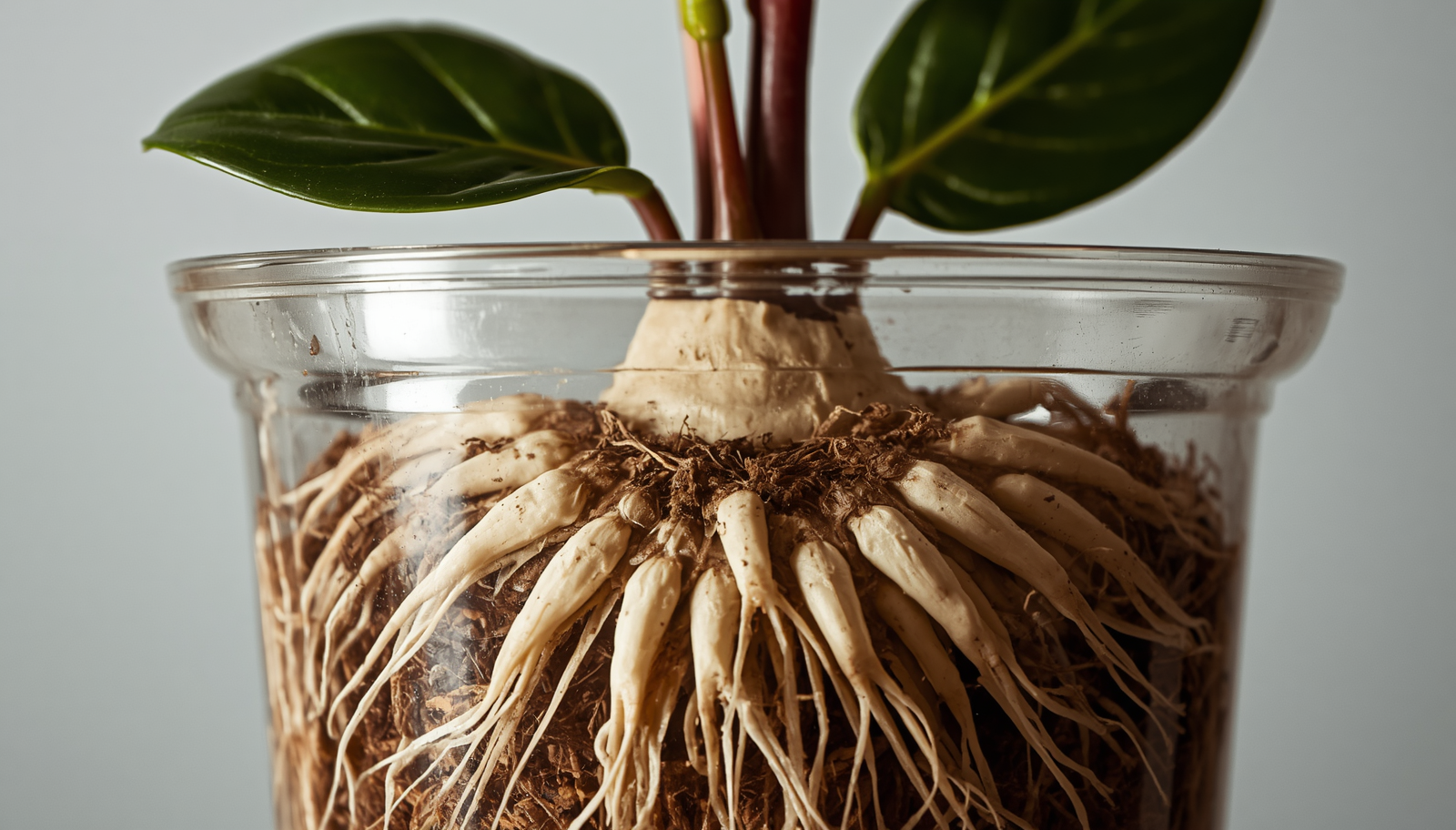
Hoya propagation is easy with stem cuttings: take a piece of last year’s stem with at least one node, root it in water, moist sphagnum moss, tree fern fiber or cuttings compost, and keep it warm and humid in bright, indirect light. The RHS roots semi-ripe hoya cuttings in a glass of water, where roots should form in two or three weeks, and also propagates hoyas by layering. Tree fern fiber versus sphagnum moss is mostly a matter of preference: both can work, and we found no study comparing them for hoyas.
Hoya Propagation in Tree Fern Fiber vs Moss: Which Is Better?
Both are used by hoya growers, and both root cuttings when kept damp rather than wet. What matters more than the material is the moisture level: the cutting needs humidity around it and air at the node, not a soggy wad.
| Medium | Strengths | Watch out for |
|---|---|---|
| Water | The RHS method; you can watch roots form, often within two or three weeks | Water roots must adjust when moved to a potting mix; change the water regularly |
| Sphagnum moss | Holds a lot of water, keeps humidity high around the node, easy to find | Stays wet if packed tightly or squeezed too little; wear gloves (CDC sporotrichosis warning) |
| Tree fern fiber | Coarse and airy; often used for epiphytic orchids and hoyas | Expensive and harder to find; very dry fiber can be slow to rewet, so soak it first |
| Cuttings compost | The RHS uses peat-free cuttings compost for potting rooted cuttings and for layering | Keep it moist but never waterlogged |
No published study compares these media for hoya cuttings; the table summarizes the RHS method and general handling advice. Sources: RHS; CDC.
Sphagnum moss is the more forgiving choice for most beginners because it is cheap, widely available and holds humidity well; just squeeze it until it is damp, not dripping, and keep it loose. Our full guide to propagating in sphagnum moss covers the method. Tree fern fiber suits growers who already use it for orchids. Whichever you use, wear gloves: the CDC lists sphagnum moss among the materials that can carry the fungus behind sporotrichosis, a skin infection picked up through cuts and scratches.
How Do You Propagate Hoya Cuttings?
- Pick the right time and stem. The RHS takes hoya cuttings or layers in spring or early summer, using stems from the previous year’s growth. Choose a healthy stem with at least one node (the joint where leaves attach) and one or two pairs of leaves.
- Cut cleanly, with gloves on. Use clean, sharp scissors wiped with rubbing alcohol and cut just below a node. The RHS advises gloves because the milky sap can irritate skin.
- Remove leaves below the waterline or medium. Leaves buried in water or moss tend to rot.
- Set the node in your medium. In water, keep the node submerged and the leaves out. In moss or fiber, nestle the node into the damp material without packing it tight.
- Keep it warm, humid and bright. Virginia Cooperative Extension recommends rooting cuttings at 70 to 75°F. A clear bag or dome raises humidity; open it daily for a minute of fresh air and keep it out of direct sun.
- Wait for real roots. The RHS says roots should form in water in two or three weeks. Pot the cutting up once it is well rooted.
A leaf alone won’t make a vine
Cuttings need stem and node tissue to grow new stems. A single hoya leaf, such as the heart-shaped Hoya kerrii leaves sold in small pots, can root and live for a long time without ever producing a vine. See our Hoya kerrii single leaf guide.
Pro tip: Layering is the low-risk option for a plant you don’t want to cut. The RHS method: fill a pot with peat-free cuttings compost, bend a strong, low shoot into it, peg it down, remove any leaves touching the compost, keep it moist until it roots, then cut it free from the parent.
How Do You Plant Hoya After Propagation?
Move the cutting into a small pot of fast-draining mix once it has a healthy root system. The RHS potting recipe for hoyas is equal parts by volume of orchid bark, peat-free multipurpose compost and coarse perlite, or cactus compost with added perlite. For rooted cuttings, the RHS pots them into peat-free cuttings compost and keeps them well watered at first.
- Keep the pot small. NC State Extension says hoyas don’t mind being pot-bound and a new pot should be no more than 2 inches larger.
- Don’t strip the old medium. If moss or fiber is wound into the roots, pot it up with them rather than tearing roots to remove it.
- Ease the transition. Roots grown in water or moss are used to constant moisture. Keep the new mix lightly moist, not wet, for the first few weeks, and keep the plant out of direct sun.
- Hold the fertilizer. The RHS says not to feed hoyas for five to six weeks after repotting.
What Does a Young Hoya Need to Thrive?
Light
Bright, indirect light year-round (NC State), shaded from hot summer sun that can scorch the leaves (RHS).
Water
Let the mix get nearly dry between waterings (Missouri Botanical Garden; NC State). Use room-temperature water: NC State says cold water can shock the plant.
Temperature
16 to 24°C (61 to 75°F) in growth, with a minimum night temperature of 10°C (50°F) for Hoya carnosa (RHS).
Our full hoya care guide covers potting mix, humidity, flowering and common problems.
How Do You Make Your Hoya Grow Faster?
Light is the biggest lever: a young hoya in a dim spot barely grows. Beyond that, feed lightly in the growing season; the RHS recommends a balanced orchid feed, preferably urea-free, every couple of weeks in spring and summer and monthly in autumn and winter, with a plain-water flush every few months. A support is optional: the Missouri Botanical Garden notes that wax plant stems climb around wire or thin trellis-like structures, the RHS suggests a wire loop or tripod of canes for climbers, and NC State calls the wax plant a great choice for hanging baskets. Patience matters too: NC State says most plants don’t flower until they are 2 or 3 years old.
For more on propagation, see our guides to pothos propagation, African violet care and snake plant propagation.
Frequently Asked Questions
Can a hoya grow from just a leaf?
A single leaf can root, but without a node it usually won’t grow a new vine. That is why single Hoya kerrii leaves often stay as one leaf for years. Always include a piece of stem with a node.
How long do hoya cuttings take to root?
The RHS says semi-ripe hoya cuttings in a glass of water should root in two or three weeks. Cuttings in moss or fiber take a similar time in warm conditions, often longer in winter.
Is it better to root hoya in water or sphagnum moss?
Both work. Water is the RHS method and lets you watch the roots; sphagnum keeps humidity high around the node. Wear gloves with sphagnum, which the CDC links to sporotrichosis.
Can you grow hoya plants outdoors?
Year-round only where it stays warm: the Missouri Botanical Garden lists Hoya carnosa as hardy in USDA zones 10 to 12. Elsewhere, NC State says it can summer outdoors in partial shade and should come inside when nights fall below 50°F.
Do you need to fertilize a rooting hoya cutting?
No. Wait until it is rooted and potted up, then hold off another five to six weeks, as the RHS advises after repotting, before starting light feeding.