
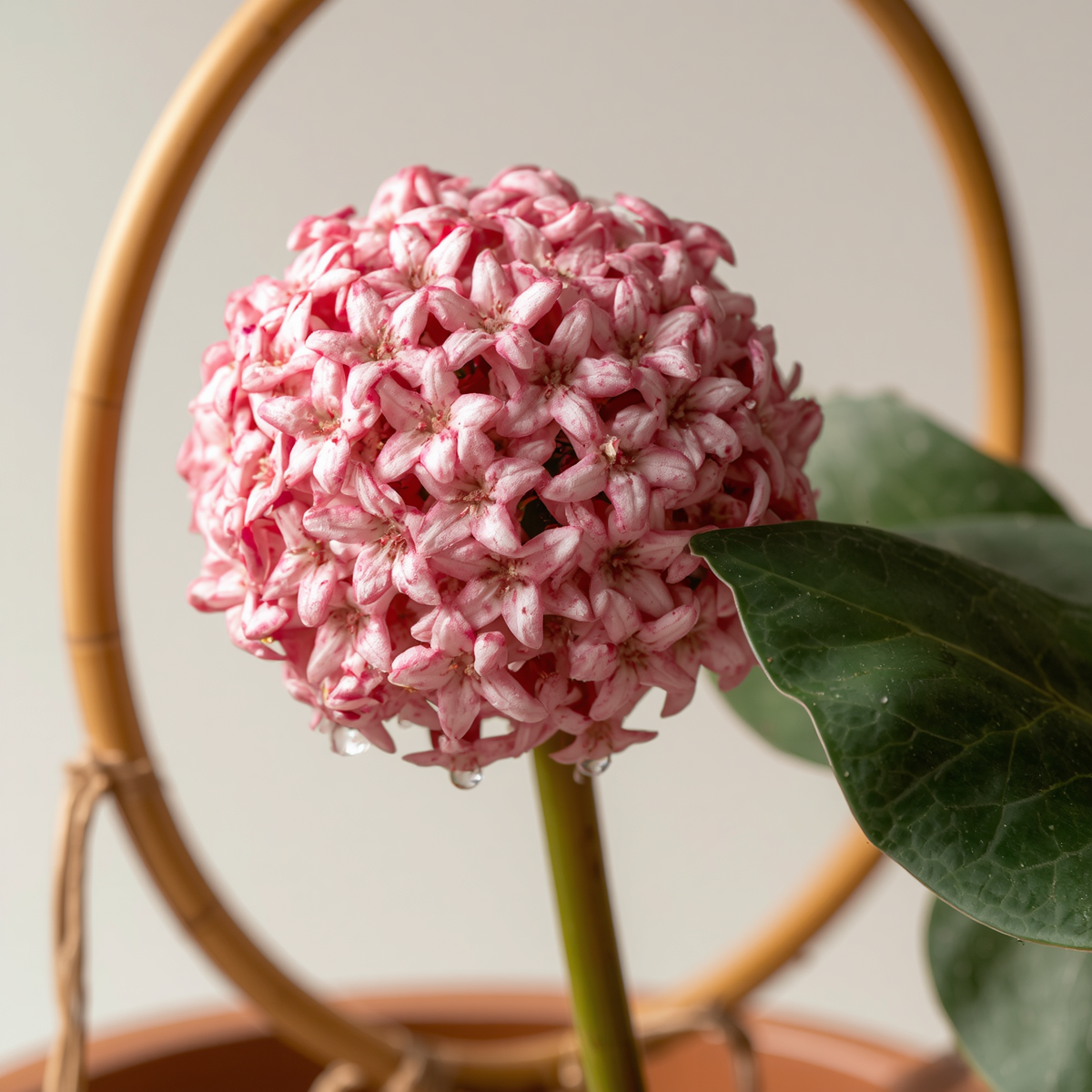
Hoya care comes down to bright light, a fast-draining mix, and letting the mix dry between waterings. NC State Extension describes the wax plant (Hoya carnosa) as an evergreen, epiphytic vine from Southeast Asia, Japan and Taiwan with thick, succulent leaves, and recommends bright indirect light year-round, a loose, fast-draining mix and a pot with good drainage. Hoyas also reward patience: most plants don’t flower until they are 2 or 3 years old, and they bloom again from the same flower spurs, so never cut those off.
| Need | What the sources say |
|---|---|
| Light | Bright indirect light year-round (NC State); bright spot shaded from hot summer sun (RHS); at least half a day of direct sun, or curtain-filtered sun (Missouri Botanical Garden) |
| Potting mix | Equal parts orchid bark, peat-free multipurpose compost and coarse perlite, or cactus compost plus perlite (RHS); loose, fast-draining (NC State) |
| Water | Let the mix become nearly dry between waterings (MOBOT; NC State); water moderately October to February (RHS) |
| Temperature | 16 to 24°C (61 to 75°F) in growth; minimum night temperature 10°C (50°F) for H. carnosa (RHS) |
| Feeding | Balanced orchid feed every couple of weeks in spring and summer, monthly in autumn and winter (RHS) |
| Flowers | Don’t cut the flower spurs; don’t move or rotate plants in bud (NC State; MOBOT; RHS) |
| Pets | Non-toxic to dogs and cats (ASPCA); the RHS advises gloves because the milky sap can irritate skin |
Sources: NC State Extension Plant Toolbox; RHS: How to grow hoya; Missouri Botanical Garden Plant Finder; ASPCA.
What Potting Mix Does a Hoya Need?
Hoyas need a mix that drains fast and lets air reach the roots. NC State recommends a loose, fast-draining potting mix high in organic matter, because the wax plant is an epiphyte, a plant that grows on trees rather than in the ground. The RHS gives a simple recipe: equal parts by volume of orchid bark, peat-free multipurpose compost and coarse perlite, or cactus compost with extra perlite. The Missouri Botanical Garden grows its wax plant in a standard, well-drained potting mix, so you don’t need an exotic blend, just one that never stays soggy.
Pot size
NC State says hoyas don’t mind being pot-bound and the new pot should be no more than 2 inches larger. The RHS adds that they can stay in the same pot for several years, until roots fill it.
Drainage
Always use a pot with drainage holes and let excess water drain away. The RHS lists root rot from wet, poorly drained compost as a problem plants rarely recover from.
When to repot
Repot in spring (RHS), only when the plant outgrows its pot, and never while it is in bud or flower (NC State).
For more on bark and perlite blends, see our chunky aroid soil mix guide; the same airy approach suits hoyas.
What Light Does a Hoya Need to Grow and Bloom?
More light means more flowers. The Missouri Botanical Garden says good light is necessary for flower production and recommends a bright spot with at least half a day of direct sun, while noting the plant tolerates curtain-filtered sun and bright indirect light. NC State calls bright indirect light year-round ideal. The RHS recommends a bright spot shaded from hot summer sun, which can scorch the leaves, and says failure to flower may be due to insufficient light.
- Best spots: an east or west window, or a south window with a sheer curtain.
- Too dark: a north window or the middle of a room usually means slow growth and few or no flowers.
- Too hot: unfiltered midday summer sun through glass can scorch the leaves.
- Grow lights: a good LED grow light works well in dim homes; see our grow light guide.
Don’t move a hoya in bud
The Missouri Botanical Garden says pots should not be rotated or moved after flower buds appear, and the RHS warns that buds may drop if light levels change or the compost is too wet or too dry.
How Do You Water a Hoya?
Water thoroughly, then wait. The Missouri Botanical Garden recommends watering moderately but consistently in the growing season, letting the soil become nearly dry between waterings, and NC State also says to let the soil dry out between waterings. NC State warns that both too wet and too dry soil can make leaves drop, and that cold water can shock the plant, so use room-temperature water.
- Check the mix. Push a finger into the mix; water when the top inch or two is dry. Thick-leaved hoyas also start to feel slightly soft or bendy when they are thirsty.
- Water deeply until water runs from the drainage holes, then empty the saucer.
- Water less in winter. From October to February the RHS says to water moderately: wait until the compost is fairly dry, but don’t let it dry out completely.
- Keep it steady during budding. Because buds can drop when the compost is too wet or too dry (RHS), avoid letting a budding plant dry out hard.
How to Care and Grow Hoya Indoors: Temperature and Humidity
Normal room temperatures suit hoyas. The RHS recommends 16 to 24°C (61 to 75°F) in spring and summer and a slightly cooler, drier rest in winter, with a minimum night temperature of 10°C (50°F) for Hoya carnosa. The Missouri Botanical Garden also says the plant tolerates winter nights down to 50°F. NC State notes the wax plant can spend summer outdoors in partial shade, but should come back inside when night temperatures fall below 50°F. Keep it away from radiators, heaters and cold drafts (RHS).
NC State says the wax plant loves high humidity and suggests a humidifier or a tray of wet pebbles; the RHS recommends standing the pot on damp gravel in warm weather, with the water level kept below the gravel surface. Thin-leaved hoyas tend to need more humidity than the thick, waxy-leaved types. Our guide to VPD for indoor plants explains how temperature and humidity work together.
How Do You Make Your Hoya Grow Faster?
There is no shortcut, but good light, correct watering and light, regular feeding make the biggest difference.
Feed lightly
The RHS recommends a balanced orchid feed, preferably urea-free, every couple of weeks in spring and summer and once a month in autumn and winter. Flush the pot with plain water every few months to prevent salt build-up, and don’t feed for 5 to 6 weeks after repotting.
Give it something to climb, or let it trail
Both work. The Missouri Botanical Garden notes that stems climb counterclockwise around wire or thin trellis-like structures, and the RHS suggests a wire loop or tripod of canes for climbers. NC State calls the wax plant a great choice for hanging baskets.
Prune lightly, if at all
Prune in late winter or early spring (RHS; NC State), removing weak or crowded shoots. The RHS says hoyas don’t respond well to hard pruning. Wear gloves: the milky sap can irritate skin.
Be patient for flowers
NC State says most plants won’t flower until they are 2 or 3 years old, with blooms in spring, summer or fall. Leave every spent flower spur in place.
Pro tip: Never cut off the peduncles (flower spurs). NC State explains that the same spur produces flowers repeatedly over several years, so cutting it removes future flowers. The RHS adds that new blooms often sprout from the stumps of previous clusters. Our Hoya carnosa flower guide covers the bloom cycle.
What Are the Most Common Hoya Plant Problems and How Do You Fix Them?
Buds dropping before opening
The RHS says buds may drop if the plant is moved, if light levels change, or if the compost is too wet or too dry. Keep budding plants in one place with steady watering.
Yellowing or dropping leaves
NC State lists soil that is too wet or too dry. The RHS links dropping, blackening leaves or dieback to poor drainage, waterlogging, or cold in winter. Check the roots; see our yellow leaves guide.
Wilting stems
Often overwatering or overfeeding; the RHS explains that excess fertilizer raises salts in the compost, which stops roots taking up water. Flush with plain water and feed less.
No flowers
Usually too little light (RHS; MOBOT), a plant that is still young (NC State), or flower spurs that were cut off.
Pests: NC State lists mealybugs, fungus gnats in mixes that stay too wet, and occasionally spider mites when the air is too dry. The Missouri Botanical Garden and RHS add scale insects, and the RHS also mentions glasshouse whitefly. For mealybugs, see our guide to rubbing alcohol for mealybugs. Root rot from wet compost is the most serious problem: the RHS says plants rarely recover, so take cuttings as soon as you notice it.
How Do You Propagate Hoya and What Comes Next?
NC State says to propagate the wax plant by stem cuttings, and the RHS recommends taking cuttings or layers in spring or early summer. For semi-ripe cuttings, the RHS uses stems from the previous year’s growth and roots them in a glass of water, where roots should form in two or three weeks, then pots them into peat-free cuttings compost. For layering, peg a low shoot into a pot of cuttings compost beside the parent plant and cut it free once it has rooted. Wear gloves, since the sap is a skin irritant.
For step-by-step methods in water, moss and soil, read our dedicated Hoya propagation guide. If you bought a single heart-shaped leaf, see why a Hoya kerrii single leaf often never grows a vine.
For more trailing and hanging plants, see our guides to lipstick plant and asparagus fern. It is also on our list of plants safe for dogs. For more trailing and hanging plants, see our guides to string of hearts care.
Frequently Asked Questions
Are hoyas epiphytes?
Many are. NC State describes Hoya carnosa, the common wax plant, as an epiphytic vine, meaning it grows on trees rather than in soil in the wild. That is why hoyas need a loose, fast-draining mix and a pot with good drainage.
Why is my hoya a long vine with no new leaves?
Long, bare stems are normal for vining hoyas: new leaves often fill in later along the vine. If growth is slow overall, the usual cause is too little light. Move it to a brighter spot without hot midday sun and don’t cut those stems, since they can carry future flower spurs.
How do I know when to water my hoya?
Water when the mix is nearly dry, as the Missouri Botanical Garden and NC State recommend. Check with a finger, water until it drains, and water less from October to February.
What causes hoya buds to fall off before they open?
The RHS says buds may drop if the plant is moved, if light levels change, or if the compost is too wet or too dry. Keep the plant in place and water steadily while it is in bud.
Why won’t my hoya bloom?
Too little light is the most common reason (RHS; Missouri Botanical Garden). Young plants also need time: NC State says most don’t flower until they are 2 or 3 years old. And never cut off the old flower spurs, which rebloom.
Are hoya plants safe for cats and dogs?
The ASPCA lists the wax plant (Hoya carnosa) as non-toxic to dogs and cats. The RHS still recommends gloves when pruning because the milky sap can irritate skin, so keep pets from chewing it.