
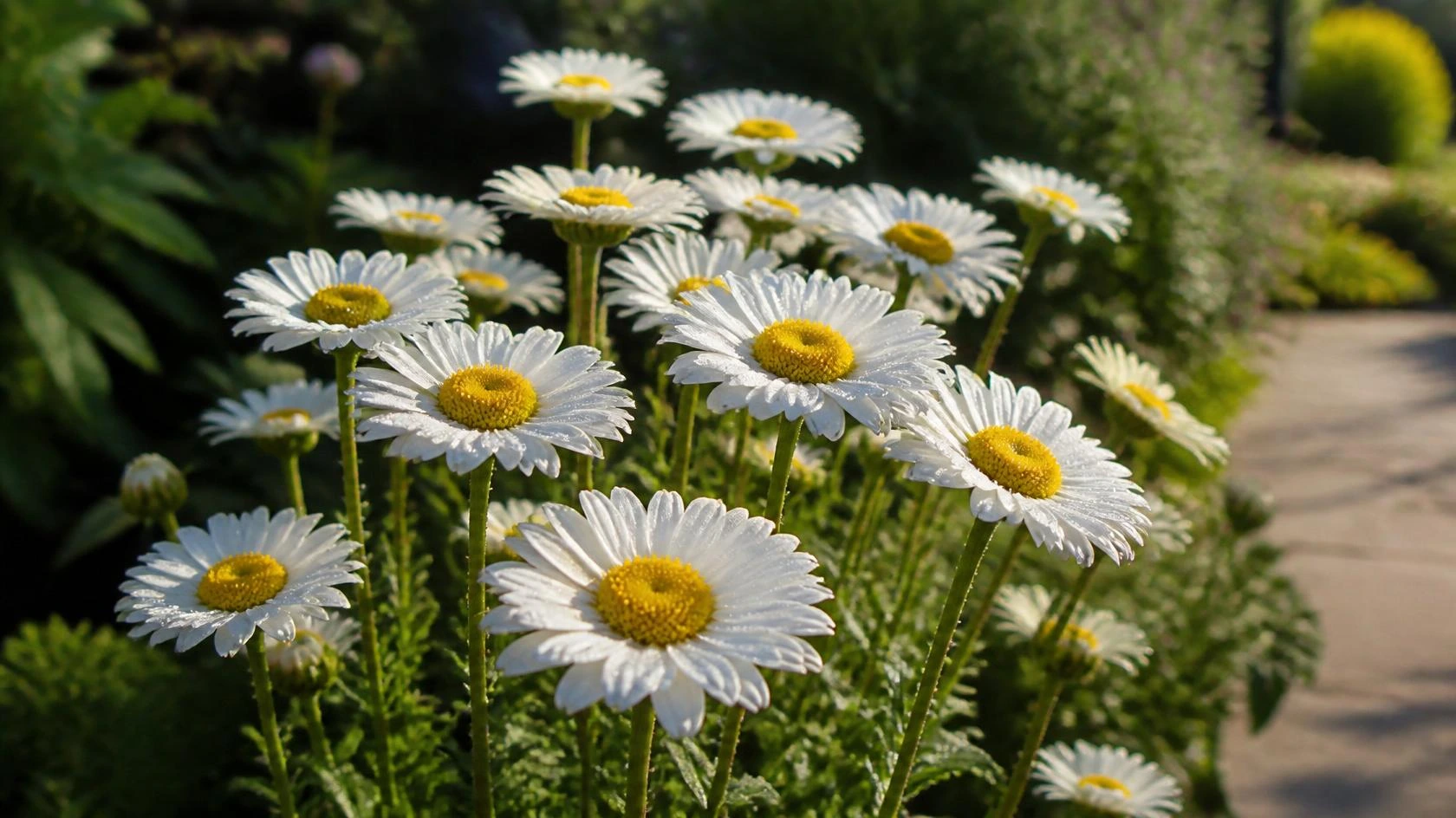
“Daisy” is not one plant. The tall white daisy in a summer border, the neon pot daisy at the supermarket, the tiny daisy in your lawn and the wild daisy along the highway are four different species, and they want different things. That is why so much daisy advice seems to contradict itself. This guide starts by helping you name your daisy, then covers how to grow daisies of each kind: when to plant, how long it takes for a daisy to grow to flowering size, how to keep them blooming, whether daisies come back every year, which ones are toxic to cats and dogs, and which “daisy” is actually a regulated weed. It follows NC State Extension, Illinois and Missouri Extension, UF/IFAS, Montana State University, the Royal Horticultural Society and the ASPCA.
Which Daisy Do You Have? 7 Common Types
Check the plant label or compare the flower and leaves. The botanical name matters, because care, hardiness and pet safety change from one “daisy” to the next.
| Daisy | How to recognize it | Life cycle | Pets (ASPCA) |
|---|---|---|---|
| Shasta daisy (Leucanthemum × superbum) | White petals, yellow center, flowers 2 to 3 in; plants 2 to 4 ft (NC State) | Perennial, zones 5 to 9 | No entry; NC State lists it as mildly toxic |
| Gerbera daisy (Gerbera jamesonii) | Big 3 to 6 in flowers in red, orange, pink, yellow or white on bare stems over a leafy rosette | Tender perennial, zones 8 to 11; annual or pot plant elsewhere | Non-toxic (listed as Gerber, Barberton or “African” daisy) |
| English daisy (Bellis perennis) | Tiny plant, 3 to 6 in tall, flowers up to 2 in; often in lawns | Short-lived perennial grown as a biennial or annual, zones 4 to 8 | No entry; NC State lists medium severity |
| Oxeye daisy (Leucanthemum vulgare) | Like a small Shasta: 1 to 2 in flowers, more lobed basal leaves, creeping roots | Short-lived perennial that reseeds heavily | No entry |
| Painted daisy (Tanacetum coccineum) | Red, rose, pink or white flowers over fern-like leaves, stems up to 24 in | Perennial | No entry |
| Cape or African daisy (Osteospermum) | Daisy-shaped flowers; garden types are usually grown from cuttings | Group of about 70 annuals, perennials and shrubs from South Africa | No entry (the ASPCA’s “African daisy” is Gerbera) |
| Michaelmas daisy (Aster spp.) | Small daisy flowers in late fall, often grown with mums | Perennial | No entry for perennial asters; China aster is non-toxic |
Sources: NC State Extension Plant Toolbox (Shasta, Gerbera, English daisy); Missouri IPM (painted daisy, Michaelmas daisy, 2025); Montana State University Extension (oxeye, 2023); University of Minnesota Osteospermum bulletin (via NC State); ASPCA cat and dog plant lists.
One surprise: NC State lists oxeye daisy as one of the parents of the Shasta daisy, which Luther Burbank bred near Mount Shasta, California, in the 1890s. That is why the two look so alike, and why it is worth knowing which one you are planting.
How to Grow Daisies at a Glance
| Factor | Shasta daisy | Gerbera daisy | English daisy |
|---|---|---|---|
| Light | Full sun to partial shade | Full sun; shade from hot afternoon sun | Sun with afternoon shade |
| Soil | Average to dry, well drained, organic rich; hates winter wet | Moist, well drained, rich; crown level with or slightly above the soil | Cool, moist, fertile, well drained |
| Height | 2 to 4 ft (NC State); 1 to 3 ft (Illinois) | 1 to 1.5 ft | 3 to 6 in |
| Bloom | June to August (NC State); June to September (Illinois) | Mostly spring and fall, any time in good conditions | About May to July, then sporadic until frost |
| Hardiness | Zones 5 to 9 | Zones 8 to 11 | Zones 4 to 8 |
| Wildlife | Attracts pollinators; deer and rabbit resistant once established | Occasional deer damage | Can turn weedy in lawns |
Sources: NC State Extension Plant Toolbox; Illinois Extension; RHS (Gerbera crown).
When to Plant Daisies
The best month to plant daisies depends on the type and on your last frost date, not on the calendar alone.
| Daisy | When to plant or sow | Source |
|---|---|---|
| Shasta daisy | Plant or divide in spring or fall, so roots settle before summer heat or winter | NC State (division timing) |
| Gerbera daisy | Sow in February or March indoors; plant out once nights stay above 41°F (5°C), bring in before they drop below it | RHS |
| English daisy | Plant in fall for spring flowers | NC State |
| Oxeye daisy | Best not planted where it is regulated (see below) | Montana State University |
How Long Does It Take for a Daisy to Grow?
From seed, a daisy usually takes from a few months to a full year to flower, depending on the type. The RHS says Gerbera seed germinates in about two to three weeks at 68 to 75°F and the plants usually flower four to six months after sowing. Missouri Extension notes that oxeye daisy plants flower the year after the seed germinates. English daisies planted in fall flower the next spring (NC State).
For Shasta daisies, none of the extension sources we checked gives a seed-to-flower time, and UF/IFAS notes that they are typically sold as transplants. Buying a nursery plant or a division from a friend is the fastest route to flowers, and it keeps named cultivars true to type.
Sun, Soil and Water
All daisies want sun and good drainage. Missouri Extension puts it plainly: poor drainage is the daisy’s greatest enemy and can cause crown rot. Illinois Extension adds that wet, poorly drained winter soil shortens a Shasta daisy’s life.
- Shasta daisy: NC State recommends full sun to partial shade and average to dry, well-drained, organic-rich soil. Once established it handles some drought. On heavy clay, plant in a raised bed. UF/IFAS warns against overwatering, since the plant is prone to fungal disease.
- Gerbera: moist, well-drained, rich soil, with the crown level with the soil surface (NC State) or slightly above it (RHS), and no water on the crown. Soggy soil causes root rot.
- English daisy: cool, moist, fertile soil; NC State notes it is not drought tolerant and likes afternoon shade.
A light mulch helps all daisies (Missouri Extension), but keep it off the crowns of Shasta daisies in winter, when they dislike sitting wet.
How to Grow Daisies From Seed, Division or Cuttings
Are daisies easy to grow from seed? Gerbera and English daisies are, as long as the seed is fresh: the RHS says Gerbera germination declines with seed age and that the seed needs some light, so don’t bury it deeply. Shasta daisies are usually grown from divisions or nursery plants instead.
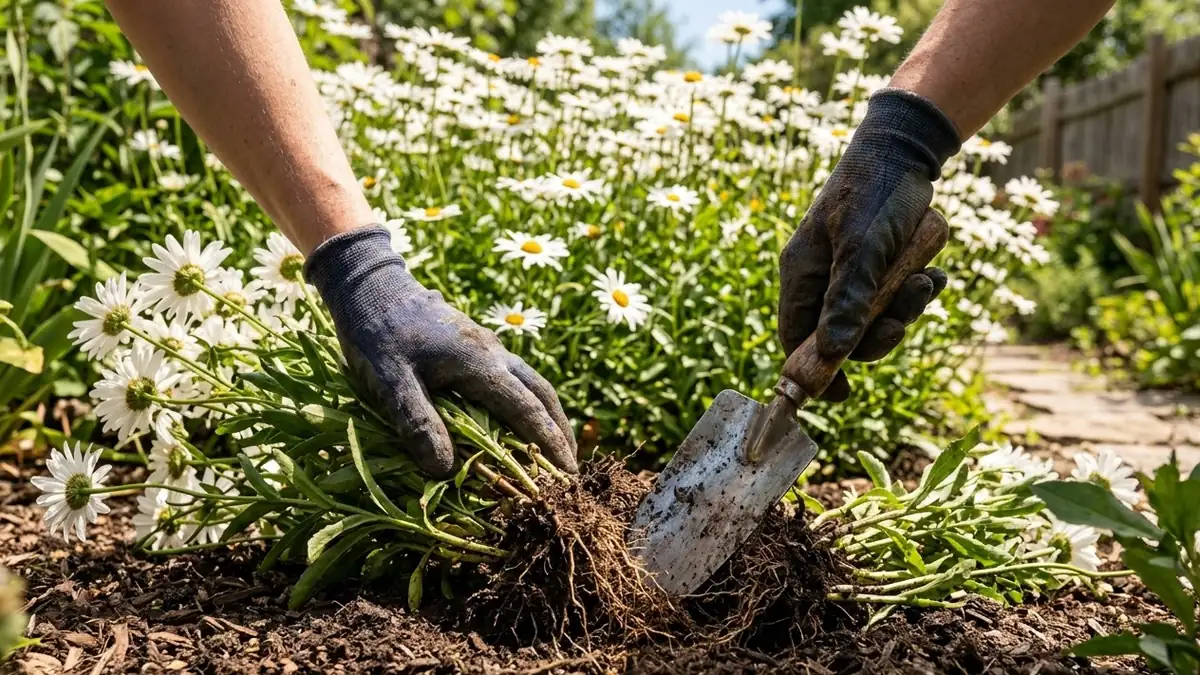
- Division (Shasta, Gerbera, English daisy). NC State recommends dividing Shasta daisies every 2 to 3 years in spring or fall. Dig the clump, split it into pieces that each have roots and shoots, and replant at the same depth. For Gerbera, the RHS suggests dividing large clumps in March or April into four or five pieces, each with a bud and roots.
- Seed (Gerbera, English daisy). Sow Gerbera on the surface of a gritty seed mix at 68 to 75°F and water carefully, because young plants rot easily (RHS). NC State lists seed and division for English daisy.
- Cuttings. Can you grow a daisy from a cutting? For Cape daisies (Osteospermum), yes: the Minnesota bulletin notes they are typically propagated from cuttings. For Shasta daisy, NC State recommends division rather than cuttings.
Daisy Plant Care in Pots
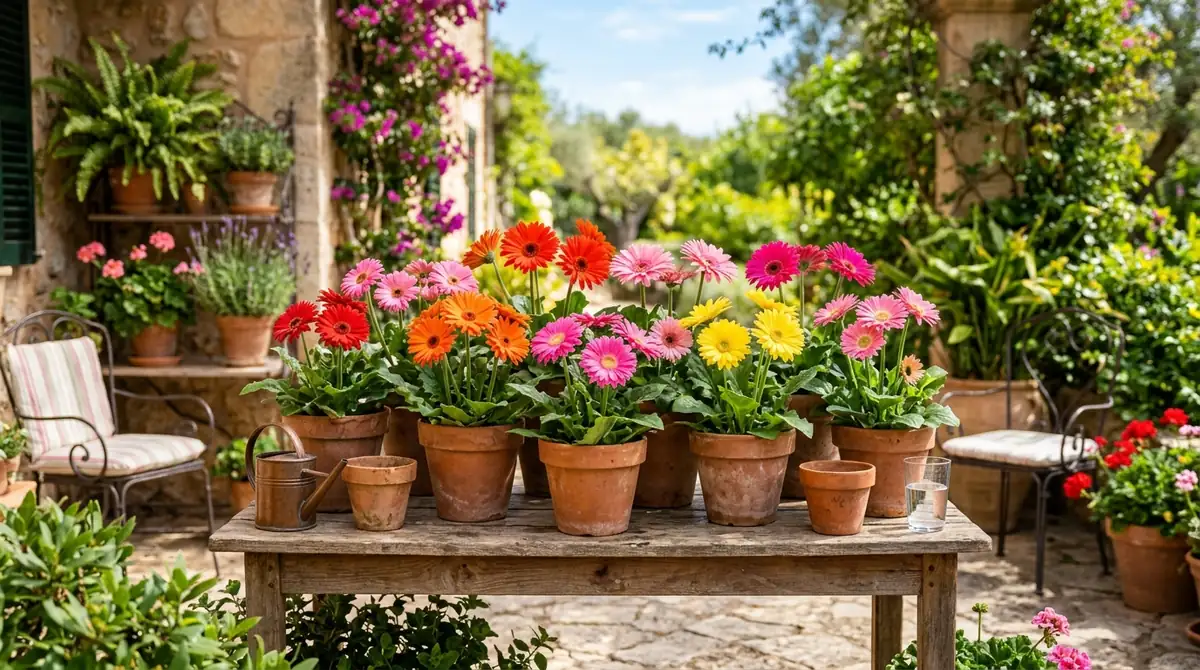
Gerbera is the classic pot daisy. The RHS recommends deep containers (Gerberas have deep roots), a rich, gritty, free-draining mix, letting the mix dry slightly between waterings, watering from below if you can, and never leaving the pot standing in water. Indoors, it keeps flowering at about 50 to 68°F (10 to 20°C) in bright light, and the RHS notes that direct summer sun through glass can scorch it. In spring and summer, feed with a general liquid fertilizer, switching to a high-potassium feed such as tomato fertilizer in summer to boost flowering (RHS).
To overwinter a Gerbera outdoors in a cold area, NC State suggests keeping it in a pot sunk into the garden for summer, then moving it to a cool, bright, frost-free spot for winter and not letting the soil dry out completely. Shasta and English daisies can also go in containers: use a pot with drainage holes and a free-draining mix, since poor drainage is the main daisy killer (Missouri Extension).
How to Keep Daisies Blooming
- Deadhead. NC State, Illinois Extension and UF/IFAS all recommend removing spent Shasta flowers to encourage more; the RHS says to snip Gerbera flower stems off at the base. Deadheading also limits self-seeding (UF/IFAS).
- Cut back in late summer. Illinois Extension suggests cutting Shasta daisies down in mid-September to stimulate new growth and extend the plant’s life in the garden.
- Divide crowded clumps every 2 to 3 years (NC State).
- Give full sun; shade means fewer flowers.
- Space plants for air flow: the RHS suggests at least 12 inches (30 cm) between Gerberas to limit fungal disease.
Missouri Extension notes that Shasta daisies flower mainly in June, with scattered blooms through summer and into fall with good care.
Why Daisies Stop Blooming
| Problem | Likely cause | Fix |
|---|---|---|
| Shasta clump flowers less each year | Overcrowding; Shasta daisies can be short-lived (Illinois) | Divide every 2 to 3 years and replant young outer pieces (NC State) |
| Plants rot or vanish over winter | Wet winter soil, crown rot (Missouri, Illinois) | Raised bed or better drainage; no soggy mulch on crowns |
| Few flowers after the first flush | Spent flowers left to set seed | Deadhead regularly (NC State, UF/IFAS) |
| Indoor Gerbera stops flowering | Too warm or too cold | Keep at about 50 to 68°F in bright light (RHS) |
| Shasta dies out in summer in the South | Heat: UF/IFAS says high summer temperatures kill it in Central and South Florida | Grow it as a cool-season annual in hot climates |
| White powder or spots on leaves | Powdery mildew, leaf spot (NC State) | More space and sun, water at the soil line |
| Wilting plants with healthy soil moisture | Verticillium wilt or stem rot (NC State) | Remove affected plants; replant in a new spot |
| Holes, trails or stippled leaves | Leaf miners, aphids, spider mites (NC State) | Hose off, remove damaged leaves; see our guide to spider mites |
Do Daisies Come Back Every Year?
Shasta daisies do: they are perennial in zones 5 to 9 (NC State), though Illinois Extension notes they can be short-lived, so dividing them keeps a patch going. Gerbera daisies come back only where winters are mild (zones 8 to 11); in colder areas treat them as annuals or overwinter them indoors. English daisies are usually grown as biennials or annuals but often self-seed, and oxeye daisy plants live only a few years but reseed so readily that a patch persists (Missouri Extension). Potted Gerberas in cold areas need to come indoors for winter (NC State).
Oxeye Daisy: The Daisy That Is a Weed
The wild white daisy of roadsides and meadows is oxeye daisy (Leucanthemum vulgare). Montana State University Extension says it is on several state noxious weed lists, including Montana’s, that one plant can produce 1,300 to 26,000 seeds, and that most seeds stay viable for at least 6 years. In Canada it is listed in the federal Weed Seeds Order (CFIA).
How to tell it from a Shasta daisy, according to Montana State: oxeye flowers are 1 to 2 inches across while Shasta flowers are larger than 2 inches; oxeye basal leaves are more deeply lobed; and oxeye spreads by shallow rhizomes while Shasta has fibrous roots. Check wildflower seed mixes for oxeye before sowing them near pasture or natural areas. Small patches can be hand-pulled or dug because the roots are shallow (Montana State).
Are Daisies Toxic to Cats and Dogs?
Some are, some are not, and the common names cause most of the confusion.
| Daisy | Pet status | Source |
|---|---|---|
| Gerbera daisy (Gerber, Barberton, Transvaal or “African” daisy) | Non-toxic to cats and dogs | ASPCA; NC State (also horses) |
| Blue daisy (Felicia) | Non-toxic to cats and dogs | ASPCA |
| “Daisy” (Chrysanthemum, mum) | Toxic to cats and dogs | ASPCA |
| Shasta daisy | No ASPCA entry; NC State: mildly toxic, with drooling, mouth irritation, vomiting and diarrhea; sap can irritate skin | NC State |
| English daisy | No ASPCA entry; NC State: medium severity, can cause vomiting and diarrhea and contact dermatitis | NC State |
| Oxeye, painted, Cape and marguerite daisies | No ASPCA entry | ASPCA |
Sources: ASPCA cat and dog plant lists; NC State Extension Plant Toolbox.
For a daisy around cats and dogs, Gerbera is the safe choice. Keep Shasta daisies, English daisies and chrysanthemums out of reach, and call your vet or the ASPCA Animal Poison Control Center at (888) 426-4435 if a pet eats one. See our lists of cat-safe plants and plants safe for dogs.
Frequently Asked Questions
Will daisies come back every year?
Shasta daisies are perennial in USDA zones 5 to 9 (NC State). Gerbera daisies come back only in zones 8 to 11. English and oxeye daisies are short-lived but reseed, so a patch often returns.
What is the best month to plant daisies?
Plant or divide Shasta daisies in spring or fall (NC State). Sow Gerbera indoors in February or March and plant out when nights stay above 41°F (RHS). Plant English daisies in fall for spring flowers (NC State).
How long does it take for a daisy to grow?
Gerberas flower about four to six months after sowing (RHS). Oxeye daisies flower the year after germination (Missouri Extension). Shasta daisies are usually bought as plants or divisions, which flower much sooner than seed.
Are daisies easy to grow?
Yes, if they get sun and good drainage. Missouri Extension says poor drainage, which causes crown rot, is their greatest enemy. Gerbera seed must be fresh to germinate well (RHS).
Can you grow a daisy from a cutting?
Cape daisies (Osteospermum) are typically propagated from cuttings. Shasta and Gerbera daisies are normally propagated by division instead (NC State, RHS).
How tall do daisies grow?
Shasta daisies grow 2 to 4 feet (NC State) or 1 to 3 feet (Illinois Extension), depending on the cultivar; Gerberas 1 to 1.5 feet; English daisies only 3 to 6 inches (NC State).
Are daisies toxic to cats?
Gerbera daisies are non-toxic to cats and dogs according to the ASPCA, while the ASPCA lists chrysanthemum “daisies” as toxic. NC State lists Shasta daisy as mildly toxic.
Sources
- NC State Extension Plant Toolbox: Leucanthemum x superbum (Shasta daisy)
- NC State Extension Plant Toolbox: Gerbera jamesonii
- NC State Extension Plant Toolbox: Bellis perennis (English daisy)
- Illinois Extension: Shasta Daisy
- Trinklein, D. University of Missouri IPM: Daisy: Sunshine in the Garden (2025)
- UF/IFAS Gardening Solutions: Shasta Daisy
- Royal Horticultural Society: How to grow gerberas
- Montana State University Extension: Oxeye Daisy (2023)
- Canadian Food Inspection Agency: Leucanthemum vulgare (Ox-eye daisy)
- University of Minnesota bulletin: Osteospermum (hosted by NC State)
- ASPCA: Toxic and Non-Toxic Plant List, Cats
- ASPCA: Toxic and Non-Toxic Plant List, Dogs