
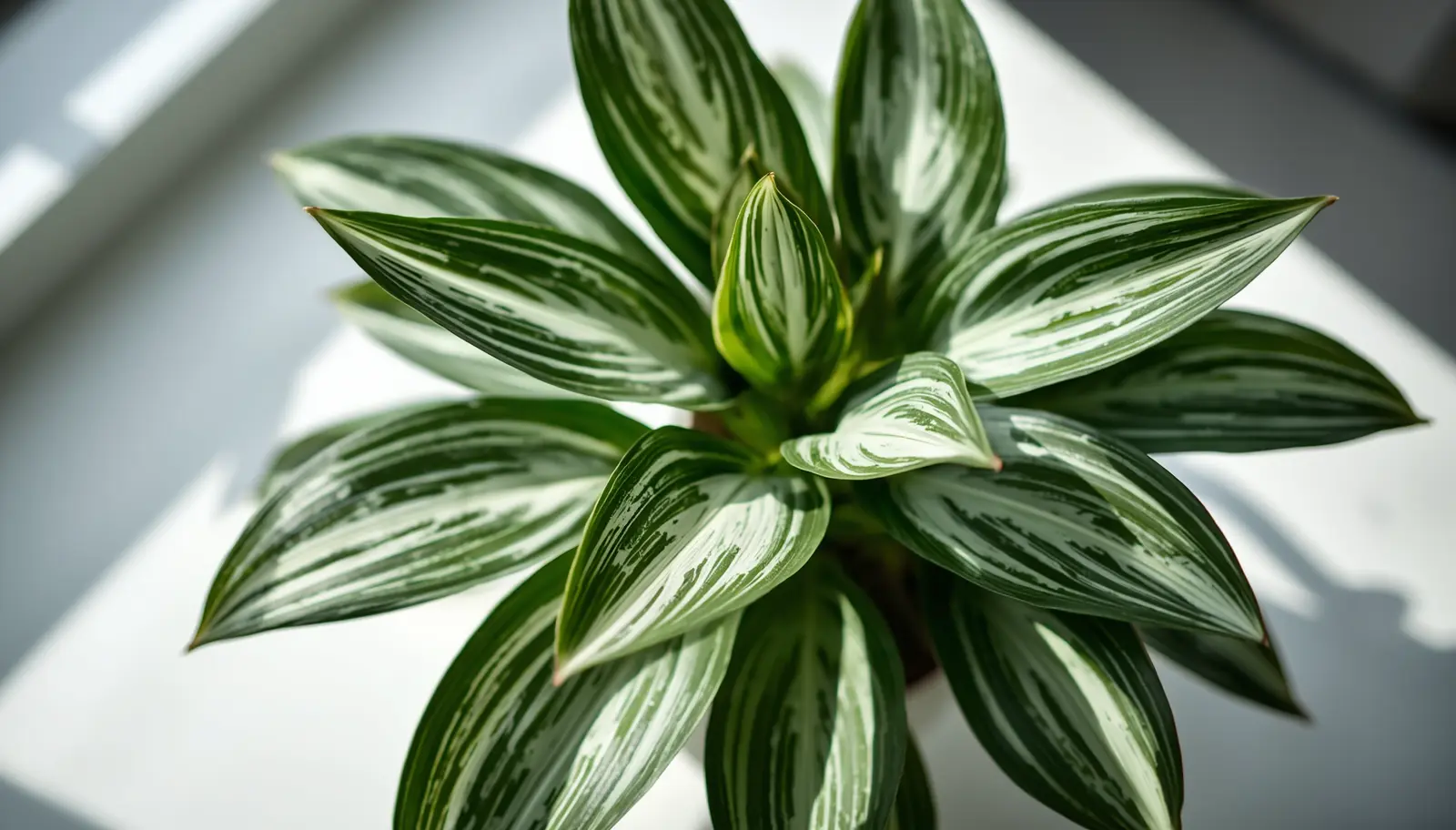
Distilled water for Calathea is the single most effective fix for brown crispy edges that refuse to go away. If your Calathea orbifolia, White Fusion, or Rattlesnake plant keeps developing tan margins no matter how often you mist or adjust humidity, the culprit is almost certainly your tap water. Municipal water contains fluoride and chloramine at concentrations that accumulate in leaf tissue through the transpiration stream, causing irreversible marginal necrosis. Switching to distilled water, reverse osmosis water, or clean rainwater with total dissolved solids below 50 ppm eliminates the root cause and stops new damage within one growth cycle.
Young houseplant collections often struggle with this issue because generic care advice treats Calathea as simply humidity-loving. While relative humidity matters, water chemistry is the primary driver of the crispy-edge epidemic. In this guide from The Lab, you will learn exactly which water types work, why tap water fails, how to remineralize pure water so it does not leach nutrients, and what to do about leaves that are already damaged. Every claim is backed by university extension research, ASPCA data, and EPA water treatment documentation.
Quick Answer: The best water for Calathea is distilled water, reverse osmosis water, or clean rainwater with a total dissolved solids (TDS) reading below 50 ppm. Tap water and standard carbon-filtered water contain 0.7 to 1.2 ppm fluoride and 1.5 to 4.0 ppm chloramine, which accumulate in leaf margins and cause permanent brown necrosis. If you must use tap water, test it first. A TDS reading above 150 ppm guarantees eventual leaf damage.
Table of Contents
- What Is the Best Water for Calathea Plants?
- Why Does Tap Water Cause Brown Edges on Calathea?
- Is Distilled Water Good for Calathea?
- How Does Reverse Osmosis Water Compare to Distilled Water?
- Can You Use Filtered or Rainwater for Calathea?
- Can Calathea Grow in Water?
- How Do You Remineralize Pure Water for Calathea?
- What Is the Best Soil Mix for Calathea?
- Are Calathea Plants Safe for Cats and Dogs?
- How Do You Fix Brown Edges on Calathea Leaves?
| Parameter | Ideal | Avoid |
|---|---|---|
| Water TDS | 0-50 ppm (distilled, RO, rainwater) | Above 150 ppm tap or carbon-filtered water |
| Water pH | 5.5-6.5 | Above 7.5 alkaline tap water |
| Relative humidity | 60-70% RH | Below 40% dry indoor air |
| Light intensity | 200-400 foot-candles | Direct afternoon sun |
| Soil moisture | Evenly moist, never soggy | Waterlogged or completely dry |
What Is the Best Water for Calathea Plants?
The best water for Calathea is any source with total dissolved solids below 50 ppm and zero fluoride or chloramine content. Distilled water, reverse osmosis water, and clean rainwater all meet this standard. Tap water, Brita-filtered water, and refrigerator-filtered water typically measure 150 to 400 ppm TDS and contain persistent disinfectants that damage Marantaceae leaf tissue over time.
Calathea species evolved in the understory of Central and South American rainforests where precipitation carries near-zero dissolved minerals. Their root systems and leaf margins lack physiological mechanisms to sequester or excrete fluoride ions. When you water with tap water, fluoride enters the xylem, travels to the leaf margins through transpiration, and concentrates there as water evaporates. Cell death follows. The damage is not cosmetic. It is dose-dependent toxicity.
| Water Type | TDS (ppm) | Fluoride Removal | Cost per Gallon | Verdict for Calathea |
|---|---|---|---|---|
| Distilled water | 0-5 | 100% | $1.00-$2.00 | Excellent |
| Reverse osmosis | 5-25 | 95-99% | $0.05-$0.15 | Excellent |
| Clean rainwater | 10-50 | 100% natural | Free | Excellent if filtered |
| ZeroWater pitcher | 0-50 | 95%+ | $0.75-$1.50 | Good for small collections |
| Brita / PUR carbon | 100-300 | Less than 20% | $0.30-$0.60 | Insufficient |
| Tap water | 150-400 | 0% | $0.002 | Harmful long-term |
Use this table as a decision framework. If your tap water tests above 150 ppm TDS, switch to distilled or reverse osmosis immediately. If you live in a soft-water region with readings between 50 and 150 ppm, a ZeroWater pitcher may suffice for one or two plants. Rainwater is ideal for outdoor collectors but requires sediment filtration and legal verification, as some municipalities restrict collection. For a deeper look at general tropical plant hydration, see our hydroponic systems guide.
Why Does Tap Water Cause Brown Edges on Calathea?
Tap water causes brown edges on Calathea through fluoride and chloramine phytotoxicity, not dehydration. Fluoride at 0.7 to 1.2 ppm accumulates in leaf margins via the transpiration stream, where it disrupts enzyme function and kills cells. Chloramine, a chlorine-ammonia compound used in over one in five U.S. water systems, damages root membranes and persists in water for weeks.
According to UF/IFAS Extension, fluoride causes dead spots near the margins of Calathea leaves, and growers should avoid fluoride in both water and fertilizer sources. The threshold for visible damage in sensitive species sits at approximately 1 ppm, which is the exact concentration the EPA allows in municipal water for dental health. Calathea leaves transpire continuously, so fluoride delivery never stops.
The second culprit is chloramine. The U.S. Environmental Protection Agency reports that over one in five Americans drinks water treated with chloramine, a disinfectant formed when ammonia is added to chlorine. Unlike gaseous chlorine, chloramine does not evaporate when left in an open container. Research from the University of Illinois found that iodoacetic acids, byproducts of chloramine-treated water, are the most toxic disinfection byproducts to mammalian cells documented to date. For plants with sensitive root membranes, this chemistry is equally destructive.
The traditional advice to leave tap water out overnight dates from the era of gaseous chlorine disinfection. Chlorine gas evaporates in 12 to 24 hours. Chloramine does not. If your municipal system uses chloramine (over 68% of U.S. systems), resting your water does nothing. You need reverse osmosis, distillation, or specialized catalytic carbon filtration to remove it.
The damage pattern is diagnostic. Necrosis begins at leaf tips and edges, the terminal points of the vascular system where water delivery ends. New growth shows symptoms first because young tissue transpires faster than mature leaves. Over days to weeks, fluoride concentration in margin cells reaches 10 to 50 ppm tissue concentration through evaporative concentration. The cells die, turning brown and crispy. This is marginal necrosis, irreversible tissue death from chemical toxicity. It is not low humidity. It is not underwatering. It is poison accumulation.
Is Distilled Water Good for Calathea?
Yes, distilled water is excellent for Calathea because the distillation process removes 100% of fluoride, chloramine, and dissolved minerals, producing water with 0 to 5 ppm TDS. It is the most accessible zero-mineral option for beginners and apartment growers who cannot install reverse osmosis systems.
Distillation works by boiling water into steam and condensing it back into liquid. Minerals, metals, and chemical disinfectants remain in the boiling chamber. The result is chemically pure H2O with a neutral pH of 6.5 to 7.0. For Calathea growers, this means zero fluoride ions entering the transpiration stream and zero chloramine molecules attacking root hairs.
Pro Tip: Buy distilled water in 1-gallon jugs from grocery or pharmacy stores. For collections of 1 to 3 Calathea plants, this costs $4 to $12 per month and requires zero installation. Store jugs away from direct sun to prevent algae growth in the container. If you have more than five plants, a countertop or under-sink reverse osmosis system becomes cheaper within six months.
The main drawback of distilled water is its aggressiveness. Water with 0 ppm TDS is hypotonic relative to soil nutrients. It will pull calcium, magnesium, and potassium out of the substrate through osmotic diffusion. Using distilled water without remineralization eventually depletes the root zone even if you fertilize on schedule. The fix is simple and covered in the remineralization section below. Never water with pure distilled water for more than two consecutive cycles without adding dilute fertilizer.
How Does Reverse Osmosis Water Compare to Distilled Water?
Reverse osmosis water matches distilled water in purity for Calathea care, typically measuring 5 to 25 ppm TDS with 95 to 99% fluoride and chloramine rejection. The main difference is cost structure. RO systems cost $150 to $400 upfront but produce water for $0.05 to $0.15 per gallon, making them economical for collections of five or more plants.
| Feature | Distilled Water | Reverse Osmosis |
|---|---|---|
| TDS output | 0-5 ppm | 5-25 ppm |
| Fluoride removal | 100% | 95-99% |
| Setup cost | $0 | $150-$400 |
| Cost per gallon | $1.00-$2.00 | $0.05-$0.15 |
| Waste water | None | 3-4 gallons per 1 gallon produced |
| Best for | 1-3 plants, beginners | 5+ plants, serious growers |
Reverse osmosis forces water through a semi-permeable membrane with 0.0001-micron pores. Fluoride ions, chloramine molecules, and dissolved salts are rejected and flushed to drain. A typical under-sink system produces 50 to 75 gallons per day and stores purified water in a pressurized tank. Countertop units require no plumbing but refill slowly and suit smaller collections. If you are already growing in semi-hydroponic media, see our Lechuza Pon semi-hydroponic transition guide for integrated water management.
When selecting an RO system, verify that the membrane is NSF-certified with documented fluoride rejection above 95%. Include a TDS meter ($15 to $25) to verify output quality monthly. Replace pre-filters every 6 to 12 months and the membrane every 2 to 3 years. The waste water can irrigate outdoor ornamentals or flush toilets if you want to close the loop.
Can You Use Filtered or Rainwater for Calathea?
Standard carbon filters such as Brita and PUR do not adequately protect Calathea because they remove less than 20% of fluoride and only 20 to 40% of chloramine. ZeroWater pitchers are a viable alternative, reducing TDS to near zero. Clean rainwater is also excellent if collected from non-toxic roofing and filtered through a basic sediment screen.
Carbon filtration improves taste and odor by adsorbing chlorine and organic compounds. It does not remove dissolved mineral ions. Fluoride passes through activated carbon with 80 to 95% retention. Chloramine shows 20 to 40% removal at best. For Calathea cultivation, pouring tap water through a Brita pitcher is functionally equivalent to using unfiltered tap water. The TDS reading after filtration remains above 100 ppm in most regions, which guarantees eventual marginal necrosis.
ZeroWater pitchers use ion-exchange resin alongside carbon, achieving TDS readings near zero. They cost more per gallon than RO but require no installation. Filter life is short in hard-water regions, so test output TDS weekly. When the meter climbs above 50 ppm, replace the filter immediately.
Rainwater is chemically ideal for Calathea. Natural precipitation contains 5 to 20 ppm TDS and zero fluoride or chloramine. Collection requires a clean roof surface (avoid asphalt shingles with copper flashing), a food-grade barrel, and a fine mesh screen to exclude debris. Check local ordinances before installing a collection system. If you already use bottom-watering, rainwater integrates seamlessly into that routine.
Can Calathea Grow in Water?
Calathea cannot be propagated from stem cuttings in water, but entire root divisions can grow successfully in a passive hydroponic or semi-hydroponic setup using inert media such as Leca or Lechuza Pon. The plant requires a stable water source with added nutrients because it is not a true aquatic species.
Unlike Pothos or Philodendron, Calathea lacks aerial roots and nodal tissue capable of generating new root systems from cuttings. Attempting to root a single leaf or stem in water results in rot within 10 to 14 days. The only reliable water-based method is dividing the root ball and transferring a section with established roots into an inert medium.
- Remove the plant from soil and gently separate a root division with at least 3 to 4 healthy leaves.
- Rinse all soil from roots under lukewarm distilled water until the root mass is clean.
- Place the division in a net pot filled with pre-washed clay pebbles (Leca).
- Fill a glass container with distilled or RO water mixed with 1/4 strength hydroponic fertilizer.
- Position the water level at one-third the height of the clay pebbles. Never submerge the base of the stem.
- Change the water completely every 14 days and scrub the container to prevent biofilm buildup.
Water-grown divisions need the same light and humidity as potted specimens. Maintain 60 to 70% RH and 200 to 400 foot-candles. If algae appears, wrap the glass container in opaque tape. For growers transitioning from soil to water culture, our hydroponic systems guide covers nutrient ratios and pH buffering in detail.
How Do You Remineralize Pure Water for Calathea?
You must remineralize distilled or reverse osmosis water by adding a complete liquid fertilizer at one-quarter strength to reach 150 to 300 ppm TDS. Pure zero-TDS water is chemically aggressive and will leach calcium, magnesium, and potassium from the substrate through osmotic pressure, starving the plant even if you fertilize regularly.
When you water with 0 ppm distilled water, dissolved minerals in the substrate diffuse into the water to equalize concentration. Over weeks of exclusive distilled watering, substrate nutrient levels decline faster than you replace them. The plant shows pale new growth, slowed leaf production, and eventual chlorosis. Remineralization prevents this by giving the water a gentle nutrient charge before it contacts the soil.
- Start with distilled or RO water verified at 0 to 25 ppm TDS using a handheld TDS meter.
- Add liquid hydroponic fertilizer such as Dyna-Gro Foliage Pro 9-3-6 at 1/4 the manufacturer label strength.
- Stir thoroughly and verify the final solution reads 150 to 300 ppm TDS and pH sits between 5.5 and 6.5.
- Use this solution for every watering from March through September during active growth.
- Reduce to 1/8 strength or use plain distilled water from October through February when metabolic demand drops 60 to 80 percent.
- Flush the substrate with plain distilled water once every 8 to 10 weeks to prevent salt accumulation from fertilizer residue.
The dilute fertilizer provides nitrogen, phosphorus, potassium, calcium, magnesium, and trace elements at concentrations that support growth without introducing phytotoxic fluoride or chloramine. This same approach works for Lechuza Pon semi-hydroponic specimens and other sensitive tropicals. If you notice fertilizer salt crust on the soil surface, reduce strength further and increase flushing frequency. Chronic over-fertilization mimics drought stress and can trigger root rot in poorly aerated mixes.
What Is the Best Soil Mix for Calathea?
The best soil mix for Calathea contains 40% coco coir, 30% perlite, 20% fine orchid bark, and 10% worm castings. This blend retains moisture for 4 to 7 days while maintaining 40 to 50% air-filled porosity, preventing both desiccation and the anaerobic conditions that trigger root rot.
Coco coir provides superior moisture buffering compared to peat moss, which becomes hydrophobic when dry. Perlite creates drainage channels. Orchid bark adds structural air pockets that keep roots oxygenated. Worm castings supply a slow-release nutrient base and beneficial microbial life. This mix supports the even moisture Calathea roots demand without the waterlogging that kills them. For a breakdown of aeration amendments, read our comparison of vermiculite versus perlite.
Are Calathea Plants Safe for Cats and Dogs?
Calathea species are non-toxic to cats, dogs, and horses according to the ASPCA. The organization lists Calathea on its non-toxic plant database for all common pets. However, ingestion may cause mild mechanical stomach upset simply because plant fiber is not digestible, so monitor pets who chew leaves frequently.
The non-toxic status makes Calathea an excellent choice for pet owners who want tropical foliage without the risk of renal failure or neurological symptoms associated with true toxic species such as lilies or dieffenbachia. Place plants out of reach if your cat treats leaves as salad, not because of poison, but because vomit on your rug is unpleasant. Browse our full cat-safe plants collection for more pet-friendly options.
How Do You Fix Brown Edges on Calathea Leaves?
You cannot fix existing brown edges because marginal necrosis is permanent cellular death. Trim damaged leaves at the base with sterilized scissors to redirect energy toward new growth. With distilled water and proper care, pristine new leaves emerge within 2 to 4 months as the plant replaces old foliage.
Dead tissue does not regenerate. A leaf that is 30% brown will remain 30% brown until it senesces naturally. Partial trimming of the brown section creates an open wound that often browns further. The best practice is removal at the petiole base. Sterilize blades with 70% isopropyl alcohol between cuts to avoid transferring pathogens. Focus your attention on protecting new growth. Leaves that unfurl after switching to distilled water will be pristine if humidity, light, and soil conditions remain optimal. Full cosmetic recovery requires patience. Calathea produces one new leaf every 3 to 5 weeks under ideal conditions, so a heavily damaged plant needs a full growing season to look lush again. For comprehensive troubleshooting beyond water chemistry, see our ultimate Calathea care guide.
Distilled water for Calathea is not a luxury upgrade. It is mandatory infrastructure for stopping marginal necrosis. Tap water delivers 5 to 15 times the safe TDS threshold along with specific phytotoxins that accumulate in leaf margins. The solution hierarchy is simple: (1) switch to distilled, RO, or rainwater below 50 ppm TDS, (2) remineralize with 1/4 strength fertilizer to 150-300 ppm, (3) maintain 60-70% humidity to slow transpiration, and (4) trim old damaged leaves to redirect energy. One filtration decision fixes an unsolvable problem.
What Are the Most Common Calathea Water Questions?
Can I use bottled spring water for Calathea?
No. Bottled spring water contains 100 to 300 ppm dissolved minerals including calcium, magnesium, and sometimes fluoride. While safer than chloraminated tap water, it still exceeds the 50 ppm threshold and will cause marginal necrosis over time. Use only distilled water, reverse osmosis water, or verified clean rainwater.
Will a Brita filter make tap water safe for Calathea?
No. Brita and PUR carbon filters remove less than 20% of fluoride and 20 to 40% of chloramine. They improve taste by removing chlorine and organic compounds but do not address the primary phytotoxins. Test with a TDS meter. If the reading remains above 50 ppm after filtration, the water will still damage Calathea leaves.
How often should I water Calathea with distilled water?
Water when the top 1 to 2 inches of substrate are dry. Typical frequency is every 4 to 7 days in summer and 7 to 10 days in winter. The water source does not change the watering schedule. It changes the outcome. Distilled water simply prevents chemical damage during each hydration cycle.
Is Calathea the same as Goeppertia?
Yes. In 2012, most species previously classified as Calathea were reclassified to genus Goeppertia based on molecular phylogenetic analysis. Calathea orbifolia is now Goeppertia orbifolia. Common usage still prefers Calathea in nursery trade. Both names refer to the same plants with identical care requirements and water chemistry needs.
Should I use distilled water for Calathea daily?
No. Calathea does not need daily watering. Using distilled water for Calathea means replacing your regular tap water with distilled water on your normal schedule. Overwatering causes root rot regardless of water purity. Stick to the dry-top-inch rule and use distilled water only when the plant actually needs hydration.
Can I fix brown edges by switching water?
Switching water stops new damage immediately but cannot repair existing necrosis. Brown edges are permanent dead tissue. Trim affected leaves at the base and wait for new growth. Pristine leaves typically emerge within 2 to 4 months if humidity, light, and soil conditions remain optimal.
1 thought on “Distilled Water for Calathea: Fix Brown Edges Forever”