
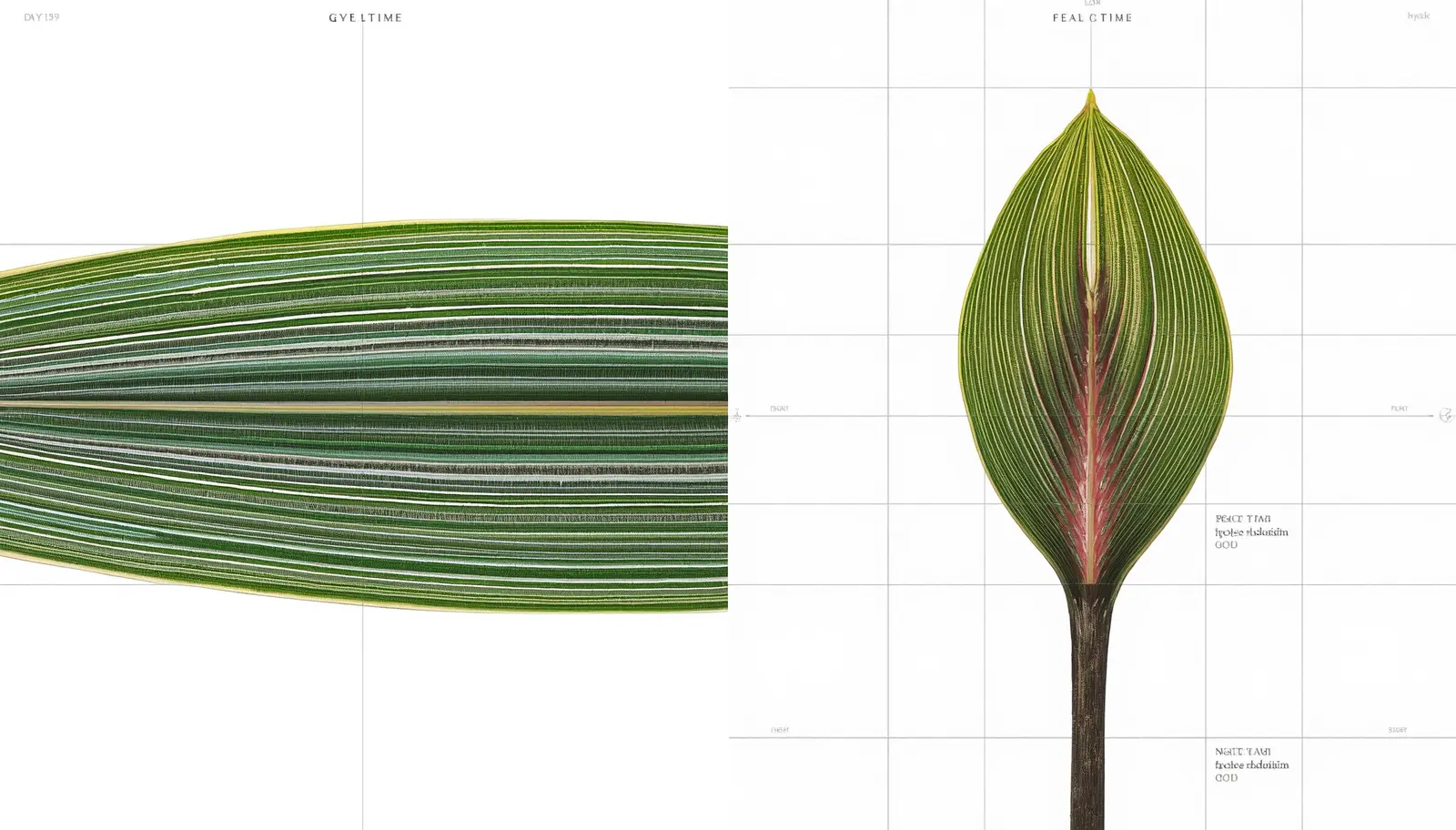
Calatheas are grown for their patterned leaves, and those leaves show every mistake: crisp brown edges, curled blades, yellowing. Calathea care comes down to a few steady conditions: bright light without direct sun, compost that stays evenly moist but never soggy, warmth without drafts, high humidity, and soft water. This guide follows the University of Florida’s production guidelines for interior calatheas, the RHS growing guide and NC State Extension.
Calathea Care at a Glance
| Need | What the sources say |
|---|---|
| Light | Bright, out of direct sun (RHS); indoors tolerates as low as 75 fc, best at 150 to 200 fc (UF/IFAS) |
| Water | Evenly moist in spring and summer; let the surface dry in autumn and winter, never completely (RHS) |
| Water type | Rainwater best (RHS); avoid fluoride (UF/IFAS); distilled or rainwater (NC State) |
| Humidity | High (RHS, NC State); 40 to 60 percent indoors (UF/IFAS) |
| Temperature | 65 to 80°F indoors (UF/IFAS); 16 to 21°C (RHS); chilling injury below 55°F (UF/IFAS) |
| Soil | Free-draining but moisture-retentive, peat-free houseplant mix (RHS) |
| Feeding | Monthly, April to September; none October to March (RHS) |
| Propagation | Division in spring (RHS, NC State) |
| Pets | Non-toxic to dogs, cats and horses (ASPCA) |
Sources: Chen and McConnell, UF/IFAS EP285; RHS calathea growing guide; NC State Extension Gardener Plant Toolbox; ASPCA.
What Is a Calathea?
Calatheas belong to the prayer plant family, Marantaceae, and come from Central and South America (NC State). Many plants sold as calatheas have been moved into other genera, mostly Goeppertia, plus Ctenanthe and Stromanthe; the RHS notes that shops still label them “calathea,” so that is the name to look for.
The leaves fold upward in the dark and open again in the light, a movement called nyctinasty that gives prayer plants their name (NC State). In the plants where nyctinasty has been studied most, mainly legumes such as the rain tree, the movement is driven by a joint-like organ called the pulvinus, where motor cells swell or shrink as potassium and chloride ions move and water follows (Ueda and Muraoka, 2026). Calatheas also have a pulvinus where the leaf blade meets the stalk. The daily folding is normal and not a sign of a problem.
Light
The RHS says calatheas grow best in a bright spot out of direct sunlight: a north- or east-facing window in summer and a south-facing windowsill in winter, with grow lights if the light is poor. NC State warns that direct sun can scorch the leaves.
For numbers, the UF/IFAS guidelines say interior calatheas tolerate light as low as 75 foot-candles, with 150 to 200 foot-candles best. Commercial growers produce them under at least 80 percent shade. A free light meter app gives a rough reading if you want to check a spot.
Too little light shows as weak growth, which the RHS says is common in Goeppertia species. Too much shows as scorched or faded leaves; UF/IFAS also lists high light as one cause of yellowing (chlorosis).
Watering
The RHS advice is to water moderately in spring and summer, keeping the compost evenly moist, and in autumn and winter to let the surface dry before watering again, but never let the compost dry out completely. UF/IFAS says to let the surface of the mix dry slightly before watering, and to keep it uniformly moist but not wet.
- Empty any water left in a decorative outer pot after watering; the RHS warns standing water can rot the roots.
- Underwatering causes curling or yellowing leaves, and overwatering causes rotting stems and drooping leaves (NC State).
- Check the compost with a finger rather than watering on a fixed schedule. Our overwatered vs underwatered guide helps tell the two apart.
Tap Water, Rainwater or Distilled?
This is where the sources differ in strictness:
| Source | Advice on water |
|---|---|
| RHS | Rainwater is best; tap water is fine if left to stand for at least 24 hours so the chlorine evaporates; distilled water from a dehumidifier or tumble dryer also works |
| NC State | Avoid tap water, which can damage the leaves; use distilled water or rainwater |
| UF/IFAS | Calatheas are sensitive to fluoride, which causes dead spots near the leaf margins; avoid fluoride in water and fertilizer |
Sources: RHS; NC State Extension; UF/IFAS EP285.
Leaving water to stand lets chlorine escape, but it does not remove fluoride. So if your water supply is fluoridated and your calathea keeps getting brown margins despite good humidity, switch to rainwater or distilled water. University of Missouri Extension’s guide to leaf tipburn, written about fluoride-sensitive houseplants in general, also advises against water that has been through a water softener and notes that perlite contains fluorides. Our best water for calathea guide compares the options in detail.
Humidity and Temperature
The RHS and NC State both say calatheas need high humidity, and both suggest a bathroom or kitchen, or standing the pot on a tray of wet pebbles with the water just below the surface of the stones. The RHS also suggests grouping plants together or misting. UF/IFAS gives 40 to 60 percent relative humidity for calatheas in interiors. A cheap hygrometer next to the plant tells you where you stand; in a dry, heated room, a humidifier is the most dependable fix. For the science of dry air, see our VPD guide.
For temperature, UF/IFAS gives 65 to 80°F indoors and warns that temperatures below 55°F risk chilling injury. The RHS gives 16 to 21°C (61 to 70°F) and NC State 65 to 75°F. All three stress the same thing: avoid drafts, cold windows, radiators and sudden swings.
Soil and Repotting
The RHS recommends a free-draining, moisture-retentive, peat-free compost: a houseplant mix, or multi-purpose compost with about 10 percent potting grit added. NC State asks for a rich, well-drained mix with plenty of organic matter. Commercial growers use soilless mixes of peat, pine bark, vermiculite and perlite at a pH around 6.0 (UF/IFAS). If fluoride damage is a problem, Missouri’s advice for sensitive plants is a perlite-free mix. Our aroid soil mix guide covers the ingredients.
Repot every year or two in spring, once the clump fills the pot (NC State, RHS), into a pot one or two sizes larger with drainage holes. Keep the top of the rootball just below the compost surface.
Feeding
The RHS says to feed once a month from April to September with a balanced liquid houseplant fertilizer, and not at all from October to March. NC State suggests a half-strength fertilizer in the growing season only. After repotting, a slow-release fertilizer can replace liquid feeding for about the first year (RHS).
More is not better. UF/IFAS lists excess fertilizer and a low pH among the causes of brown leaf margins and tips, and excess potassium as a cause of leaf spotting and duller color. If you see a white crust on the compost, flush it with plenty of plain water; see our white crust guide.
Calathea Care in Winter
- Move it closer to the light. The RHS suggests a south-facing windowsill in winter, out of direct sun in the brightest hours if the sun is strong.
- Water less. Let the surface dry before watering, but do not let the compost dry out completely (RHS).
- Stop feeding from October to March (RHS).
- Keep it away from radiators and cold glass. Heating dries the air, and cold below 55°F risks chilling injury (UF/IFAS).
- Watch for oedema. The RHS says patchy, water-soaked spots on the leaves are most likely in winter, from overwatering.
Brown Edges, Curling and Yellow Leaves
| Symptom | Likely causes | What to do |
|---|---|---|
| Brown leaf tips and edges | Low humidity (RHS, NC State); fluoride in water (UF/IFAS); too much fertilizer or low pH (UF/IFAS) | Raise humidity; switch to rainwater or distilled water; feed less and flush the compost |
| Leaves curling | Underwatering (NC State) | Check the compost; water thoroughly if dry |
| Yellowing leaves | Overwatering, too little fertilizer or high light (UF/IFAS); underwatering (NC State) | Check moisture and light first, then feeding |
| Drooping leaves, rotting stems | Overwatering (NC State); root pathogens (UF/IFAS) | Let the surface dry; check the roots |
| Water-soaked patches | Oedema from overwatering, mostly in winter (RHS) | Water less |
| Speckled, silvery leaves with fine webbing | Red spider mite (RHS) | Raise humidity; treat for mites |
| Sticky leaves, black sooty mould | Mealybugs or soft scale (RHS) | Remove the insects; treat |
| Weak, leggy growth | Too little light (RHS) | Move to a brighter spot |
Sources: RHS; NC State Extension; UF/IFAS EP285.
Calathea brown edges often have more than one cause at once, so fix humidity and water first, then feeding. For yellowing that is not explained here, see our yellow leaves guide, and for mushy roots our root rot guide.
Is Calathea Safe for Pets?
Yes. The ASPCA lists calathea as non-toxic to dogs, cats and horses. Non-toxic does not mean edible, so a pet that chews a lot of leaves may still get a mild stomach upset; call your vet if you are worried. For more options, see our cat-safe plants list.
Propagation by Division
Calatheas are propagated by division (NC State, RHS). Commercial growers use tissue culture, and only a few species are grown from seed (UF/IFAS). Stem cuttings work only for branching relatives such as Ctenanthe (RHS).
- Divide in spring, when you would repot anyway (RHS).
- Take the plant out of its pot and gently tease or cut the rootball into sections. The RHS says each section should have several leaves; UF/IFAS says each rhizome piece needs at least one leaf.
- Pot each section in fresh compost at the same depth.
- Keep the divisions warm, humid and moist until new growth starts (RHS).
For watering newly potted divisions without disturbing them, see our bottom watering guide.
For more houseplants grown for their colorful leaves, see our guides to Tradescantia Nanouk, caladiums and Calathea White Fusion. It is also on our list of plants safe for dogs. For a controlled, humid growing space indoors, see our guide to setting up a greenhouse cabinet. It is one of our picks in our guide to bathroom plants.
Frequently Asked Questions
Why does my calathea have brown edges?
The RHS says browning leaf tips and edges are usually caused by low humidity. UF/IFAS adds fluoride in the water and excess fertilizer or low pH as causes of brown margins. Raise the humidity, switch to rainwater or distilled water, and feed less.
Why are my calathea leaves curling?
NC State links calathea leaves curling to underwatering. Check the compost and water thoroughly if it is dry. Remember the leaves also fold upward every night, which is normal.
Should I mist my calathea?
The RHS lists misting as one way to raise humidity, alongside a pebble tray, grouping plants and a humid room such as a bathroom. A humidifier or a naturally humid room gives steadier humidity than occasional misting.
Can I use tap water for a calathea?
The RHS says tap water left to stand for 24 hours is acceptable, while NC State advises distilled or rainwater. Standing removes chlorine but not fluoride, and UF/IFAS says calatheas are sensitive to fluoride, so use rainwater or distilled water if your tap water is fluoridated.
How often should I water a calathea?
There is no fixed schedule. Keep the compost evenly moist in spring and summer, and in autumn and winter let the surface dry before watering again, never letting it dry out completely (RHS).
What temperature is too cold for a calathea?
UF/IFAS says temperatures below 55°F risk chilling injury, and recommends 65 to 80°F indoors. Keep the plant away from cold windows and drafts.
Is calathea the same as maranta?
No. Both are prayer plants in the family Marantaceae, but they are different genera. Many calatheas have been reclassified as Goeppertia (RHS).
Sources
- Chen, J. and McConnell, D.B. Cultural Guidelines for Commercial Production of Interiorscape Calathea. UF/IFAS Extension EP285
- RHS: How to grow calatheas
- NC State Extension Gardener Plant Toolbox: Goeppertia
- Trinklein, D. (2021). Leaf Tipburn on Houseplants. University of Missouri IPM
- ASPCA: Calathea
- Ueda, M. and Muraoka, Y. (2026). Bioorganic studies on the nyctinastic leaf-movement of plants. Proceedings of the Japan Academy, Series B 102(1): 1-17