
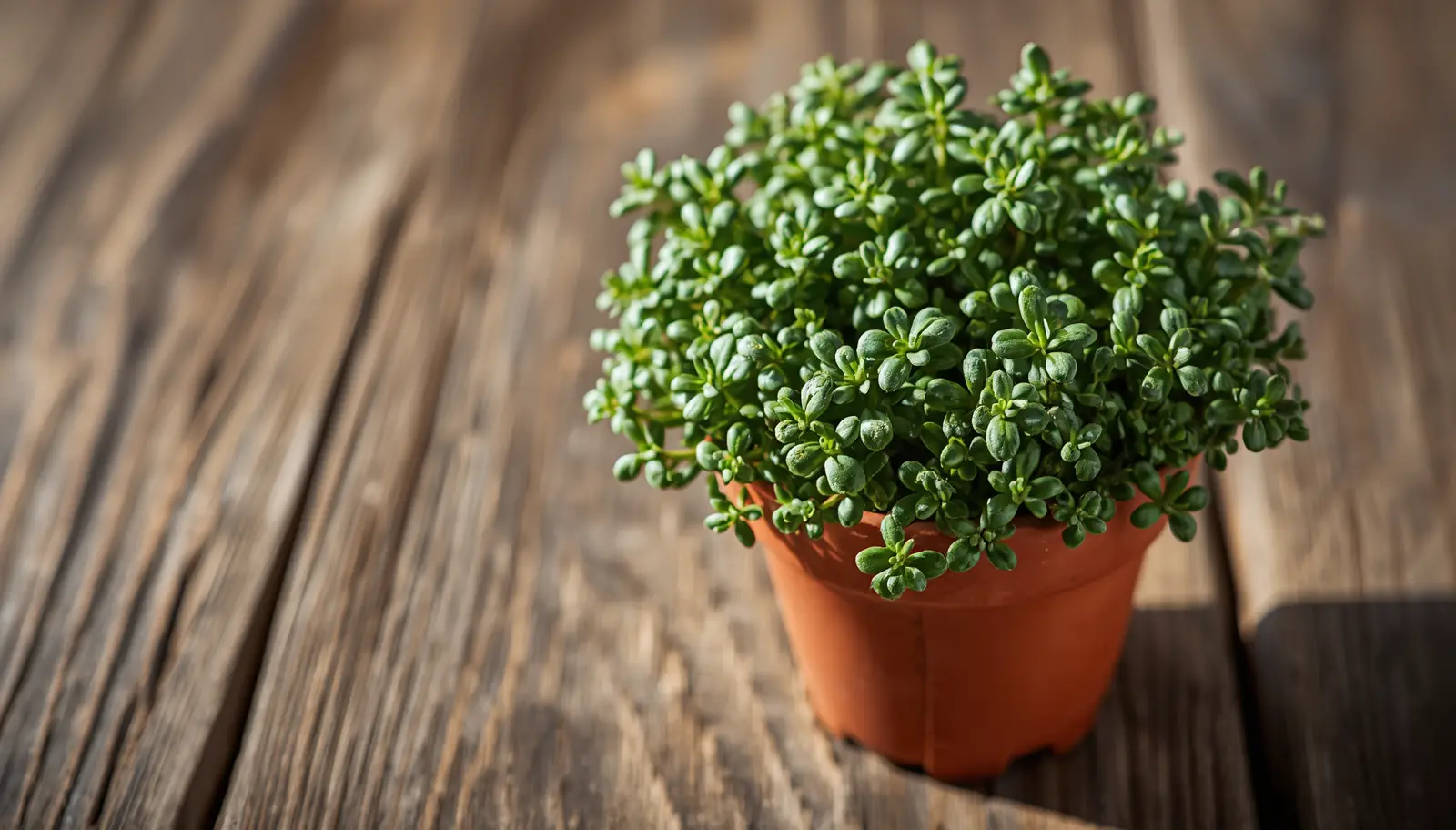
Oregano (Origanum vulgare) is a hardy perennial herb in the mint family. It is easy to grow, likes sun and sharp drainage, and gets by on fairly poor soil. This guide explains how to grow oregano in the garden, in pots and indoors, from seed or cuttings, and when to harvest it for the best flavor. It follows the RHS, University of Illinois Extension, University of Maryland Extension, UF/IFAS Extension and the ASPCA.
Oregano at a Glance
| Need | What the sources say |
|---|---|
| Sun | Full sun (RHS, Illinois); 6 to 8 hours, afternoon shade in hot climates (UF/IFAS) |
| Soil | Free-draining; grows well in fairly poor soil (RHS, UMD); slightly alkaline (UF/IFAS) |
| Spacing | 20 to 30 cm (8 to 12 in) (RHS) |
| Water | Established plants in the ground rarely need watering; pots never waterlogged (RHS) |
| Feeding | None in the ground; granular feed for pots after a year (RHS) |
| Size | Sprawling stems to about 2 ft (UMD) |
| Lifespan | Replant when woody, after 3 to 4 years (UMD) |
| Pets | Toxic to dogs, cats and horses; mild vomiting and diarrhea (ASPCA) |
Sources: RHS oregano grow-your-own guide; University of Illinois Extension; University of Maryland Extension; UF/IFAS Extension Pasco County (Sirchia, 2024); ASPCA.
Sun and Soil
The RHS says oregano thrives in full sun and free-draining soil and grows well in fairly poor soil, warning that heavy or damp soil can cause root rot; in that case, grow it in a raised bed or container. Illinois Extension says it must have full sun and good drainage for best growth and to survive winter, and UMD Extension notes it grows well in poor soil.
In hot climates, UF/IFAS Extension recommends 6 to 8 hours of sun with some afternoon shade, slightly dry, well-draining, slightly alkaline soil, and planting in the cooler months of fall and winter in Florida.
Seed, Cuttings or Plants?
Illinois Extension says seed-grown oregano often doesn’t come true, so it suggests buying plants grown from cuttings. Flavor varies a lot between seedlings, so if you know a plant you like, propagate it. Greek oregano (O. vulgare var. hirtum) is the type Illinois lists as “true oregano, excellent flavor, hardy.”
From cuttings or division
The RHS lists three methods: softwood cuttings from new growth in summer, dividing clumps in spring or after flowering, and layering, where you peg a low stem into the soil until it roots. How to grow oregano from cuttings: take a few inches of non-flowering shoot tip, strip the lower leaves, and root it in a pot of gritty compost kept just moist.
From seed
The RHS says to sow on the surface of moist seed compost in spring, without covering the seed, at around 20°C (68°F); seedlings appear in one to three weeks. Illinois agrees that light is needed for germination. Water carefully, because seedlings are prone to damping off (RHS). Harden plants off and plant out after the last frost, 20 to 30 cm (8 to 12 in) apart.
How to Grow Oregano in a Pot
The RHS recommends a pot at least 15 cm (6 in) wide and deep with drainage holes, filled with peat-free, soil-based compost mixed with up to 25 percent horticultural grit. Water pots in dry weather but never let them become waterlogged, and give plants that have been in the same pot for more than a year a general-purpose granular feed in late spring or early summer. Terracotta dries out faster than plastic, which suits oregano.
How to Grow Oregano Indoors
Oregano grows best outdoors, but you can keep it indoors. The RHS says plants can sometimes be kept productive indoors over winter if they get enough warmth and light, and Illinois notes that tender types may need to come indoors for winter. Indoors, light is the limit: give it your sunniest window or a grow light, let the pot dry between waterings, and empty the saucer. Pale, stretched stems mean it needs more light. See our grow light guide and our rosemary guide, which has the same needs.
Watering and Feeding
The RHS says to water newly planted oregano during dry spells, that established plants in the ground usually need no extra watering, and that they need no extra feeding. UF/IFAS calls oregano drought-tolerant and says it struggles in standing water or waterlogged soil. In pots, water when the top of the compost is dry.
Harvesting and Drying
The RHS says to snip off shoots and strip the leaves from late spring to autumn, and that flavor is best before the flowers open. Illinois says harvesting can begin just before the plants flower and that letting them flower reduces the flavor of the leaves; UF/IFAS suggests harvesting as flower buds form. The flowers are edible and can be scattered over salads (RHS).
Drying: hang leafy sprigs in a dark, well-ventilated place for a few weeks, then store the leaves in an airtight jar (RHS). Illinois suggests a cool, dry, dark, well-ventilated spot.
Pruning, Winter Care and Replanting
- Cut back: trim established plants in late spring to keep them compact, remove dead or straggly stems, and cut back flower stems once the blooms fade (RHS). UMD says cutting back flowers stimulates foliage.
- Winter: common oregano is reliably hardy, but keep it out of waterlogged conditions, move pots to a sheltered spot, and use a ventilated cloche in cold, wet areas (RHS).
- Replant: UMD says to replant when plants become woody, after 3 to 4 years. Division or cuttings give you fresh plants.
Common Problems
| Problem | Likely cause | Source |
|---|---|---|
| Yellowing, rotting at the base | Heavy or waterlogged soil | RHS, UF/IFAS |
| Orange, yellow and black dusty spots | Mint rust | RHS |
| Seedlings collapse | Damping off | RHS |
| Chewed or speckled leaves | Mint moth caterpillars, leafhoppers | RHS |
| Weaker flavor | Plant allowed to flower before harvest | Illinois |
| Woody, less productive plant | Age (3 to 4 years) | UMD |
Sources: RHS; UF/IFAS Extension; University of Illinois Extension; UMD Extension.
For mint rust, which also attacks oregano, see our mint care guide.
Is Oregano Safe for Pets?
No. The ASPCA lists oregano (Origanum vulgare hirtum) as toxic to dogs, cats and horses. Its toxic principles are gastrointestinal irritants, and the signs it lists are mild vomiting and diarrhea. Keep pots out of reach of pets that chew plants, and call your veterinarian or the ASPCA Animal Poison Control Center at (888) 426-4435 if you are concerned. See our cat-safe plants list.
For more herbs and edibles, see our guides to creeping thyme. For which herbs root in water and which need soil, see our guide to herbs that grow in water.
Frequently Asked Questions
How much sun does oregano need?
Full sun (RHS, Illinois). UF/IFAS recommends 6 to 8 hours, with some afternoon shade in very hot climates.
Can you grow oregano in a pot?
Yes. The RHS suggests a pot at least 15 cm (6 in) wide and deep with drainage holes and soil-based compost with up to 25 percent grit.
Can you grow oregano indoors?
Yes, with enough warmth and light. The RHS says plants can sometimes be kept productive indoors over winter; use your sunniest window or a grow light.
Why doesn’t my seed-grown oregano taste like oregano?
Seed-grown oregano often doesn’t come true (Illinois), so flavor varies. Buy plants raised from cuttings, or propagate a plant whose flavor you like.
Should you let oregano flower?
For the best leaf flavor, harvest before it flowers; Illinois says flowering reduces leaf flavor. The flowers are edible, and the RHS says to cut back flower stems once they fade.
Is oregano toxic to cats and dogs?
Yes. The ASPCA lists oregano as toxic to dogs, cats and horses, with mild vomiting and diarrhea.