
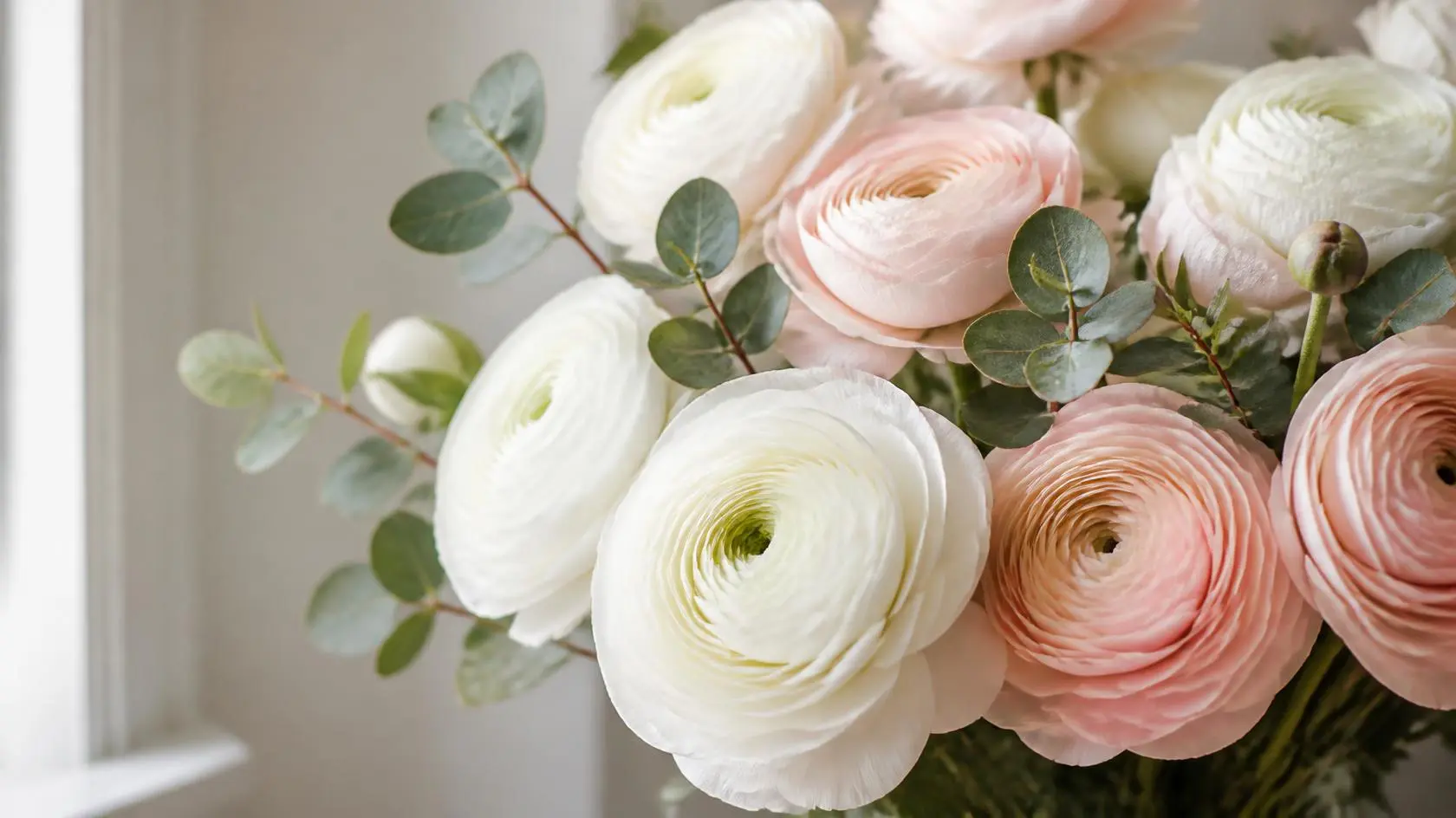
The garden ranunculus (Ranunculus asiaticus, the Persian buttercup) is one of the most popular spring and wedding flowers, with layered, paper-thin petals in almost every color. The ranunculus flower meaning most people quote comes from the Victorian language of flowers: “You are radiant with charms.” This guide explains where that meaning comes from, how it differs from the wild buttercup’s very different meaning, which color meanings are modern florist conventions, and which popular legends have no traceable source. It also covers pet safety.
What Is a Ranunculus?
NC State Extension describes Ranunculus asiaticus as the Persian buttercup, native to the area around the eastern Mediterranean, a cool-season plant grown from claw-like tubers that flowers in spring and goes dormant in summer. It belongs to the buttercup family (Ranunculaceae) with the wild buttercups. The genus name is usually explained as Latin for “little frog,” a reference to the damp places where many wild buttercups grow.
What Does Ranunculus Mean?
| Entry in Greenaway (1884) | Meaning |
|---|---|
| Ranunculus | You are radiant with charms |
| Ranunculus, Garden | You are rich in attractions |
| Ranunculus, Wild | Ingratitude |
| Buttercup (Kingcup) | Ingratitude. Childishness |
| Crowfoot | Ingratitude |
Source: Kate Greenaway, Language of Flowers (1884), Project Gutenberg 31591.
The best-known Victorian flower dictionary, Kate Greenaway’s Language of Flowers, gives ranunculus the message “You are radiant with charms” and the garden ranunculus “You are rich in attractions.” Those two lines are the source of the modern ranunculus meaning of charm, attraction and admiration. In practice, a bouquet of ranunculus says “I find you charming” or “you dazzle me,” which makes it a natural fit for new romances, anniversaries and weddings.
Ranunculus vs Wild Buttercup Meaning
The same genus carries a much less flattering message when it comes to the wild buttercup. Greenaway lists the wild ranunculus and crowfoot as “Ingratitude” and the buttercup or kingcup as “Ingratitude. Childishness.” So if you are choosing flowers for their meaning, the cultivated Persian buttercup (charm) and the yellow field buttercup (ingratitude) send opposite messages.
The childhood game of holding a buttercup under someone’s chin has a real explanation. A 2012 study in the Journal of the Royal Society Interface (Vignolini and colleagues) found that the buttercup’s (Ranunculus repens) unusual gloss comes from a flat, partly transparent pigmented outer petal layer above a starch layer, which reflects light strongly in one direction and throws the yellow glow onto your chin. It says nothing about liking butter.
The Persian Prince Legend
Many flower sites tell a story of a young Persian prince who fell in love with a nymph, died of heartbreak and was turned into a ranunculus. Others describe a Native American tale in which Coyote replaces his stolen eyes with buttercups. We could not find an early written source for the Persian version, and versions differ from site to site, so treat it as modern flower lore rather than ancient myth. It does fit the flower’s romantic image, which is why florists like to repeat it.
Ranunculus Color Meanings
Greenaway gives no color-specific meanings for ranunculus. The color meanings below are modern conventions used by florists, based on general color symbolism rather than any historical source. Use them as a guide, not a rule.
| Color | Common modern meaning | Typical use |
|---|---|---|
| White | Purity, new beginnings | Weddings, bridal bouquets |
| Pink | Admiration, affection | New romance, Mother’s Day |
| Red | Romance, passion | Valentine’s Day, anniversaries |
| Yellow and orange | Cheer, warmth, friendship | Birthdays, congratulations |
| Purple | Charm, admiration | Gifts and celebrations |
Modern florist convention; not from Victorian dictionaries.
Ranunculus for Weddings and Gifts
The “radiant with charms” meaning, the many colors and the rose-like layered form make ranunculus a favorite for wedding work and spring bouquets. It is also a long-lasting cut flower: the RHS says stems cut before the flowers are fully open last 10 to 12 days in a vase. Ranunculus is a cool-season spring flower, so it is most widely available from late winter to spring.
For other flowers with Victorian meanings, see our guides to January birth flowers and August birth flowers.
Growing Your Own
Ranunculus grows from claw-shaped corms. Soak them before planting, set them claws down about 2 inches deep in full sun and free-draining soil, and plant in fall where winters are mild or in late winter to spring elsewhere. Clemson Extension says plants flower about 90 days after planting for up to 6 to 7 weeks. Our full how to grow ranunculus guide covers soaking, timing, pots and storage.
Is Ranunculus Toxic to Cats and Dogs?
Yes. The ASPCA lists buttercups (Ranunculus species) as toxic to dogs, cats and horses. The toxic principle is protoanemonin, an irritant, and signs include vomiting, diarrhea, depression, loss of appetite, drooling, oral ulcers and a wobbly gait. NC State adds that the sap can cause skin redness, burning and blisters. Keep bouquets and trimmings away from pets, and call your veterinarian or the ASPCA Animal Poison Control Center at (888) 426-4435 if one eats it. See our cat-safe plants list for safer choices.
Frequently Asked Questions
What does a ranunculus flower symbolize?
Charm and attraction. Greenaway’s 1884 dictionary gives “You are radiant with charms” for ranunculus and “You are rich in attractions” for garden ranunculus.
What does a buttercup mean in the language of flowers?
Greenaway lists buttercup (kingcup) as “Ingratitude. Childishness,” and wild ranunculus and crowfoot as “Ingratitude.”
What do ranunculus colors mean?
Modern florists commonly use white for purity, pink for admiration, red for romance, and yellow or orange for cheer. These are conventions, not Victorian meanings.
Is the Persian prince legend true?
It is widely repeated, but we found no early written source for it, so treat it as modern flower lore.
How long do cut ranunculus last?
About 10 to 12 days if cut before the flowers fully open (RHS).
Is ranunculus toxic to cats?
Yes. The ASPCA lists buttercups (Ranunculus) as toxic to cats, dogs and horses because of protoanemonin.
Sources
- Greenaway, K. (1884). Language of Flowers. Project Gutenberg
- Vignolini, S. et al. (2012). Directional scattering from the glossy flower of Ranunculus: how the buttercup lights up your chin. Journal of the Royal Society Interface 9
- NC State Extension Plant Toolbox: Ranunculus asiaticus
- Vargo, M. (2021). Add Ranunculus to Your Fall Planting To-do List. Clemson Extension
- RHS: How to grow ranunculus
- ASPCA: Buttercup