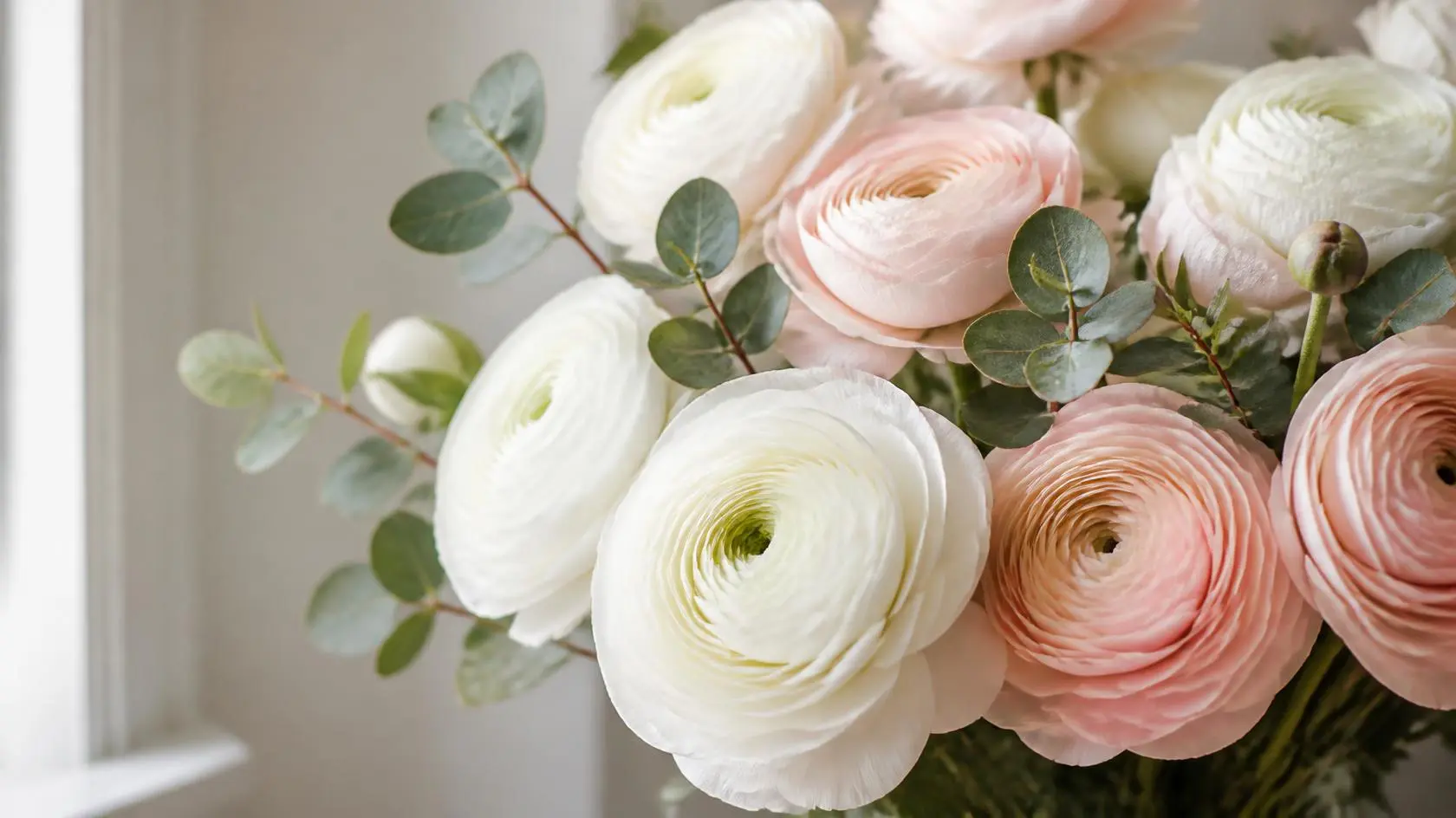
Ranunculus flower meaning centers on charm, attraction, and radiant beauty. In the Victorian language of flowers, a bouquet of ranunculus told the recipient, “I am dazzled by your charms.” Today, that message lives on in wedding aisles and spring bouquets, where the Persian buttercup’s paper-thin petals signal romance, admiration, and deep emotional connection.
But the ranunculus carries more than a single sentiment. Its symbolism shifts with color, culture, and legends that have followed the flower for centuries. From a heartbroken Persian prince to a trickster coyote in Native American folklore, the ranunculus has collected stories as layered as its petals. This guide unpacks every shade of ranunculus meaning, traces its mythic origins, and shows you how to grow these blooms at home. For hands-on growing instructions, see our companion guide in The Lab.
Ranunculus symbolizes charm, attraction, and radiant beauty across all colors. In floriography, it sends the message, “You are dazzling.” Red ranunculus means passion; white means pure love and grace; pink means gentle admiration; yellow means joy; orange means positivity; and purple means creativity and royalty. The flower is toxic to cats and dogs.
Table of Contents
- What Is Ranunculus and Where Does It Come From?
- What Does Ranunculus Mean in the Language of Flowers?
- What Is the Persian Legend Behind Ranunculus?
- What Does Each Ranunculus Color Symbolize?
- Why Is Ranunculus So Popular for Weddings?
- How Do You Grow Ranunculus at Home?
- Is Ranunculus Toxic to Cats and Dogs?
- What Are the Most Common Questions About Ranunculus?
| Parameter | Ideal | Avoid |
|---|---|---|
| Light | Full sun, 6 to 8 hours daily | Deep shade, less than 4 hours |
| Soil | Rich, loamy, well-draining | Heavy clay, waterlogged beds |
| Water | Keep moist but not wet | Soggy soil, standing water |
| Temperature | 60 to 70 degrees Fahrenheit days, 45 to 55 nights | Above 75 degrees Fahrenheit sustained |
| Planting Depth | 2 inches deep, 9 inches apart | Shallow planting, crowded spacing |
| Bloom Time | 90 days after planting, lasts 6 to 7 weeks | Mid-summer heat (stops blooming) |
What Is Ranunculus and Where Does It Come From?
Ranunculus is a genus of over 600 species in the Ranunculaceae family, native to temperate regions across Asia, Europe, North Africa, and the Americas. The ornamental varieties sold by florists are almost always Ranunculus asiaticus, commonly called Persian buttercup. These cultivars produce blooms with 100 to 130 tissue-paper-thin petals arranged in dense rosettes that resemble miniature peonies or roses.
The name Ranunculus comes from the Latin rana (frog) and unculus (little), meaning “little frog.” According to the Missouri Botanical Garden, this reflects the plant’s affinity for moist habitats near streams and wetlands. The species epithet asiaticus points to its origins in Southwest Asia.
Persian buttercups reached Europe during the reign of Elizabeth I in the 16th century and quickly became prized garden flowers. Today they dominate spring wedding season and florist shops worldwide. Most varieties carry little to no fragrance, making them ideal for scent-sensitive venues. For another spring bloom with rich symbolism, see our guide to how to grow hyacinths.
What Does Ranunculus Mean in the Language of Flowers?
In floriography, the Victorian art of sending messages through bouquets, ranunculus carries a clear meaning: charm and attraction. A single stem says, “You possess radiant charm.” A full bouquet amplifies that message into, “I am completely dazzled by you.” This meaning made ranunculus a favorite for secret admirers and new romances in the 19th century.
Where red roses declared bold passion, ranunculus offered a more playful, admiring tone. It suggested infatuation without presumption. That same energy explains why the flower dominates modern wedding work. It speaks of fresh love and genuine admiration. Unlike birth flowers tied to specific months, such as the January birth flower, ranunculus is not locked to any calendar date, making it appropriate year-round for anniversaries, promotions, or spontaneous gestures.
The flower also carries connotations of joy and positivity. Orange and yellow varieties are often gifted as cheer-up bouquets or congratulatory arrangements.
What Is the Persian Legend Behind Ranunculus?
The most enduring ranunculus story comes from Persian folklore. A young prince fell deeply in love with a forest nymph and serenaded her day and night. When his love went unreturned, he died of heartbreak. A giant ranunculus bloomed from the exact spot where he fell. Other versions say the nymphs transformed him into the flower to silence his songs.
This legend gives the ranunculus its romantic weight. The flower is literally born from unrequited love, from devotion so intense it changes form. When you give ranunculus today, you echo that prince’s message: “I am enchanted by you.” The myth also explains why the bloom feels slightly melancholic beneath its bright colors. It is beautiful, but it came from longing.
A very different legend comes from certain Native American tribes, who knew the flower as “Coyote Eyes.” In this story, a mythological coyote entertained himself by tossing his eyes into the air and catching them. An eagle swooped down and stole the eyes mid-flight. Blind and desperate, the coyote grabbed two ranunculus flowers from a nearby field and used them as replacement eyes. This tale gives the buttercup a wilder, more mischievous character in contrast to the Persian romance.
What Does Each Ranunculus Color Symbolize?
While the base meaning of ranunculus is charm and attraction, each color adds its own nuance. Florists use these distinctions to craft precise emotional messages. The table below breaks down the symbolism for the six most common ranunculus colors and the occasions that match them.
| Color | Primary Meaning | Best Occasion |
|---|---|---|
| White | Pure love, grace, refinement, innocence | Weddings, bridal bouquets, anniversaries |
| Red | Passion, romance, deep desire | Valentine’s Day, romantic gestures |
| Pink | Gentle admiration, sympathy, sweet affection | Mother’s Day, new romance, get-well |
| Yellow | Joy, happiness, positive energy, friendship | Birthdays, congratulations, cheer-up gifts |
| Orange | Enthusiasm, warmth, positivity, creativity | Graduations, promotions, housewarmings |
| Purple | Creativity, royalty, mystery, elegance | Artistic celebrations, formal events |
White ranunculus has become the signature bridal flower. Its pristine petals complement any color scheme while signaling the grace and purity associated with marriage. Red ranunculus offers a less conventional alternative to red roses, carrying the same romantic heat with more texture and delicacy. Pink sits in the middle ground, suitable for early-stage romance or familial love without the intensity of red or the formality of white.
Pro Tip: The Bouquet Count Code
In floriography, quantity matters. A single ranunculus stem says, “You charm me.” A dozen says, “I am completely dazzled by your radiant beauty.” A mixed-color bouquet sends layered messages: white for pure intent, pink for gentle affection, and orange for the joy the recipient brings. Florists often use all-white or blush-pink ranunculus as the emotional anchor of wedding arrangements.
Why Is Ranunculus So Popular for Weddings?
Ranunculus has become one of the most requested wedding flowers of the past decade for reasons both aesthetic and symbolic. The bloom’s layered, crepe-paper petals photograph beautifully, hold up well out of water during ceremonies, and combine naturally with roses, peonies, and eucalyptus.
Symbolically, white and blush ranunculus carry the perfect wedding message: pure love combined with radiant charm. The flower suggests a marriage built on genuine admiration. Brides often cite its delicate-but-structured appearance as matching their vision of modern romance: soft, layered, and full of detail.
The bloom also offers practical advantages. Most varieties are fragrance-free, which matters in enclosed venues where strong scents trigger headaches or allergies. The stems are slender and elegant, making them ideal for boutonnieres and corsages. Vase life for cut ranunculus ranges from 7 to 14 days when harvested at the marshmallow-soft bud stage. That longevity means bouquets stay fresh through rehearsal dinners, ceremonies, and morning-after brunches.
How Do You Grow Ranunculus at Home?
Growing ranunculus requires cool temperatures, full sun, and well-draining soil. The plant is a tender perennial grown from corms, not true bulbs. In USDA zones 7 through 10, plant corms in fall for late winter or early spring blooms. In colder zones, plant pre-sprouted corms in spring after the last frost.
According to Clemson Cooperative Extension, select a site with at least 6 to 8 hours of sunlight and excellent drainage. Heavy clay soils cause corms to rot. Before planting, soak dry corms in room-temperature water for 4 hours, changing the water hourly. The corms will plump from shriveled claws into octopus-like forms.
Iowa State University Extension notes that ranunculus is a cool-season plant that fades when sustained temperatures exceed 75 degrees Fahrenheit. The Spruce confirms that full sun or 6 to 8 hours of daily sunlight is required for successful blooming. Less light produces fewer flowers and weaker stems. Forcing indoors requires bright light and cool conditions: no more than 60 degrees Fahrenheit during the day and 45 to 50 degrees at night. Apply a balanced soluble fertilizer every two weeks during the growing season.
- Soak corms in room-temperature water for 4 hours, changing water every hour.
- Fill a shallow tray with 1 to 2 inches of lightly moistened potting mix.
- Place soaked corms with tuberous fingers facing down; cover with 1 inch of soil.
- Move tray to a cool, dark space at 50 to 55 degrees Fahrenheit for 2 weeks.
- Check daily for mold; discard any rotting corms immediately.
- Once sprouts appear, transplant outdoors 2 inches deep and 9 inches apart in full sun.
- Water to keep soil moist but not wet; fertilize every two weeks.
- Harvest when buds are half open and centers feel soft like a marshmallow.
After flowering, allow foliage to yellow completely before cutting. The plant stores energy in the corm for next season. In zones colder than 7, dig up corms after foliage dies back, dry them, and store at 50 to 55 degrees Fahrenheit until replanting. For a deeper dive, read our full guide on how to grow ranunculus.
Every part of the ranunculus plant contains ranunculin, which converts to protoanemonin when damaged or chewed. This toxin causes burning in the mouth, vomiting, diarrhea, and skin blistering on contact. Wear gloves when handling corms and keep all plant material away from children and pets. For more on plant safety, visit The Infirmary.
Is Ranunculus Toxic to Cats and Dogs?
Yes. All Ranunculus species are toxic to cats, dogs, and horses. The ASPCA lists buttercup (Ranunculus spp.) as toxic, with protoanemonin as the irritant principle. Clinical signs include vomiting, diarrhea, depression, anorexia, hypersalivation, oral ulcers, and wobbly gait. If you suspect ingestion, contact the ASPCA Animal Poison Control Center at (888) 426-4435 or your veterinarian immediately.
The toxin releases when plant tissue is crushed or chewed. Fresh leaves and stems are more dangerous than dried material, though neither is safe. The bitter taste usually deters animals from eating large quantities, but curious puppies, kittens, and grazing horses may still sample the foliage.
Because of this toxicity, ranunculus is not suitable for households with free-roaming pets that chew plants. If you want a pet-safe alternative with a similar romantic look, consider roses or zinnias. Browse our full list of cat-safe plants for non-toxic options. Never place ranunculus bouquets where cats can reach them, as even batting at fallen petals can transfer toxins during grooming.
Proprietary Data: Ranunculus Vase Life & Bloom Metrics
[OWNER TO COMPLETE: Insert observed vase life, bloom duration, or corm germination rate data here. Format: “In our tests, cut ranunculus stems harvested at the marshmallow-bud stage lasted [X] days in plain water versus [Y] days in floral preservative at [temperature] degrees Fahrenheit.” Alternatively: “Pre-soaked corms planted in [month] produced first blooms in [X] days, with peak bloom lasting [Y] weeks before heat shutdown.”]
What Are the Most Common Questions About Ranunculus?
What is the difference between ranunculus and peonies?
Ranunculus and peonies look similar but are unrelated. Ranunculus is a cool-season corm in the Ranunculaceae family; peonies are long-lived perennials in the Paeoniaceae family. Ranunculus blooms are smaller, with thinner petals, and the plant dies back in summer heat. Peonies return for decades and produce larger, more fragrant flowers.
Do ranunculus flowers have a scent?
Most ranunculus varieties are fragrance-free. This makes them ideal for wedding venues, hospital rooms, and homes where strong floral scents trigger headaches or allergies. Florists often pair ranunculus with fragrant blooms like garden roses in mixed arrangements.
How long do cut ranunculus flowers last?
Cut ranunculus lasts 7 to 14 days in a vase when harvested at the correct stage. The bud should be colored and the center should feel soft, like a marshmallow. Harvesting too early produces flowers that never open; harvesting too late shortens vase life. Change water every two days and recut stems at an angle.
Can you grow ranunculus indoors?
Yes, but it requires cool temperatures and bright light. Indoor ranunculus needs daytime temperatures below 60 degrees Fahrenheit and nighttime temperatures of 45 to 50 degrees. A sunny windowsill or grow light works for illumination. Without cool conditions, the plant will stretch and produce weak stems.
Why are ranunculus called buttercups?
The common name buttercup applies to the entire Ranunculaceae family, particularly yellow wild species like Ranunculus repens. The name may come from the golden-yellow color of common buttercups or from the old folk belief that buttercups gave butter its yellow hue. Persian buttercups (R. asiaticus) are the ornamental cousins of these wildflowers.
What does the buttercup chin test mean?
The buttercup chin test is a children’s game, not a scientific measure. Kids hold a yellow buttercup under their chin; if the skin glows yellow, it supposedly means the person likes butter. The glow is real, caused by UV light reflected by mirror-flat cells on the petals, but it has nothing to do with dairy preferences.
