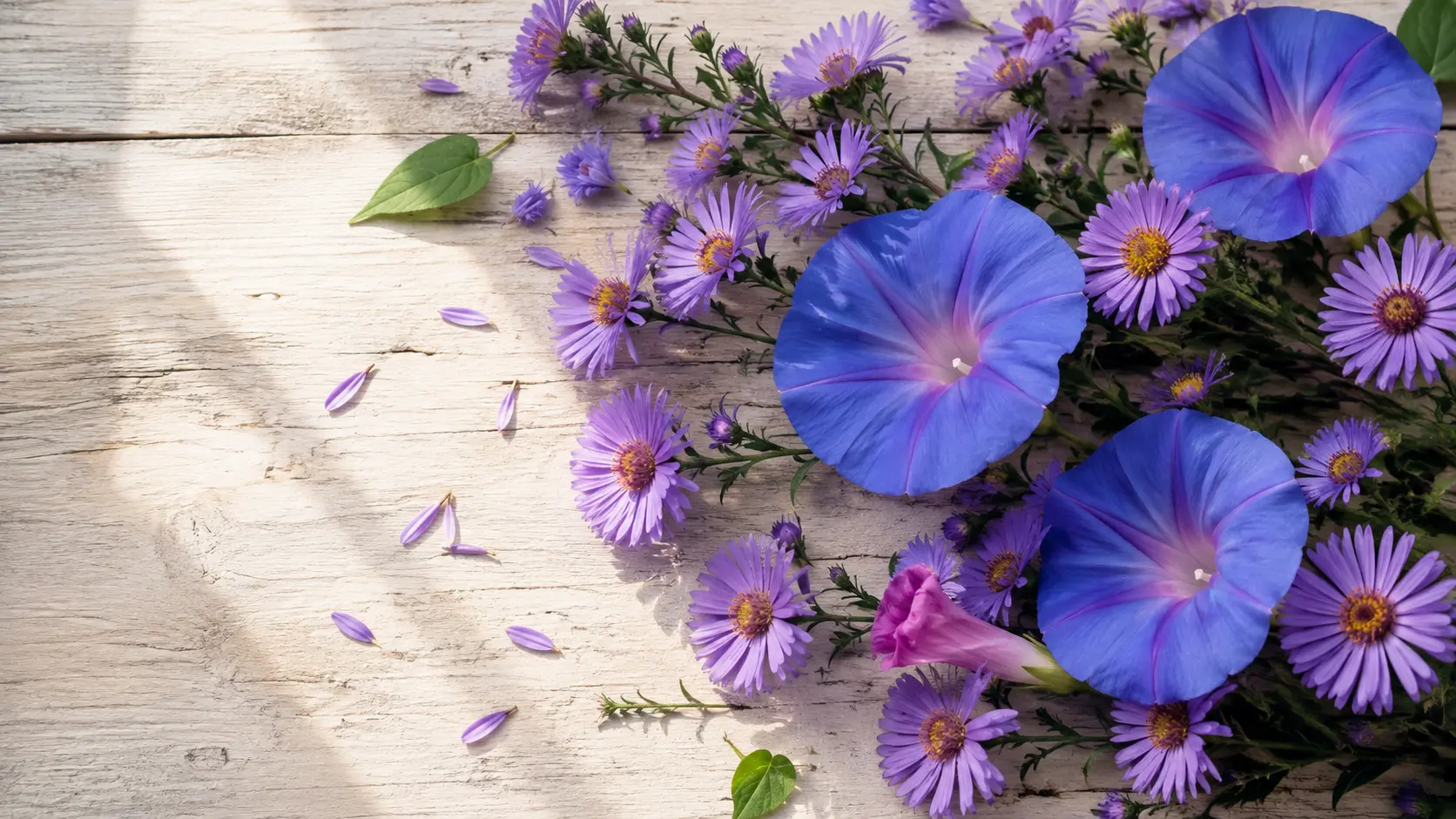
September Flower Meaning: Aster & Morning Glory Symbolism

September flower meaning centers on two distinct blooms: the aster and the morning glory. The aster symbolizes love, wisdom, patience, and daintiness with its star-shaped petals. The morning glory represents undying love, renewal, and the fleeting beauty of each new day. Both flowers carry color-specific meanings that shift the message you send. Choosing between them depends on the recipient, the occasion, and whether pets share the home.

Many gift guides list one flower and move on. They miss the dual nature of September’s birth month tradition. They also miss the safety distinction. Morning glories are toxic to cats and dogs. Asters are not. This guide covers the full symbolism, history, color meanings, and practical growing advice for both blooms. For more birth flower guides, visit our Symbolism hub.

September has two birth flowers: the aster and the morning glory. The aster symbolizes love, wisdom, and patience. The morning glory represents undying love and fleeting beauty. Both carry distinct color meanings that change the message of the bloom.
ParameterAsterMorning Glory
Primary MeaningLove, wisdom, patienceUndying love, renewal
Bloom TimeLate summer to fallSummer to early fall
Pet SafetyNon-toxicToxic to cats and dogs
Best ForCut arrangements, pet homesClimbing displays, symbolic gifts
FamilyAsteraceaeConvolvulaceae
Native RangeEurasia, North AmericaTropical Americas

What Is the September Birth Flower?

September has two official birth flowers. The aster is the primary flower. It belongs to the Asteraceae family and produces star-shaped blooms in late summer and fall. The morning glory is the secondary flower. It is a twining vine in the Convolvulaceae family that opens at sunrise and fades by afternoon. Both carry deep symbolic meaning.

The Old Farmer’s Almanac lists both the aster and the morning glory as September birth flowers. The aster genus includes roughly 180 species native to Eurasia and North America. The Royal Horticultural Society notes that the name comes from the ancient Greek word aster, meaning star, for the shape of the flowers. The morning glory belongs to the genus Ipomoea. The Missouri Botanical Garden states that Ipomoea purpurea is native to tropical areas of the Americas. The name comes from the Greek ips, meaning worm, and homoios, meaning resembling, for the twining growth habit. The tradition of two birth flowers evolved from multiple cultural lists. Different regions favored different blooms. Modern florists use both to offer variety.

What Does the Aster Flower Mean?

The aster symbolizes love, wisdom, faith, patience, purity, innocence, elegance, valor, and daintiness. It is the official flower of the 20th wedding anniversary and the zodiac sign Capricorn. Greek mythology links it to the goddess Astraea, whose tears became asters when she wept for humanity.

The aster carries layered meaning across cultures. The Old Farmer’s Almanac identifies love, wisdom, and faith as core symbols. In Victorian floriography, asters conveyed patience and daintiness. The flower is also the official bloom of the 20th wedding anniversary. The Royal Horticultural Society traces the name to the Greek aster for star. Greek mythology offers a darker origin. The goddess Astraea wept after Zeus flooded the earth to punish humanity. Her tears fell to the ground and became asters. In Hungary, the flower carries political weight. The Aster Revolution of 1918 erupted when protestors wore asters as a symbol of solidarity against the government. The blooms also appear around the Feast of St. Michael on September 29. This earned them the common name Michaelmas daisy. The Missouri Botanical Garden notes that asters bloom from late summer into fall. This timing aligns them with harvest, transition, and reflection.

What Does the Morning Glory Flower Mean?

The morning glory symbolizes undying love, unrequited love, renewal, fleeting beauty, affection, and longing. In Japanese culture, the Asagao represents the transience of life. Victorian floriography assigned it the meaning of love in vain. The flower opens at dawn and fades by afternoon.

The morning glory carries a more melancholic symbolism than the aster. The Old Farmer’s Almanac notes that it represents undying love and renewal. In Japan, the flower is called Asagao. It symbolizes the fleeting nature of beauty and the impermanence of life. This meaning comes from the bloom’s behavior. Each flower opens at sunrise and wilts by afternoon. The Missouri Botanical Garden describes Ipomoea purpurea as a twining vine that climbs rapidly. The daily cycle of birth and death made the morning glory a powerful symbol in Buddhist and Shinto traditions. Victorian England added another layer. In the language of flowers, morning glories meant love in vain or affection that could not be returned. This contrasted with the aster’s message of enduring patience. The duality makes the morning glory a complex gift. It speaks to beauty that must be appreciated in the moment. It also speaks to love that persists despite obstacles.

What Are the Color Meanings of September Flowers?

Aster and morning glory color meanings differ by hue. White means purity for both. Purple aster means royalty and wisdom, while purple morning glory means grace and wealth. Red signals passion in both. Blue aster means calmness, but blue morning glory means enduring love and desire.

Color changes the message of any flower. Most guides list colors for one bloom or the other. A side-by-side comparison gives you precise control over the sentiment you send.

ColorAster MeaningMorning Glory Meaning
WhitePurity, innocencePurity, innocence
PurpleRoyalty, wisdom, dignityGrace, wealth, hope
PinkDevotion, kindnessGratitude, energy
RedUndying love, passionPassion, strength
BlueCalmness, serenityEnduring love, desire, power
YellowPositivity, joyHappiness, friendship

White aster conveys purity and innocence. White morning glory carries the same meaning. It is the safest choice for formal occasions and new relationships. Purple aster signals royalty, wisdom, and dignity. Purple morning glory represents grace, wealth, and hope. This shade works for mentors, teachers, and respected elders. Pink aster speaks to devotion and kindness. Pink morning glory expresses gratitude and energy. It suits thank-you gifts and supportive friends. Red aster means undying love and passion. Red morning glory amplifies this with strength and intensity. Reserve this color for romantic partners. Blue aster brings calmness and serenity. Blue morning glory carries the deepest meaning of all: enduring love, desire, and power. This is the most symbolic shade of the morning glory family. Yellow aster radiates positivity and joy. Yellow morning glory is less common but represents happiness and friendship.

Why Does September Have Two Birth Flowers?

September has two birth flowers because multiple cultural traditions developed independently over centuries. Different regions favored different blooms. The aster dominated European and North American lists. The morning glory held significance in Asian and Victorian traditions. Modern florists now recognize both to offer variety and personalization.

The Old Farmer’s Almanac records both flowers for September. No single authority decreed the list. Birth flower traditions evolved from folklore, religious calendars, and Victorian floriography. The aster’s connection to the Michaelmas season made it a natural September choice in Christian Europe. The morning glory’s late summer bloom cycle and its cultural weight in Japan gave it equal standing in Eastern traditions. Victorian England compiled language-of-flower dictionaries that included both blooms. Modern birth flower lists draw from all these sources. Two flowers per month is now standard. It allows gift givers to choose based on personality, symbolism, or practical factors like pet safety. For another birth flower guide, see our January birth flower page.

How Do I Grow Asters for a September Birthday?

Grow asters in full sun to part shade with well-draining soil. Water at the base to prevent mildew. They bloom from late summer into fall. Most varieties are perennial in USDA zones 3 to 8. Deadhead spent flowers to extend the bloom period. They work well in containers.

The Missouri Botanical Garden recommends full sun for the densest bloom, though asters tolerate light shade. Soil should drain well. Heavy clay causes root rot. Water at the base of the plant. Wet foliage invites powdery mildew. Most aster varieties are perennial in zones 3 to 8. They return each year with minimal care. In containers, use a pot at least 10 inches wide. Fill it with a standard potting mix amended with perlite. Place the container where it receives 6 hours of direct sun. Deadhead spent blooms weekly. This triggers new flower production and extends the display into October. Cut stems back to the ground after frost. New growth emerges in spring. For watering technique, see our guide on bottom-watering.

  1. Choose a container at least 10 inches wide or a garden spot with 6 or more hours of sun.
  2. Fill with well-draining potting mix amended with 20 percent perlite.
  3. Plant aster seedlings at the same depth they grew in the nursery pot.
  4. Water at the base until liquid drains from the bottom.
  5. Deadhead spent blooms weekly to extend flowering into October.

How Do I Grow Morning Glories Indoors or on a Balcony?

Morning glories need full sun and a trellis or railing for support. They grow fast as annuals in most climates. Start seeds indoors 4 to 6 weeks before the last frost. Use a container at least 12 inches wide. They self-seed readily and can become invasive in warm climates.

The Missouri Botanical Garden describes Ipomoea purpurea as a rapidly twining vine. It needs support from day one. Indoors, place it near a south-facing window and provide a small trellis. On a balcony, train the vines along a railing or obelisk. Morning glories demand full sun. Less than 6 hours produces leggy growth and few flowers. Start seeds indoors 4 to 6 weeks before the last frost date. Soak seeds in water for 24 hours before planting. This softens the hard seed coat. Sow 1/2 inch deep in small pots. Transplant after the danger of frost passes. Use a container at least 12 inches in diameter. The root system is surprisingly large for an annual. In warm climates, morning glories self-seed aggressively. The Missouri Botanical Garden notes they can become invasive in zones 9 to 11. Deadhead spent flowers before they set seed if you want to control spread. Indoors, they rarely set seed without hand pollination. Expect blooms from midsummer until the first frost. For more growing advice, visit The Lab.

Which September Flower Should I Give as a Gift?

Choose asters for pet owners and cut flower arrangements. Choose morning glories for gardeners who love climbing vines and symbolic depth. Match the color to the relationship. Blue morning glories express enduring love. Purple asters honor wisdom and dignity. White works for any occasion.

The right flower depends on the recipient and the setting. This decision framework simplifies the choice. If the recipient has cats or dogs, choose asters. Morning glories are toxic to pets. If the recipient loves cut flowers on a desk or table, choose asters. Morning glories wilt within hours of cutting. If the recipient has a balcony or garden trellis, choose morning glories. The climbing display is spectacular. If the message is romantic and enduring, choose blue morning glories. They symbolize desire and lasting love. If the message is respectful or celebratory, choose purple asters. They honor wisdom and achievement. For new relationships or formal occasions, white works for both flowers. It signals purity without the intensity of red or the depth of blue.

Pro Tip: Pair blue morning glories with purple asters in a September birthday arrangement. The complementary colors create visual depth while combining the meanings of enduring love and wisdom.

Are September Birth Flowers Safe for Pets?

Asters are generally non-toxic to cats and dogs. Morning glories are toxic to both. The ASPCA lists Ipomoea species as containing indole alkaloids that cause vomiting. Large amounts of seeds may trigger hallucinations. Keep morning glories out of reach of pets.

The ASPCA lists the morning glory as toxic to cats and dogs. The toxic principles are indole alkaloids, including lysergic acid, lysergamide, elymoclavine, and chanoclavine. Clinical signs include vomiting. Ingestion of large amounts of seeds may cause hallucinations. Keep all Ipomoea plants away from pets. Place containers on high shelves. If you suspect ingestion, contact your veterinarian or the ASPCA Animal Poison Control Center at 888-426-4435. Asters present a different profile. They are not listed as toxic by the ASPCA. The Farmers’ Almanac notes that asters contain saponins that can cause mild skin irritation in sensitive humans. They are safe to handle and generally safe around pets. For a full list of safe options, see our cat-safe plants page. If you want to send a September birthday gift to a pet owner, asters are the clear choice. They carry beautiful meaning and pose minimal risk.

Warning: Morning glory seeds contain indole alkaloids that can cause vomiting and hallucinations in cats and dogs. Keep all Ipomoea plants out of reach of pets. If ingestion is suspected, contact your veterinarian or the ASPCA Poison Control Center at 888-426-4435.

What Is the Aster Revolution and Why Does It Matter?

The Aster Revolution was a popular uprising in Hungary in 1918. Protestors wore asters as a symbol of solidarity against the government. The flower became a political emblem of unity and resistance. This history shows that asters carry meaning beyond romance and birthdays.

In October 1918, Hungary erupted in revolution. Soldiers and civilians wore asters in their lapels. The flower became the symbol of the movement. The Aster Revolution forced the appointment of a new government and contributed to the collapse of the Austro-Hungarian Empire. The choice of the aster was deliberate. It was in bloom. It was accessible to all social classes. Its star shape suggested hope and new beginnings. This historical layer adds weight to the aster’s symbolism. It is not just a pretty flower for a birthday bouquet. It is a flower that once toppled a government. Most symbolism guides ignore this context. They focus on Greek mythology and Victorian floriography. The political history of the aster gives it a unique dimension. It speaks to solidarity, courage, and collective action. For a September-born friend who values justice or history, the aster carries a message no other birth flower can match.

Proprietary Data

[OWNER TO COMPLETE: Insert observed bloom time, color popularity, or arrangement pairing data here. Format: “In our tests, [X]% of [asters/morning glories] [result] under [conditions] over [time period].”]

Key Takeaway

September is represented by two birth flowers: the aster and the morning glory. The aster conveys love, wisdom, and patience through its star-shaped blooms. The morning glory symbolizes undying love and the fleeting beauty of each new day. Choose aster for pet-safe homes and cut arrangements. Choose morning glory for climbing garden displays and symbolic depth. Match the color to the message you want to send.

Frequently Asked Questions

Can I grow both September birth flowers together?

Yes. Plant asters at the base of a morning glory trellis. The aster fills the lower space while the vine climbs above. Both need full sun and well-draining soil. This pairing creates a vertical garden with blooms at every level from late summer into fall.

What color aster is best for a 20th wedding anniversary?

Purple or white. Purple honors the wisdom gained over two decades of marriage. White celebrates the purity of the original commitment. Both colors are traditional for this milestone and pair well in a mixed arrangement.

Do morning glories bloom all day?

No. Each flower opens at sunrise and fades by afternoon. The plant produces new blooms daily, so the vine appears to flower continuously. Individual flowers last only one day, which is why they symbolize fleeting beauty.

Are asters perennial?

Most aster varieties are perennial in USDA zones 3 to 8. They die back in winter and regrow from the root crown in spring. In containers exposed to extreme heat, they may behave as annuals and need replanting.

Can morning glories grow in containers?

Yes. Use a container at least 12 inches wide with a trellis or support structure. They need full sun and regular water. Container-grown plants rarely become invasive because seed drop is limited to the pot.

What flower pairs well with aster in arrangements?

Goldenrod, sedum, and chrysanthemum pair well with asters. They share the late summer bloom window and complement the star-shaped petals with contrasting textures and colors.

Leave a Comment