
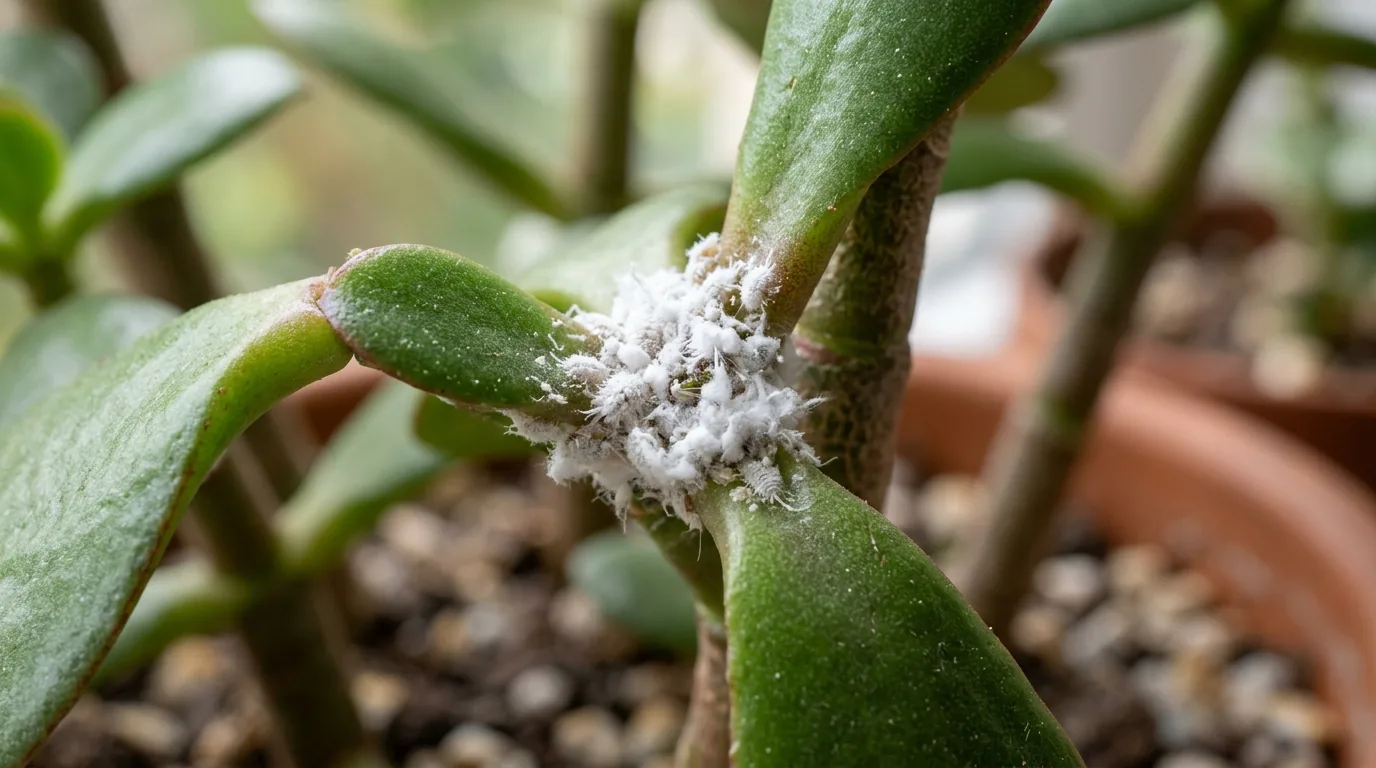
White, cottony fluff in the leaf joints, sticky leaves and slowly yellowing growth: those are mealybugs, one of the most stubborn houseplant pests. They hide in the crown and leaf axils, protect themselves and their eggs with wax, and a single female can lay 100 to 200 or more eggs (UC IPM). That is why one wipe-down rarely ends an infestation. This guide explains how to get rid of mealybugs on houseplants step by step, what to do about root mealybugs in the soil, and which treatments work best, using UC IPM, Colorado State, University of Wisconsin and Iowa State Extension.
How to Recognize Mealybugs on Houseplants
| Sign | What you see | Source |
|---|---|---|
| Adults | Oval, wingless, about 1/16 inch, covered in white wax | Wisconsin, UC IPM |
| Egg sacs | White cottony masses, often in leaf joints and stem crotches | UC IPM, Wisconsin |
| Crawlers | Tiny yellow, orange or pink young without wax yet | UC IPM |
| Honeydew | Sticky leaves, sometimes black sooty mold or ants | UC IPM, Colorado State |
| Damage | Feeding on stem tips, leaf joints and new growth; yellowing, wilting and stunting when roots are attacked | Wisconsin |
Sources: UC IPM Pest Notes 74174 (2016); University of Wisconsin Extension, Mealybugs; Colorado State University Extension, Managing Houseplant Pests (2025).
Mealybugs on houseplants are easy to miss at first. Iowa State Extension notes they are usually beneath leaves, on stems or at the base of leaf stalks, and UC IPM says they hide in the crown, branch crotches and stems near the soil. UC IPM lists common indoor hosts including aglaonema, cactus, dracaena, ferns, ficus, hoya, jade, orchids, palms, philodendron, schefflera and poinsettia, and Iowa State notes succulents are a favorite. White fluff can also be woolly aphids or cottony cushion scale, so UC IPM suggests checking the insect under the wax.
Why Mealybugs Are So Hard to Kill
- Wax armor: the cottony wax protects them from drying out (Wisconsin) and keeps sprays from reaching their bodies, which is why UC IPM says soap and oil work best on young nymphs with less wax.
- Lots of protected eggs: females lay 100 to 200 or more eggs in cottony sacs over 10 to 20 days (UC IPM); a citrus mealybug female can lay up to 600 (Wisconsin).
- Year-round breeding indoors: UC IPM says all life stages can be present at once on indoor plants, where stable temperatures suit them and natural enemies are absent.
- Hiding places: crevices, the crown and even the roots, where contact sprays never reach (Colorado State).
How to Get Rid of Mealybugs on Indoor Plants: 6 Steps
- Isolate the plant and check every plant around it, especially succulents and other favorite hosts. UC IPM says to inspect pots, stakes and saucers for egg sacs too.
- Prune the worst parts. Wisconsin and UC IPM suggest cutting out heavily infested stems and leaves and throwing them away immediately.
- Wash the plant. A moderately strong spray of warm water (Wisconsin) or a forceful stream of water on sturdy plants (UC IPM) knocks many off. Wisconsin notes washing rarely removes them all, so it is a first step, not the cure.
- Dab with rubbing alcohol. For small infestations, UC IPM recommends touching each mealybug and egg sac with a cotton swab dipped in isopropyl alcohol at 70% or weaker. Test a few leaves 1 to 2 days first, because alcohol can burn some plants (UC IPM, Wisconsin). Our guide to rubbing alcohol for mealybugs covers the method and mix ratios in detail.
- Spray for bigger infestations. UC IPM suggests a 10 to 25% isopropyl alcohol spray repeated weekly; Colorado State mentions dilute alcohol sprays of 25 to 50%; insecticidal soap, horticultural oil and neem oil can also suppress them, especially young nymphs (UC IPM). Cover the leaf joints and undersides, because these are contact sprays with no residual action (Colorado State).
- Repeat and inspect weekly. Iowa State’s approach is to check plants at least once a week and keep removing mealybugs with an alcohol swab, combining hand removal and sprays because neither alone kills them all. Keep going until no new white fluff appears for several weeks.
Treatments Compared
| Treatment | What the sources say | Best for |
|---|---|---|
| Alcohol swab (70% or weaker) | Kills the mealybugs it touches; test first (UC IPM) | A few visible mealybugs |
| Alcohol spray | 10 to 25%, weekly (UC IPM); 25 to 50% (Colorado State); can injure some plants | Wider infestations on tolerant plants |
| Insecticidal soap | Contact only, no residual; may need several applications (Colorado State, Wisconsin) | Young nymphs, repeat treatments |
| Horticultural or neem oil | Can suppress mealybugs, especially young nymphs; test first (UC IPM) | Repeat treatments |
| Water spray | Reduces exposed populations on sturdy plants every few days (UC IPM) | First step |
| Imidacloprid spikes or granules | May reduce crawlers; UC IPM calls them less reliable and says to avoid them when possible | Last resort |
| Mealybug destroyer beetle (Cryptolaemus montrouzieri) | Released at 2 to 8 adults per plant (Wisconsin); needs mealybug eggs to breed (UC IPM) | Large collections, conservatories |
Sources: UC IPM Pest Notes 74174 (2016); Colorado State University Extension (2025); University of Wisconsin Extension. See also our neem oil guide.
The sources differ on alcohol strength because the methods differ: a swab touches only the pest, while a spray wets the whole plant, so sprays use weaker solutions and need a leaf test first.
Root Mealybugs: How to Get Rid of Mealybugs in Soil
Root mealybugs (ground mealybugs, Rhizoecus species) live in the potting mix and feed on roots. UC IPM says they have no obvious wax filaments, are usually not noticed until a plant is unpotted, and are hard to control. Wisconsin lists the clues: yellowing or wilting leaves, stunting, poor blooming and small white cottony masses around the drainage holes. Colorado State and UC IPM say African violets and gardenias are the plants most often affected.
- Sprays will not reach them. Colorado State says root-feeding stages are missed by alcohol and soap treatments.
- Discarding is often best. Wisconsin calls it often the most practical way to eliminate root mealybugs, and UC IPM recommends disposing of infested plants quickly before they spread.
- Systemics are an option. Colorado State says soil-applied systemic insecticides such as imidacloprid can be effective; use only a product labeled for houseplants and follow the label.
- Never reuse the soil, and scrub the pot before using it again; see our how to repot a plant guide for cleaning pots.
How to Keep Mealybugs From Coming Back
- Quarantine new plants. UC IPM says to inspect new plants carefully and return or discard any with mealybugs; Wisconsin suggests keeping new plants separate for about a week.
- Check weekly. Look in leaf joints, under leaves and at the crown (Iowa State).
- Do not overfeed. UC IPM and Wisconsin both say excess nitrogen produces the soft new growth mealybugs favor.
- Control ants, which protect mealybugs from their natural enemies (UC IPM).
- Avoid broad-spectrum insecticides, which kill the natural enemies that keep mealybugs in check (UC IPM).
For the other common houseplant pests, see our guides to getting rid of spider mites, getting rid of fungus gnats, armored scale and aphids.
Frequently Asked Questions
What kills mealybugs instantly?
Rubbing alcohol on a cotton swab kills the mealybugs it touches (UC IPM, Iowa State). It does not reach hidden eggs or root mealybugs, so you need to repeat the treatment and inspect the plant weekly.
What causes mealybugs on houseplants?
They often arrive on a new plant, then thrive indoors where temperatures are stable and natural enemies are absent (UC IPM). Soft, nitrogen-rich growth from overfeeding makes plants more attractive (UC IPM, Wisconsin).
Can mealybugs live in soil?
Yes. Root mealybugs live in the potting mix and feed on roots (UC IPM). Look for white cottony bits around the drainage holes and on the rootball when you unpot the plant (Wisconsin).
How do I get rid of mealybugs in soil?
They are hard to control. Wisconsin and UC IPM say discarding infested plants is often the most practical option; Colorado State says soil-applied systemic insecticides can work. Do not reuse the infested soil.
Do mealybugs spread to other plants?
They can. UC IPM says to inspect new plants and to check pots, stakes and other materials for egg sacs, because infestations spread from plant to plant indoors. Isolate infested plants and check their neighbors.
Does neem oil kill mealybugs?
UC IPM says insecticidal soap, horticultural oil and neem oil can suppress mealybugs, especially young nymphs with less wax. Test on a few leaves first and repeat applications.
Should I throw away a plant with mealybugs?
If it is heavily infested, or has root mealybugs, often yes. UC IPM recommends discarding heavily infested plants rather than treating them repeatedly, and Wisconsin recommends it for severe and root infestations.