
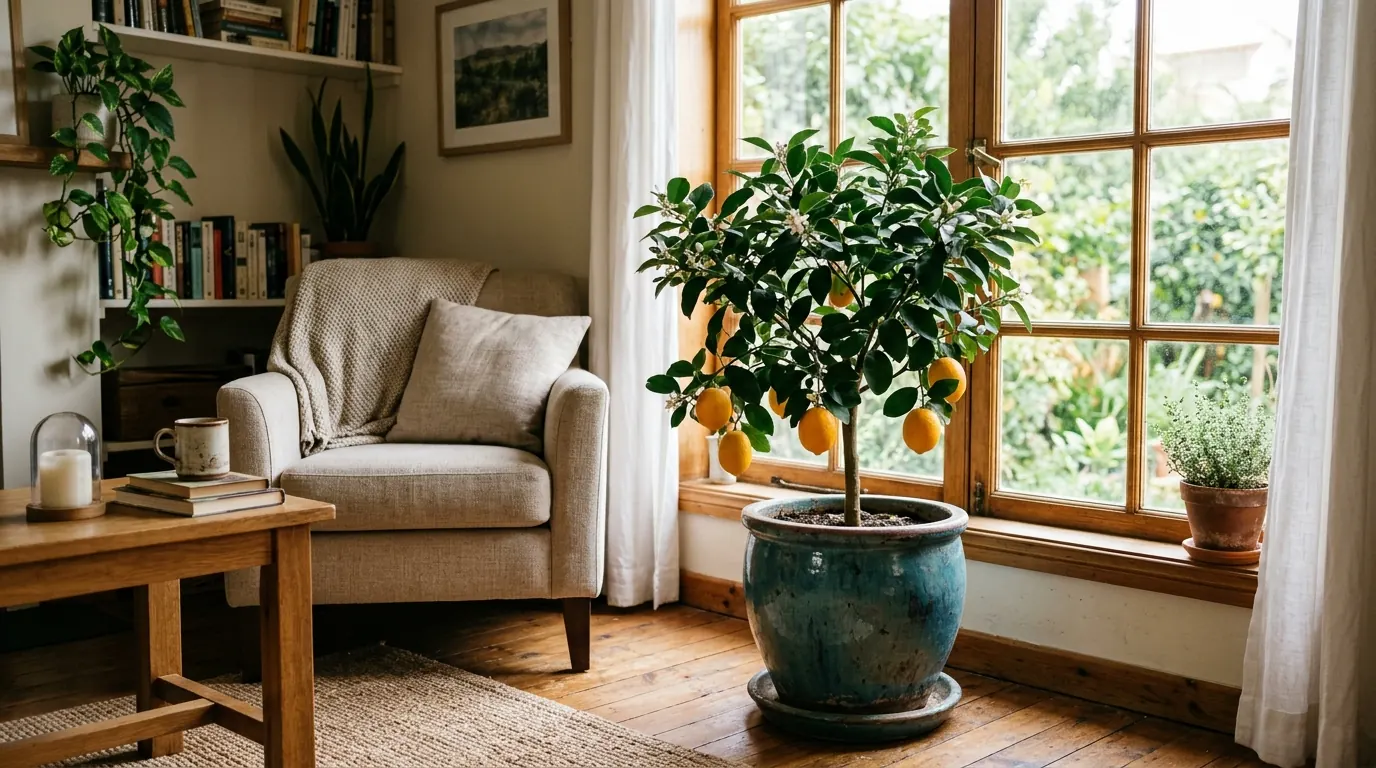
A Meyer lemon is one of the few fruit trees that can live in a pot and still flower and fruit indoors, but only if it gets enough light, cool nights and careful watering. It is also the citrus most likely to drop a pile of leaves the week it comes inside. This guide covers Meyer lemon tree care from summer outdoors to winter on a windowsill: light, temperature, water, soil, feeding, pollination, pests, and when to bring a Meyer lemon tree indoors. It also explains why your lemon tree indoors is losing leaves and what to do about it, following NC State, the University of Wisconsin, Iowa State and the University of Maryland.
Meyer Lemon Tree Care at a Glance
| Need | What the sources say | Source |
|---|---|---|
| Light | At least 6 hours of direct sun, preferably 8 to 12; south-facing window in winter; grow lights to supplement | UMD, Iowa State, Wisconsin |
| Temperature | Day 65 to 75 F (UMD) or 65 to 85 F (Iowa State); night 55 to 65 F | UMD, Iowa State |
| Humidity | About 50% in winter, with a humidifier | UMD |
| Water | Water when the top 2 inches are dry; deeply and infrequently; less in winter | UMD, Wisconsin |
| Soil | Slightly acidic, well-drained soilless mix; up to one-third perlite or pumice | Wisconsin |
| Fertilizer | 2-1-1 or 3-1-1 N-P-K, or a citrus fertilizer, in the growing season | UMD, Wisconsin |
| Size | 6 to 10 ft tall in the ground; smaller in a pot | NC State |
| Hardiness | USDA zones 8b to 11b; cannot survive frosts | NC State |
| Fruit | 6 to 9 months from flower to ripe fruit | NC State, Iowa State, Wisconsin |
| Pets | Lemon is toxic to cats and dogs | ASPCA |
Sources: NC State Extension Gardener Plant Toolbox; University of Wisconsin Extension, Indoor Citrus (Mahr, revised 2026); Iowa State Extension, Growing Citrus Indoors; University of Maryland Extension, Growing Dwarf Citrus (updated 2026); ASPCA plant lists.
Light
Light is the biggest limit indoors. The University of Maryland asks for at least 6 hours of direct sun, preferably 8 to 12, with a south-facing window the best spot in winter. Iowa State says a west- or south-facing window with 6 to 8 hours of direct light is often needed, and the University of Wisconsin adds that plants getting less than 6 hours of direct light need supplemental light to fruit. In low light the tree may stay green, but it is very unlikely to flower or fruit. If your best window falls short, see our guide to grow lights for indoor plants.
Temperature and Humidity
Citrus like warm days and cooler nights. The sources give slightly different day ranges, but agree on the nights:
| Source | Day | Night | Notes |
|---|---|---|---|
| University of Maryland | 65 to 75 F | 55 to 65 F | Cooler temperatures trigger flower development; damage below 32 F |
| Iowa State | 65 to 85 F | 55 to 65 F | Below 50 F can cause leaf loss |
| University of Wisconsin | About 55 to 85 F overall | A 5 to 10 degree day-night difference promotes flowering | |
Sources: UMD Growing Dwarf Citrus (2026); Iowa State Growing Citrus Indoors; Wisconsin Indoor Citrus (2026).
Keep the tree away from heat vents and cold drafts; Wisconsin warns against abrupt temperature shifts. Indoor winter air is dry, and UMD suggests a humidifier to reach about 50% relative humidity. For general cold-season advice, see our guide to winter houseplant care.
Watering, Soil and Pots
- When to water: push a finger 2 inches into the mix and water when it feels dry; check once or twice a week indoors (UMD).
- How to water: deeply and infrequently rather than little and often, letting the mix dry slightly between waterings, and less in winter (Wisconsin). Empty the saucer so the pot never sits in water (UMD).
- Soil: a slightly acidic, well-drained, high-porosity soilless mix. Wisconsin says adding up to one-third perlite or pumice by volume improves drainage, and to avoid mixes made to hold moisture.
- Pots: drainage holes are a must. Wisconsin prefers deep pots for stability, suggests increasing pot size gradually, and says a 10 to 12 inch pot can hold a tree for several years, with repotting every one to two years. See our guide on how to repot a plant.
Fertilizer
Citrus are heavy feeders that need more nitrogen than phosphorus or potassium (Wisconsin). Both Wisconsin and UMD point to a 2-1-1 ratio (UMD also lists 3-1-1) or a fertilizer labeled for citrus, ideally with trace elements such as iron, zinc and manganese. The schedules differ:
- UMD: fertilize at least three times in the active growing season, spring to late summer, stop by early fall, and skip winter.
- Wisconsin: granular slow-release fertilizer, supplemented with dilute soluble fertilizer from April through September.
- Iowa State: a slow-release fertilizer in April or May feeds lightly through spring and summer.
- NC State: for indoor trees, fertilize every three months.
Yellow leaves with green veins can mean iron deficiency or a mix that isn’t acidic enough; UMD suggests a fertilizer with chelated iron and/or a sulfur-based soil acidifier, following potted-plant directions.
When to Bring a Meyer Lemon Tree Indoors
A Meyer lemon can spend summer outside, but the sources set different cutoffs for bringing it back in:
| Source | Bring it in | Move it out |
|---|---|---|
| University of Wisconsin | Before night temperatures drop into the 40s F | Once temperatures are consistently above 50 F, acclimating over 1 to 2 weeks |
| Iowa State | Once nights drop below 50 F | Once nights are in the 50s F, starting in partial shade |
| University of Maryland | Before the first fall frost, after acclimating gradually | After the last spring frost, acclimating over about two weeks |
Sources: Wisconsin Indoor Citrus (2026); Iowa State Growing Citrus Indoors; UMD Growing Dwarf Citrus (2026).
The safest reading of all three: start the move when nights head toward 50 F, and don’t wait for frost. Before it comes in, check for pests; UMD recommends a preventive spray of horticultural oil or insecticidal soap. Our guide to bringing plants indoors for winter walks through the full move.
Lemon Tree Indoors Losing Leaves
Some leaf drop after the move is normal. UMD says leaf drop is common when citrus comes indoors after a season outside, as it adjusts to different light and humidity, and Wisconsin says sudden environmental changes can make leaves, flowers and young fruit drop. If the tree keeps dropping leaves, work through the causes:
| Clue | Likely cause | Fix |
|---|---|---|
| Leaves dropped right after coming in | Adjustment to less light and drier air | Brightest window, grow light, humidifier; wait for new growth |
| Mix stays wet; leaves cupped or yellow | Overwatering (UMD lists leaf drop as a sign; Wisconsin links cupped or yellowed leaves to it) | Let the top 2 inches dry; empty saucers; check drainage |
| Mix bone dry | Too little water (Iowa State) | Water deeply until it drains |
| Near a door, cold glass or vent | Temperatures below 50 F or sudden swings (Iowa State, Wisconsin) | Move it to a steady spot |
| Fine stippling, webbing or sticky leaves | Spider mites, scale or other pests | Inspect and treat (see Pests below) |
Sources: UMD Growing Dwarf Citrus (2026); Wisconsin Indoor Citrus (2026); Iowa State Growing Citrus Indoors.
Flowers, Pollination and Fruit
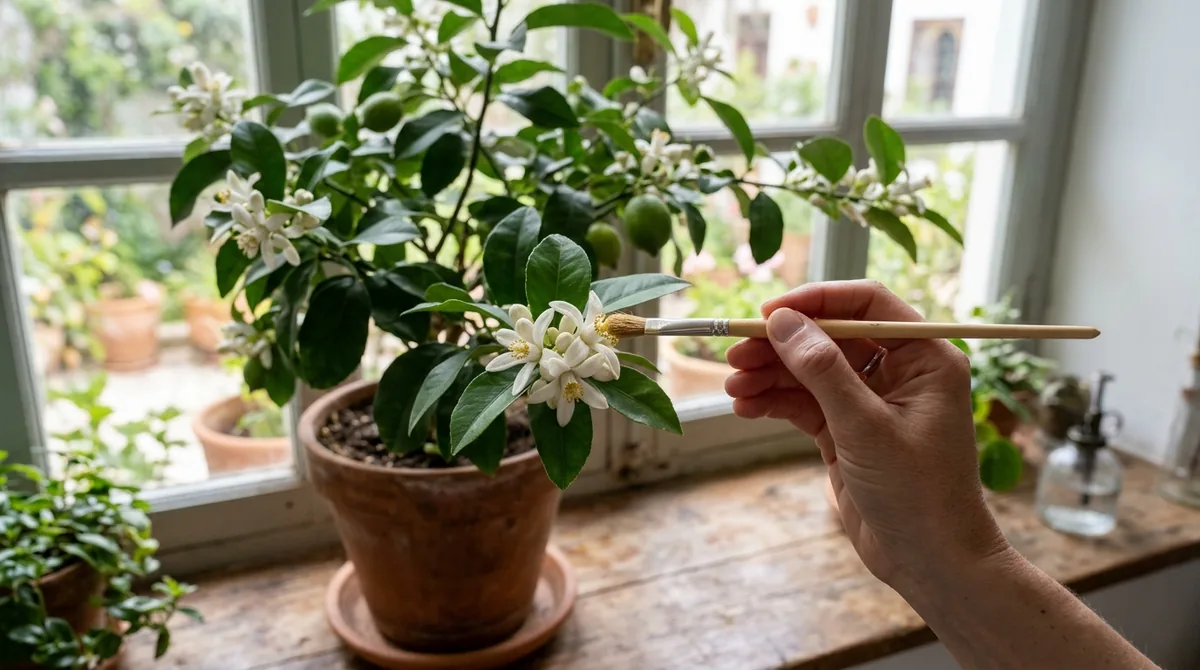
Most citrus, Meyer lemon included, doesn’t need a second tree to fruit (UMD, Wisconsin). Outdoors insects do the pollinating; indoors you have to do it. UMD suggests moving pollen from flower to flower with a small dry paintbrush, and Iowa State adds that a cotton swab, flicking the flowers or a fan also works. NC State also recommends hand-pollinating indoor trees.
Be patient: lemons take about 6 to 9 months to ripen (NC State, Iowa State, Wisconsin), and young plants may take several years to bear (UMD). NC State describes the Meyer lemon as sweeter than common lemons when mature, and suggests thinning clusters to one or two fruits for bigger lemons.
Pests, Pruning and Pets
Pests: Wisconsin names brown soft scale and two-spotted spider mite as the most common indoor citrus pests in the Midwest, with aphids, mealybugs and whiteflies now and then. Washing the foliage periodically helps deter them. UMD’s options are insecticidal soap for aphids, mites, mealybugs and whiteflies, and horticultural oil for scale, usually with repeat treatments. Iowa State says to use only products labeled for edible fruit plants if you plan to eat the fruit. See our guides to getting rid of spider mites, armored scale and mealybugs.
Pruning: UMD says pruning can be done from fall until spring growth begins, noting that timing affects flowering and fruiting, and that periodic root pruning keeps a potted tree manageable. NC State says pruning improves airflow and keeps the tree smaller.
Pets: the ASPCA lists lemon (Citrus limonia) as toxic to both cats and dogs. Keep the tree and its fallen fruit away from pets, and see our lists of cat-safe plants and plants safe for dogs.
For overwintering tips, see our guides to overwintering geraniums.
Frequently Asked Questions
How do you care for a Meyer lemon tree indoors?
Put it in your sunniest window, ideally south-facing with at least 6 hours of direct sun, keep nights around 55 to 65 F, water when the top 2 inches of mix are dry, use a humidifier in winter, and hand-pollinate the flowers (UMD, Iowa State).
Why is my lemon tree indoors losing leaves?
Most often it is adjusting to lower light and drier air after coming indoors (UMD). Overwatering, too little water, temperatures below 50 F, sudden changes and pests are the other common causes.
When should I bring my Meyer lemon tree indoors?
Before night temperatures drop into the 40s F, according to the University of Wisconsin; Iowa State says once nights drop below 50 F. Acclimate it and check it for pests first.
How often should I water a Meyer lemon tree?
There is no fixed schedule. UMD says to check once or twice a week indoors and water when the soil feels dry 2 inches down; water less in winter (Wisconsin).
Do you need two Meyer lemon trees to get fruit?
No. Most citrus is self-fertile (UMD, Wisconsin), but indoors you need to move the pollen yourself with a small brush.
How long does it take a Meyer lemon to ripen?
About 6 to 9 months from flower to ripe fruit (NC State, Iowa State, Wisconsin).
Is a Meyer lemon tree toxic to cats and dogs?
Yes. The ASPCA lists lemon as toxic to cats and dogs.
Sources
- NC State Extension Gardener Plant Toolbox: Citrus x limon ‘Meyer’
- Mahr, S. University of Wisconsin Extension: Indoor Citrus (revised 2026)
- Iowa State Extension: Growing Citrus Indoors
- University of Maryland Extension: Growing Dwarf Citrus (updated 2026)
- ASPCA: Toxic and Non-Toxic Plant List, Cats
- ASPCA: Toxic and Non-Toxic Plant List, Dogs