
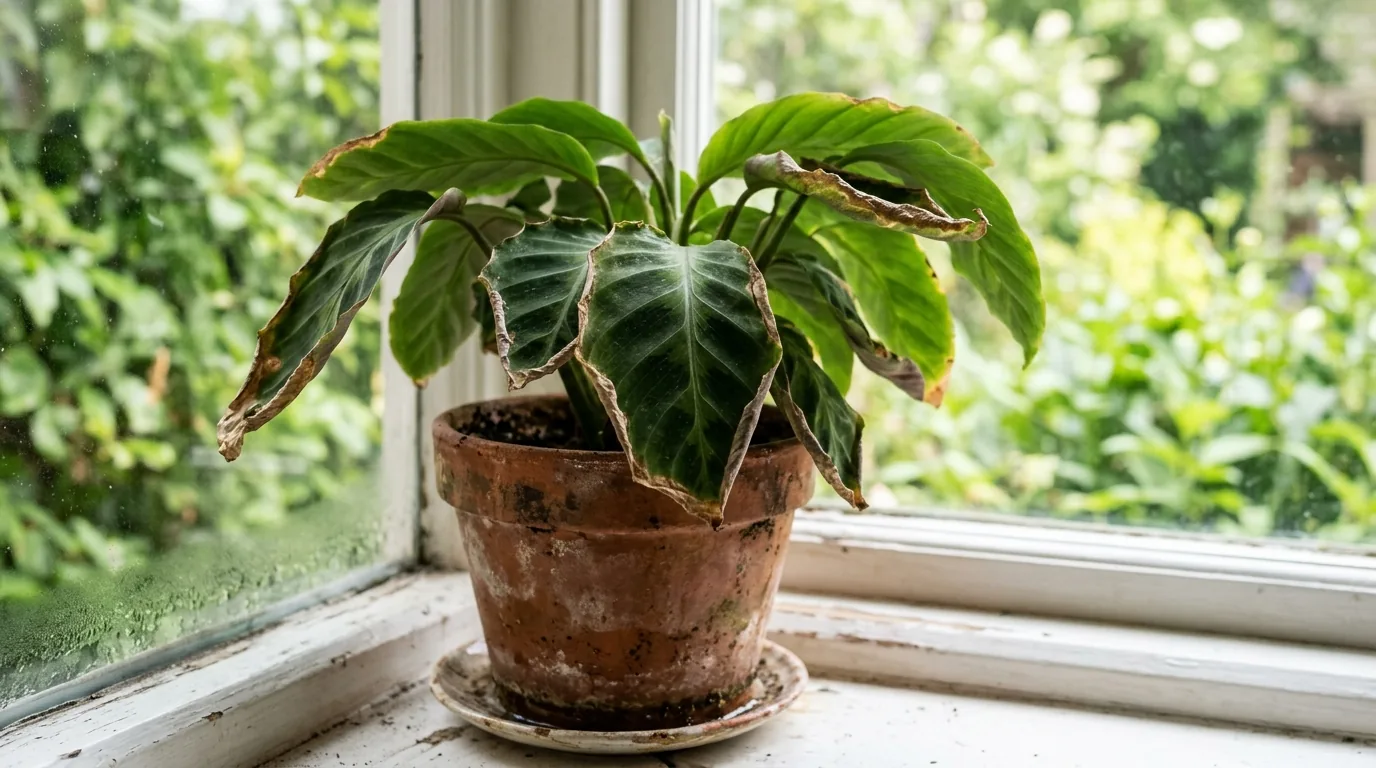
Curled leaves are a plant’s way of saying something changed: the soil dried out, the roots are drowning, the air got cold, the sun got stronger, or something tiny is feeding on the new growth. The trouble is that all of these look similar at first glance. This guide answers why are my plant leaves curling by walking through the causes in the order extension specialists suggest checking them, explains what it usually means when plant leaves are curling up, curling down or curling and turning yellow, and shows how to fix each one, following Clemson HGIC, UNH Extension, UC IPM, Iowa State, the University of Wisconsin and the University of Georgia.
Why Are My Plant Leaves Curling? Causes at a Glance
| What you see | Likely cause | Quick check | Source |
|---|---|---|---|
| Leaves roll inward, plant wilts, soil is dry | Underwatering | Top inch or more of mix is dry; pot feels light | Clemson HGIC, UNH |
| Leaves cup or curl and yellow, soil stays wet | Overwatering, root rot | Soggy mix; dark, soft roots | Clemson HGIC, UNH, Wisconsin |
| New leaves curled, twisted or distorted; sticky residue | Aphids | Small soft insects on shoot tips; honeydew | Iowa State, UC IPM |
| New leaves curled with silvery stippling | Thrips | Tap a shoot over white paper | UC IPM |
| Newest leaves curled at the edges, twisted, brittle | Broad or cyclamen mites | Too small to see; needs magnification | UC IPM |
| Curling after a cold night or near a drafty window | Cold injury | Plant touching cold glass or near an outside door | UNH |
| Bleached, scorched leaves after moving to brighter light | Too much light too quickly | Pale patches or crispy edges | UGA, UMN |
| Brown, crispy edges with curling | Dry air or salt buildup | White crust on soil or pot rim | UNH, Clemson HGIC |
Sources: Clemson HGIC 2251 (2025); UNH Extension (Erler 2020); UC IPM Pest Notes; Iowa State Extension; University of Wisconsin (Mahr 2026); UGA Extension B1318 (Pennisi 2022); University of Minnesota Extension (Trott 2026).
A 5-Minute Check, in Order
- Feel the soil. Push a finger in an inch or two. Bone dry points to underwatering; wet and sour-smelling points to overwatering.
- Look at which leaves curl. Only the newest leaves suggests pests feeding on new growth; old and new leaves together suggests water, light or temperature.
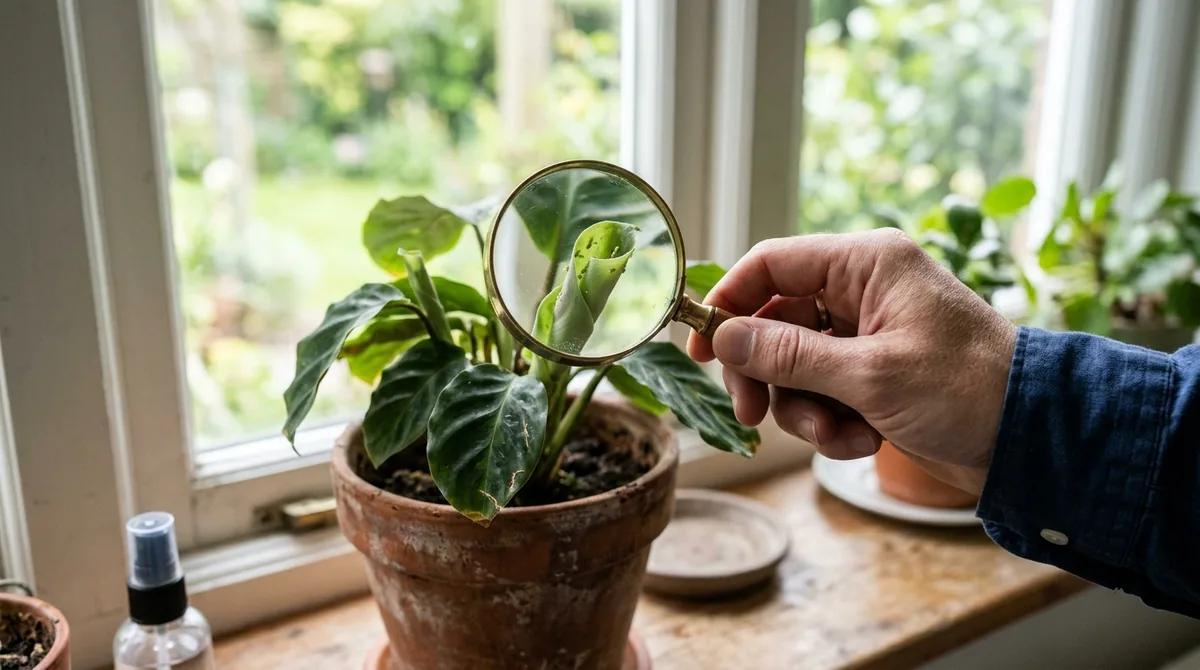
- Turn leaves over and check shoot tips with a magnifier for insects, webbing or sticky honeydew.
- Think back a week. Did the plant move, get repotted, sit by a cold window, or go from a dim room into sun?
- Check the roots if the soil is wet and the plant is declining: healthy roots are firm and light; rotted roots are dark and soft (Clemson HGIC).
Watering: Too Little or Too Much
Water is the first thing to check. Clemson HGIC lists wilting, leaf curling and eventually death as symptoms of chronic underwatering. UNH Extension explains that plant leaves often roll inward to reduce moisture loss, and adds that overwatering can cause curling too, by rotting the roots so they can’t take up water.
- Underwatered: soak the pot until water runs out of the drainage hole, let it drain, and then water when the top inch is dry. If the mix has shrunk from the pot sides, soak it in a basin for a while so it rewets.
- Overwatered: let the mix dry before watering again, empty the saucer, and check the roots. Clemson HGIC says to discard the plant if most roots are dark, soft and dead; otherwise trim the damaged roots and repot into fresh, well-drained mix. The University of Wisconsin notes that cupped or yellowed leaves can be a symptom of excessive watering on citrus.
Not sure which you have? See our guide to overwatered vs underwatered plants, and for rotting roots, our guide to root rot treatment.
Pests That Curl New Leaves
If only the newest leaves are curled, look for sap-feeding pests. UC Agriculture and Natural Resources says aphids, thrips and whiteflies curl new, still-growing leaves by sucking juices from them.
| Pest | What it does to leaves | Our guide |
|---|---|---|
| Aphids | Curled, yellow, deformed leaves that eventually drop, plus sticky honeydew (Iowa State) | Aphids on indoor plants |
| Thrips | Distorted, curled shoot tips and leaves, papery leaves with pale stippling or silvering (UC IPM) | Getting rid of thrips |
| Broad and cyclamen mites | New leaves curled at the edges and twisted, feeding hidden in buds and growing points (UC IPM) | See below |
| Spider mites | Mottled, yellow-green, then tan leaves rather than true curling (Iowa State) | Getting rid of spider mites |
| Mealybugs and scale | Yellow and deformed leaves (Iowa State) | Getting rid of mealybugs |
Sources: Iowa State Extension, Diagnosing Houseplant Problems Caused by Insect Pests; UC IPM Pest Notes: Thrips (7429) and Broad Mite and Cyclamen Mite; UC ANR (Schellman 2018).
Broad and cyclamen mites deserve a special mention because you can’t see them. UC IPM describes them as tiny mites that feed in the growing point and cause new leaves to curl at the edges and twist. Because they hide in buds and distorted tissue, sprays often miss them, and several extension sources suggest discarding a badly infested plant rather than fighting it. Isolate new plants for a few weeks before they join your collection.
Cold, Drafts and Dry Indoor Air
UNH Extension lists cold exposure as another cause of curling. In winter it suggests keeping plants a few inches from the glass, covering very drafty windows with clear plastic, and keeping tropical foliage plants away from heat registers, which blow hot, dry air. It recommends roughly 40 to 50% relative humidity, notes that brown leaf tips and edges indicate humidity is too low, and says a humidifier or grouping plants works better than misting, which only helps briefly. Clemson HGIC adds that cold water can spot leaves, so water with room-temperature water. For more, see our guide to winter houseplant care.
Too Much Light or Heat
Plants moved suddenly into bright sun can scorch. The University of Georgia describes over-exposure to light as upright leaves with bleached, scorched areas. The University of Minnesota recommends moving plants closer to bright windows gradually over one to two weeks, and says pale patches or crispy edges mean the change happened too fast. Pull the plant back from the window or filter the light with a sheer curtain, and give it time.
Plant Leaves Curling Up vs Curling Down
Many websites give a neat rule, like “up means heat, down means overwatering.” The extension sources we checked don’t support a rule that tidy, because the same cause can curl different plants in different directions. What the sources do describe:
- Plant leaves curling up or rolling inward: usually water loss, as leaves roll to reduce moisture loss (UNH); also seen with too much light, where leaves stand upright and bleach (UGA).
- Plant leaves curling down or cupping: look at the roots and the watering; the University of Wisconsin links cupped leaves to excessive watering on citrus, and Clemson HGIC links overwatering to wilting from dead roots.
- Only the newest leaves twisted or curled at the edges: pests, especially broad or cyclamen mites (UC IPM).
Use the direction as a clue, not a diagnosis, and confirm with the soil and a close look at the leaves.
Plant Leaves Curling and Turning Yellow
When curling comes with yellowing, overwatering moves to the top of the list: Clemson HGIC says yellowing of the whole plant is most often caused by overwatering. Aphids also cause curled, yellow leaves (Iowa State), and Clemson HGIC notes that a pot-bound plant short of nitrogen or iron yellows its lower leaves first. Check the soil moisture and the roots first, then the undersides of the leaves. Our guide to plant leaves turning yellow covers the yellowing side in more detail.
Frequently Asked Questions
Why are my plant leaves curling?
The most common cause is water stress: Clemson HGIC lists leaf curling as a symptom of chronic underwatering, and overwatering can cause curling by rotting the roots (UNH). Pests, cold drafts and sudden strong light are the next things to check.
Will curled leaves uncurl?
Usually not. UNH Extension notes that curled leaves can’t be fixed, but new leaves should grow normally once the cause is corrected.
Why are my plant leaves curling up?
Leaves often roll inward or upward to reduce moisture loss when the plant is short of water (UNH). Too much light can also make leaves stand upright and bleach (UGA).
Why are my plant leaves curling down?
Downward curling or cupping often goes with wet soil and root problems; the University of Wisconsin links cupped leaves to overwatering on citrus. Check the soil and roots first.
What bugs make plant leaves curl?
Aphids, thrips and whiteflies curl young leaves by feeding on them (UC ANR, Iowa State), and broad and cyclamen mites curl and twist the newest leaves (UC IPM).
Can low humidity make leaves curl?
Dry air mainly shows up as brown leaf tips and edges, according to UNH Extension, which recommends about 40 to 50% humidity in winter. Combine it with dry soil and leaves may curl as they lose water.
Should I cut off curled leaves?
Only if they are badly damaged or infested. Leaves that are still mostly green keep feeding the plant while new growth comes in.
Sources
- Clemson HGIC 2251: Houseplant Diseases and Disorders (updated 2025)
- Erler, E. UNH Extension: Houseplant Winter Care Q&A (2020)
- Schellman, A. UC ANR: Curling Leaves on Plants (2018)
- UC IPM Pest Notes: Thrips (7429)
- UC IPM: Broad Mite and Cyclamen Mite
- Iowa State Extension: Diagnosing Houseplant Problems Caused by Insect Pests
- Mahr, S. University of Wisconsin Extension: Indoor Citrus (2026)
- Pennisi, B. UGA Extension B1318: Growing Indoor Plants with Success (2022)
- Trott, R. University of Minnesota Extension: Spring Houseplant Care (2026)