
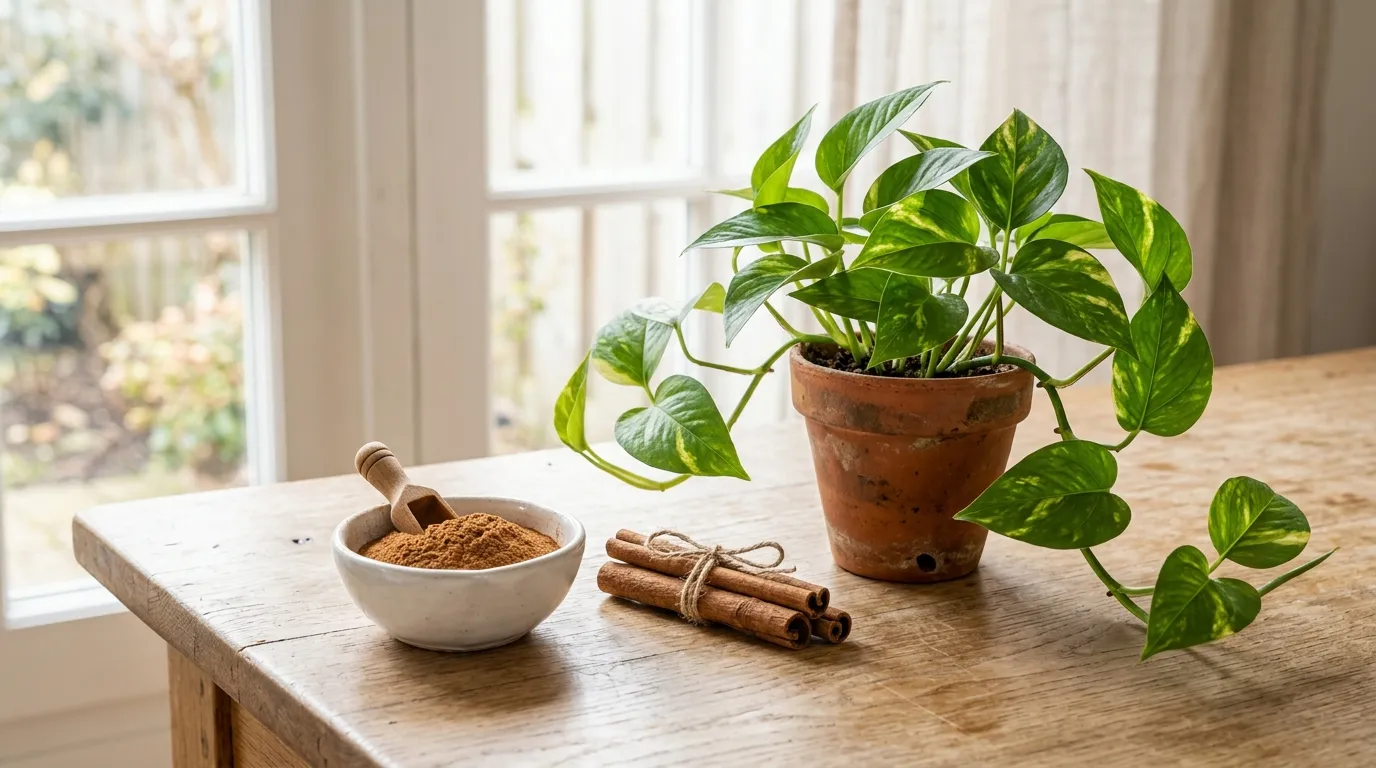
Cinnamon for plants is one of the most shared houseplant hacks: sprinkle it on soil for fungus gnats, dust it on cuttings as a rooting aid, or use it to stop damping off. The research is thinner than the hype. A 2021 review in Molecules found that cinnamon oil and extracts inhibit many plant-disease fungi in lab tests, but most of that work used concentrated oils, not kitchen powder, and the same review notes cinnamon can also be toxic to plants. We found no trials of ground cinnamon sprinkled on houseplant soil.
| Claim | What the evidence says | Better proven option |
|---|---|---|
| Kills fungus gnats | No trials found on cinnamon powder | Drier soil, yellow sticky traps, Bti, beneficial nematodes (UC IPM) |
| Prevents damping off | Lab activity of oils and extracts; no home seed-starting trials found | Fresh commercial compost, clean pots, ventilation, no overwatering (RHS) |
| Rooting hormone | No: rooting hormones are auxins such as IBA (CTAHR) | Rooting hormone, preferably with a fungicide (Virginia Tech) |
| Antifungal | Cinnamon oil and extracts inhibit many fungi in vitro (Kowalska et al., 2021) | Remove infected tissue, improve airflow |
| Repels pests | Mainly repellent effects in studies, mostly of extracts and oils (Kowalska et al., 2021) | Targeted controls for the specific pest |
Sources: Kowalska et al., Molecules 26(17):5299, 2021; UC IPM Pest Notes: Fungus Gnats; RHS: Damping off; University of Hawaii CTAHR OF-38; Virginia Cooperative Extension 426-002.
What Does the Research Say About Cinnamon for Plants?
The most thorough summary we found is a 2021 review by Kowalska and colleagues, “Cinnamon as a Useful Preventive Substance for the Care of Human and Plant Health.” It reports that cinnamon and its compounds hinder bacterial and fungal growth, that it acts on pests mainly as a repellent (with toxic effects at higher doses), and that it is a promising candidate for preventive use in organic farming. In lab tests, cinnamon oil and extracts inhibited fungi such as Fusarium, Rhizoctonia solani and Botrytis cinerea.
Three caveats matter for houseplant owners:
- Most results are in vitro (in a dish or tube), using concentrated oils or extracts, not a sprinkle of ground spice on potting mix.
- Cinnamon can harm plants too. The review notes cinnamon’s phytotoxic effects make it a possible herbicide, and reports that seeds treated with cinnamon oil emerged considerably worse in the field than seeds treated with conventional or organic fungicides.
- Dose and form are unknown for home use. There is no tested rate for powder on houseplants.
Does Cinnamon Get Rid of Fungus Gnats?
There’s no good evidence that it does. Fungus gnat larvae live in moist potting mix and feed on fungi and decaying organic matter. The UC IPM fungus gnat guide doesn’t mention cinnamon; its recommendations are to avoid overwatering and provide good drainage, trap adults with yellow sticky traps, and, if needed, use biological controls such as Bacillus thuringiensis subspecies israelensis (Bti), Steinernema nematodes or predatory mites. UC IPM also suggests raw potato chunks, cut side down, to check for larvae.
Pro tip: Letting the top inch or two of mix dry between waterings does more against gnats than any spice. Our fungus gnat guide covers traps and biological controls.
Does Cinnamon Stop Mold and Damping Off?
Lab studies suggest cinnamon extracts can slow some fungi, but we found no trials showing that sprinkling cinnamon on seed trays prevents damping off at home. The RHS explains that damping off is caused by soil-borne organisms including Pythium, Phytophthora, Rhizoctonia and Fusarium, and is worst under high humidity, poor air circulation and thickly sown seed. Its control advice is cultural: raise seedlings in fresh commercial compost, use clean pots and trays, don’t overwater, keep seedlings well ventilated, and keep stored rainwater clean. The RHS adds that no fungicides are available to home gardeners for damping off.
White fuzz on houseplant soil is usually harmless saprophytic fungus feeding on organic matter in a mix that stays wet. Scraping it off and watering less is the fix; see our guide to mushrooms and mold in houseplant soil.
Is Cinnamon a Rooting Hormone?
No. Rooting hormones are plant hormones called auxins; the University of Hawaii CTAHR, for example, recommends a rooting hormone such as IBA (indole-3-butyric acid) for harder-to-root cuttings. Cinnamon isn’t an auxin product, so it can’t stimulate rooting the way these do. Some growers dust cinnamon on cut surfaces hoping its antifungal compounds keep the wound clean; that is plausible from the lab research but untested on cuttings. If that is your goal, Virginia Cooperative Extension suggests using a rooting hormone, preferably one containing a fungicide.
For easy-rooting houseplants such as pothos, many cuttings root without any treatment. For more on rooting, see our sphagnum moss propagation guide.
Does Cinnamon Repel Ants, Aphids and Other Pests?
The Kowalska review reports that cinnamon acts on pests mainly as a repellent, and at higher doses can kill some insects and prevent egg-laying, but those studies mostly used extracts and oils at measured concentrations. A line of powder may make ants detour for a while, but it washes away with watering and doesn’t reach pests on leaves. For common houseplant pests, use targeted methods; for example, UC IPM’s 70% alcohol swab for mealybugs, covered in our rubbing alcohol for mealybugs guide.
How to Use Cinnamon on Plants (If You Want To)
- Use a light dusting, not a layer. A thin film on a cut stem or a pinch across the soil surface; thick layers can crust and repel water.
- Keep it off leaves and seedlings. Given its phytotoxic effects in research, avoid coating young growth.
- Don’t rely on it. Fix the cause: overwatering for gnats and mold, dirty pots and old compost for damping off.
- Skip cinnamon oil. Concentrated essential oils can damage plants and are a bigger risk to pets.
Is Cinnamon Safe Around Cats and Dogs?
The ASPCA lists the cinnamon plant (Cinnamomum zeylanicum) as non-toxic to dogs, cats and horses, but powder is a different exposure. The ASPCA Animal Poison Control Center warns that small amounts of cinnamon may cause mild stomach upset, larger exposures can irritate the throat and stomach and cause hyperactivity and a fast heart rate, and inhaled cinnamon can lead to coughing, trouble breathing and pneumonia. Don’t dust powder where cats sniff and dig, and call your vet or the ASPCA (888) 426-4435 if a pet eats or inhales a lot.
Frequently Asked Questions
Does cinnamon kill fungus gnats?
We found no evidence that it does. UC IPM recommends avoiding overwatering, yellow sticky traps for adults, and Bti or beneficial nematodes for larvae.
Is cinnamon good for plants?
It has antifungal and repellent compounds, but research mostly used oils and extracts, and a 2021 review notes cinnamon can also be phytotoxic. A light dusting is unlikely to harm a plant, but it isn’t a fertilizer or a proven treatment.
Can I use cinnamon as a rooting hormone?
No. Rooting hormones contain auxins such as IBA (University of Hawaii CTAHR). Cinnamon may help keep a cut surface clean, but it doesn’t stimulate rooting; Virginia Cooperative Extension suggests a rooting hormone that contains a fungicide instead.
Does cinnamon stop mold on houseplant soil?
It might slow surface fungus briefly, but the mold returns if the mix stays wet. Remove the growth, water less and improve airflow.
Does cinnamon prevent damping off?
There are no home seed-starting trials showing it does. The RHS recommends fresh commercial compost, clean containers, careful watering and good ventilation, and notes no fungicides are available to gardeners for damping off.
Is cinnamon on plants safe for cats?
The cinnamon plant is listed as non-toxic by the ASPCA, but the ASPCA warns that inhaled cinnamon can cause coughing and breathing problems in pets. Avoid dusting powder where cats sniff or dig.
Sources
- Kowalska et al. (2021): Cinnamon as a Useful Preventive Substance for the Care of Human and Plant Health, Molecules 26(17):5299
- UC IPM Pest Notes: Fungus Gnats
- Royal Horticultural Society: Damping off
- Virginia Cooperative Extension: Propagation by Cuttings, Layering and Division
- University of Hawaii CTAHR OF-38: Bougainvillea (rooting hormone guidance)
- ASPCA: Cinnamon
- ASPCA: When Pumpkin Spice Is Not So Nice